“My tank was empty and I didn’t get much help”: Bruno Armirail reveals staggering power numbers behind his brutal Worlds pace-setting
Cycling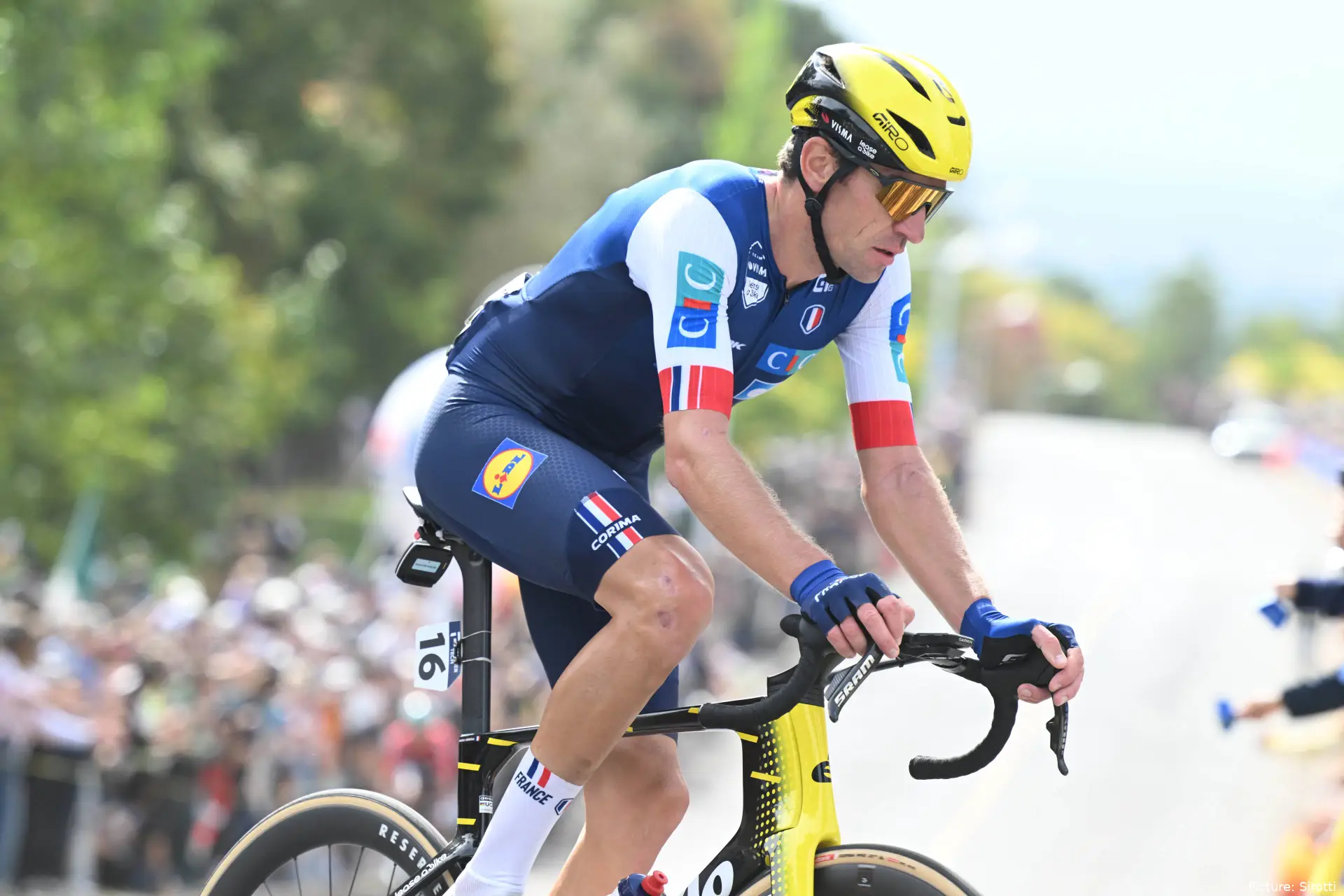
Bruno Armirail may not have been anywhere near the finish when Brandon McNulty became world champion in Montreal, but the Frenchman had already played one of the most demanding roles in the race.
Armirail was given a clear assignment by France: make the race hard from the moment the peloton reached the circuit. His effort was so severe that even riders from the front of the race were talking about it afterward. Visma | Lease a Bike rider Tijmen Huising was struck by how quickly Armirail could ride for such a long period.
“It’s really bizarre sometimes how fast that guy can ride. He just kept going. Although it does make a difference when you’re in the lead, because then you don’t have to constantly sprint out of those turns,” Huising said.
Armirail's own account after the race confirmed that the extreme pace was no accident. He had been sent to the front with one objective: force the race to develop early and make the circuit as difficult as possible for the riders behind him.
“This was my job. That’s what we had to do: make the race tough starting at the circuit, so that’s what we did. We had a breakaway group that I think had a lead of almost 8 or 9 minutes as we turned onto the circuit, and by the time I dropped back, it was down to just 20 seconds,” Armirail said in a post-race interview.

Bruno Armirail ahead of stage 1 at the 2026 Tour Auvergne-Rhône-Alpes
An hour and a half at 440 watts
The scale of the effort becomes clearer in the numbers Armirail later shared on Strava. According to his published data, he spent around 1 hour and 32 minutes riding at the front, averaging 42.3 kilometers per hour with a normalized power of 440 watts.
The Frenchman knew from the beginning that his contribution would have a limited lifespan. The plan was not necessarily to empty the tank immediately, but to continue pushing until he could no longer maintain the required pace.
“The important thing is to keep going as long as possible, no matter what. Thomas Voeckler knows me; he knows I’ll give it my all. The plan wasn’t necessarily to go all out for two or three laps, but if I couldn’t go any further, I’d stop,” Armirail explained.
His contribution also served a tactical purpose beyond simply reducing the gap to the breakaway. “That gives the guys behind me some breathing room, too. So yeah, if I could have kept going for one more lap, that would have been cool, but oh well, it is what it is—my tank was empty and I didn’t get much help,” he said.
Read also
A pace that left even the favorites struggling
Armirail’s long stint at the front was one reason the early stages of the race were so punishing. Bart Lemmen, another Visma | Lease a Bike rider and an everyday teammate of Huising, also noticed how quickly riders were beginning to run out of energy.
“That was really fast, and you could tell that everyone was slowly running out of steam. I certainly was,” Lemmen said. “And then you know the final sprint is coming early. Bruno isn’t going to ride like that and then let the pace drop again.”
The effect was felt even among the leading contenders. Remco Evenepoel also struggled with the pace during the early part of the race, while France's young leader Paul Seixas ultimately could not sustain the demands of the race and finished 15th after suffering cramps in the closing kilometers.
Armirail himself never reached that decisive phase. Once his work was complete, he was quickly out of the race, having used virtually everything available to him. “I could have kept going for one more lap, that would have been cool,” he said. Instead, his tank was empty.
Félix SernaCycling Journalist
Félix Serna is a writer at CyclingUpToDate and has been part of the team since 2025. He covers professional cycling across both the men’s and women’s calendars, with a focus on UCI rankings, race developments, and rider performance. His work includes interview-based reports, liveblogs, and tournament coverage designed to provide clear, accurate context throughout the season.
In his reporting, Félix regularly uses ProCyclingStats for results, statistics, and historical reference. He places strong emphasis on careful sourcing, editorial accuracy, and updating articles promptly when new, verified information becomes available. He holds a bachelor’s degree in International Studies.
claps 0visitors 0
Just in
Popular news
Latest comments
- Who are you asking?Jumpyjohn20-10-2026
- Ah yes, thanksJumpyjohn20-10-2026
- And all World Tour wins for Pogi!Lozza20-10-2026
- I hope visma does find some sponsors cause right now visma is a shitshow and a sinking ship. Very worriying seeing they cant compete with other teams for the best guys and even riders, coaches and staff leave mid contract, doesnt seem good for visma now.. No way to keep up with lidl and rbh for them and no point thinking about UAE even who obv is nr 1..miguel20-10-2026
- What news he is training again and???? It is his jobpaultryan200220-10-2026
- Can’t wait! Go Pogi! ❤️Lozza20-10-2026
- Strada BianchiLozza20-10-2026
- What races would you like to see Pog ride next year?Hills3320-10-2026
- What great news for the team and how great for Sivakov to ride for a French phenom. He showed his loyalties to the Slovenian phenom (see worlds '24), and I'm sure his colleagues at UAE are congratulating him on a great move. Sivakov is a great rider, and moves like these are going to even out the playing field and make for more tactical races in the future, I hope. Yes yes, riders launch earlier than in the past, but it's a team sport, and the teams really do matter a lot.RidesHills20-10-2026
- Mind’s gone blank, SB?Jumpyjohn20-10-2026
Loading
Write a comment