"They're a little different" - Tadej Pogacar explains why his zone two differs from other riders with training insight
Cycling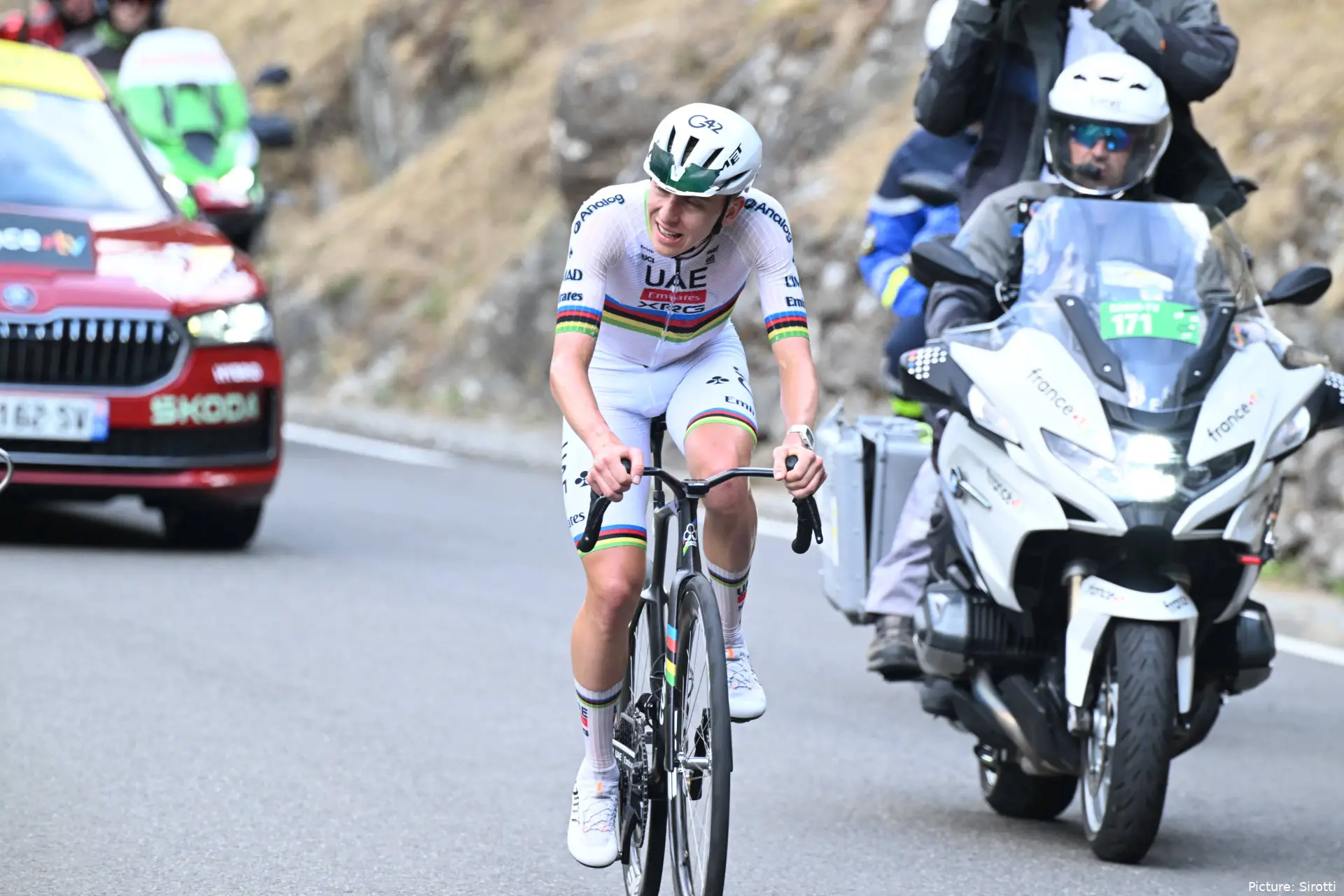
Tadej Pogacar may well boast perhaps one of the highest zone two numbers in cycling, but according to the Tour de France champion, numbers aren't everything when it comes to racing. Speaking in an interview as part of the premiere of the documentary series 'Anatomy of a GOAT', he gave an insight into his training.
The five-time Tour champion has established himself as cycling's most dominant rider over the past six years, sweeping up countless wins and winning four of the five monument victories. Such is his dominance, the UAE Team Emirates-XRG rider is among the most powerful riders in the world.
In the documentary, graphics show that his zone two power ranges from over 230 watts to over 320 watts, making his capabilities for higher efforts even higher. Speaking about the level, Pogacar noted that zone two power isn't everything as riders with lower numbers have took big wins.
Zone two power refers to the power a rider can sustain within a lower intensity heart rate and perceived effort. The higher the watts produced at lower intensity, effectively means greater potential power output in higher intensity efforts. Zone two training builds endurance for cyclists, making it a sizeable and vital aspect to training.
"They're a little different [his zone two figures]. Each rider has their own zones, and that depends on the cyclist's weight. There are certain levels: some riders have lower numbers, and others, higher ones," Pogacar said in an interview with Eurosport.

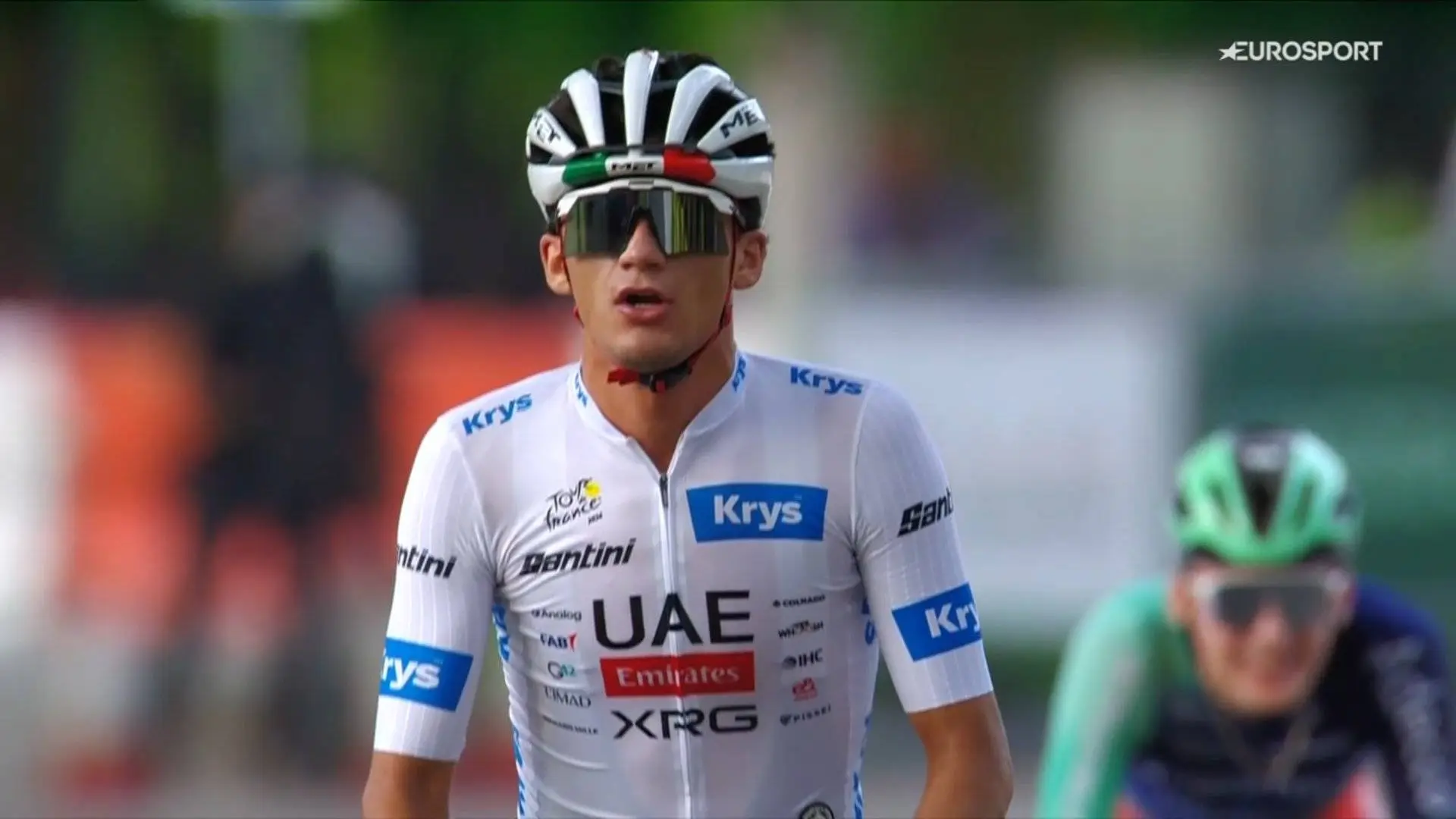
Tadej Pogacar on stage 9 of the 2026 Tour de France
Tadej Pogacar and zone two training
"In the end, many cyclists, even with lower numbers, can win big races because so many things can happen in cycling, and you also have to be smart on the bike to win. It's not all about the numbers."
Speaking about his training and zone two's role within his workouts, Pogacar notes his coach from 2018 to 2023, Íñigo San Millán. He switched coaches and joined forces with Javier Sola ahead of the 2024 season, adding that his training focus changed significantly as a result.
"With training and consistency. You have to work with what you have and try to get the most out of it. Since I changed coaches, switching from Íñigo to Javier Sola, it's a bit more complicated to explain some of my training sessions.
Read also

Pogacar maps his training evolution
"With Íñigo, it was usually always Zone 2, followed by a 15-minute climb in Zone 4, or practically all out, once or twice. That was more or less the basic training routine most of the time. But now I do very different workouts. I don't repeat the same ones very often throughout the year."
He added: "They always vary a bit, depending on the next race. In winter, I add some more strength or torque work and also some sprints, but I still do a lot of work in Zone 2 because I'm used to it, and besides, I really like going fast all day long.
"Zone 2 training definitely helped me become the cyclist I am today. But in recent years I already had that huge base of endurance, and it was a big step forward to change my training a bit and do different things: more VO2 max, some race simulations... That helped me continue to progress."
Gavin QuinnCycling Journalist
Gavin Quinn is a cycling journalist and ultra-distance cyclist with a BA in Journalism from Dublin City University. Formerly the Press & Communications Officer for Cycling Ireland, Gavin has worked inside the national team at the World Championships and has reported for the Irish Mirror, Mirror UK, and The42.
His expertise is backed by elite-level access, having interviewed stars like Sam Bennett and Ben Healy, as well as immense personal endurance. In 2025, he completed a 12,000km solo cycle from Ireland to Vietnam, following a 4,600km tour across Europe. From the cobbles of Paris-Roubaix to the gradients of the Tourmalet, Gavin’s writing focuses on the "romance and brutality" of the sport. Having visited 50+ countries, he brings a global, cultural perspective to his coverage of the pro peloton for CyclingUpToDate.
claps 7visitors 7
Just in

Popular news
Latest comments
- Yeah, unreal.
 parisbound0008-11-2026
- there needs to be space in life for pointless comments!Ketterechts08-11-2026
- That is a very lazy way of putting it but so far on this website it seems like everyone is happy to look at everything lazily, even things that annoy them intensely. All they want to do is state their feeling and position but ask most to analyse a problem or come up with solutions or improvements and you’re stunned by silence. Nobody even really knows how this all happens. It’s very simple and quick to just say the UCI did it but I bet you they didn’t, I bet you not more than 2 people were involved, more likely just 1. The UCI may be ultimately responsible but it is not their decision, this is about hierarchy, power and delegation. The fact that protest is possible also means it isn’t over and that MORE people could get involved for a thorough review which could throw up anything. It is highly likely it was a sole commissar who decided and has that power in a first round. Therein might lie the problem the UCI has to consider, is it acceptable to give so much authority to one single person when it is quite possible for them to have a natural bias or be too easily susceptible to imposed bias. Who is to say an individual in this position isn’t susceptible to collaboration with outside players with interests in the results, nations, families, teams, betting companies, etc. On the one hand we have sports where these problems have been worked on way more to reduce such problems, on the other hand we have sports with far stricter and more draconian rules not even concerning safety or obstruction that nobody really questions like false starts or stepping out of lane or zones in athletics. If cycling hastowork on itself, it would be good if protagonists (all kinds) would start doing a little more than just moaning over outcomes.Jumpyjohn08-11-2026
- Yes, so why not make comments less pointless?Jumpyjohn08-11-2026
- What a race! I didn't expect Vanthourenhout to collapse like that, and Wyseure did take the fight to Nys, but there was no doubt at the end. I also wonder what Aubin Sparfel would be capable of were he to race in the elites now. In the U23 ranks he is making good work of Giel Lejeune, who himself is among the better riders in the elites, and a top 10 contender in the big races (3rd at Kleebergcross, 8th at Berencross and 5th at Heerderstrand). In the French Cup, Sparfel is significantly better than Romain Debord (8th at Koppenbergcross and 10th at the Euros) and Rémi Lelandais (12th at Koppenbergcross and 19th at the Euros).
 Rafionain-Glas08-11-2026
- There really was nothing in it. Schreiber was so much faster, and Brand was fighting to stay in the wheel in the sprint. Schreiber did move a bit, but to say she closed the door doesn't make sense because Brand couldn't enter it anyway, abd she wasn't impeded.Rafionain-Glas08-11-2026
- He should have been allowed to go to Movistar. Right now both arent a good fit for each other and are just wasting each other's time and effortabstractengineer08-11-2026
- Thibau Nys does exactly what Iserbyt is calling forRafionain-Glas08-11-2026
- i did not see it. was the relegation justified or an overly hard decision? and don‘t cross riders deviate from straight lines all the time? bumping into each others when they cut corners, etc … why being more strict with the rules on the finish sprint?Ketterechts08-11-2026
- seems like we are advertising the website with pointless comments…Ketterechts08-11-2026
Loading
2 Comments