“Micro-dosing EPO can no longer be detected six or seven hours later” – UCI boss defends midnight Tour de France doping raids as warning to peloton
Cycling
The overnight controls that woke Tadej Pogacar and Jonas Vingegaard during the Tour de France were designed to deny riders a predictable window in which micro-dosed EPO could disappear before testers arrived.
UCI president David Lappartient has backed the International Testing Agency after Vingegaard was disturbed at approximately 2am before Stage 15 and Pogacar underwent a separate control at around 5am.
Both riders complained about the effect on their sleep during the decisive final week of the Tour. Vingegaard struggled to settle again after his test, while Pogacar was left with only a few hours of rest before returning to the race.
Lappartient said the shrinking detection window associated with micro-dosing could require testers to act immediately rather than wait until morning. “We support the ITA if they have to carry out specific tests,” he told Daniel Benson. “Why? Because we know that with micro-dosing EPO, it can no longer be detected six or seven hours later.”
The controls were carried out with judicial authorisation in France and reached several riders during the Tour. Their timing prompted criticism from the peloton, team staff and the CPA, with the disruption to recovery becoming almost as heavily debated as the grounds on which the tests had been approved.
“The fear that the ITA could turn up”
Micro-dosing involves using smaller quantities in an attempt to retain a performance benefit while reducing the period during which a prohibited substance can be detected.
A rider tested several hours later may therefore present a very different sample from one collected during the night. “For riders, the fear that the ITA could turn up is just as significant as the fear that the police could come,” Lappartient said.
The comparison reflected the deterrent the UCI hopes to create. The overnight operation involved only a limited number of riders, but removed any guarantee that the hours spent inside a team hotel would remain untouched by anti-doping officials.
Lappartient nevertheless ruled out making such controls a regular feature of Grand Tours. “It has to remain very exceptional,” he said. “We will not support something that is done every night to all the riders. It really has to remain exceptional.”
Pogacar described the disturbance as “inhuman”, while the timing was also questioned by other riders who argued that interrupted sleep carried consequences for recovery and safety.
The World Anti-Doping Code normally protects an overnight period from routine testing, but national authorities can approve controls outside those hours when the required legal threshold is met.

Jonas Vingegaard and Tadej Pogacar were woken in the middle of the night for surprise doping tests during the 2026 Tour
No specific suspicion
The involvement of a French judge immediately raised questions over whether the riders visited during the Tour had been selected because of information directed specifically against them. Team Visma | Lease a Bike later said it had been told that Vingegaard’s control was not based on an individual suspicion concerning the Dane.
Lappartient gave the same account of the wider operation. “In cycling, there is always suspicion, probably because of our past, but I know everything that has been done to fight doping,” he said. “Night-time testing is a tool in that fight, but it is not a tool that should be used every day.”
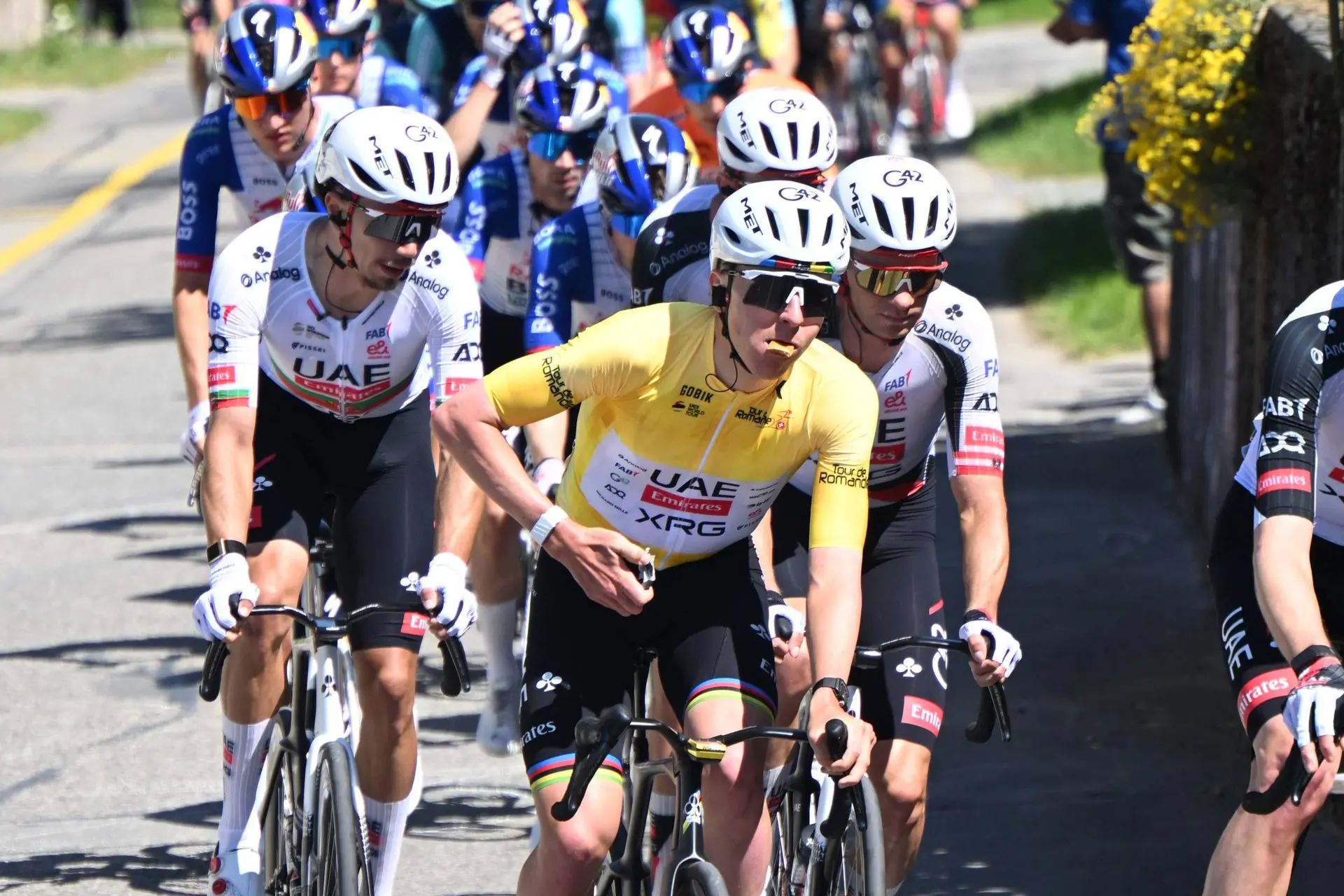
No anti-doping violation involving either Vingegaard or Pogacar was announced following the controls. Lappartient instead presented their value as a warning that testing could take place before a narrow detection window had closed.
“The aim is not to wake a rider in the middle of the night,” he said. “The ITA has to say: look, we have this control available. It sends a message: we are here, and we will never give up the fight against doping. So it is not about suspicions directed at one particular rider, but a general message to the whole peloton.”
The controls did not produce a publicly announced case against either Tour leader. They did ensure that future riders considering micro-dosing could no longer assume the night would pass before a sample was taken.

Kieran WoodDeputy Editor-in-Chief
Kieran Wood is a sports journalist based in Wales and has been active in journalism since 2022. He regularly contributes to DartsNews.com and CyclingUpToDate.com, where he covers professional cycling and darts. In cycling, his work includes liveblogs from major races, including the Tour de France, the Giro d’Italia, and La Vuelta a España, alongside race reports and analysis. He has also conducted interviews with professional riders.
His reporting spans the full racing calendar, from one-day classics to stage races, with a focus on accurate, real-time coverage and clear contextual analysis. For statistics, results, and historical context, he regularly uses resources such as ProCyclingStats. To support reporting on rider activity and training context where relevant, he also references Strava.
In his work, Kieran places strong emphasis on careful sourcing, editorial accuracy, and updating articles as new, verified information becomes available.
claps 0visitors 0
Just in

Popular news
Latest comments
- Roglič brought in as many points as some of the lower standing teams, so you would think that more than one team would be trying to get one of the top 25 points machines onto their team. He brought in only 500 points less than the entire Picnic Post NL team. Take those points and Unibet is still not in the top 18, but put him on one of the teams fighting for 18th and they get some security. NSN at 18th with Roglič’s 2100 points would be in 11th place.RidesHills24-10-2026
- He's 20, in two years or so he will be the guy winning everything.awp24-10-2026
- You're talking about being lucky if someone crashes out... I'm talking about quality.PogiSloFans24-10-2026
- He finished 2nd this year at the Tour. Pogacar crashed out of the Vuelta. If he had crashed out of the Tour, Remco would have won.acem8224-10-2026
- Lance never won a TdF, so not sure why he and Hincapie are listed here. I thought this was best domestiques for TdF winners.mij24-10-2026
- Pelizzaari is not Remco's domestiqueabstractengineer24-10-2026
- YetJumpyjohn24-10-2026
- Nibali got into the lead because he wanted the team car further forward in the caravan (I love this as a sign of tactical thinking). He solidified the lead on the rainy cobbles day when he was just brilliant, while other contenders crashed out on the wet roads. Strategic and skillful, yes, but the English roads weren’t as decisive as they might seem.RidesHills24-10-2026
- The Domedancy is the one designed for Seixas - anaerobic short climbs. Seixas isn't as good with the long climbs
 Rafionain-Glas24-10-2026
 - no i just type inivitable facts, nothing else. I wish UAE wasnt so damn good but hey the reality is they are. Visma on opposite direction crashing with no money and riders, coaches leaving mid contract ffs..i wish that wasnt the case but im not pretednig its not real when it is reality... RbH and Lidl i UAE cloesst opponents now thats clear. But if were real how can you stop that team with del toor and pogacar (greatest ever rider they made him) and you have mcnulty as a dom with (who would be captain in other teams and wins world and 10 more behind him..) history also says their the best team by far so what you want me to say? fake and be delusional and tell myself things? Its not a matter for praising anyone its a matter of beeing real nothing else, i wish visma for instance was better and like before but they cant buy any proper climbing guys cause their broke...heck they cant even keep their riders and coaches who flee mid contract what you want me to do lol.miguel24-10-2026
Loading
Write a comment