Five Amstel Gold Race victories, a disputed world title, a bitter feud and 18 years of silence - The remarkable story of Jan Raas
Cycling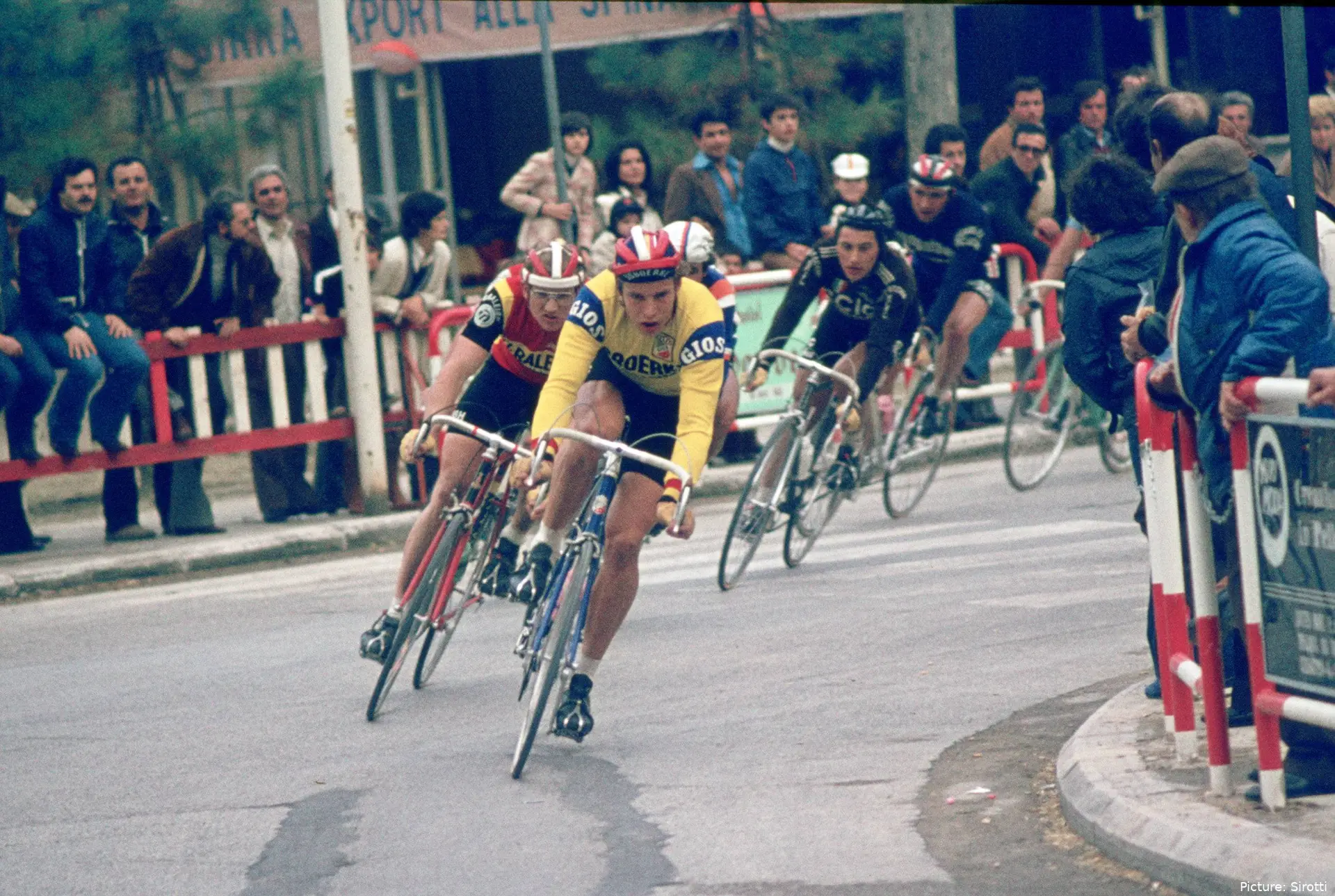
Our Cycling Legends series continues with Jan Raas, one of the defining riders of Dutch cycling’s golden era. A tactician with a fast sprint and an instinct for the decisive moment, Raas won the 1979 world road title, four monuments, five editions of the Amstel Gold Race and ten stages of the Tour de France. His story also includes a disputed rainbow jersey, a bitter split from mentor Peter Post, a career-ending crash, and a second life as one of the sport’s most influential team managers.
Jan Raas and Peter Post: from Zeeland amateur to TI-Raleigh leader
Jan Raas was born in Heinkenszand, in the Dutch province of Zeeland. He played football before taking up cycling as a teenager, after his brother-in-law Cees introduced him to a racing bike. Raas joined the local Theo Middelkamp club and quickly made his mark as an amateur, winning the Dutch amateur road championship in 1974 and stages of Olympia’s Tour. Peter Post, manager of TI-Raleigh, signed him for the 1975 season.
The move did not bring instant success. Raas rode for TI-Raleigh in 1975 and 1976, then switched to Frisol-Gazelle after he and Post disagreed about his role in the team. Raas wanted the chance to race for himself. At Frisol, he made his case in the biggest possible way, winning Milan-Sanremo and the Amstel Gold Race in 1977. When the team folded, he returned to TI-Raleigh the following year.
The partnership brought a remarkable run of victories, though it would not last. Raas was not shy about what drove him. “Money was never my motivation; I always wanted to win,” he said in an interview to wielersportinfo. It was a concise description of the rider who could turn a tactical opportunity into a decisive move.
| Race | Raas’ wins | Defining detail |
| UCI Road World Championships | 1979 | Beat Dietrich “Didi” Thurau in the sprint in Valkenburg |
| Amstel Gold Race | 1977, 1978, 1979, 1980, 1982 | Five wins, including four consecutive victories |
| Milan-Sanremo | 1977 | Attacked on Capo Berta; Roger De Vlaeminck was second |
| Tour of Flanders | 1979, 1983 | In 1983, attacked alone with about 20 kilometres remaining |
| Paris-Roubaix | 1982 | Won solo, 16 seconds ahead of Yvon Bertin |
| Tour de France stages | From 1977 to 1984 | Wins across six editions; he also wore yellow in 1978 |
| Dutch road championship | 1976, 1983, 1984 | National champion three times |
| Paris-Tours | 1978, 1981 | Two wins in the French autumn classic |
Raas’ record belongs above all to the one-day races. He never won a Grand Tour overall, and the Tour de France was the only one where he claimed stage victories. Ten times he found a way to win, often through a combination of timing, nerve and a fast finish.

Jan Raas is about to start the ITT at the Kelvinator Grand Prix
Francesco Moser and the five Amstel Gold Race victories
The Amstel Gold Race became Raas’ signature event. He won in 1977, 1978, 1979 and 1980, then returned to the top in 1982. Four consecutive victories remain a remarkable achievement in a race where positioning and judgement on the short Limburg climbs matter as much as raw power.
The wins came in different ways. In 1978, Raas broke clear and finished alone, more than a minute ahead of Francesco Moser. A year later, he helped shape a breakaway with Henk Lubberding and Sven-Ake Nilsson before going clear near the finish. In 1980, he beat Fons De Wolf and Sean Kelly in a sprint.
His streak ended in 1981, when Bernard Hinault beat him with a perfectly timed sprint. Raas returned the next year and won for a fifth time, beating Stephen Roche in the sprint, with Gregor Braun third. Five victories remain the race record. The UCI has described the qualities behind his success as speed, tactical sense and an ability to handle short climbs - a fitting summary of the rider who made the race his own.
Roger De Vlaeminck and the cobbled Monuments
Raas’ 1977 Milan-Sanremo was his breakthrough Monument. At 24, riding for Frisol-Gazelle, he attacked on the Capo Berta and stayed clear in the final kilometres. Roger De Vlaeminck finished three seconds behind, with Raas’ teammate Wilfried Wesemael third. The win announced that the Dutchman could beat the established stars on the biggest one-day stages.
Two years later he added the Tour of Flanders, finishing more than a minute ahead of Marc Demeyer. He won it again in 1983 after a long solo attack.
Paris-Roubaix came in 1982, after several attempts. With nine riders still in contention late in the race, TI-Raleigh sent Ludo Peeters up the road. When that move was brought back, Raas counterattacked and reached the Roubaix velodrome alone. Yvon Bertin finished 16 seconds behind.
His other major wins included Gent-Wevelgem and Omloop Het Volk in 1981, the E3 Prijs Harelbeke three times, Paris-Brussels in 1978, and Paris-Tours in 1978 and 1981. Raas was a classics specialist: he read the race, made rivals respond and kept enough speed for the finish.
Dietrich Thurau and the Valkenburg world title
The 1979 World Championships on home roads in Valkenburg was the most defining and most contested victory of Raas’ career. He beat West German rider Dietrich Thurau in the sprint to take the rainbow jersey. Henk Lubberding was among the Dutch teammates who had worked for him.
Raas had made his ambition plain a year earlier, after Gerrie Knetemann won the world title. “Next year, it’ll be my turn,” he reportedly said to sportgeschiedenis. In Valkenburg, he delivered on that promise, though the victory came amid controversy. Television images showed teammates pushing him on the Cauberg, prompting complaints from rival teams and criticism in the press. There was also debate over the collision involving Italian Giovanni Battaglin in the closing meters. The jury reviewed the incident, and Raas kept the title.
He refused to speak to Dutch television immediately after the finish, angry at the way the pushing had been shown. Four days later, however, the programme Sportpanorama interviewed him as the newly crowned world champion.
The doubts did not disappear. In 1986, Raas was reported to have told journalist Bert Wagendorp: “In the past fifteen years, only one professional became world champion purely on sporting merit: Joop Zoetemelk.” It was a striking comment from a rider whose own title had been questioned. It also showed how complicated the subject remained, even years after the race.

Jan Raas racing against the clock in the ITT of the 1979 Kelvinator Grand Prix
Klaus-Peter Thaler and ten Tour de France stage wins
Raas won ten Tour de France stages between 1977 and 1984. He was a stage hunter rather than a contender for the overall classification, and his victories came in different situations, from bunch sprints to attacks and short time trials.
His first came in 1977, on stage six from Bordeaux to Limoges, where he finished ten seconds ahead of Klaus-Peter Thaler. The 1978 Tour brought his most memorable opening week. Raas won the prologue in Leiden, but the organisers cancelled the result because heavy rain had made conditions unsafe. He was furious at losing the chance to wear yellow. The next day, he won the stage to Sint Willebrord by one second and took the jersey anyway. He wore yellow for three days, then won the stage from Épernay to Senlis later in the race.
The episode captured Raas’ competitive temperament: frustration could quickly become fuel. In a post-stage radio interview after his 1977 Limoges win, he put it simply: “You also need a little bit of luck.”
His other stage wins came in 1979, 1980, 1982 and 1984. On the 1982 stage around Lille, which crossed the cobbles of the “Hell of the North”, Raas attacked rather than rely on his sprint. His tenth and final Tour stage came in Bordeaux in 1984, making him the first rider-manager to reach that total.
Bernard Hinault, Stephen Roche and the riders around Jan Raas
Raas’ most prominent rivals included Francesco Moser, Freddy Maertens, Bernard Hinault and Dietrich Thurau. They were sporting rivals, not proof of personal feuds. Moser finished second to him at the 1978 Amstel Gold Race; Hinault beat him in 1981; and Raas beat Thurau for the 1979 rainbow jersey. Stephen Roche was another notable opponent, finishing behind him at the 1982 Amstel.
Roger De Vlaeminck and Hinault were among the major names Raas faced in the cobbled classics, even when team tactics and positioning decided the outcome before a head-to-head sprint.
The Raleigh years were shaped by colleagues as well as rivals. Gerrie Knetemann, Joop Zoetemelk, Cees Priem, Henk Lubberding and Ludo Peeters were among the important riders around him. Knetemann was a contemporary and teammate, while Lubberding was a crucial helper in the 1979 world title. Peter Post was Raas’ mentor in the sporting sense, but their relationship eventually became one of Dutch cycling’s defining team conflicts.
Peter Post and the move to Kwantum
Raas rode for TI-Raleigh in 1975 and 1976, Frisol-Gazelle in 1977, TI-Raleigh again from 1978 through 1983, and Kwantum Hallen-Yoko from 1984. His split with Post at the end of 1983 divided a celebrated team. Raas helped establish the new Kwantum outfit, taking several riders with him. He was a team leader and, increasingly, a manager. The rivalry between the Post and Raas camps continued long after the breakup.
A serious crash at Milan-Sanremo in 1984 marked the beginning of the end of his racing career. He returned to win the Dutch road championship and a Tour de France stage that year, but retired halfway through the 1985 season, aged 32. His move into team management was almost immediate: he became directeur sportif at Kwantum after a change of staff during the spring.
Jelle Nijdam and the Rabobank years
Raas became one of the architects of the Dutch professional team that evolved through sponsors including Superconfex, Buckler, WordPerfect and Novell before becoming Rabobank. He recruited riders, built a development pathway and managed a generation that included Jelle Nijdam, Adrie van der Poel and Jean-Paul van Poppel. When Rabobank became title sponsor in 1996, Raas helped shape an ambitious project at the centre of Dutch cycling.
His departure in 2003 was abrupt and badly damaged his relationship with the sport’s media. He rarely spoke publicly afterwards. When Omroep Zeeland approached him, Raas reportedly replied: “You know I don’t give interviews, and I want to keep it that way.”
In 2009, he did write a short comment for the biography Op z’n Raas, asking Rabobank to leave him alone. He argued that the team had refused to cross the line into risky medical support and that some top riders had turned down offers after learning of its strict anti-doping policy.
That account sits alongside later allegations about doping during the Rabobank years. Former rider Danny Nelissen alleged that Raas had called a meeting at which doping was discussed; other reporting cited anonymous riders who said EPO use began early in the team’s history. Raas gave a different account in a 2021 interview with journalist Maarten Kolsloot.
Read also


He said he recognised the signs when riders arrived at Milan-Sanremo without a preparation race and still performed at the front. “I never believed in fairy tales,” he said. The accounts should be read as competing claims, not as a settled finding of personal guilt or innocence.
Kolsloot’s interview was Raas’ first extensive conversation in eighteen years. It did not make him a regular presence in the media, and it did not undo the silence that had followed his exit from Rabobank.
Raas had already said most of what he needed to say on the road: in the attack on Capo Berta, on the cobbles at Roubaix, and in the sprint for the rainbow jersey. After that, he chose when to speak and, more often, when not to.
Carlos Silva is a writer for CyclingUpToDate.com, where he contributes race reports, interviews, analysis pieces, and live coverage of the international cycling calendar. Holding a degree in Sports from the Jean Piaget Institute, he combines academic knowledge of performance, training, and competition with hands-on journalism experience in professional cycling.
Throughout his career, Carlos has conducted interviews with leading figures in the sport, including Alberto Contador, Joaquim Rodríguez, Óscar Pereiro, João Almeida, Isaac del Toro, Derek Gee, John Degenkolb and Geraint Thomas. These conversations reflect direct engagement with Grand Tour winners, Classics specialists, and emerging talents.
He has provided on-site coverage at major events ranging from the Vuelta a España to the Tour de France, alongside stage races such as Vuelta a Andalucía, Volta ao Algarve, Volta a Portugal and O Gran Camiño. Covering the mythical climbs of the Giro d'Italia remains one of his professional ambitions.
Carlos is responsible for liveblog coverage of all major WorldTour races and beyond, including the Tour de France, Giro d'Italia and Vuelta a España. His reporting integrates verified data from ProCyclingStats to ensure statistical accuracy, contextual depth, and analytical precision.
A lifelong cycling enthusiast, he approaches storytelling across written, photographic, and video formats with a focus on credibility, tactical insight, and informed race interpretation.
claps 2visitors 2
Just in

Popular news
Latest comments
- So far, a good series about riders before my time, even if the text feels AI generated like so much on this site. About the rider, he seems like one of many who are active fan favorites but don’t survive in the stories of cycling, a few decades later - I didn’t really know anything about him and this was a good read, thank you!RidesHills15-11-2026
- A calm, honest documentary, a bit of hagiography but mostly not too much. When he talks about a coffee shop, it aligns with several things in his world - he might want calm, but he does (more than a little bit) have someone near him (his fiancee) who makes sure that things happen the way he expects. Many atheletes have retired only to find out just how much others were taking care of their lives for them. If they work out (I'm old, things happen), I am sure it will take a renegotiation, which is a good thing. I truly enjoyed watching it, seeing him, seeing her, seeing the whole system built around him.RidesHills15-11-2026
- You do? My mother grew up around Bleiburg (Pliberk), across the border in Austria . My grandparents lived close to the train station in Bleiburg, and I spent a lot of the 70s and 80s there. The "Jugo" train of my youth went to Dravograd or Maribor, exotic places (behind the wall) at the time. What a moment that was, the 10 days war of '91 - times sure have changed.RidesHills15-11-2026
- I hope he rides a bitmij15-11-2026
- Greatest athlete this world has ever produced ! LOL ... you definitely are a comdian ! Cycling is so sprecialized and you think he's the greatest athlete ever ! Still laughing !frieders315-11-2026
- b.s. headline. Jonas wasn't told anything, it is just a pundit telling him what to do. the actual article is not even close to the insinuation of the headline.mij15-11-2026
- I think Roglic could have beaten Sepp. not Jonas. I was referring to Sepp.mij15-11-2026
- I'm deeply sick of this guy and his unwillingness to race seriously for more than a month or two. I'll never respect riders who do that. Seixas will be stronger than him next season, and maybe Del Toro as well. I don't even think he'll finish on the podium at any GT where Pogi, Seixas, and Del Toro are racing.megasmacky15-11-2026
- Not a chance in hell.megasmacky15-11-2026
- If you go watch some races from last season other riders that have never caught Jonas...are now catching him. Some are just riding away from him and he can't hold the wheelmd197514-11-2026
Loading
1 Comments