European cycling federation release definitive statement after Ciccone disputes photo finish - "Not a traditional photograph"
Cycling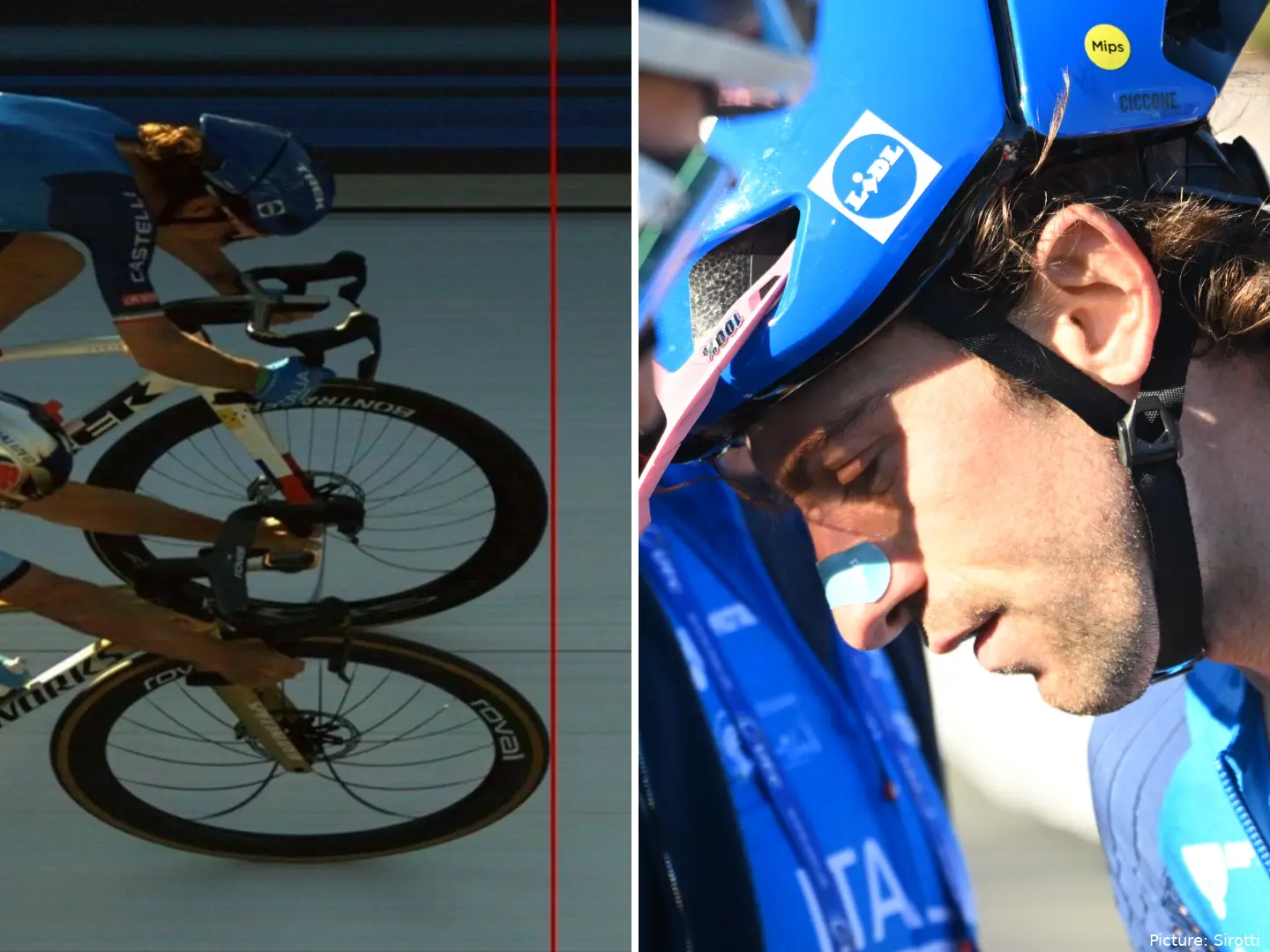
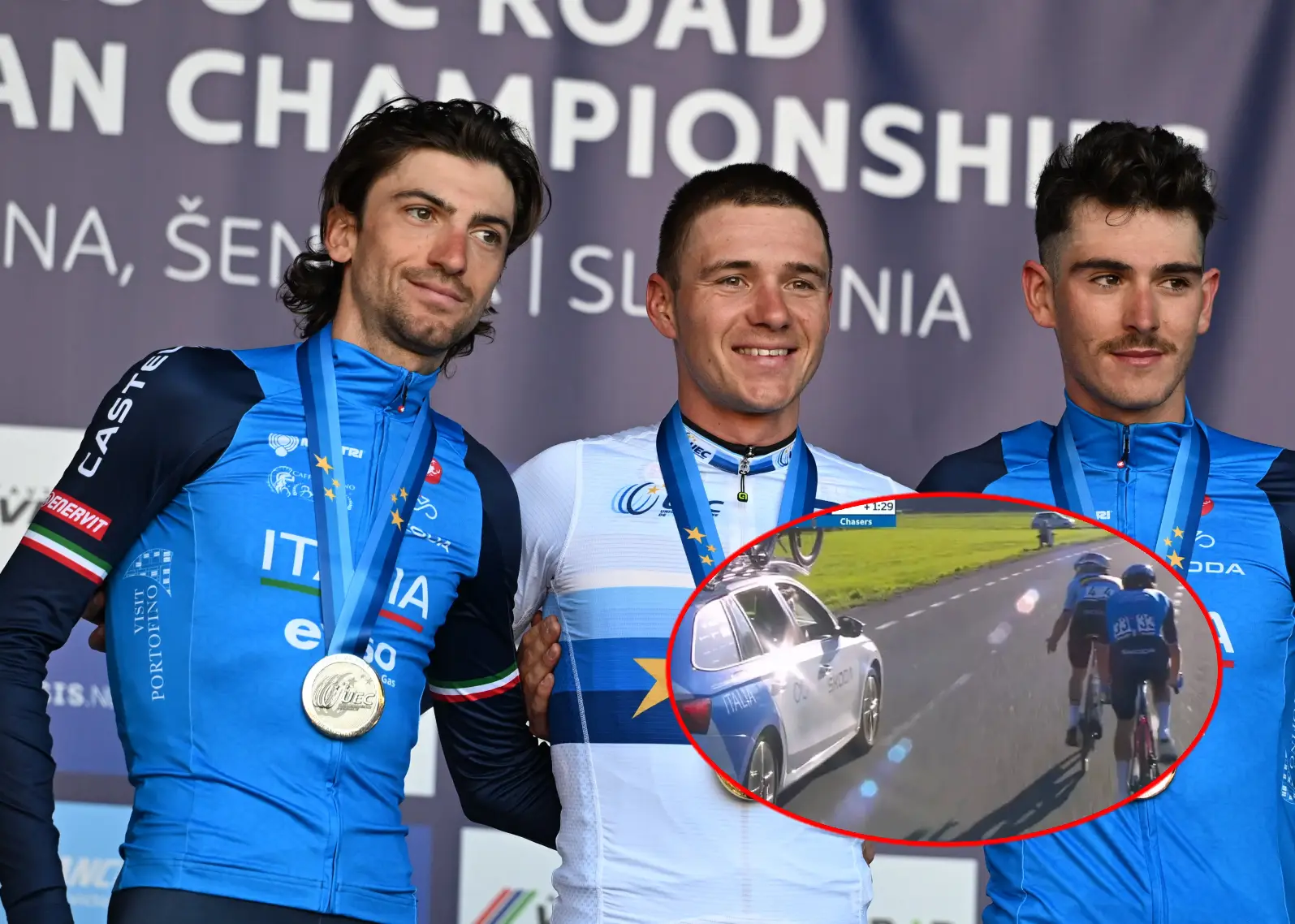
The European cycling federation has released a definitive statement following Giulio Ciccone's questioning of the photo finish at the end of the 2026 European Championships elite men's road race. Remco Evenepoel was awarded the European title in Slovenia in a two-up sprint with the Italian.
After the podium presentation, Ciccone took to Instagram on Monday to question the result, requesting to see a photo from the "real finish line" as he revealed that he cannot accept the result.
Ciccone claimed: “This morning, the race commissioners, together with the federation’s technical staff, explained to me how it works and what criteria were used in interpreting the photo finish.
"So I am not asking for a new explanation. I do, however, ask to see a real photo finish that corresponds exactly to the actual finish line.
He added: “I want to start with something that is beyond dispute for me: Remco was the strongest rider yesterday. He rode like a champion, knew how to read and manage a complex race, and delivered an extraordinary performance. We, all of Italy, tried in every possible way to counter that. I have enormous respect for him; I do not want to call that into question.”

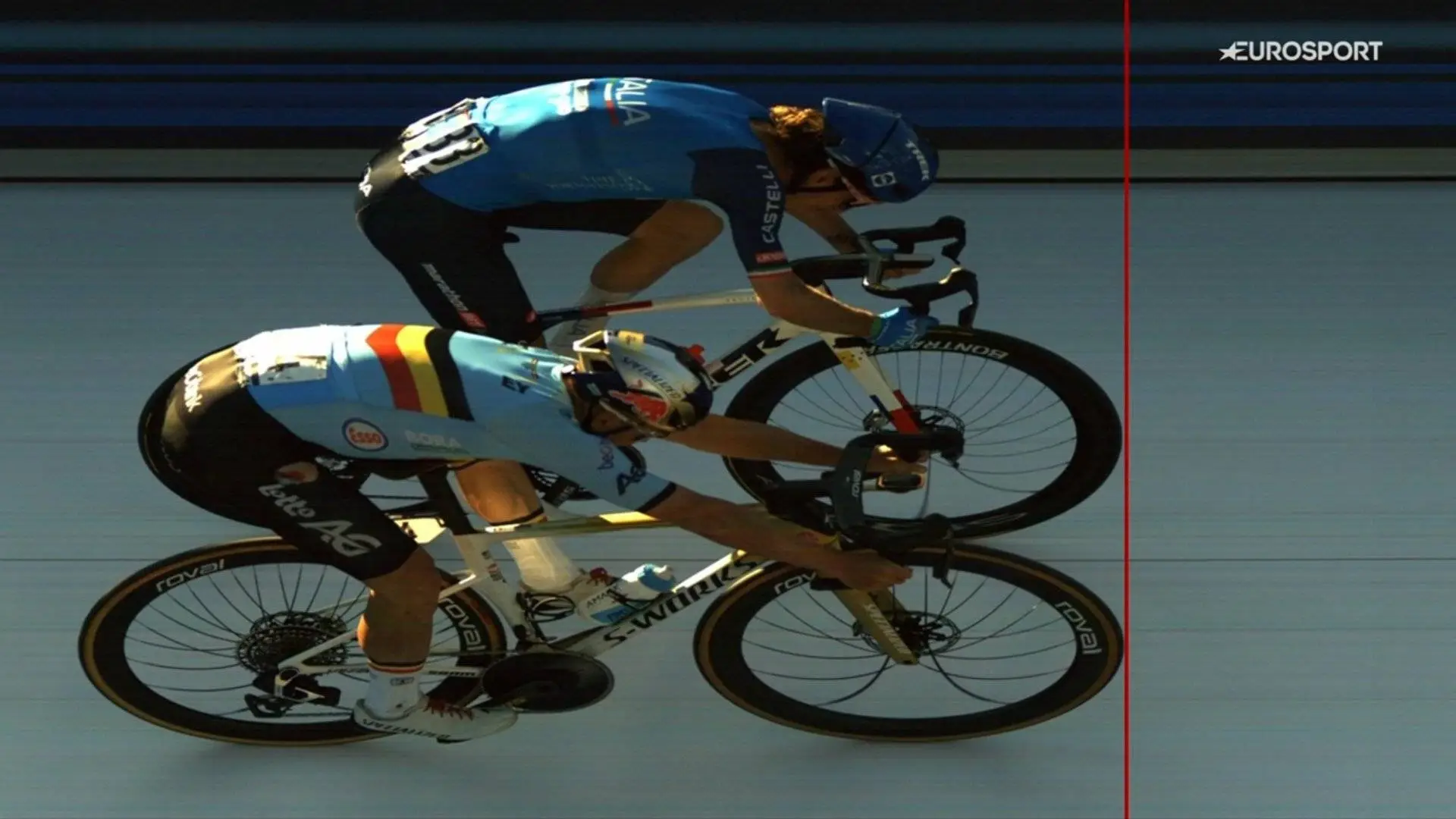
Remco Evenepoel outsprinted Giulio Ciccone in a photo-finish at the European Championships
"I have watched the available footage hundreds of times"
With the pair separated by just millimetres, it took some time before the winner was officially declared.
He added: “The title was decided by a difference of 0.0028 seconds [data states it is 0.00028 seconds, ed.]. That is 2.8 thousandths. I have watched the available footage hundreds of times—the footage where the finish line is visible. I cannot reconcile what I see there with the result.”
On Monday evening, the federation released a statement breaking down the process of how their photo finish system worked. Explaining that apparent discrepencies in the photo, the federation claimed that it can determine a race winner with "extreme precision".
“The photo finish system used at the European Championships records the finish line 13,000 times per second, making it possible to determine the order of finish with extreme precision, even in the case of minimal differences," Union Européenne de Cyclisme (UEC) said in a statement.
Read also
EUC statement on photo finish
In terms of Ciccone's request to see the "real finish line", the federation pointed out that the technology doesn't produce a traditional on the line image.
“It is important to clarify that the photo finish is not a traditional photograph. The final image is composed of the chronological sequence of shots taken at the finish line. For this reason, the horizontal axis represents time and not distance.”
“This can cause apparent distortions of wheels, bicycles, and riders, without in any way affecting the accuracy of the result. In cycling, the decisive reference point is the front part of the front wheel at the exact moment it crosses the finish line.”

Gavin QuinnCycling Journalist
Gavin Quinn is a cycling journalist and ultra-distance cyclist with a BA in Journalism from Dublin City University. Formerly the Press & Communications Officer for Cycling Ireland, Gavin has worked inside the national team at the World Championships and has reported for the Irish Mirror, Mirror UK, and The42.
His expertise is backed by elite-level access, having interviewed stars like Sam Bennett and Ben Healy, as well as immense personal endurance. In 2025, he completed a 12,000km solo cycle from Ireland to Vietnam, following a 4,600km tour across Europe. From the cobbles of Paris-Roubaix to the gradients of the Tourmalet, Gavin’s writing focuses on the "romance and brutality" of the sport. Having visited 50+ countries, he brings a global, cultural perspective to his coverage of the pro peloton for CyclingUpToDate.
claps 0visitors 0
Just in

Popular news
Latest comments
- Yes I follow, but Ciconne is not happy because he can't see the actual line put down on the road. The system is correct and I can understand why he is unhappy. You will have seen it yourself when the broadscaters replay the photo finish, The line on the road is seen.Cyclingsbestfan06-10-2026
- The whole picture (right to left) is the finish line. Imagine it as just a vertical line of pixels at the finish line - photographed 13000 times per second. Then stacked from right to left. Thats why the spokes look so strange. For us not all vertical lines are shown, because everything would be streched quite long - the organizers can zoom in very precisely. They have over 30 lines where Remcos wheel is in the picture and Ciccones is not. In fact - if one person would pass the line at half the speed as the others, he would be stretched to twice the length that the others. Same can be seen at wheels and everything else. I have not seen the race, but from the picture Ciccone seems to have come faster from behind. Because he is "shorter" and his rear wheel passed the line earlier.StefanD06-10-2026
- Was the judge a Belgian like when Tom Pidcock was robbed of Amstel Gold.🤣🤣😅😅😅😅paultryan200206-10-2026
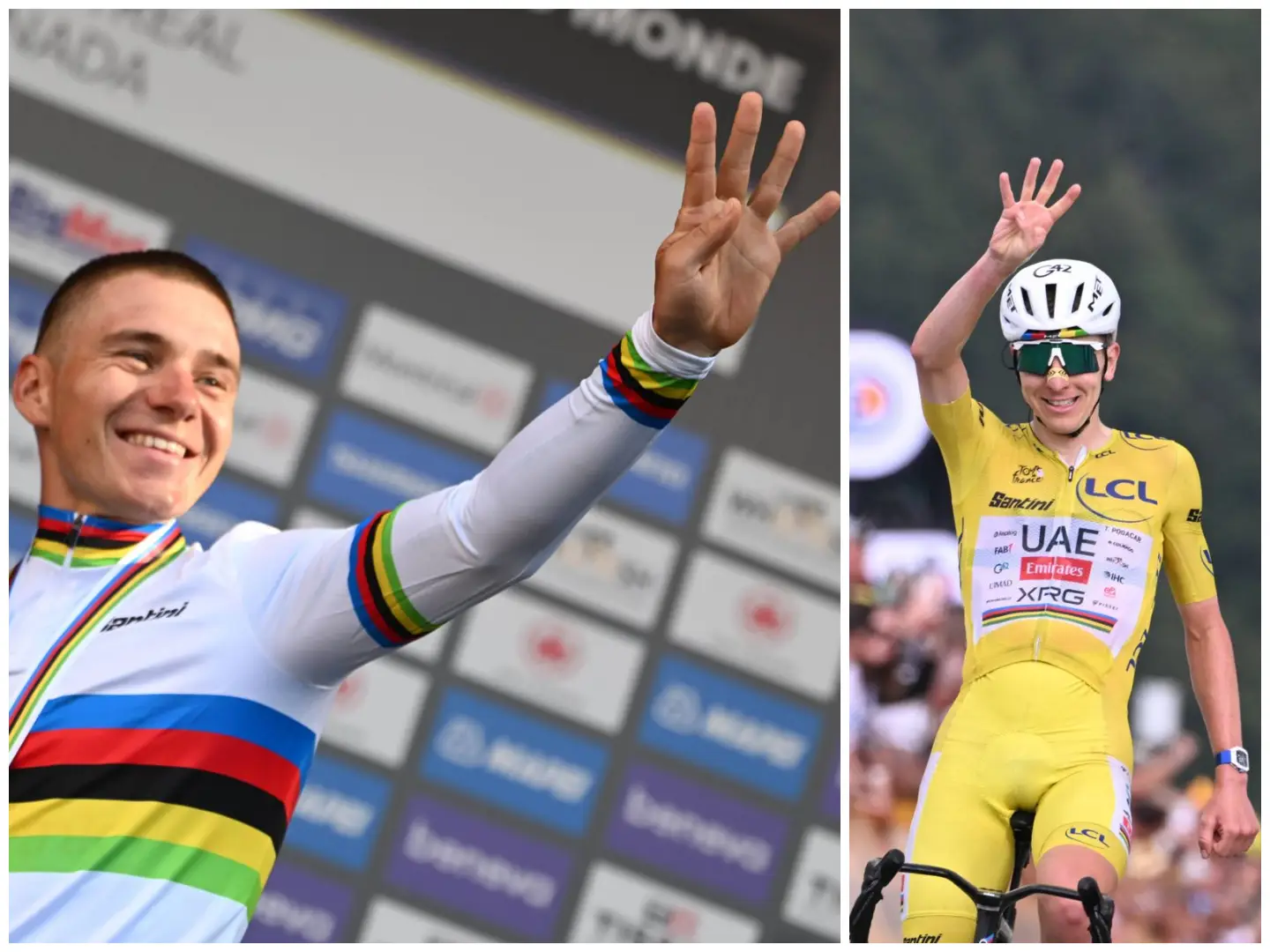
- It would have been Pog 4 TdFs and 1 Giro, and Jonas 3 TdFs, 1 Giro and 1 Vuelta. A rough equivalence, I know, but there would have been much talk of Jonas being as good as Pog in grand tours.Hills3306-10-2026
- Yes, Slovenian Cycling said how devastated they were that Tadej could not take part, as it actually was meant to be a celebration for him. And that was a very low-budget, make-shift appearance. It's not like they hired an open-topped car.Hills3306-10-2026
- TdF GCs: Pog 5, Jonas 2, so no par in your scenario.Lozza06-10-2026
- So in the phot above Remco has clearly won, but Ciccone is saying the actual finish line marking on the ground is not shown. Only that red line? I don't follow the technicalities of why the actual finish line is not seen in the picture?Cyclingsbestfan06-10-2026
- What a d**k! If Pogi hadn’t shown up can you imagine how disappointed the Slovenian fans would have been after the already massive disappointment of his not being able to race?!Lozza06-10-2026
- In the case of the EC, Ciccone was the only other real contender from the top 15 in the WC, and for me his loss to Remco in Quebec showed he lacked the mentality to finish it off. But luck is part of the game, and it's favouring Remco right now. Re others benefiting from Pogi being out of the picture, imagine if Pog had crashed out of the Tour instead. If Jonas had then won, his grand tour record would have been on a par with Pog's. If Remco had beaten Jonas, the sports world would have gone crazy. So much depends on luck. Perhaps a better measure would be the strength of the competition beaten, but nobody seems to be in the mood for that.Hills3306-10-2026
- OK, can I say something? We would not be having these conversations if Pogi was in all the races... the WC and EC. He would have won both of them by a big margin and the only comments would be: "OMG, how boring it was. Pogi is "killing" cycling." ... Capish?PogiSloFans06-10-2026
Loading
4 Comments