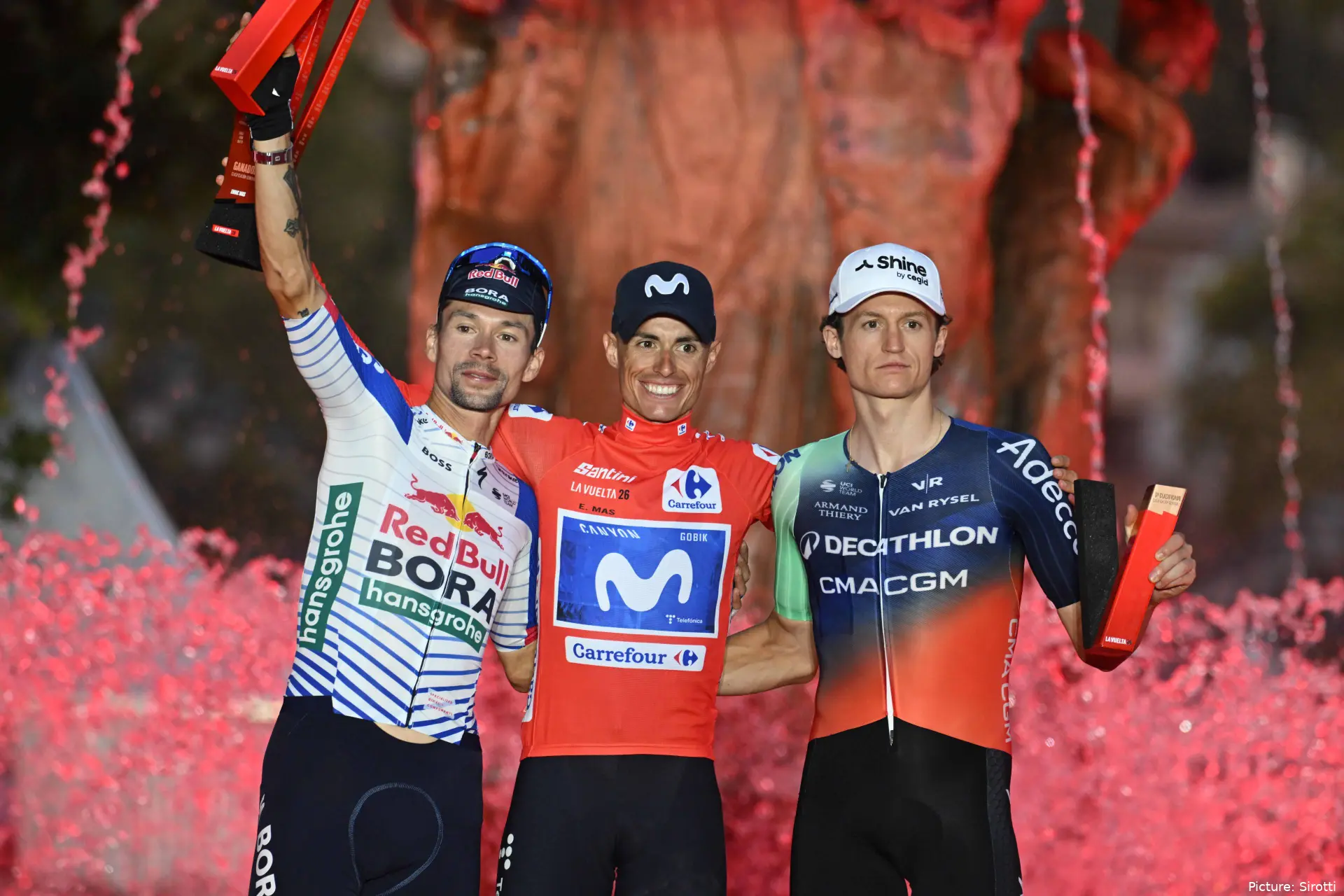
The Vuelta a España has come to an end. On the CyclingUpToDate Podcast, Rúben Silva and Gavin Quinn have analyzed the final week, the brutal overall classification battle and why Enric Mas' victory means so much to the cycling world.
"It's so good to see maybe not one of the top teams on the top podium of a Grand Tour, you know," Quinn argued in what he believed was a breath of fresh air at the Spanish Grand Tour. It's probably been a while since we've had somebody who isn't in UAE, Visma, Red Bull at the top".
At the end of the three weeks, Enric Mas has come out the overall winner, after having featured on the podium four separate times, and finishing second on three occasions before finally conquering the red jersey.
"It's the culmination of a decade of heartbreaks, promising moments, ups and downs for Movistar, for Enric Mas. And it's their home Grand Tour in Spain. The scenes afterwards were unbelievable, you know, Enric Mas jumping onto a crowd of supporters with his friends, his family..."
A deserved victory for Enric Mas
The crowds in Granada roared on for Movistar during the circuit that went up Alhambra, with the GC race neutralized the period to celebrate was extended. But for the 31-year old, the celebration continued after the end of the race.
"And it's so totally deserved from a cycling perspective. Even before Pogacar left the race, he equalled Pogacar on a climb (stage 6, ed.) and I think a lot of people might almost forget that. And yeah, he was excellent in the final week like we predicted he would be".
Mas withstood the many attacks of Enric Mas and the time trial abilities of Primoz Roglic. The Movistar rider was consistent and often the best climber in the Vuelta, earning him an achievement that looked to be past his abilities.
"Movistar's team tactics were also exceptional. I know we're going to go into the stages in a little bit more detail, but they played it perfectly because it's not like there was no challenge from below. Primoz Roglic tried his best from everything from the time trial to the final two mountains".
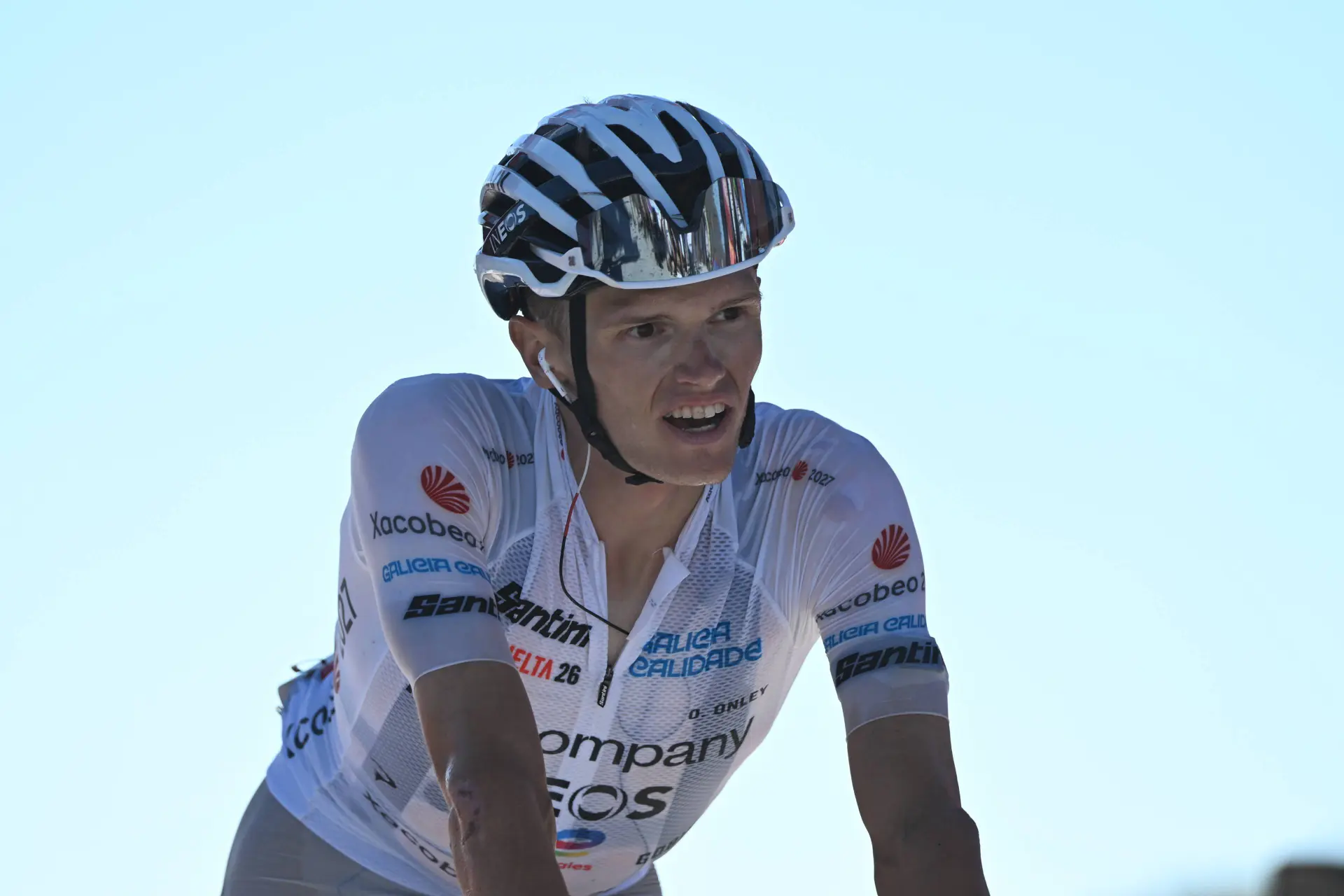
"Felix Gall was probably the strongest climber of the race and he also threatened. Even come the final minutes of stage 20, he was still putting on pressure. Even if it wasn't directly at Enric Mas, he still was".

Enric Mas crosses the line on Stage 20 of the 2026 Vuelta a Espana
A brutal queen stage
Whilst Mas had a lead over Primoz Roglic and Felix Gall into the final competitive stage, the GC win was far from consolidated. Stage 20 featured almost 5000 meters of climbing, most of them packed together in the steep climbs of the Sierra Nevada.
"Each and every one of those four climbs could have decided the race. And they just went all out, up all of them, just every single time. 50 or 60 riders in the breakaway, complete chaos," Rúben Silva pointed out.
The final mountain stage provided action like is rarely seen in professional cycling, with Richard Carapaz attacking all of the ascents in order to try and break into the podium. He did not succeed in his mission, but the race was broken apart on the very first of the four ascents, with no turning back.
Read also
"And there are points in the race where you barely even understood what was going on," he added, with a slight comparison to the chaotic excitement of Paris-Roubaix. The constant emergence of satellite riders and the maximum efforts so far from the finish in such a difficult day proved to be the main challenge for each of the riders.
"And it was just the culmination of a great Grand Tour and a stage that's really like, there's no excuses. You are going to win this Vuelta or finish on the podium if you are excellent, if you are the best at climbing mountains".
Rúben SilvaEditor-in-Chief
A founding contributor to CyclingUpToDate since its launch in January 2022, Ruben Silva has played a central role in shaping the site’s editorial direction and long-term growth. Before joining the project, he built his experience through independent blogging at Echelons Hub and by producing race previews for Ciclismo Internacional, developing a strong analytical voice rooted in daily engagement with professional cycling.
Beyond editorial work, he has been closely involved in the expansion and coordination of CyclingUpToDate’s wider network, helping establish and support sister platforms across multiple languages. This includes ongoing collaboration with CiclismoAlDia (Spanish), CiclismoAtual (Portuguese), WielrennenUpToDate (Dutch), and RadsportAktuell (German), contributing to a shared editorial vision and consistent international coverage.
He also helps oversee editorial governance across the network, setting standards for accuracy and consistency and coordinating updates or corrections when needed.
Originally from the Porto metropolitan area in Portugal, he holds a bachelor’s degree in Geography. His path into cycling journalism was shaped not through formal media training, but through independent reporting, community engagement, and sustained on-the-ground involvement in the sport.
Over the course of his career, he has conducted approximately 100 interviews across road cycling and cyclocross, ranging from one-to-one conversations and online formats to press conferences and on-site pre- and post-race coverage. His interviews include leading riders, team managers, and prominent figures within cycling media: Tadej Pogacar, Jonas Vingegaard, Mathieu van der Poel, Primoz Roglic, Wout van Aert, Joao Almeida and Tom Pidcock; managers like Patrick Lefevere and Joxean Matxin; and YouTube personality Bryan Kennedy (BKXC)...
Within 18 months of launch, he helped grow CyclingUpToDate’s English-language platform into one of the most-read cycling news websites, built entirely from the ground up. As both a professional journalist and lifelong cycling enthusiast, his focus remains on delivering accurate, timely, and well-contextualized coverage.
claps 1visitors 1
Just in
Popular news

Latest comments
- It will absolutely change his tt position. Call me out if I'm wrong, when we start seeing him training on the tt bike, you will see.awp27-10-2026
- please , come on now! The Tour begins July 2, 2027!!! It is still 2026 !!!! Get a hobby or something.dave26-10-2026
- How is this relevant? Perhaps you are doing a Coleridge but not poetic
 Rafionain-Glas26-10-2026
 - Brilliantly putRafionain-Glas26-10-2026
- vingegaard will get humiliated. he might not even make the podium. he should retire, or accept being handed down the ranks.Ketterechts26-10-2026
- Bull crap...his C7 injury won't affect his TT position!frieders326-10-2026
- blah blah blah is all I see in your comment!frieders326-10-2026
- i thought they were cycling journalists. either they don‘t know the basics or they don‘t write their reports. either way suboptimal … it is not an american team anymore!Ketterechts26-10-2026
- Quiz, who said "When I watched the Worlds and the Euros, it made me miss racing of course, but I’d say that the older I get, the easier it becomes to stay away from racing and find other things I enjoy." Clue, not Elie Isabit in the doghouse now for supposing he can second guess MVDP, who has the added complication of women having a say these days in his circumstances, something Fien might have explained to him if he’d bothered asking, hope he doesn’t get a talking to for that. And speaking of that, I noticed he celebrated 10 years together in 2023 and yet in 2017 he was definitely with someone else, could get messy tonight. Bye for nowJumpyjohn26-10-2026
- Wout has the lifetime contract. I think he gets first shot no matter what.mij26-10-2026
Loading
1 Comments