Christian Prudhomme gives "a categoric no" to demands to move Tour de France in the calendar to escape heat waves
Cycling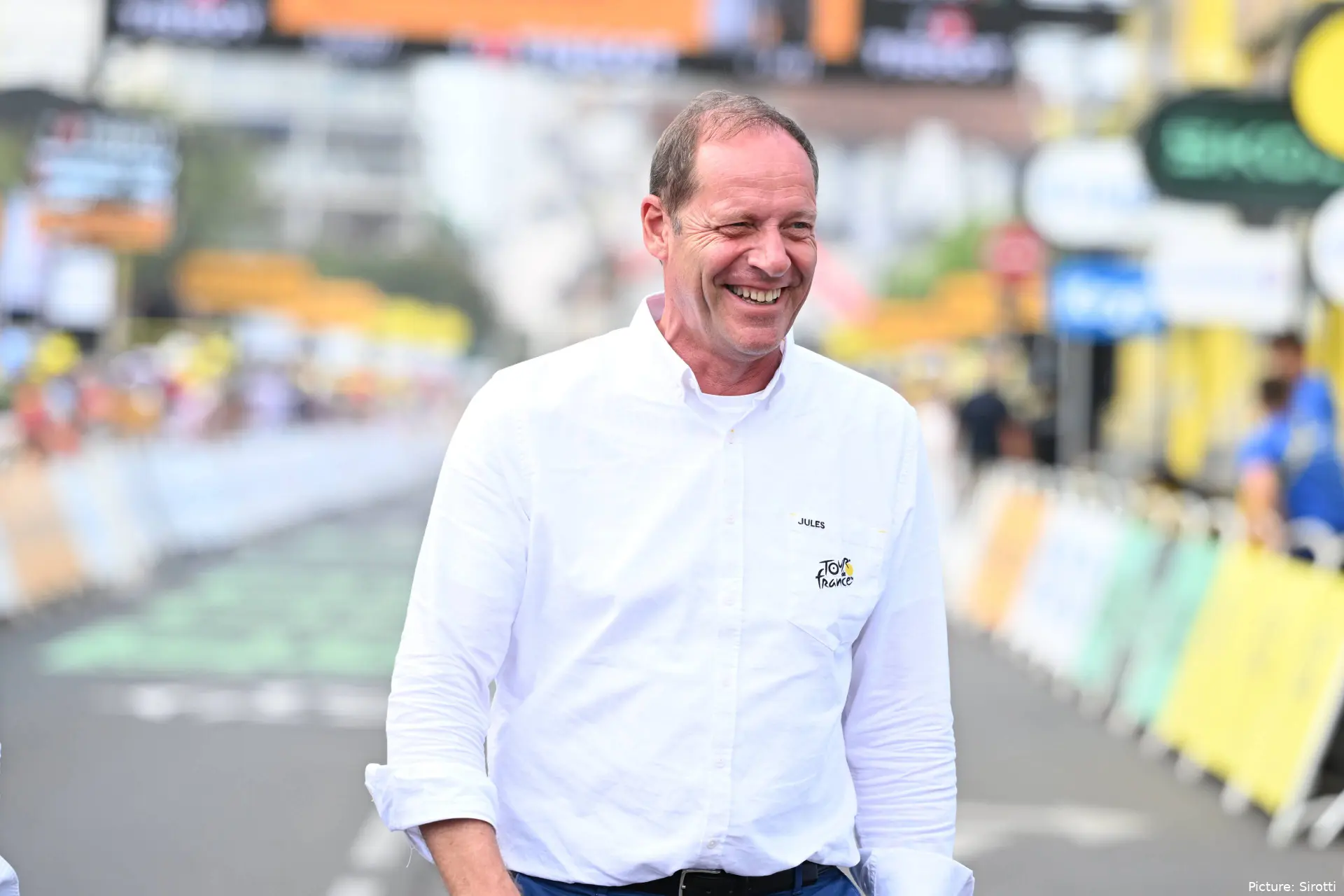
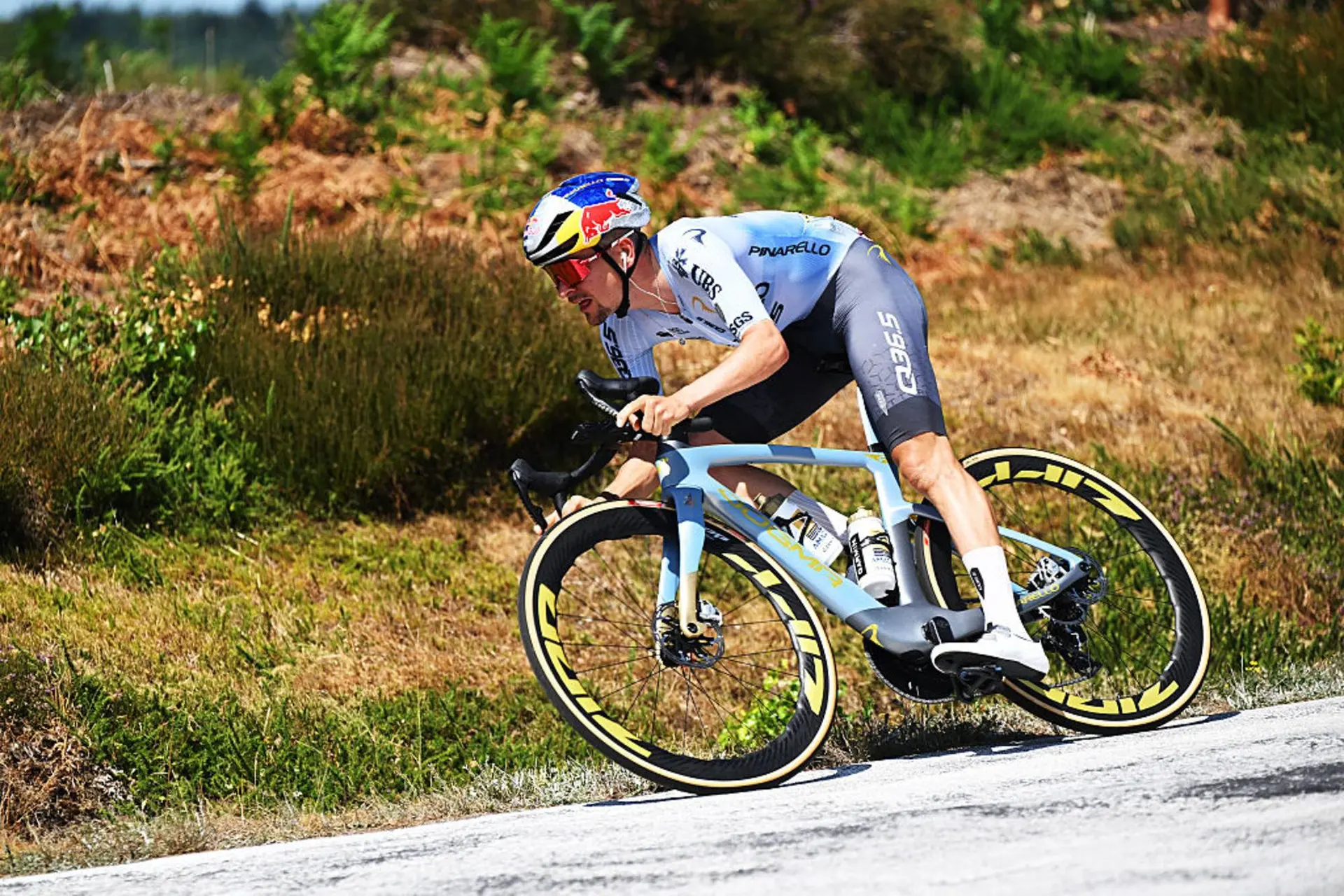
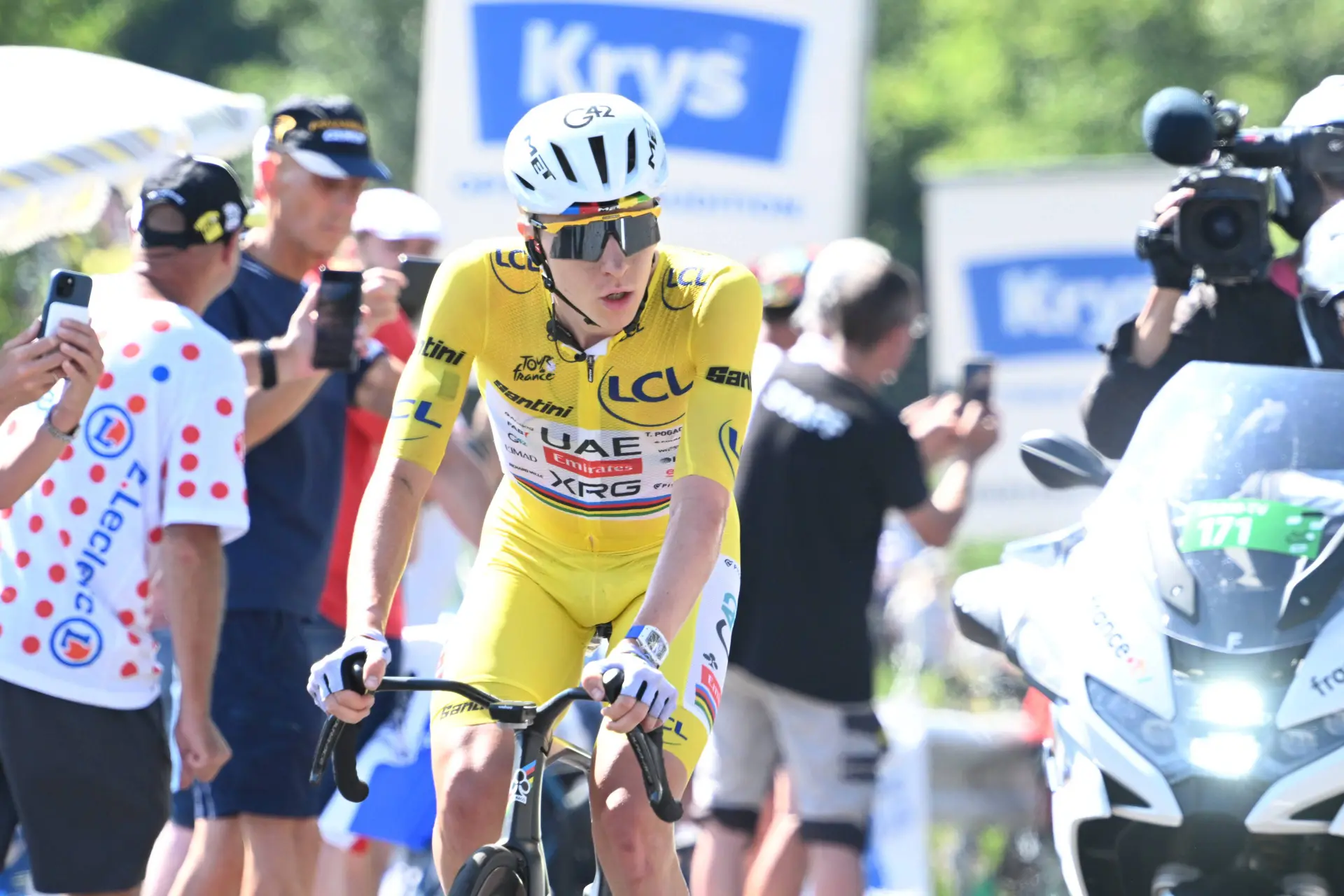
Since its very beginning, the 2026 Tour de France is being struck by intense heat waves. These have caused the shortening of stage 9, for example. The situation has brought back the discussion of whether the Grande Boucle wouldn't be better off taking place at a different part of the year. However Tour director Christian Prudhomme is strictly against moving the Tour alongside its 100-year-long history.
"Of course, there are things that will need to be changed, and no doubt there are things that need improving, but as far as changing the July date is concerned, it’s a categoric no," Prudhomme responded on the Vélo Club show.
First and foremost, Prudhomme outlines the importance of the month of July for the history of Tour de France; across its 113 editions the race has only ever taken place in a different term in post-Covid 2020 edition.
"The Tour de France has been born three times in the month of July. First, when it was founded in 1903, a second time in 1910 with the invention of high-mountain stages in the Pyrenees, and a third time in 1936 with the introduction of paid holidays, when people set off on their bikes along the Tour’s routes – that’s what made the Tour so popular. Climate change is very real, so perhaps one day… But it’s not on the agenda at the moment."
Read also
Overhaul of the calendar simply is not possible
Speaking more broadly on the subject of UCI calendar, Prudhomme admits that he's not perfectly satisfied with its current state. At the same time, he admits that the needed massive overhaul might be an unrealistic task.
"If I could have the power to change it all, I would change all the calendar. I would not race in July and August in the hot places and do a completely different calendar, but that’s something that you need to think through very well. It’s not something I can do."

High temperatures are affecting the Tour de France
Introducing... the morning Tour?
On contrary, looking at where Prudhomme can lead a change is the racing times. One thing he'll look into in the future is moving the stage starts a little earlier to evade racing through the highest temperatures in the afternoon.
"Maybe the next step will be to start earlier the stages," he contemplates. But the change would come with its share of technicalities to solve: "That would mean that all the riders would need to be able to stay within the start area. That’s rarely the case, so it would mean that the start would always have to be in a very large city."
That's not exactly a change Prudhomme is open to making as of now. "The Tour de France features very large cities, medium-sized towns and smaller villages. That’s the very essence of the Tour."
It is in any case quite a fascinating development in the eyes of Prudhomme. It's not so long ago that women have asked the opposite - to have their race starts moved to later times, in particular for the Classics. In particular for events where men's and women's events overlapped.
"We felt the female champions’ requests to have later starts for races such as Flèche Wallonne and Liège-Bastogne-Liège were entirely legitimate, and now we’re being asked to have the men start at a time when the women legitimately no longer wanted to start," Prudhomme said. "These are the kinds of issues that can’t be resolved in the heat of the moment."
Ondrej ZhasilCycling Journalist
Ondřej Zhasil is a cycling journalist at CyclingUpToDate and has been part of the team since 2023. He is based in Ostrava, the third-largest city in the Czech Republic, and covers professional cycling across the main UCI competitions, including the Tour de France, the Giro d’Italia, and La Vuelta a España. A key focus of his work is startlist analysis and pre-race coverage, where he examines team selections, rider line-ups, and tactical scenarios ahead of major events.
Alongside WorldTour coverage, Ondřej has developed specific expertise in junior cycling and in racing across East Asia, including competitions in China and Japan. He also maintains a broad working knowledge of other disciplines and levels, including cyclocross, while continuing to expand his understanding of mountain bike racing.
Ondřej holds a bachelor’s degree in Mathematics and Physics, which supports his analytical, data-driven approach to performance and race analysis. In his reporting, he regularly uses ProCyclingStats for results, statistics, and historical context. He places strong emphasis on careful sourcing, editorial accuracy, and updating articles promptly when new, verified information becomes available.
claps 0visitors 0
Just in
Popular news
Latest comments
- Very surprised del toro couldn't beat everyone here against lesser competition. He's well on his way to being top 5 in the worldbruins3008-10-2026
- Being the best rider left in the race is pretty much the only way to win in any edition, surely? Seems reductive to say "they only won because the entire peloton wasn't as absolutely stacked as it could've been" - you can only beat who is in front of you.wrsty08-10-2026
- I’m sorry but generally the coverage on your site is first class but this incident highlights something I just don’t get with cycling journalism. This accident should never have been allowed to happen, it comes uncomfortably close to the Finlay Tarling tragedy and two other incidents took place within days of this. I checked all of the cycling websites and you all put out basically the same story. Pidcock gave journalists the perfect opening to blow this sky high, what has the UCI got to say? What is Adam Hansen doing? What do the organisers say? Nothing, you all trot out the same easy quotes taken from Pidcocks interview after the race but do nothing to follow it up. I see it time and time again, journalists taking the easy way out but being outraged when it happens again as it surely will. Riders can’t do this but journalists should be independent and should be able to raise these uncomfortable questions but cyclinguptodate and every other on line publication prefer to take the easy way out. That’s the real tragedy here.Paul53108-10-2026
- Happy to help :-)Mistermaumau08-10-2026
- Well, ok but, it’s also a structural, team, budgeting, direction and all sorts of other issueMistermaumau08-10-2026
- I wouldn’t call it an analogy but maybe his criticism is a little unfair. On the other hand, the fact Cicco made a public affair out of it despite having received all the explanations and proof makes me feel he now deserves being criticised for not accepting there is nothing to discuss.Mistermaumau08-10-2026
- Much as I like him (one of my favourites), I do want to attract a little attention to the coincidence of his recent performances in the current context. Not the first time a rider improves noticeably when there’s a job interview to prepare. In the same lighthearted humour of his, i hope the UCI will let him wear it at home as the rules quite strictly state you can only wear it during participation in the discipline you won in, and we all know how capable they are of interpreting rule interpretation ;-) Also, if it’s going to be retirement (please not), I wouldn’t call that an agreement as somebody will probably feel they didn’t get what they wanted.Mistermaumau08-10-2026
- Agreed. There used to be a team willing to pay though. I take all these figures (that vary enormously according to who is publishing) with handfuls of salt. We don’t know how salaries are treated (especially between a UK employer and Andorran resident), we don’t know how numbers are derived and from where, if deductions have been taken into consideration, etc. but if he returns to Colombia, he’s going to need quite a bit in protection money.Mistermaumau08-10-2026
- And another one gone, another one gone, another one bites the dust. Ah gonna get you too…Mistermaumau08-10-2026
- Top marks RidesHills. A great post that sums up exactly Egan Bernals situation.Cyclingsbestfan08-10-2026
Loading
Write a comment