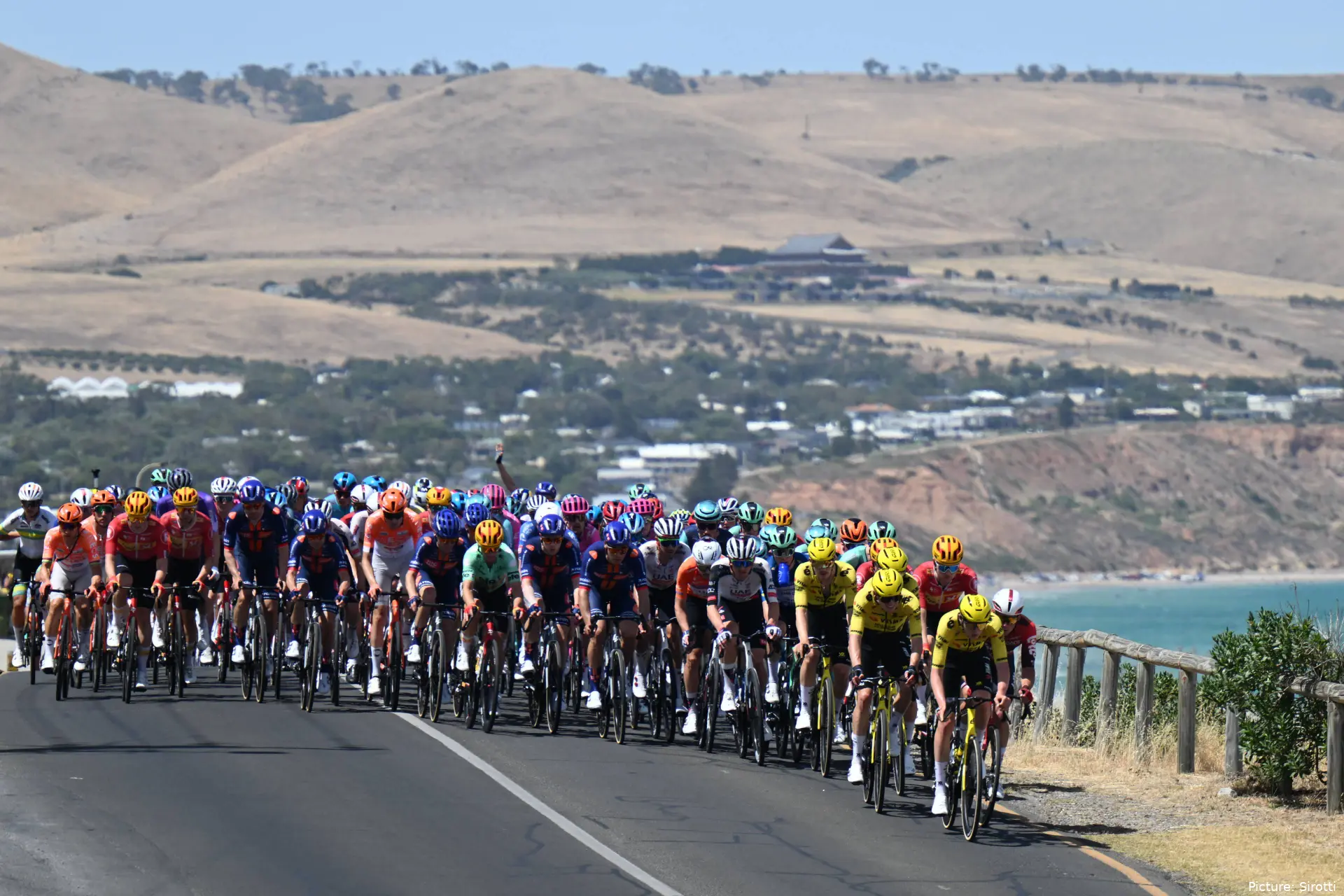
Numbers like these are reshaping how sportsbooks price one-day classics. Major operators have been steadily broadening their cycling coverage since the early 2010s, and Spring Classics are increasingly treated as premium calendar events, with dedicated markets opening weeks before race day and pricing adjusted in near real-time as early-season results come in. That expansion shows in the search activity operators are generating around their promotions; the bet365 promo code is among those appearing in broader sportsbook coverage of the Milan-San Remo and Tour of Flanders market build-up. For anyone who follows professional cycling closely, the early-season results have already given bookmakers and fans alike plenty to work with.
Why the Peloton Has Become a Punter's Playground
The broader picture tells its own story. Americans legally wagered $166.94 billion on sports in 2025, an 11% increase on the previous year, generating a record $16.96 billion in revenue according to the American Gaming Association. Globally, the online gambling market is projected to reach $143.17 billion in 2026, per Research and Markets. Sports betting alone accounted for 56.19% of total online gambling revenue in 2024, according to Grand View Research.
Cycling has carved out its own corner of that growth. In-play betting markets have been expanding cycling coverage since the early 2010s, and the range of wagers available on a single one-day classic today would have seemed unlikely a decade ago. Bettors can now choose from:
- Outright race winner
- Podium and top-five finish markets
- Head-to-head rider matchups
- In-play markets during the race itself
- Stage winner and classification bets in multi-day lead-up events
One-day classics sit in a sweet spot for punters. They're short enough to follow from start to finish, dramatic enough to produce regular upsets and feature a concentrated field of elite riders whose week-to-week form is visible in real time. There's no three-week buffer to absorb a bad day. One race, one result.
The Pogacar-Van der Poel Factor
The rivalry between Pogacar and Mathieu van der Poel has done more for cycling betting interest than any marketing campaign could. Milan-San Remo odds on Oddschecker currently list van der Poel at 19/10 and Pogacar at 21/10, with the next closest rider at 14/1. That gap between the top two and the rest tells you everything about how concentrated the market is.
Van der Poel reinforced his credentials on 10 March, winning Stage 2 of Tirreno-Adriatico after attacking on the gravel in the final eight kilometres. He edged out Isaac del Toro and Giulio Pellizzari in a three-man sprint in San Gimignano. The stage was chaotic; Matteo Jorgenson crashed on the preceding climb, and Thymen Arensman went down heavily, losing his strong position in the general classification.
Here's what makes this rivalry compelling from a betting perspective. Both riders are clearly a level above the field, yet one-day racing has a way of tearing up the formbook. A single crash, a mechanical failure, a missed split in crosswinds; any of these can upend even the shortest-priced favourite. Grand Tour betting gives the strongest rider weeks to recover from a setback. A one-day classic offers no such luxury.
It's worth considering what's happening just below that top tier, too. Paul Seixas, who finished second at Strade Bianche at just 19 years old, averaged around 330 watts over the final two hours, according to ten Dam's analysis. That's the level Pogacar himself held in 2024 and 2025. The talent beneath the headline names is rising fast, and that adds another layer for anyone studying the form book before placing a bet.
Crashes, Cobbles and Why Chaos Sells Tickets
The 2026 spring season has already served up a reminder of how quickly things can go wrong. Jonas Vingegaard began his campaign at Paris-Nice on 8 March and publicly criticised the dangerous road conditions after the opening stage, warning that several riders shared his concerns, as reported by CyclingUpToDate.
At Tirreno-Adriatico, the gravel finale on Stage 2 delivered wet surfaces, crashes and a GC reshuffle. Arensman, who had finished second in the opening time trial, lost his position entirely through a crash rather than a lack of ability. Jorgenson, another GC contender, was also brought down.
This kind of unpredictability is precisely what makes spring classics attractive to sportsbooks. When any favourite can lose through a crash on a wet gravel sector, the odds carry real tension, and that keeps bettors engaged. It explains why major bookmakers now treat races like Milan-San Remo, the Tour of Flanders and Paris-Roubaix as premium events with expanded market offerings. The cobblestones, gravel and narrow roads that define these races also define their appeal to bettors.
With Milan-San Remo on 21 March and the Tour of Flanders on 5 April, both Pogacar and van der Poel are in peak early-season form. The question for anyone placing a bet is whether the favourites can stay upright long enough to deliver on their odds.
The Cobbles Are Calling
The spring classics have always been cycling's most unpredictable spectacle. What's changed in 2026 is that the betting industry has caught on. Record revenues, a generational rivalry between two riders who refuse to share the spotlight and a racing calendar built on chaos have combined to make this the most compelling period for cycling betting in years.
As the cobbled monuments approach over the coming weeks, the markets will only sharpen. The performances at Strade Bianche and Tirreno-Adriatico have set the baseline. The emerging talents, the power data and the ever-present risk of a cobblestone crash will keep bettors and fans alike glued to their screens through April. Could the spring classics, long celebrated as cycling's greatest theatre, become its most popular betting product too?
claps 0visitors 0
Just in
Popular news
Latest comments
- Strade? Never saw him as a gravel rider that can handle it.mij18-10-2026
- It surprises me that anyone still believes any professional (or amateur!) sport is clean--much less wants it to be. The best you can hope for is a reasonably level playing field that doesn't expose young, ambitious athletes to health risks they don't understand. In that regard, World Tour cycling appears to do a better job than almost any sport with independent, random testing. There are certainly fewer mysterious midnight "heart attacks" these days. If you want to see what an uneven playing field looks like, show up to masters nationals. It is also certainly the case that no major pharmaceutical corporation has developed a multi-billion dollar miracle drug just to give it only to one or two anointed ectomorphs in a minor non-revenue sport. If you don't like that all sports run on PEDs these days and you can't be bothered to contribute as a tester, a federation official, or pharmaceutical representative, then just turn off the TV and play outside.
 MarkFour18-10-2026
 - Good grief, who proofreads this stuff? Errors abound.wrsty18-10-2026
- You can add weight to a bike and limit gears or make it single speed if you like. I doubt that would reduce crashes. It would just add another dymanique. All good and well, but It wont stop cars getting on to the course.Cyclingsbestfan18-10-2026
- Seixas is probably second best in the World on short climbs. But that hasn't translated as well to long climbs
 Rafionain-Glas18-10-2026
 - Idiotic fellaRafionain-Glas18-10-2026
- Nothing. Against Pogi nothingabstractengineer18-10-2026
- He didn't even try to sprint all outvappaxbipmv18-10-2026
- Campenaerts looked like a rolling pumpkin with that all orange leaders skinsuit !frieders318-10-2026
- He can take his dumb a$$ politics somehwere else !frieders318-10-2026
Loading