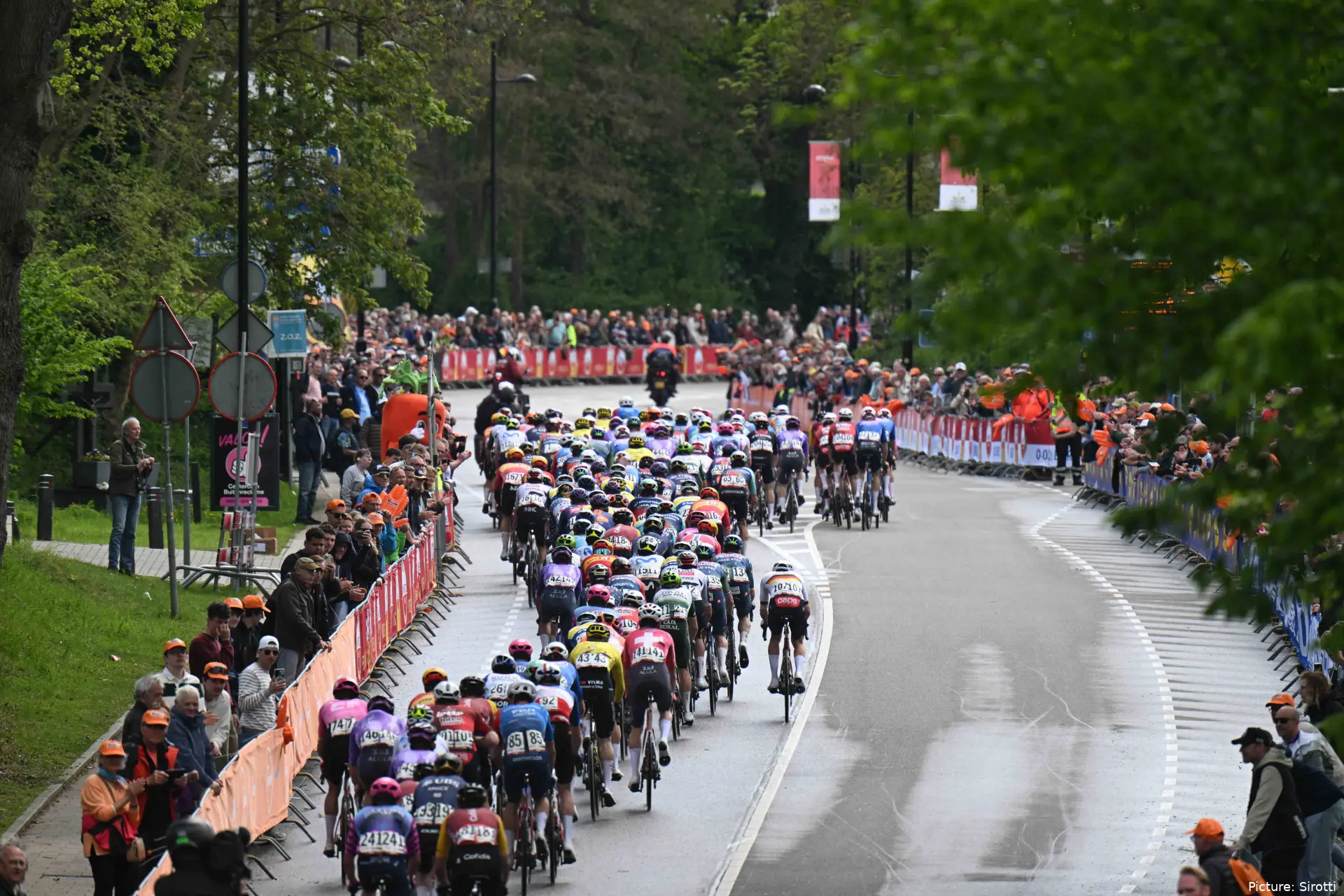
In Denmark, cycling is woven into everyday life and professional sport, so major races attract interest that extends beyond dedicated fans.
According to the Danish Road Directorate's Centre for Cycling Knowledge, cycling accounted for 13% of all trips nationwide on average between 2022 and 2024, highlighting how deeply bicycles are integrated into everyday transportation.
Palpably, you can see this connection in the country's cycling infrastructure and its enthusiasm for elite competitors who represent Denmark on the international stage.
So, when the Tour de France begins, or a Danish rider challenges for a prestigious title, the competition becomes a shared talking point that connects sporting achievement with national pride and gives fans plenty to discuss.
Sports betting with Danish providers and the local sporting audience
If you are exploring sports betting with Danish providers, understanding the country's regulatory framework is a useful starting point.
The Danish Gambling Authority oversees licensed betting operators and establishes requirements for businesses offering regulated gambling services in Denmark; these rules cover areas such as player protection and responsible gambling, giving consumers a framework for assessing licensed operators.
Feasibly, you can check an operator's licensing status before considering its markets for major cycling events, as regulatory oversight provides an important safeguard.
Meanwhile, cycling also offers a variety of betting markets that reflect the sport's tactical complexity.
You can bet on the overall race winner, individual stage winners, points classifications or head-to-head contests between riders.
Ultimately, each option requires a different assessment of the competition, as a sprinter's strengths on flat roads differ considerably from a climber's abilities on steep mountain finishes.
Overall, understanding these distinctions helps you evaluate a market in context and gives you a more informed basis for following the odds.
Danish champions and the psychology of national support
Denmark's recent success in professional cycling has strengthened its connection with the sport's biggest competitions.
For example, Jonas Vingegaard won the Tour de France in 2022 and 2023, giving Danish supporters a compelling figure to follow in one of cycling's most prestigious events.
Also, the country also hosted the opening three stages of the 2022 Tour, bringing the race directly to Danish roads.
Overall, these achievements demonstrate how international success and memorable sporting occasions can reinforce public enthusiasm for cycling; when a Danish rider competes for a major title, you might find yourself paying closer attention to their chances and interpreting every promising performance as a sign of future success.
Familiarity with a rider's strengths can help you assess their prospects, but national pride can also cloud your judgment; so, you could overestimate a favorite's chances after an impressive stage or overlook signs of fatigue.
As a general rule of thumb, separating your emotional investment from the available evidence helps you evaluate a contest with greater discipline.
Reading race dynamics beyond the headline favorites
Major cycling races reward detailed observation, where the strongest rider does not necessarily win every stage.
So, if you follow a race closely, pay attention to course profiles, weather conditions, team tactics and the timing of attacks.
In illustration, crosswinds can split the peloton and steep climbs can expose weaknesses, so a rider who looks comfortable early in a stage could face a very different challenge later; these variables help explain why betting odds change as the competitive picture develops.
Team strategy also deserves your attention, as an individual rider's ability tells only part of the story, where a potential stage winner could spend the day protecting a teammate's overall lead or supporting a designated sprinter, changing their prospects of securing an individual result.
Ultimately, when you assess a betting market, consider the rider's responsibilities alongside recent performances and course suitability; even a well-informed prediction remains uncertain, as teams can change their plans in response to unexpected developments.
How live racing changes betting decisions
Live betting adds another dimension to major cycling events, as odds respond to developments throughout a stage, where a breakaway could gain enough time to threaten the favorites, or a mechanical problem could disrupt a contender's plans.
Crashes and shifting alliances also change the competitive picture, so bookmakers continually reassess the likely outcomes.
So, if you follow the action in real time, you can see how sporting events influence the markets and why prices sometimes move dramatically within a short period.
However, quick decisions are not necessarily informed decisions, as television coverage does not always reveal every tactical detail.
For example, a rider who appears strong early in a stage could struggle later, and an attack that looks promising could form part of a wider team strategy.
You should also remember that other market participants are reacting to the same developments, so spotting a change does not automatically create a profitable opportunity.
Meanwhile, setting a spending limit before racing begins helps you keep the excitement under control.
Cycling data, informed predictions and responsible participation
Cycling analysis gives you several ways to compare competitors before placing a wager: recent results, elevation profiles, time gaps and performances on particular terrain can help you assess how a rider matches up against the field.
Sprint statistics could prove useful before a flat stage, whereas climbing performances provide more relevant context for a demanding mountain finish.
Overall, by connecting these details with the race's likely demands, you can develop a clearer view of the factors influencing each market; however, historical results cannot guarantee future success, as illness, fatigue, mechanical failures and team priorities can change a rider's prospects.
Typically, you should also recognize that informed analysis does not eliminate the bookmaker's margin or make betting a reliable source of income - treat wagers as entertainment and set limits that fit your budget, so an unsuccessful prediction does not encourage you to chase losses.
Fortunately, if gambling becomes difficult to control, Denmark offers support resources through its gambling authorities and specialist services.
Passion creates interest
Denmark's cycling culture provides a natural foundation for following major races with enthusiasm and detailed knowledge, where everyday cycling, internationally successful competitors and events such as the 2022 Tour de France Grand Départ connect professional racing with a broad audience.
If you follow the sport, this background gives you plenty to explore, from the tactical demands of a mountain stage to the pressure facing a rider who hopes to defend an overall lead, with that interest also explaining the appeal of cycling-related betting markets.
Ultimately, your understanding of cycling can make watching a race more rewarding and help you interpret betting markets with greater care.
But, recognizing the difference between a climber and a sprinter gives you useful context, while attention to team tactics helps explain why individual results can defy expectations.
Still, no amount of sporting knowledge removes uncertainty or guarantees a winning wager.
Undoubtedly, Denmark's cycling heritage gives fans plenty to analyze, with the unpredictable nature of racing remaining a defining part of its appeal.
Rúben SilvaEditor-in-Chief
A founding contributor to CyclingUpToDate since its launch in January 2022, Ruben Silva has played a central role in shaping the site’s editorial direction and long-term growth. Before joining the project, he built his experience through independent blogging at Echelons Hub and by producing race previews for Ciclismo Internacional, developing a strong analytical voice rooted in daily engagement with professional cycling.
Beyond editorial work, he has been closely involved in the expansion and coordination of CyclingUpToDate’s wider network, helping establish and support sister platforms across multiple languages. This includes ongoing collaboration with CiclismoAlDia (Spanish), CiclismoAtual (Portuguese), WielrennenUpToDate (Dutch), and RadsportAktuell (German), contributing to a shared editorial vision and consistent international coverage.
He also helps oversee editorial governance across the network, setting standards for accuracy and consistency and coordinating updates or corrections when needed.
Originally from the Porto metropolitan area in Portugal, he holds a bachelor’s degree in Geography. His path into cycling journalism was shaped not through formal media training, but through independent reporting, community engagement, and sustained on-the-ground involvement in the sport.
Over the course of his career, he has conducted approximately 100 interviews across road cycling and cyclocross, ranging from one-to-one conversations and online formats to press conferences and on-site pre- and post-race coverage. His interviews include leading riders, team managers, and prominent figures within cycling media: Tadej Pogacar, Jonas Vingegaard, Mathieu van der Poel, Primoz Roglic, Wout van Aert, Joao Almeida and Tom Pidcock; managers like Patrick Lefevere and Joxean Matxin; and YouTube personality Bryan Kennedy (BKXC)...
Within 18 months of launch, he helped grow CyclingUpToDate’s English-language platform into one of the most-read cycling news websites, built entirely from the ground up. As both a professional journalist and lifelong cycling enthusiast, his focus remains on delivering accurate, timely, and well-contextualized coverage.
claps 0visitors 0
Just in
Popular news
Latest comments
- disrespectful thats a joke ...
 Davide20-10-2026
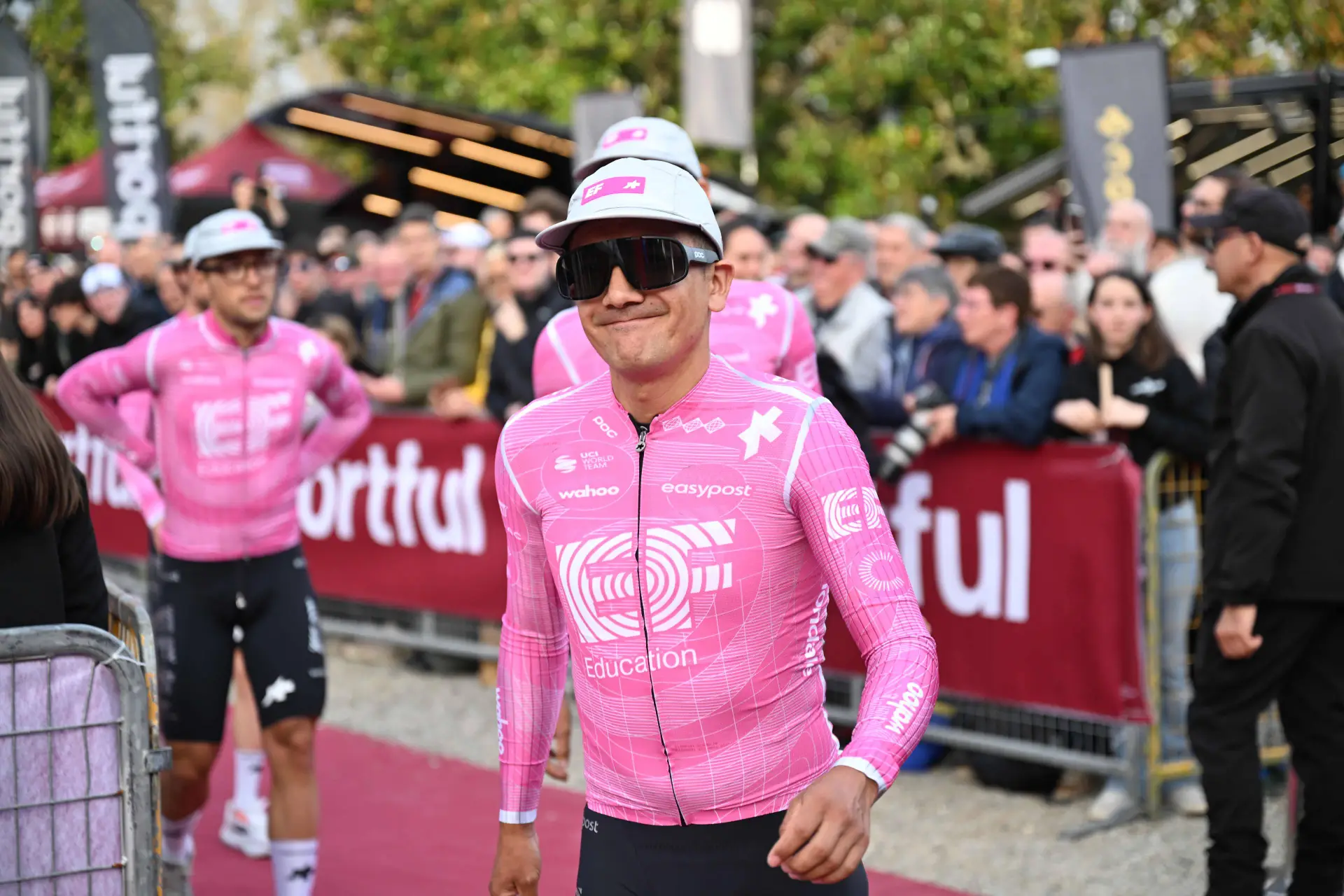
- EF’s “island of misfit toys” squad is probably one of my favorites in the peloton. They are fun to watch, always trying stuff - they ride with heart and panache, and their kits are excellent.wrsty20-10-2026
- 'Children these days'... Wout, since the caveman learned to say "Ug", older generations have always said this about younger generations. Not every young rider is a cowboy. So what's to say that the fact that Poels was respectful meant that his peers were equally so?
 Rafionain-Glas19-10-2026
- "...In a weakened field" Most definitely ! YAWN !frieders319-10-2026
- Noted. But I had to appease his fans.MajorPayne19-10-2026
- I wonder if he'll race Challenge MallorcaRafionain-Glas19-10-2026
- Head to head time-splits: Jay Vine vs Remco Evenepoel: 10.5 km - Vine lost 45 seconds to Evenepoel 34.2 km - Vine lost a further 1:10, and was caught in the vicinity of that checkpoint. Note: I remember Vine getting caught before the second checkpoint, and ProCyclingStats log supports that, however, the gap at the second checkpoint was less than 2 minutes. 45.4 km - Vine lost only 16 seconds Of course, Vine lost less time in the middle section than the early section, but at the final segment rate, he'd have lost 15 seconds in the opening section and and 34 seconds in the middle. It is possible that Vine paced himself very well but that seems unlikely. In comparison with Stefan Küng: Kung lost: 26 seconds at T1. A further 1:11 by T2. A further 40 seconds by the finish. Relative to Evenepoel, Küng did slow down by the end. Maxime Decomble: Lost 47 seconds at T1. A further 1:20 by T2. A further 26 seconds by the finish. Mikkel Bjerg: Lost 37 seconds at T1. A further 1:34 by T2. A further 46 seconds by the finish. It is not concrete evidence that Vine cheated though it certainly doesn't absolve him. However, watching the race, I am 100% sure that Vine did not pull over and follow a different line when Remco passed him. Remco pulled away quite quickly, but the gap did not balloon and Vine definitely got aero assistance.Rafionain-Glas19-10-2026
- That ship has sailed years agovappaxbipmv19-10-2026
- He doesn't have to. I'd be perfectly happy if he loses SB if he then wins everything elsevappaxbipmv19-10-2026
- Please don't put Remco in the same sentence as Tadej. It's disrespectful to Tadej. Please make a note of this.KissinKate19-10-2026
Loading