“You don’t get the feeling that feedback makes a big difference”: Slovenian sprinter calls for public rider protests to drive improvements in cycling safety
Cycling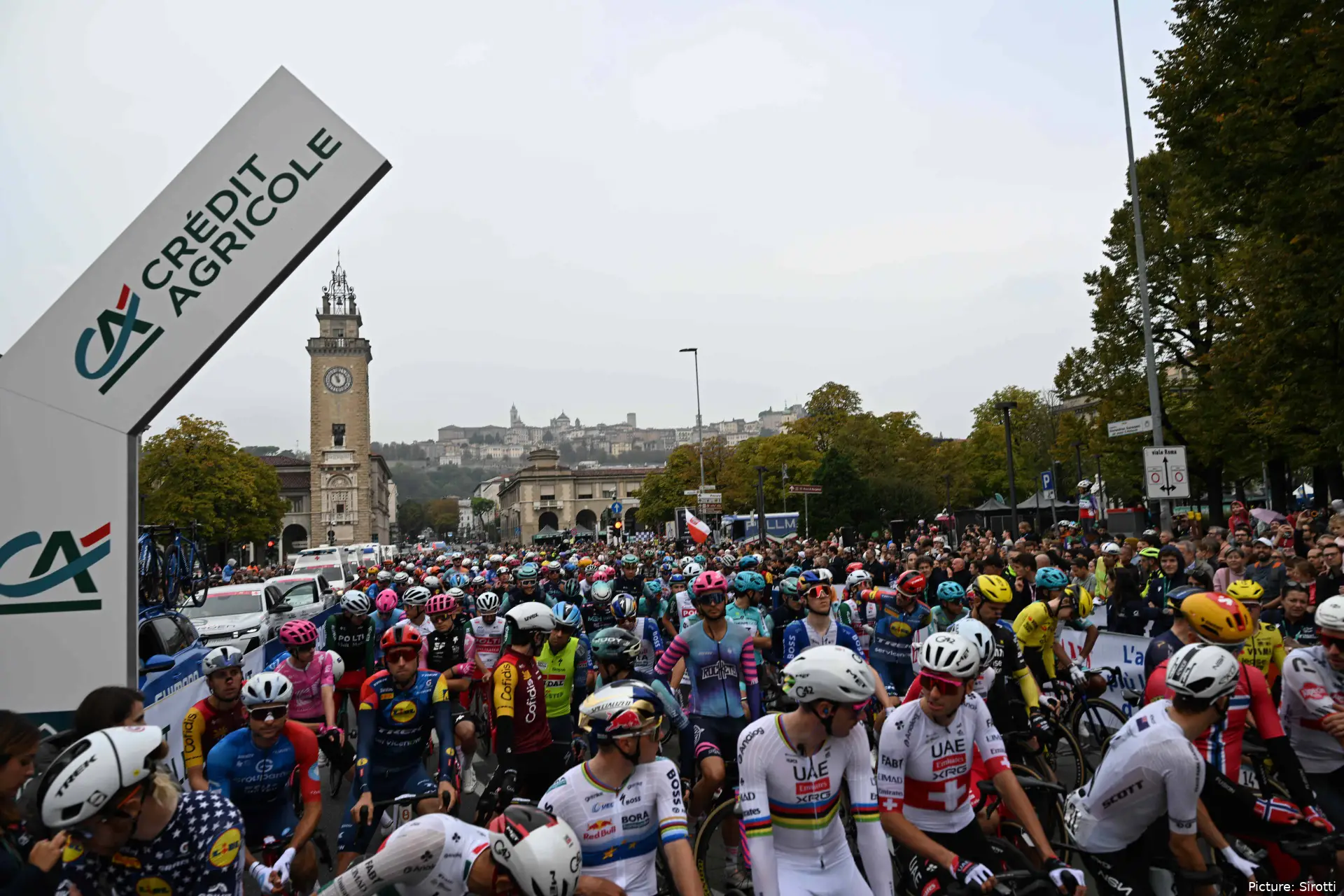
Matevz Govekar believes professional cycling may need more visible demonstrations from riders to push safety concerns higher up the agenda. The Bahrain - Victorious sprinter argues that private feedback does not always translate into meaningful changes, whereas public protests can attract media attention and put pressure on race organizers and the wider sport.
Speaking on the Domestique Hotseat, the Slovenian discussed the five-minute stoppage at Il Lombardia in October, when the peloton refused to begin racing in response to a series of dangerous incidents involving vehicles on race routes.
The protest followed a delivery van entering the course at Coppa Bernocchi and a collision between two riders and a police motorcycle travelling in the opposite direction at Tre Valli Varesine.
The demonstration also came in the wake of the death of 19-year-old Finlay Tarling, who was killed in a collision with a vehicle during the Volta a Portugal in August. At Il Lombardia, Remco Evenepoel addressed the crowd in Bergamo on behalf of the riders, demanding better guarantees that competitors could race without vehicles entering the course.
For Govekar, the incident showed why riders sometimes need to take their concerns beyond the usual channels.
“There are many people trying to improve things who say that cyclists have to be more vocal,” he said. “They want us to be vocal with feedback, but you don’t get the feeling that this feedback actually makes a big difference. When the races are stopped, like it was in Lombardia, there is a bigger media impact behind it. In the end the media has an impact, and that’s how it should be.”

Matevz Govekar won a bunch sprint stage at the 2024 Tour of Britain
Govekar sees public pressure as a possible catalyst for change
The Slovenian is unsure whether the Il Lombardia demonstration will lead to more protests in the future. “Maybe these protests are helping, maybe they are not really,” he said. “If incidents like that keep happening, I can imagine they will continue, and if things get better, they will stop.”
While securing race routes remains a complicated challenge, Govekar also sees potential in improving the protective equipment available to riders. “I’m not saying I would wear knee pads or elbow pads, but the airbags that are starting to be developed could add a big positive benefit,” Govekar said.
The Slovenian compared the possible introduction of airbags with the adoption of helmets, which initially faced resistance from riders before becoming compulsory in professional road racing in 2003.
“Riders didn’t wear helmets because they were hot. Nowadays, when you have a full aero helmet and it’s super hot outside, you feel it’s five degrees hotter inside. Maybe at first there will be races where you say it was unbearable to have an airbag on your jersey. But you need to start somewhere, and then the product will improve.”
Read also
Tour of Guangxi highlights the risks of sprint finishes
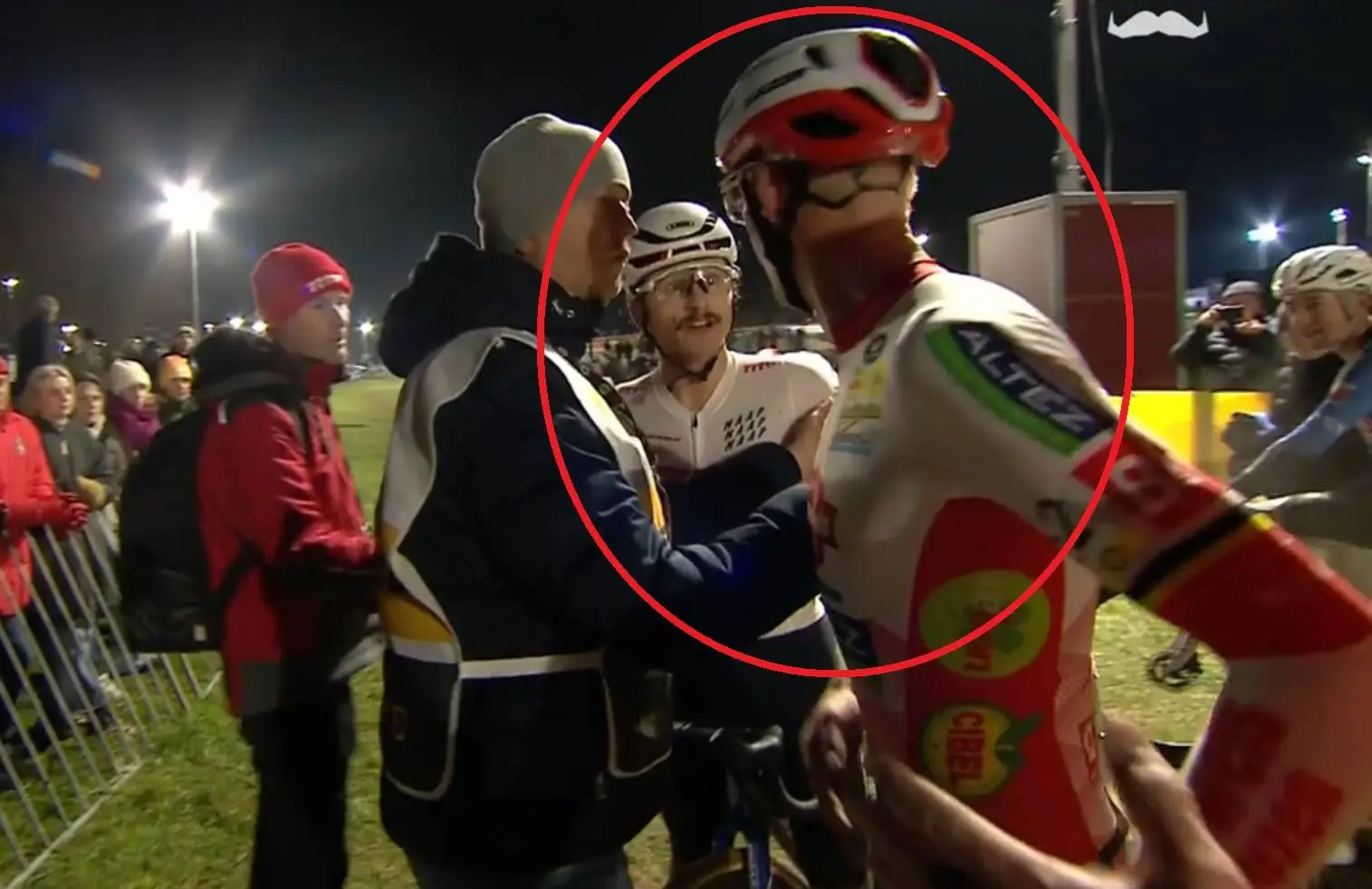
Govekar's experience at the Tour of Guangxi, his final race of the 2026 season, offered another perspective on the issue. He praised the road closures and traffic management in China, but identified the sprint finishes as particularly demanding and dangerous.
“You easily reach 60km/h even without descending,” he said. “These sprints in China are super hectic. You come into the sprint ten guys in one line, and there are quite a lot of elbows.”
Govekar hopes the ongoing debate will lead to gradual improvements across the sport. “There is a lot of discussion going on, and I hope it improves,” he concluded. “It always has to be a process that keeps getting better.”

Félix SernaCycling Journalist
Félix Serna is a writer at CyclingUpToDate and has been part of the team since 2025. He covers professional cycling across both the men’s and women’s calendars, with a focus on UCI rankings, race developments, and rider performance. His work includes interview-based reports, liveblogs, and tournament coverage designed to provide clear, accurate context throughout the season.
In his reporting, Félix regularly uses ProCyclingStats for results, statistics, and historical reference. He places strong emphasis on careful sourcing, editorial accuracy, and updating articles promptly when new, verified information becomes available. He holds a bachelor’s degree in International Studies.
claps 0visitors 0
Just in

Popular news

Latest comments
- On a positive note, you maybe notice turning this topic into a discussion has the benefit of eliminating certain participants who do not see how they can turn it back to their sole interest ;-)Jumpyjohn08-11-2026
- People see what they want to. I am actually the opposite of your accusation, probably more of a rebel than most of you who don’t get the big picture. The difference is, I don’t go moaning publicly about the consequences of my transgressions, I understand the need for rules and I take my OWN responsibility when deciding to ignore or break them or doing so involuntarily. I will also not hesitate to state my case or argue vehemently when relevant, sometimes it works, sometimes it makes things worse but that’s the price to pay for principles and having character.Jumpyjohn08-11-2026
- That may be but that was unknown to others and nothing says that’s the whole truth. Again, don’t try to misinterpret, it is a call and technically it is correct. Besides, even if there is a valid reason, that does not disqualify the ruling or punishment as far as the rules have been developed. I don’t think they’re as far as in football where for handball there is a distinction (in some ways and specific cases) between intentional or not. And football can be just as harsh and people live with it, eg the offside rule, also judged to within tiny fractions but often wrong or ignored. It’s the nature of every collective organisation and sometimes I wonder if our rebellion against it isn’t seated in the feelings we carry from the injustices we’ve felt personally, like being flashed driving 1km/h too fast when we are explained limits are just a security measure but we are absolutely certain not to have endangered anyone with our transgression. The problem is, nobody has better solutions and no 2 people have the same interpretation of where a limit should be.Jumpyjohn08-11-2026
- Because for you deviated implies the other rider MUST have been made to fall and fail to finish ??? I don’t know if you ride a bike but next time someone carves you up or drives dangerously close, just hold back from those feelings of changing something, reporting or filming or even complaining. Everyone will just say, hey you’re still here undamaged, doesn’t seem like anyone did anything.Jumpyjohn08-11-2026
- And we, what are we doing?Jumpyjohn08-11-2026
- And yet, it attracts people, even you. What’s more, it attracts the rival fanboys to fill cyberspace with endless pointless my hero is better than your hero blabla that’s all been heard before and only helps sell the site as an advertising platform. You know what the solution is but most can’t resist. No different than women who follow and discuss celebs through gossip magazines.Jumpyjohn08-11-2026
- he is doing 460 watts for 35 min to achieve 7 w/kg with VO2 at 96 , just unreal numbers.abstractengineer08-11-2026
- Just do it, and put up with the consequencesJumpyjohn08-11-2026
- "was a headliner at the Tour de France" Nobody cared about Piddie. Only rivals that were there for Pogi, Jonas, Remco, Sexias, Lipo, Del Toro and they were all expected to lose. Piddie was not even in any conversation.abstractengineer08-11-2026
- exactly, he had an amazing season, but with these overstatements they don‘t do him good.Ketterechts08-11-2026
Loading
Write a comment