World Championships come full circle - Why Montreal has a unique place in cycling history ahead of men's rainbow jersey race
Cycling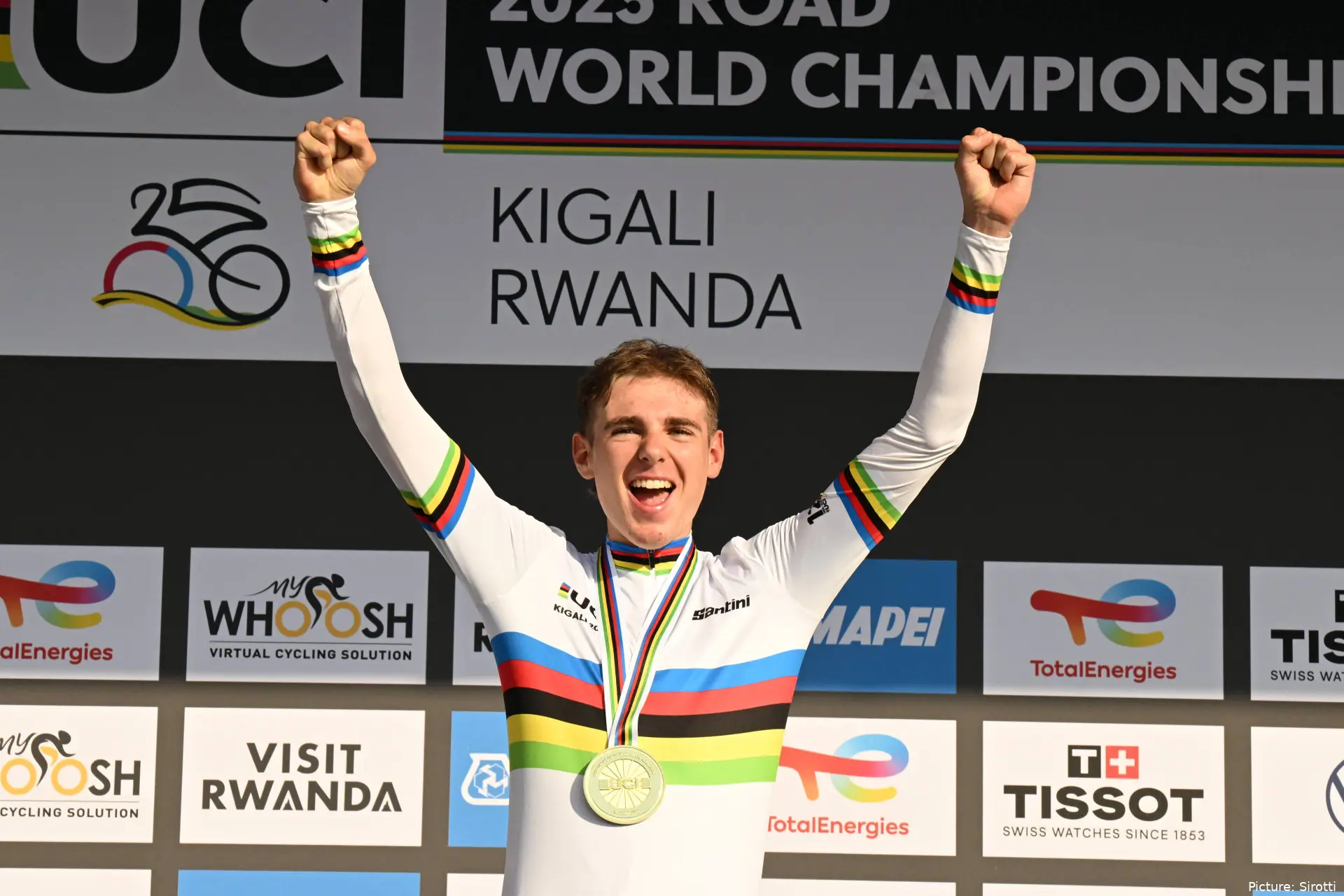
The UCI Road World Championships have historically been closely tied to Europe. From the inaugural edition at Nürburgring in 1927 through much of the 20th century, the rainbow jersey was contested mainly on European roads. There came a moment, however, when the UCI decided to push the championship beyond its borders and take it across the Atlantic for the first time.
That turning point arrived in 1974, when Montréal became the first city outside Europe to host the Road Worlds. Since then, the championship has returned at different times to the Americas, Asia, Oceania and, more recently, Africa, with Kigali as the first African host in 2025. The 2026 edition also marks a return to Montréal, 52 years after that first experience.
In total, before the edition currently underway in Canada, the Road Worlds had ventured outside Europe on eleven occasions: Montréal 1974, San Cristóbal 1977, Colorado Springs 1986, Utsunomiya 1990, Duitama 1995, Hamilton 2003, Melbourne 2010, Richmond 2015, Doha 2016, Wollongong 2022, and Kigali 2025. Each host brought a distinct sporting and geographical context.
The second visit in history to Montréal therefore offers a way to retrace over half a century of global expansion. From Eddy Merckx’s win in Canada to Tadej Pogačar’s triumph in Kigali, with landmark titles for Moreno Argentin, Óscar Freire, Peter Sagan, and Remco Evenepoel along the way, the Worlds have steadily built a broader narrative.
1974: Montréal opens the door to the wider world
The 1974 edition marked a before and after in the Worlds’ history. Montréal was the first host outside Europe, as the UCI took the championship to Canada at a time when international cycling remained deeply rooted on the continent. The chosen stage was Mont Royal, an area that would later grow into one of the city’s major cycling hubs.
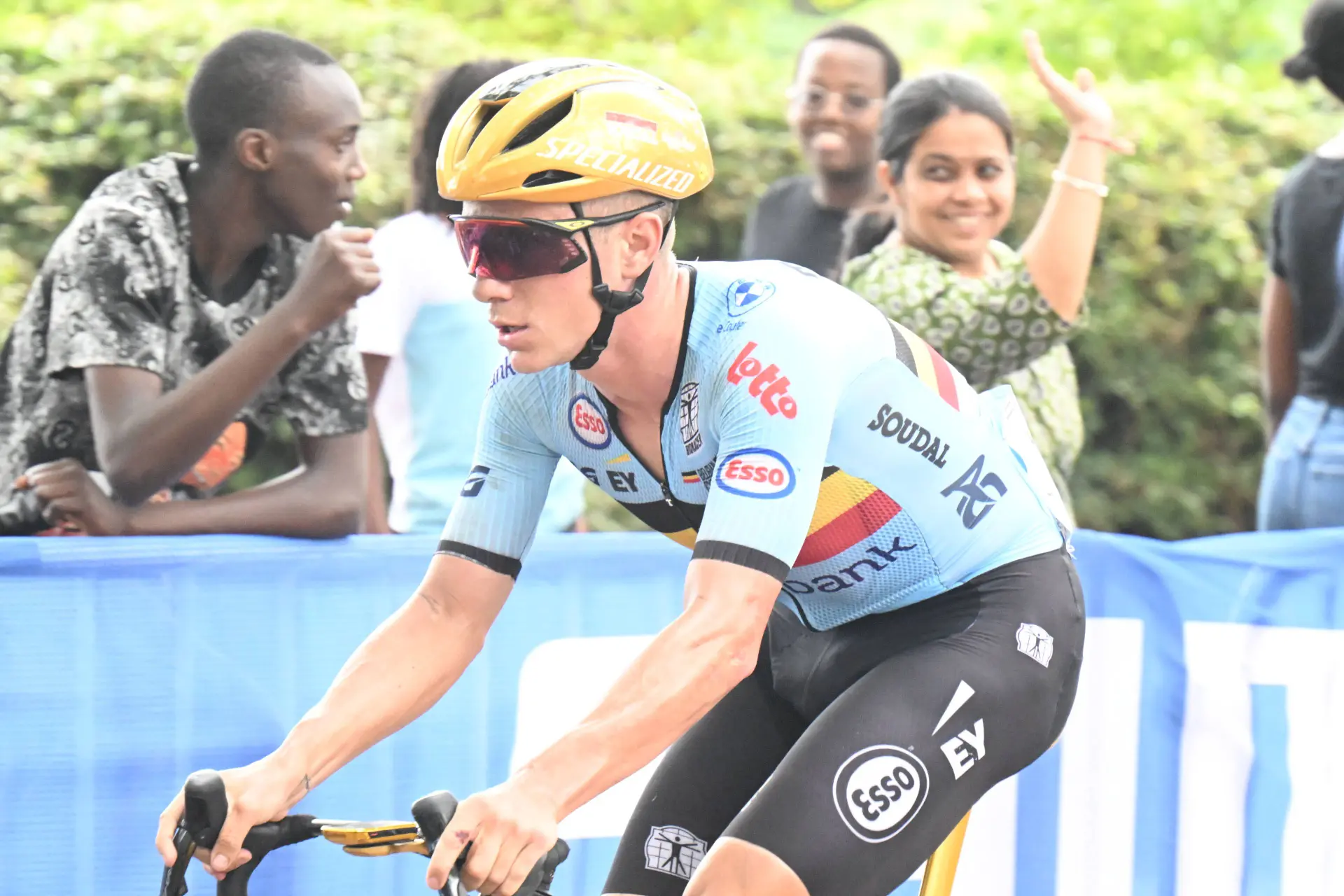
The men’s race winner was one of the sport’s all-time greats: Eddy Merckx. The Belgian prevailed on 25.08.1974, adding another rainbow jersey to a career already laden with victories in Grand Tours and Monuments. The win carried extra weight as it came in the first Worlds held beyond Europe.
In the women’s race, held the previous day, victory went to France’s Geneviève Gambillon. She had already been world champion two years earlier in Gap and returned to the top step on a course she later recalled as especially demanding. Gambillon finished ahead of Soviet rider Baiba Caune and the Dutchwoman Keetie van Oosten-Hage.
Montréal did not remain an isolated experiment. The city would build a strong international cycling tradition, ultimately hosting the Grand Prix Cycliste de Montréal, while Mont Royal stayed embedded in the backdrop of major events. Half a century on, the UCI returned to the same setting for the 2026 Worlds.

Eddy Merckx in action in 1974.
1977: San Cristóbal takes the Worlds to Venezuela
Three years after the Canadian breakthrough, the Worlds again left Europe and crossed to South America. San Cristóbal, Venezuela, hosted in 1977, further extending the championship’s reach and taking the rainbow jersey to a region with a cycling culture distinct from Europe’s established powers.
The men’s race ended with victory for Italy’s Francesco Moser. The Trentino native became world champion in an edition that returned Italy to the center of the international stage. Moser would go on to forge one of Italian cycling’s great careers, with the San Cristóbal title already among his biggest achievements.
In the women’s race, gold went to French rider Josiane Bost. Her triumph came at a time when France was producing several leading figures in international women’s cycling. Bost won in Venezuela and added her name to a list of champions that had grown rapidly since the late 1950s.
San Cristóbal also left vivid memories of that unique venture. The UCI has recently revisited accounts of an edition shaped by its global atmosphere and the presence of large numbers of Italian fans. The championship proved it could move well beyond traditional venues without losing its status as a major international event.
1986: Colorado Springs hosts the Worlds in the United States
The next Worlds outside Europe took almost a decade to materialize. Colorado Springs hosted in 1986, taking the championship back to North America for the second time. The U.S. city, known for its sporting tradition and altitude, staged an edition in which European cycling again faced a markedly different environment.
Moreno Argentin was the standout of the men’s race. The Italian claimed the world title, one of the most significant of his career. Already a force in the Classics, Argentin’s win in Colorado Springs added the rainbow jersey to a palmarès built above all on one-day races.
The women’s race was won by Jeannie Longo. For the French rider, it was the beginning of a historic relationship with the Worlds that would stretch over many years. Longo became one of the defining figures in women’s cycling, and her victory in the United States was an early chapter in her international dominance.
The Colorado Springs edition was also linked to the sport’s commercial and competitive growth beyond Europe. Unlike Montréal, where cycling tradition took deep root, the United States still represented a developing market for road racing. The choice of venue nevertheless underlined the intent to take the Worlds to new territories.
1990: Utsunomiya takes the rainbow to Japan
In 1990, geography shifted again. Utsunomiya became the first Asian host of the Road World Championships, moving the sport’s focus to Japan. The selection coincided with a period of increasing internationalization in professional cycling and a stronger calendar presence outside Europe.
Rudy Dhaenens won the men’s race. The Belgian prevailed in an edition that again showed the ability of riders from Europe’s great schools to adapt to courses and settings far from their usual battlegrounds.
The women’s title went to France’s Catherine Marsal. At just 20 years old, Marsal took one of the biggest wins of her career in Japan, becoming world champion in an edition that expanded the championship’s international footprint even further.
Utsunomiya also left a legacy beyond the Worlds themselves. The Japanese city maintained close ties with international cycling and would later host other major events. The 1990 Worlds showed the rainbow jersey was no longer confined to Europe and that Asia could be a viable stage for a competition of this scale.

Abraham Olano on the top step at Duitama 1995
1995: Duitama takes the Worlds to Colombia’s altitude
Five years after Japan, the Worlds returned to the Americas. This time the destination was Colombia and, specifically, Duitama, a high-altitude venue that delivered one of the championship’s most distinctive stages. The 1995 edition unfolded under especially demanding physical conditions.
The men’s winner was Abraham Olano. The Spaniard triumphed in a race remembered for altitude and a punishing route. His victory brought the rainbow jersey back to Spain at a time when Spanish cycling was gaining growing weight in the international peloton.
Jeannie Longo reclaimed the world title in the women’s race. The French rider added another crown and cemented an extraordinary record at international championships. Her victory in Colombia was another chapter in a career spanning several decades.
Duitama represented one of the boldest moves to place the Worlds in a radically different environment. The altitude made that edition unlike European races. The choice of Colombia also foreshadowed the country’s later rise as one of international cycling’s heartlands.
2003: Hamilton brings the Worlds back to Canada
Canada hosted again in 2003, nearly three decades after Montréal. Hamilton was selected, becoming the second Canadian city to stage the Worlds. The edition arrived when professional cycling had a far more global footprint and North America was gaining traction as a stage for major events.
Igor Astarloa won the men’s race. The Spaniard claimed the biggest victory of his career in Hamilton, delivering another Spanish rider to the top of the Worlds podium.
The women’s race went to Sweden’s Susanne Ljungskog. The Scandinavian rider prevailed in an edition that again confirmed the growth of women’s cycling within the championship. Her win put Sweden at the center of the Canadian Worlds.
Hamilton also showed how far the event had evolved since that first visit to Montréal in 1974. Canada now had an established relationship with international cycling, and the Worlds found a venue with the experience to stage a global competition.
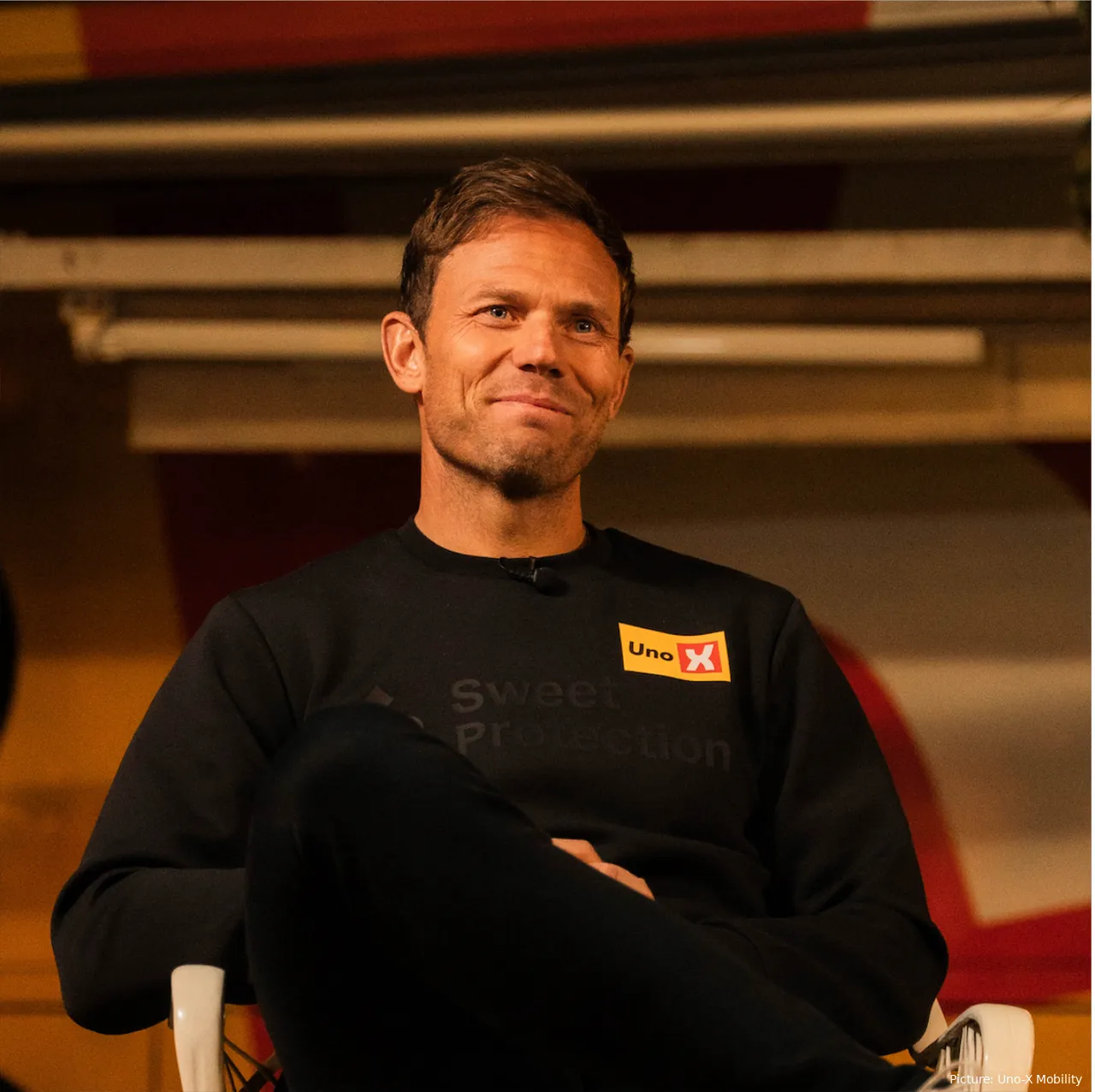
Thor Hushovd, world champion in 2010, now Uno-X director
2010: Melbourne takes the Worlds to Australia
Australia hosted the Road Worlds in 2010, with Melbourne at the heart of the event. It was the first time the championship travelled to Oceania and further proof of its geographic expansion. The edition also came as Australia fielded a top-class generation of riders.
Thor Hushovd took the men’s title. The Norwegian landed one of the standout victories of his career in Melbourne, winning a Worlds decided in a sprint, a scenario that suited his blend of speed and resilience.
In the women’s race, Giorgia Bronzini prevailed. The Italian won in Melbourne and began her relationship with the rainbow jersey, which she would reclaim a year later in Copenhagen. Her triumph made Italy one of the edition’s key protagonists.
Melbourne opened a new door for the Worlds. After America and Asia, the championship arrived in Oceania for the first time. The event showed its international outlook was not tied to a single region and could anchor itself in major sporting centers across continents.
2015: Richmond brings the Worlds back to the United States
Fifteen years after Colorado Springs, the United States again hosted the Road Worlds. Richmond staged the 2015 edition, welcoming the international peloton on a course that mixed urban sections, short climbs, and technical sectors.
Peter Sagan was the headline act in the men’s race. The Slovak took his first elite world title in Richmond, winning from a reduced group. The victory earned him the rainbow jersey for the first time, which he then defended successfully in 2016 and 2017.
The women’s title went to Britain’s Elizabeth Armitstead, later known as Lizzie Deignan. The rider from the United Kingdom won a race decided among several of the peloton’s leading specialists.
Richmond also consolidated the Worlds’ presence in North America. The 2015 U.S. experience differed from Colorado Springs nearly three decades earlier, with organization geared toward a global audience and a more professionalized context for both women’s and men’s cycling.

Peter Sagan and Mark Cavendish in competition
2016: Doha takes the Worlds to the Persian Gulf
A year later, the UCI tested an entirely different host. Doha staged the 2016 Worlds, bringing the championship to the Middle East for the first time. The choice of Qatar was defined by the climate, in particular the heat, which shaped both preparation and race execution.
Peter Sagan retained the men’s world title. The Slovak successfully defended the jersey he had won in Richmond, cementing his place as a defining figure of the modern era. It was the second of his three consecutive world crowns.
In the women’s race, Amalie Dideriksen became world champion. The Dane took the biggest win of her career in Doha, emerging as one of the standout young champions of her generation. The race ended in a sprint that Dideriksen won.
Doha was one of the most distinctive editions due to its environment and racing conditions. The heat forced teams to rethink preparation and strategy. The experience also showed the UCI’s willingness to bring the Worlds to regions with little historical presence on the road racing calendar.
2022: Wollongong puts Australia back on the Worlds map
Australia hosted again twelve years after Melbourne. In 2022, the venue was Wollongong, south of Sydney, with a 266.9 km men’s route and around 3,945 m of elevation gain. The course combined the Wollongong circuit with the climbs to Mount Pleasant.
Remco Evenepoel was the dominant force in the men’s race. The Belgian delivered an authoritative display, going solo to win his first elite rainbow jersey. The victory came after a season that also brought him the Vuelta a España.
The women’s race was won by Annemiek van Vleuten. The Dutch rider took the title despite competing with a fractured elbow sustained days earlier in the mixed relay. Her triumph capped one of the most remarkable seasons of her career.
Wollongong also confirmed Australia’s growing status within professional cycling. The country had already staged the Melbourne Worlds and had a mature cycling structure. The 2022 edition restored the championship to Oceania after twelve years, crowning two of the era’s defining riders.

Isaac Del Toro, Tadej Pogacar, at the Kigali Worlds
2025: Kigali opens Africa’s door
Kigali 2025 marked another historic milestone: the Road World Championships were held on African soil for the first time. Rwanda welcomed the international peloton with a course defined by repeated climbs and the demanding profile of the capital’s roads. The host city was a new step in the championship’s geographic expansion.
Tadej Pogacar won the men’s race. The Slovenian claimed his second road rainbow jersey in Kigali, after Zürich 2024. His victory came on a punishing course and cemented Pogacar as a defining figure of the Worlds’ most recent chapter.
In the women’s race, Magdeleine Vallières Mill made history for Canada. The North American rider took her first elite world title after attacking in the closing phase. It was also Canada’s first elite women’s road world championship.
Kigali meant more than a new host. Choosing Rwanda took the Worlds to a continent that had never staged them, shining a spotlight on a region with a growing cycling culture. The UCI positioned the edition as the first African Worlds, half a century after Montréal’s pioneering trip outside Europe.
2026: Montréal reprises the stage that launched the journey beyond Europe
The 2026 edition returns the Worlds to Montréal, 52 years after that first venture abroad. The Canadian city thus becomes the first non-European host to stage the championship twice. The races again revolve around Mont Royal, the same backdrop that starred in 1974.
As of publication, the men’s road race is still to be contested. The title will be decided on the final day, so the winner cannot yet be added to the historical roll. The edition also follows the Kigali Worlds, won by Tadej Pogacar in 2025.
The same applies to the women’s road race: the Montréal 2026 title is still undecided. The individual time trial has been held, where Marlen Reusser retained the rainbow jersey she had won in Kigali in 2025. The Swiss rider dominated a 39.2 km course and celebrated on her 35th birthday.
The return to Montréal closes, for now, a circle that began in 1974. The city that opened the door to Worlds outside Europe welcomes them back more than half a century later, after the championship has visited the Americas, Asia, Oceania, and Africa. The rainbow jersey returns to where its global expansion began, cementing Montréal as one of the event’s most distinctive hosts.
All Worlds held outside Europe
| No. | Year | Host city | Elite men – Road race | Elite women – Road race |
| XLI | 1974 | Montréal, Canada | Eddy Merckx | Geneviève Gambillon |
| XLIV | 1977 | San Cristóbal, Venezuela | Francesco Moser | Josiane Bost |
| LIII | 1986 | Colorado Springs, United States | Moreno Argentin | Jeannie Longo |
| LVII | 1990 | Utsunomiya, Japan | Rudy Dhaenens | Catherine Marsal |
| LXII | 1995 | Duitama, Colombia | Abraham Olano | Jeannie Longo |
| LXX | 2003 | Hamilton, Canada | Igor Astarloa | Susanne Ljungskog |
| LXXVII | 2010 | Melbourne, Australia | Thor Hushovd | Giorgia Bronzini |
| LXXXII | 2015 | Richmond, United States | Peter Sagan | Elizabeth Armitstead |
| LXXXIII | 2016 | Doha, Qatar | Peter Sagan | Amalie Dideriksen |
| LXXXIX | 2022 | Wollongong, Australia | Remco Evenepoel | Annemiek van Vleuten |
| XCII | 2025 | Kigali, Rwanda | Tadej Pogačar | Magdeleine Vallieres |
| XCIII | 2026 | Montréal, Canada | — | — |
Javier RampeCycling Journalist
Javier Rampe is a sports analyst with more than 15 years of experience. He holds a degree in Economics from the University of Rome and a Diploma in Business Studies from the University of Cádiz. Despite coming from an academic background not particularly associated with cycling, his passion for both cycling and journalism was instilled in him from an early age. He grew up following Miguel Indurain and José María “El Chava” Jiménez. An admirer of Michael Robinson’s communication style and journalistic approach, he was inspired to pursue a degree in Journalism at the University of Buenos Aires, which he is currently completing.
He has always maintained close ties with the worlds of sport and culture, contributing from a young age to sports blogs and film and music review websites. His work has appeared in media outlets such as Cope, RAI, and Radio Con Vos. He is also the founder of the cycling-focused podcast El Contraanálisis and the football interview channel Días De Fútbol, dedicated to conversations with professional footballers.
In addition to his work at Ciclismoaldia, Javier has interviewed some of the most influential figures in modern cycling, including Alejandro Valverde and Tadej Pogačar, as well as key voices in anti-doping policy such as Alberto Yelmo, David Varillas, and Marcelo Milano. Marcos Maynar, in relation to the ‘Operación Ílex’ case, is also among the personalities he has interviewed. He enjoys conducting in-depth analysis of the cycling ecosystem and has attended major events such as Strade Bianche, the Vuelta a Andalucía, and Itzulia, as well as numerous national cyclo-cross races.
His background in economics, combined with extensive experience in marketing and corporate communications, drives his continuous study of positioning strategies and ensures that he always keeps his focus on crafting compelling and evocative headlines.
claps 0visitors 0
Just in
Popular news
Latest comments
- A tenner and he wins the Tour next year, too 😂anonymouscyclist17-10-2026
- the answer is either stick to classics or GTs but not bothabstractengineer17-10-2026
- the exodus already stared with Ciccone. Already they were struggling with two sprinters, now there are three. Also Ganna will demand leadership. Gall is the most proven GC, Ayuso has the most potential. GC leadership for everybody will be impossible. Literally a UAE style mess without pogi.abstractengineer17-10-2026
- I raced as an amateur for 12 years, including six years on my country’s national road cycling team. I secured two national titles and competed in three World Championships plus more than 15 international stage races. At 23, we travelled to Italy for a training camp—or so I assumed. On a rest day, we watched a presentation about adopting a more “professional” training approach. It was crystal clear what “professional” meant. That moment first exposed me to this dilemma. After returning from Italy, I left cycling—at least at the competitive level I had known. Over the following two years, the whole team was caught doping. I hold that everyone is innocent until proven guilty. In my view, current stakeholders operate on a different scale, and the sums involved are vast. I am unsure whether any doping would ever be revealed. I try to stay positive and enjoy the show. My 2c.
 vannpelt17-10-2026
 - Fiver he wins 🤣
 leedorney17-10-2026
 - “…measures to reduce speeds.” Might as well shorten the race course to just 50km as well? ASO generates at minimum €300m a year and 30- 40% profit. Maybe stop being greedy and spend more of the profit to protect the riders instead.b3tlla17-10-2026
- he also had quite the life off the bike during his pro years. he used his celebrity status to full affect.mij17-10-2026
- Nairo and Froome’s battles were great.mij17-10-2026
- I think it is a good sign to have only signed a couple of riders. it shows their system is working - retention of their own riders and using their development squad. As for retention of their own riders, they won a GT, a monument, they took a points jersey in another GT. They have a U23 WC. They have multiple one day and one week race wins. Keep the core. Their development squad has delivered fantastic results. And for all the talk of Vismas decline, their culture must be amazing since no one signed elsewhere. That is a very GOOD sign.mij17-10-2026
- Why is it beyond people's intellectual capabilities to stop accusing others of doping without proof? How are we supposed to live in a world where suspicion is evidence of guilt?This is pure infantile asinine nonsense.
 Brucegel17-10-2026
Loading
Write a comment