"We saw Miguel Indurain struggle on a very similar stage in the 1990's" - Samuel Sanchez warns of potentially decisive stage at 2027 Tour de France
Cycling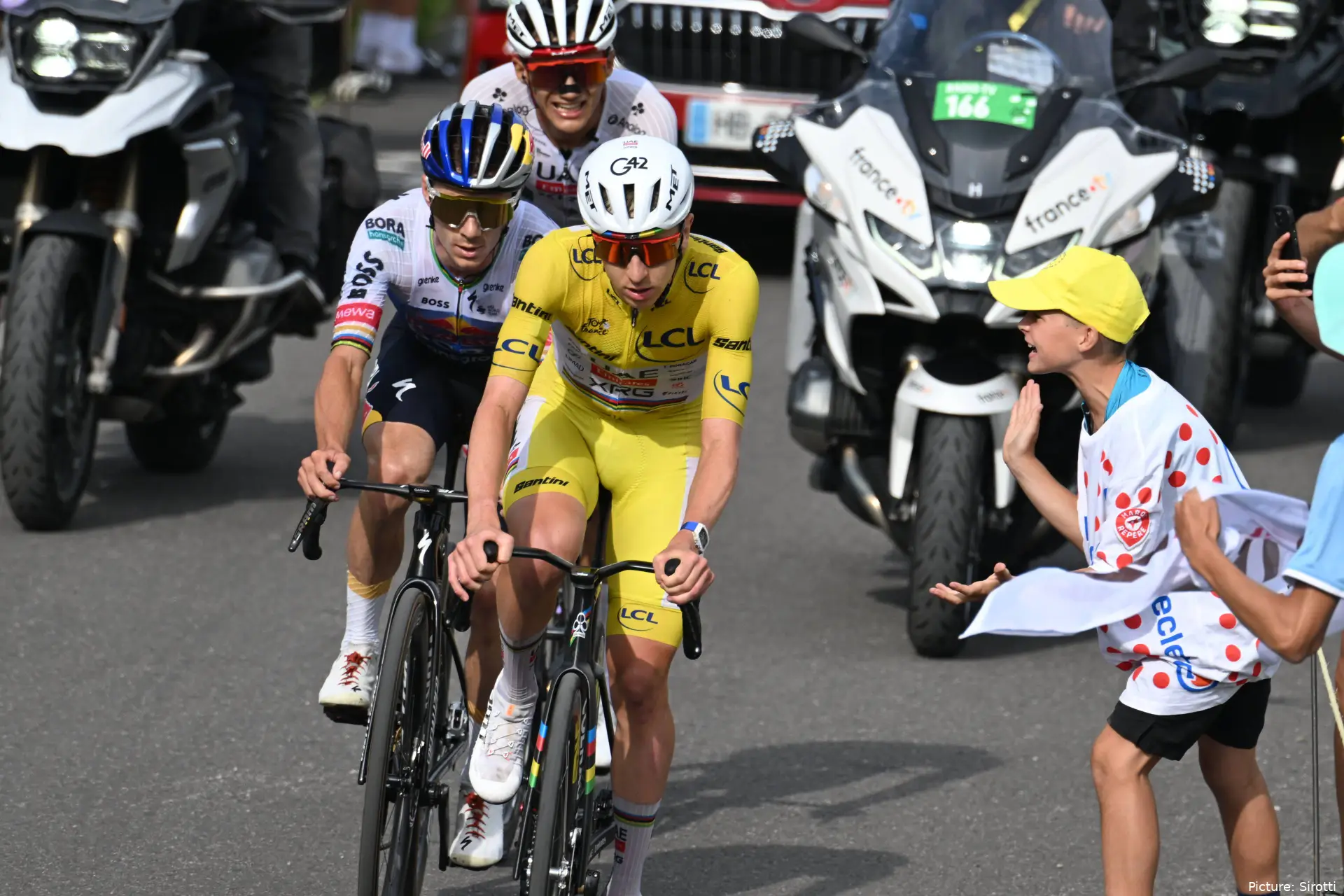
The 2027 Tour de France route offers several key points that could shape the battle for the general classification. In his analysis for Eurosport, Samuel Sánchez highlights the importance of the 71 kilometres of time trials, the difficulty of the two major Pyrenean stages and a day that could be overlooked amid all the mountains: Stage 14 to Mende.
“The presentation of the 2027 Tour de France has given us several interesting things to consider,” begins the 2008 Beijing Olympic champion to Eurosport, who first focuses on the British Grand Départ. The race will start in the United Kingdom, where the riders face three stages that, in his view, could deliver excitement and spectacle before the race returns to France.
Another aspect Sánchez highlights is the 71 kilometres of time trials. That is a substantial distance, and the main contenders will have to push hard, although the Asturian does not believe it will prove decisive on its own. “It won’t decide the race, but it will force the riders to fight hard for their places in the general classification,” he explains, assessing the discipline’s potential impact on the race.
Attention will then turn to a final week that promises to be decisive. Sánchez’s analysis points to two particularly demanding days in the Pyrenees, but his most striking warning concerns a stage that could catch the favourites off guard: “And, for me, there’s a trap stage: the day in Mende.”
Stage 14 features a near-summit finish atop the Cõte de la Croix Neuve with 3 kilometers at 10%, a common finale at the Tour, but this time around with plenty more climbing beforehand.

Stage 14 of the upcoming Tour de France caught Samuel Sanchez' attention
The Pyrenees will shape the general classification
The mountains will account for much of the 2027 Tour de France’s decisive racing. The first of the two major Pyrenean stages will feature more than 5300 metres of climbing, while the second will reach around 4500 meters. “We’re looking especially at that final week, with two truly tough Pyrenean stages,” says Sánchez, who believes both days could open decisive gaps between the contenders for the yellow jersey.
The figures point to two grueling days, giving the climbers opportunities to attack while the more consistent riders will have to defend their positions. The accumulated effort could prove crucial in a three-week race, particularly when the favourites tackle the final climbs with their reserves running low. “They will decide who wins this Tour de France,” the former rider warns of the two Pyrenean stages.
Read also
A special day to take into consideration
However, Sánchez does not want attention to focus solely on the great mountain passes. “Everyone is looking at the mountains, the Alps and the Pyrenees, but that stage in Mende could be decisive,” he stresses. His warning concerns a stage whose cumulative demands could hurt the favourites, even if it lacks the spectacle of the major high-mountain stages.
To reinforce his point, the Olympic champion recalls a moment from Spanish cycling history: “We saw Miguel Indurain struggle on a very similar stage in the 1990's.” The historical reference illustrates the danger of underestimating stages that may appear less decisive on paper. In the 2027 Tour, the Pyrenees could settle the race, but in Samuel Sánchez’s analysis, Mende looms as a potential trap that could disrupt the plans of the main contenders.
Javier RampeCycling Journalist
Javier Rampe is a sports analyst with more than 15 years of experience. He holds a degree in Economics from the University of Rome and a Diploma in Business Studies from the University of Cádiz. Despite coming from an academic background not particularly associated with cycling, his passion for both cycling and journalism was instilled in him from an early age. He grew up following Miguel Indurain and José María “El Chava” Jiménez. An admirer of Michael Robinson’s communication style and journalistic approach, he was inspired to pursue a degree in Journalism at the University of Buenos Aires, which he is currently completing.
He has always maintained close ties with the worlds of sport and culture, contributing from a young age to sports blogs and film and music review websites. His work has appeared in media outlets such as Cope, RAI, and Radio Con Vos. He is also the founder of the cycling-focused podcast El Contraanálisis and the football interview channel Días De Fútbol, dedicated to conversations with professional footballers.
In addition to his work at Ciclismoaldia, Javier has interviewed some of the most influential figures in modern cycling, including Alejandro Valverde and Tadej Pogačar, as well as key voices in anti-doping policy such as Alberto Yelmo, David Varillas, and Marcelo Milano. Marcos Maynar, in relation to the ‘Operación Ílex’ case, is also among the personalities he has interviewed. He enjoys conducting in-depth analysis of the cycling ecosystem and has attended major events such as Strade Bianche, the Vuelta a Andalucía, and Itzulia, as well as numerous national cyclo-cross races.
His background in economics, combined with extensive experience in marketing and corporate communications, drives his continuous study of positioning strategies and ensures that he always keeps his focus on crafting compelling and evocative headlines.
claps 0visitors 0
Just in
Popular news
Latest comments
- Agreed, but nobody thinks ahead that much, especially so-called fans, they are the first to demand their rights to joy and entertainment, regardless of the price their hero pays. You only have to look at boxing/rugby research on past athletes’ problems in retirement to see how little their OWN fans really care.Jumpyjohn26-10-2026
- He might very well accept lower salary voluntarily (whilst others might get pressured into that anyway over the coming years) in exchange for non financial benefits such a move would bring. Wouldn’t be the first rider to get positive results from a change of team and wouldn’t be the first star rider to do well in a smaller outfit. MVDP has never suffered from not being in a leading team, MP did extremely well before his team started expanding (maybe too) fast, PS certainly didn’t underdevelop until now. Everyone fits in best in a unique situation that won’t work for anyone else, we should all be striving for finding that.Jumpyjohn26-10-2026
- Always best to focus on “a good beginning is half the work” philosophy Which also makes mathematical sense. If you look at the probabilities of things happening in a chain, each event has less than one. For two to happen you multiply, the result will thus always be even less. The earlier in the chain you affect probability, the more often that is multiplied each time you add a subsequent link in the chain. Or oppositely, it’s extremely inefficient to focus on the last event in the chain because the chances of that happening AFTER all the other events have also happened is far too small to consider. And realistically, it is also obvious that if you allow uncertainty into event 1 or 2, not only do you enormously increase the chances of a last event, you also increase the chances of other non-considered events. In non-mathematical terms, one day a car might drive into a whole peleton. Oups, what did I suggest, oh no, we actually already saw this almost happening on video, it was only the drivers’ unexpected fast reaction to reverse that averted the possible cancellation of cycling for an extended period as the sport would have been forced to question itself way more than it has ever had to.Jumpyjohn26-10-2026
- This is Trump level like distortion of information, shame on you CUTD!!!! I will boycott for a week from tonight on and unlike all the Moulike characters here, I keep my promises.Jumpyjohn26-10-2026
- sounds positive news for Lidl-Trek...still dirty on them for not resigning Lucinda Brand and why they arent all in with sponsorship of the Baloise team in 'cross.
 Davide26-10-2026
- yeah your point about accidents happening in a chain of events, not a single event, is key. no police or barriers at a crossing. a car gets on the road. a trailing cyclist doesn't have an escort. no radio and GPS is being used to track stragglers. and tragedy. break one thing in the chain and it could be accident avertedmij26-10-2026
- The doctors called the concussion severe, even at the scene of the accident, because that is the term for it. The concussion protocol is the best they can do right now, with further research being done. It makes sense for Tadej's concussion to be severe because the freak circumstances lead to twisting of his head (and body) as he fell at high speed. Look at reports on the Toronto research published in early 2025 for starters, with images of the brain showing the effects that persist after symptoms clear up. Btw if Tadej had ridden the EC and fallen, he could have suffered more serious injury to the spine as the vertebra would not have been fully healed. Also serious consequences if he had hit his head. Don't know why you are so keen to downplay the impacts.Hills3326-10-2026
- Complete bullshit headline. The best thing this website can do is commit suicide.Renz26-10-2026
- If he wants to retire, he can spend a couple of non intensive low key seasons at UNO-X for lower salary as well.abstractengineer26-10-2026
- we need facts about these accidents and see the stats about these facts to find what can be done and what cannot be done. That is the job of the UCI. This has been done in many industries, Airlines, and Spacecrafts. Once teh UCI sets the rules, then the organizers can decide upfront whether or not they want to hold the race or not. UCI also needs to make the rules applicable to all stakeholders including riders and staff about what to do and not do, for safety. Parachutes are the safest to exit a jet fighter/bomber but none are provided on a passenger aircraft. most safety mechanisms are not viable on a spacecraft. in industries most accidents are the result of a chain of events, a single link not happening will not cause that accident. all these things are thoroughly investigated. inspite of all the safeguards, accidents happen and will happen, because humans remain inherently flawed but following rules/procedures minimize the risk and stats, not an individual accidentabstractengineer26-10-2026
Loading
Write a comment