“We can’t ignore that Vingegaard is the big favourite” - Javier Ares anticipates Tour de France-like battle at Volta a Catalunya
Cycling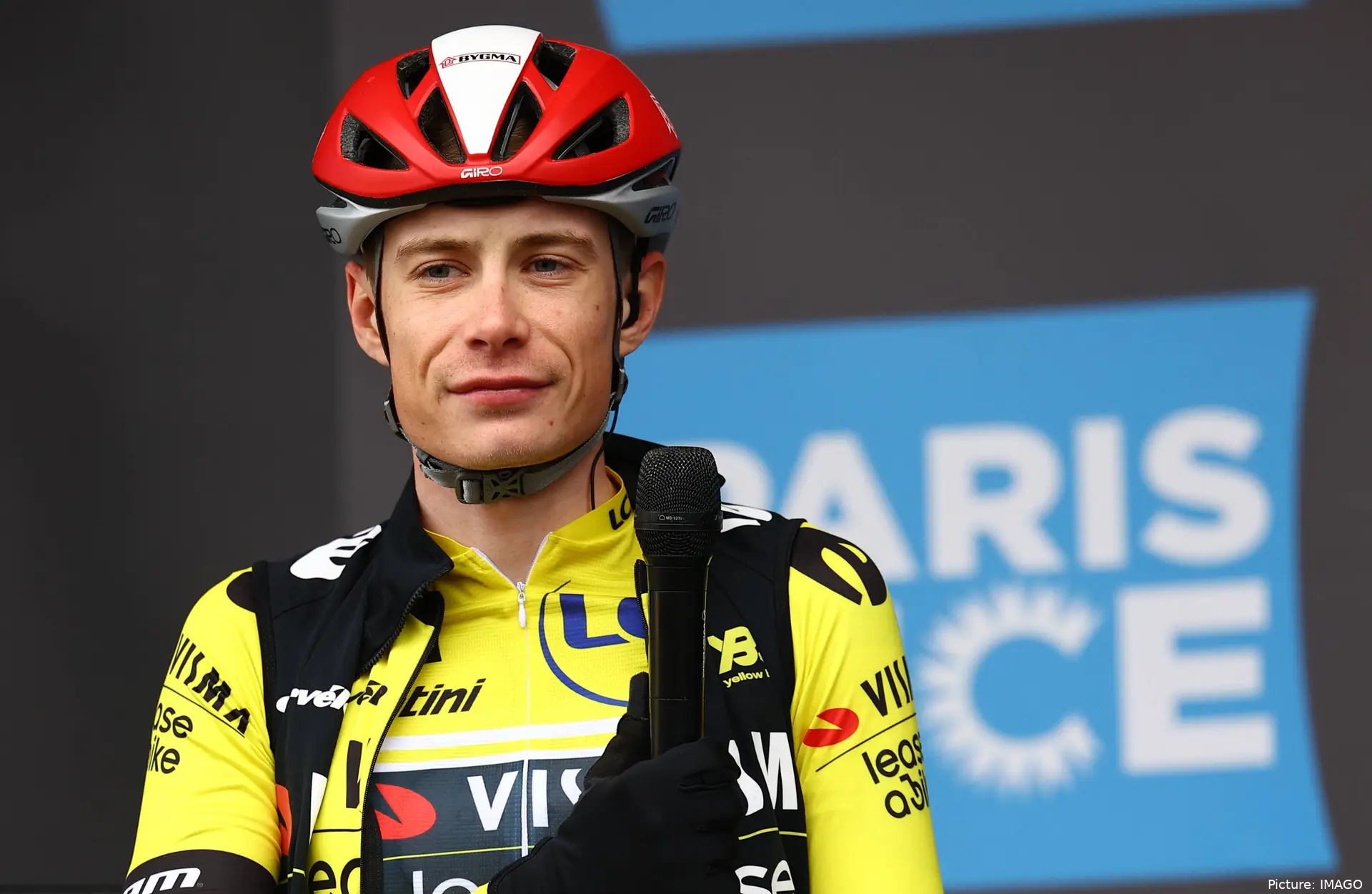
The cycling season has barely begun, yet it has already etched itself in fans’ recent memory. The Milano–Sanremo exhibition remains vivid, still “blinking,” as Javier Ares describes on his YouTube channel, after one of those moments that transcend the calendar. But cycling never stops. It shifts stage, landscape, and narrative, while preserving its competitive essence. Time to turn the page and focus on one of the great early-season fixtures: the Volta a Catalunya.
“Still blinking after what we witnessed at the Milano–Sanremo, Tadej Pogacar’s show, an indelible page in cycling history,” says Ares, framing the scale of the moment. He quickly pivots, though: “It would be tremendously unfair, because the season has only just started.” Enter the Volta, the next essential chapter.
The Catalan race needs no introduction, but it does need context. Ares underlines its historic weight: “We must remember it’s the fourth-oldest race… it was in 1911 that this race got underway.” Only the Tour, the Tour of Belgium, and the Giro are older in terms of stage-races. That fact alone explains the significance of an event that has evolved from a local character into an international reference.
He stresses that steady growth: “The race has been growing… from the 60s on… with names like Jacques Anquetil, Merckx, Ocaña, Gimondi.” That evolution cemented its prestige, later enhanced by winners such as Miguel Indurain and Alejandro Valverde.
Beyond history, this edition offers instant appeal: a clash of the peloton’s leading figures. Ares puts it plainly: “Here we have another big duel of the season.” Two names stand at center stage: Jonas Vingegaard and Remco Evenepoel.
The verdict on the Dane is firm: “Let’s not overlook that Vingegaard is the big favorite.” He arrives after a commanding Paris–Nice and with a team fully committed to him. “He’ll have the whole team at his disposal… there’s not the slightest doubt given the firepower he brings,” adds Ares, underscoring his status.

Jonas Vingegaard, favorite to win the Volta a Catalunya
Opposite him, Evenepoel is the alternative. A rider who raises questions but also excitement: “After the doubts that may have surfaced… he now needs to back up all the good signs.” The Volta is the perfect arena to gauge his true level against the elite.
Still, reducing the race to a head-to-head would be too simplistic. Ares himself warns of the peloton’s depth: “There are at least seven or eight teams with enormous potential.” Bora, Lidl–Trek, UAE, Movistar, and Ineos all bring line-ups ready to fight for the overall.
Team-by-team, the options are broad. At UAE, the focus is on Joao Almeida: “Finally back… the team leader, without any discussion.” At Movistar, attention centers on Enric Mas and others seeking a breakthrough: “He has to be among the best.” Meanwhile, at INEOS Grenadiers, responsibility falls on riders like Carlos Rodríguez and other emerging leaders such as Oscar Onley.
There’s also room for individual storylines that enrich the narrative. Nairo Quintana’s possible farewell adds an emotional note: “It seems likely he could announce his definitive retirement this season.” Returns from injury, mentioned in several cases, also inject uncertainty and intrigue.
As usual, the route will be both judge and protagonist. Ares calls it one of the race’s great attractions: “It’s one of the tightest and best stage races on the calendar.” That’s no throwaway line. The structure blends deceptive stages with a clearly mountainous second half.
Opening stages of the Volta and key points
The early days, while seemingly more accessible, hide pitfalls: “The last 25 kilometers… with three or four walls near the finish that can ruin the sprinters’ chances.” A Volta hallmark, where nothing is fully predictable.
The real selection begins from Thursday: “That’s when the show starts… a full mountain profile split across the last four stages.” Climbs like Vallter 2000 and La Molina will force gaps, with long, demanding ascents that suit pure climbers.
Ares lays out the numbers: “11 kilometers at 7.6%… 16 kilometers at 7.2%.” Figures that hint at decisive accumulated fatigue before the finale in Barcelona, where the Montjuïc circuit will again take center stage".
That finish in the Catalan capital is a signature: “With all the ingredients, all the attractions, and all-out fighting.” It has historically produced a spectacle and could still be decisive for the overall.
Beyond the result, the Volta serves a strategic function in the calendar. Ares puts it clearly: “It will give us a real measure… looking ahead to the Giro d’Italia.” In that sense, the race is a competitive laboratory to gauge form and refine goals.
The broader context adds appeal. Overlapping races and the start of the Classics make for a packed week of cycling: “We’ve got a full week.” In that landscape, the Volta stands out as a main focal point.
In short, the Catalan race returns to the center of the cycling map. With history, a top-class field, and a demanding route, it has all the ingredients to become one of the season’s great shows.
As Ares sums up, “it’s one of the most recognizable races on the calendar… with a very complete, highly mountainous route.” A mix that guarantees drama and, once again, will let us measure some of the world’s best in a setting of maximum demand.
Juan LarraCycling Journalist
Juan Larra is a writer for Cyclinguptodate and editor-in-chief of Ciclismoaldia, where he has played a central role since its inception. Under his leadership, the website has become a trusted source for professional cycling coverage, offering in-depth analysis, news, and feature stories.
A sports journalist with over 20 years of experience, Juan earned his degree in Journalism from the University of Seville in 2007. He began his career covering a wide range of sports—including football, basketball, Formula 1, MotoGP, tennis, and cycling—for platforms such as the official La Liga app, Vodafone and Movistar websites, NBA Blogdebasket, and Cadena Cope, honing his skills in writing and editorial management.
In addition to his work at Ciclismoaldia, Juan contributes to Cyclinguptodate and serves as editor-in-chief for the tennis-focused site Tenisaldia. Throughout his career, he has conducted exclusive interviews with cyclists and sports figures, provided detailed analysis of competitions ranging from local Spanish races to major international events, and acted as a special correspondent at prestigious races including Paris-Roubaix, the Tour de France, and the Vuelta a España.
Juan’s combination of experience, expertise, and direct access to athletes has established him—and the platforms he leads—as authoritative voices in professional cycling.
claps 1visitors 1
Just in


Popular news

Latest comments
- writing about yourself in third person ... please, at least have someone else from your staff author these self-coverage articles!Ketterechts25-11-2026
- Don’t forget Yates’s podium at 2023 TdF!Lozza25-11-2026
- It was stage 14 to Morzine that Carlos Rodriguez won in 2023, not Puy de Dome. And Kwiato actually won the previous stage himself to Grand Colombier!Lozza25-11-2026
- Go Pogi!! 🐐❤️Lozza25-11-2026
- They didn’t have or need “extraordinary information”. All they needed was for a French judge to sign off on the night-time testing for it to go ahead.Lozza25-11-2026
- If the sponsors voted for Primoz then you get him, otherwise not.flyer25-11-2026
- It sure can feel or seem that way but I wonder if the same amount of prodigious performances (compared to the others) would occur if no one was ever doping at all.flyer25-11-2026
- Given the similarity of two articles (published on I think the same date), I'm reusing (copy-n-pasting) my post from the twin: I've always thought the last day of each of the grand tours was problematic mostly in that the GC is considered completed before the race starts when that is not really true. There is some tension, but not desirable tension. What saves the awkward practice is the race finish is legit for those who participate - so it's not wholly different from the other stages. That neutralizations usually make good sense demonstrates their necessity so if that has to be the way to go I agree that the design plan for the neutralization should be completed before the race starts. This years end stage in the Vuelta had one of the best first half's I've seen in that many of the riders looked to be thoroughly enjoying themselves making it a joy to watch. But I think it was slightly closer to the exception rather than the rule.flyer25-11-2026
- Even I often win without being there at all, not even breaking a sweat. Beat that!flyer25-11-2026
- It is not about rest and peaking again - 5 weeks is not enough for that. It is about recovery while maintaining form. 4 weeks is easier for that. With a Giro-Vuelta, the 12 week break is enough to rest and then peak again. Not for the Tour
 Rafionain-Glas25-11-2026
Loading
Write a comment