“This isn’t an anti-Pogacar strategy” - Tour de France boss names Evenepoel and Seixas as reasons behind 2027 time-trial increase
Cycling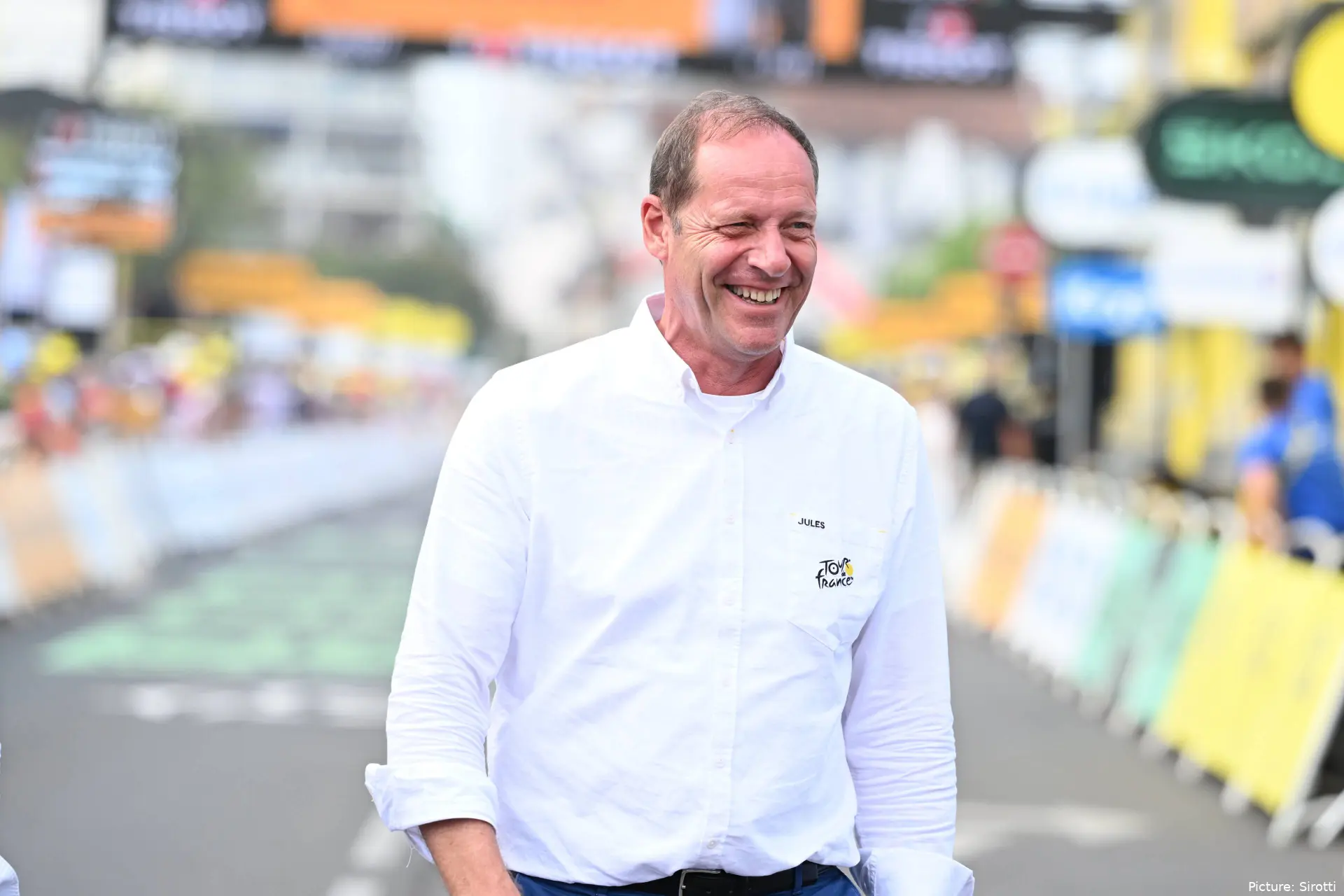
Christian Prudhomme has identified Remco Evenepoel and Paul Seixas as part of the thinking behind the Tour de France’s biggest individual time-trial programme in 15 years. The race director wants the 71km included in the 2027 route to help counterbalance time lost in the mountains, but believes Tadej Pogacar could still win both tests.
“This isn’t an anti-Pogacar strategy,” Prudhomme told RMC Sport after the route presentation. “Pogacar loves a challenge, so perhaps he’ll be the one who wins both time trials.”
The 38km stage from Blois to Chambord and the 33km test around Toulouse give the race its highest individual time-trial total since 2012. Both take place before the final Pyrenean stages, with the Col du Portet summit finish and the road to Laruns following in the closing week.
“With time trials, when the same riders gain time both in the mountains and against the clock, you don’t feel inclined to increase the amount of time trialling because you end up with the same result,” Prudhomme explained. “But now we have a rider who has dominated time trialling for years, Remco Evenepoel. There is also Paul Seixas, who is very good in that discipline. It could help balance out the time lost in the mountains.”

Paul Seixas and Christian Prudhomme ahead of La Fleche Wallonne 2026
Seixas enters the thinking behind the route
The change follows several editions in which organisers increased the number of finishes suited to puncheurs. Prudhomme cited both more entertaining racing and lower risks at the finish than in conventional bunch sprints as reasons for those choices.
“We will never design a route for one rider. But we do design routes for types of riders,” he said when asked specifically about Seixas. “This time, we’re including more time trialling because we want to restore the balance.”
Pressed on whether the young Frenchman belonged among the riders who could benefit, Prudhomme was explicit: “Among the very best time triallists, there is obviously Remco Evenepoel, but there is also Paul Seixas. Yes, I’m not going to hide that.”
Pogacar will pursue a record sixth Tour victory in 2027. “Of course, Tadej Pogacar is capable of getting the better of everyone, including in the time trials. But naturally, we want the suspense to last as long as possible,” Prudhomme said. “If Paul Seixas improves as much between 2026 and 2027 as he has this year, we’re going to have a fantastic summer. I have no doubt about that.”
Read also

Time-trial gains face a late mountain examination
The two time trials offer different challenges. Blois–Chambord on stage seven is completely flat, taking riders past the chateaux of Blois, Chambord and Cheverny. Toulouse hosts the second test immediately after the final rest day.
“The second will be very important: an out-and-back course along the Garonne around Toulouse, with the Cote de Pech David, which caused such a stir at the 2025 Tour,” Prudhomme explained.
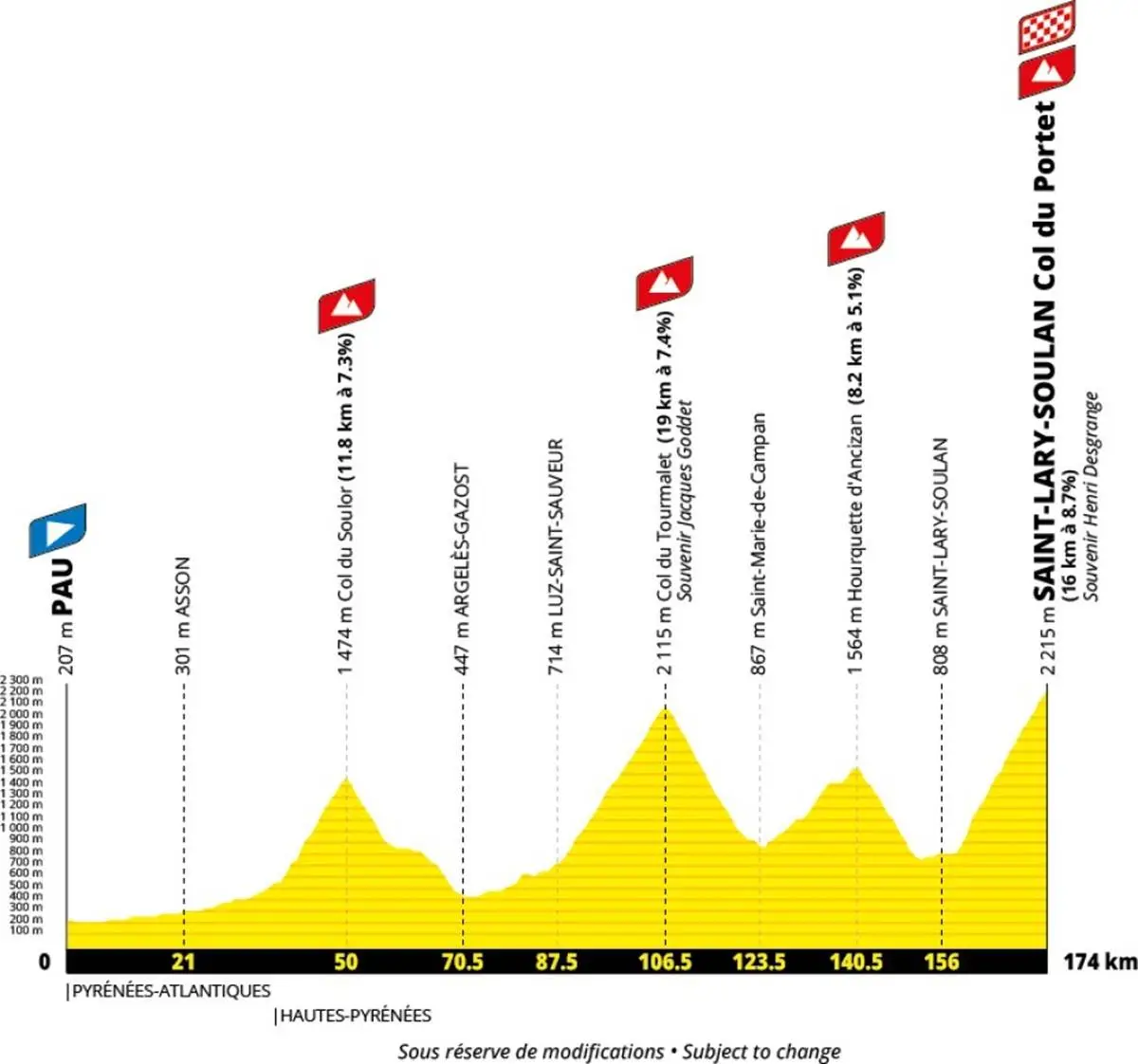
A flatter stage to Pau separates that effort from the Tourmalet and Col du Portet on stage 18. The Portet brings 16km of climbing at almost 9%, before the following day’s route to Laruns takes in Burdinkurutxeta, Bagargui, Larrau, Soudet and Marie-Blanque. “There is enough there to turn the race on its head just 48 hours before the final finish,” Prudhomme said.
Earlier in the race, the Alps will offer a different kind of mountain test. No climb there will exceed 2,000 metres, but the Col du Pre and Bisanne precede the first-ever finish at Les Saisies. The stage to Sallanches also includes two passages over the Cote de Domancy.
The possibility of keeping the GC contest open through Paris also remains. Asked whether the Montmartre finale could count towards the general classification after neutralisation in the previous two editions, Prudhomme replied: “Of course it’s possible, and that’s what I’m hoping for.”
The final-stage circuit will be unchanged from 2026, retaining Montmartre before the finish on the Champs-Elysees.

Kieran WoodDeputy Editor-in-Chief
Kieran Wood is a sports journalist based in Wales and has been active in journalism since 2022. He regularly contributes to DartsNews.com and CyclingUpToDate.com, where he covers professional cycling and darts. In cycling, his work includes liveblogs from major races, including the Tour de France, the Giro d’Italia, and La Vuelta a España, alongside race reports and analysis. He has also conducted interviews with professional riders.
His reporting spans the full racing calendar, from one-day classics to stage races, with a focus on accurate, real-time coverage and clear contextual analysis. For statistics, results, and historical context, he regularly uses resources such as ProCyclingStats. To support reporting on rider activity and training context where relevant, he also references Strava.
In his work, Kieran places strong emphasis on careful sourcing, editorial accuracy, and updating articles as new, verified information becomes available.
claps 2visitors 2
Just in

Popular news
Latest comments
- Hopefully any potholes on the British roads can be repaired so everyone arrives safely in France, and Pog, Jonas, Remco and Seixas can all be fighting it out in Paris.Hills3322-10-2026
- If Pogi is once again successful this year... next year we can expect 100 km or more of flat Time Trials ... and just one proper mountain stage, in the penultimate stage, the year after that. :)) :)) :))PogiSloFans22-10-2026
- EXTRA EXTRA - Read all about it !!! Plans for TDF 2028 and 2029 !!!! If Pogi is once again successful this year... next year we can expect 100 km or more of flat Time Trials ... and just one proper mountain stage, in the penultimate stage, the year after that. :)) :)) :))PogiSloFans22-10-2026
- If Pogi is healthy and in the same shape as he was this year, then we’re getting a 6 ⭐⭐⭐⭐⭐⭐TDF winner... 100%. Let’s go Pogi! 💪👍 In their efforts to make the route as anti-Pogačar as possible, they ended up striking the biggest blow to the one rider who has managed to beat Pogi at the Tour twice!?!? The "poor" Danes are swearing and spitting at Christian Prudhomme: Hvad fanden laver du? ... Du er kraftedeme dum! Det er noget lort! ... Skrid ad helvede til! ... For helvede, mand! ... Jeg er pisseligeglad! PS: Ha ha ha ha ... ChatGPT told me these swear words.PogiSloFans22-10-2026
- Pogi will probably focus more on the time trials, as he’ll have to, and I don’t expect him to lose 3 seconds per kilometer. Maybe in the first time trial, if he has a really bad day, but certainly not across both combined. He might even win the second one, which is shorter, features a short climb, and takes place in the third week. I expect him to take the yellow jersey after Stage 10 and keep it until the end. He also has a tough World Championships and the Vuelta coming up after the Tour, so he’ll need to manage his energy wisely. If Pogi is healthy and in the same shape as he was this year, then we’re getting a 6 ⭐⭐⭐⭐⭐⭐TDF winner... 100%. Let’s go Pogi! 💪👍PogiSloFans22-10-2026
- What if Seixas has an open road to 2nd, or Vingegaard... or both of them? Well then, Remco will just have to be 4th.PogiSloFans22-10-2026
- Said it in a different thread: I wish the races with gravel/off-road sections (Strade Bianchi, Paris-Tours, Tro Bro Léon, Veneto, In Flanders Field, and more) could be combined into a some kind of points series that could provide some kind of marketing to them all.RidesHills22-10-2026
- What a fascinating top 10 that is. Pidcock ahead of Vingegaard? Gall ahead of van der Poel? And Pogačar, even after his injuries, has more points than Evenepoel and Roglič combined.RidesHills22-10-2026
- Remco has an open road to the 2nd place next yearBenAflec22-10-2026
- I think he's close. For one thing - and this won't be a well-received take - I won't be surprised if Pog skips RVV this year. He has bigger goals, most of which are later in the season. The big thing in the spring is PR, and there is case for him come into that race fresh and maybe with a couple of kg of additional weight. But even if Pog does do RVV, Wout can win. As he is sometimes prone, he blew himself up too early last year trying to keep up with Pog on Oude de Kwaremont. Had he been just a bit more patient he might well have ended up chasing with either Remco or MVDP. Still not easy to catch Pog, and no guarantee he'd beat the other two even if they did. But the point remains: it's there if things go just right.MidnightRider22-10-2026
Loading
4 Comments