"They have to come to Europe" - Guillermo Thomas Silva hopes his example can inspire next generation of Uruguayan cyclists
Cycling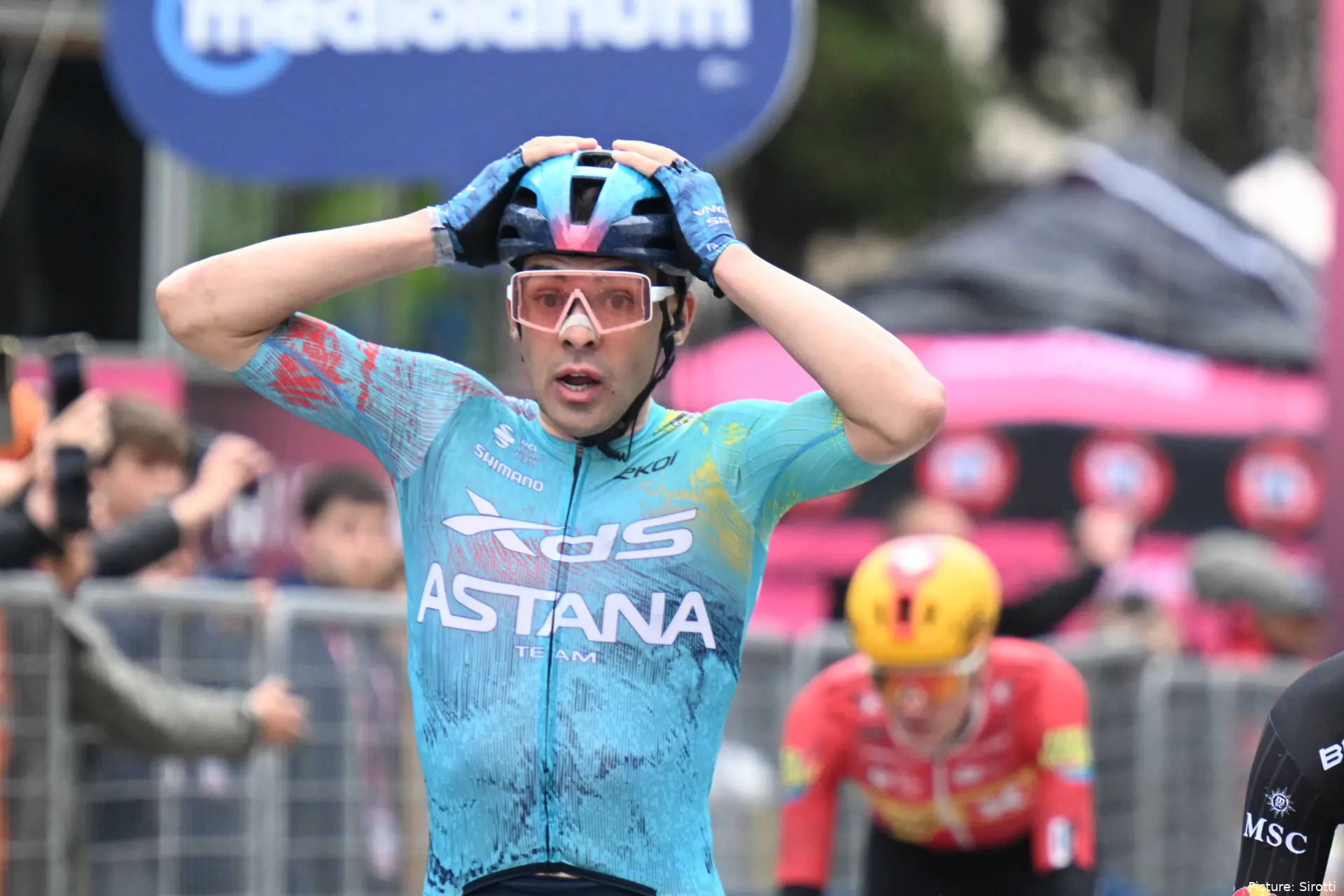
There are riders who need years to find their place in the pro peloton, and others who, when the right chance comes, look destined to seize it from day one. Guillermo Thomas Silva clearly belongs to the second group. At 24, the Uruguayan is delivering an outstanding 2026 season, emerging as one of the year’s big revelations on the international calendar and one of the fastest-rising names in the WorldTour peloton.
His leap to the top tier came this season with XDS Astana Team, after a long development path in Spain. And the impact could not be clearer: six wins, 1,336 UCI points and high-value victories, including a stage of the Giro d’Italia that brought him the Maglia Rosa, plus back-to-back wins at the Clásica de Ordizia and the Clásica Castilla y León.
But Silva is not just a rider who has hit a purple patch. His main strength is his versatility. He climbs, endures, handles demanding routes, and has enough speed to finish off reduced sprints. It’s a profile increasingly prized in modern cycling and one that, intriguingly, not long ago was tied to Caja Rural - Seguros RGA and even on Movistar Team’s radar, which ultimately let slip a chance that now looks especially significant.
Read also
From Uruguay to Spain to turn professional
Silva's story began to shift while he was still a junior. At just 17 he left Uruguay for Spain to continue developing his career.
"When I was a second-year junior I left home and went to Spain, where I joined an amateur team," Silva explained in an interview with Marca. The next season was hampered by covid during which Silva did not get to leave the country, but his feats were not forgoten and Caja's development team offered the Uruguayan a platform to restart his journey to pro level.

Guillermo Thomas Silva at stage 3 of the 2026 Giro d'Italia
It was at Caja Rural that he first showed he could be more than a prospect. There he had the chance to race, take on responsibility, and discover his limits. The subsequent move to XDS Astana opened the WorldTour door, and Silva responded immediately.
His progression is even more striking for the range of terrains where he has managed to excel.
The transition: from the Giro to the Spanish classics
Three victories at the Tour of Hainan - two stages and the overall - already hinted the Uruguayan was ready to step up. But it was at the Giro d’Italia where his name reached a different dimension.
Silva took a stage win and, on top of that, earned the privilege of wearing the Maglia Rosa. A historic result for a rider just beginning his elite journey and, above all, for Uruguayan cycling.
"The stage win and the Maglia Rosa were indescribable," he said. The emotion had an extra layer with his family in Italy. "I’m still speechless, because it was probably the highest point Uruguay has reached in cycling," he added.
Silva did not stop there. In July he chained two major wins in Spain: the Clásica de Ordizia and the Clásica Castilla y León, conquered in just two days. A show of consistency, resilience, and the ability to compete on very different terrain.
That level has put the Uruguayan among the season’s most productive riders and confirms his ceiling is still far from defined.
Silva can finish in any scenario
Silva’s great strength is his adaptability. He does not seem to need a specific race type to be a protagonist. He can survive in the mountains, attack from range, contest reduced finishes, and use his turn of speed.
That versatility explains much of his 2026 breakthrough and makes his future especially compelling. In a peloton increasingly ruled by riders who can compete across terrains, Silva ticks many boxes top teams seek.
🇧🇬 🇮🇹 PHOTO: @giroditalia
— XDS Astana Team (@XDSAstanaTeam) May 10, 2026
Ciao, Italia! 🇮🇹💗
Get ready to welcome the Maglia Rosa, Tomas Silva is coming to bring it home!#XDSAstanaTeam #GirodItalia
📷 @SprintCycling pic.twitter.com/2dhCQOmKH4
And that also highlights what might have been. The Uruguayan came through Caja Rural and Movistar Team had a chance to sign one of the talents rising in Spanish cycling. In the end it was XDS Astana who backed him, and the return has been immediate.
Silva, however, does not forget the path taken. "All this is something I think I hadn’t even dreamed of," he admits. His story aims to inspire other young Uruguayans who want to follow his steps. Though he leaves a clear message: "If they want to be cyclists, they have to come to Europe."
Bigger target: the Montreal Worlds
The season is far from over. Silva is currently racing the Arctic Race of Norway and will then head to altitude camp before the Canadian WorldTour classics and, above all, the 2026 World Championships in Montreal.
The Uruguayan knows it will be a particularly demanding race. He won’t set a hard target, but he is clear he wants to arrive in top condition.
"It will be a very tough race, but I’ll try to prepare as best I can. I’m not setting a specific objective, but I’ll try to get the most I can," he says.
By now, Silva has achieved far more than he likely imagined when he left Uruguay as a junior. He has won in Asia, conquered Spanish classics, raised his arms at the Giro, and worn pink.
The next chapter of his rise could be written in Montreal. And in the meantime, one fact in the peloton is getting harder to ignore: Guillermo Thomas Silva is no longer a promise. He is the real deal.
Ondrej ZhasilCycling Journalist
Ondřej Zhasil is a cycling journalist at CyclingUpToDate and has been part of the team since 2023. He is based in Ostrava, the third-largest city in the Czech Republic, and covers professional cycling across the main UCI competitions, including the Tour de France, the Giro d’Italia, and La Vuelta a España. A key focus of his work is startlist analysis and pre-race coverage, where he examines team selections, rider line-ups, and tactical scenarios ahead of major events.
Alongside WorldTour coverage, Ondřej has developed specific expertise in junior cycling and in racing across East Asia, including competitions in China and Japan. He also maintains a broad working knowledge of other disciplines and levels, including cyclocross, while continuing to expand his understanding of mountain bike racing.
Ondřej holds a bachelor’s degree in Mathematics and Physics, which supports his analytical, data-driven approach to performance and race analysis. In his reporting, he regularly uses ProCyclingStats for results, statistics, and historical context. He places strong emphasis on careful sourcing, editorial accuracy, and updating articles promptly when new, verified information becomes available.
claps 0visitors 0
Just in
Popular news
Latest comments
- Nothing. Against Pogi nothingabstractengineer18-10-2026
- He didn't even try to sprint all outvappaxbipmv18-10-2026
- Campenaerts looked like a rolling pumpkin with that all orange leaders skinsuit !frieders318-10-2026
- He can take his dumb a$$ politics somehwere else !frieders318-10-2026
- good to have her back. fingers crossed she‘ll be able to stay!Ketterechts17-10-2026
- A tenner and he wins the Tour next year, too 😂anonymouscyclist17-10-2026
- the answer is either stick to classics or GTs but not bothabstractengineer17-10-2026
- the exodus already stared with Ciccone. Already they were struggling with two sprinters, now there are three. Also Ganna will demand leadership. Gall is the most proven GC, Ayuso has the most potential. GC leadership for everybody will be impossible. Literally a UAE style mess without pogi.abstractengineer17-10-2026
- I raced as an amateur for 12 years, including six years on my country’s national road cycling team. I secured two national titles and competed in three World Championships plus more than 15 international stage races. At 23, we travelled to Italy for a training camp—or so I assumed. On a rest day, we watched a presentation about adopting a more “professional” training approach. It was crystal clear what “professional” meant. That moment first exposed me to this dilemma. After returning from Italy, I left cycling—at least at the competitive level I had known. Over the following two years, the whole team was caught doping. I hold that everyone is innocent until proven guilty. In my view, current stakeholders operate on a different scale, and the sums involved are vast. I am unsure whether any doping would ever be revealed. I try to stay positive and enjoy the show. My 2c.
 vannpelt17-10-2026
 - Fiver he wins 🤣
 leedorney17-10-2026
Loading
Write a comment