“The level is a little lower this year” – Patrick Lefevere unimpressed by Tour de France Femmes 2026
Cycling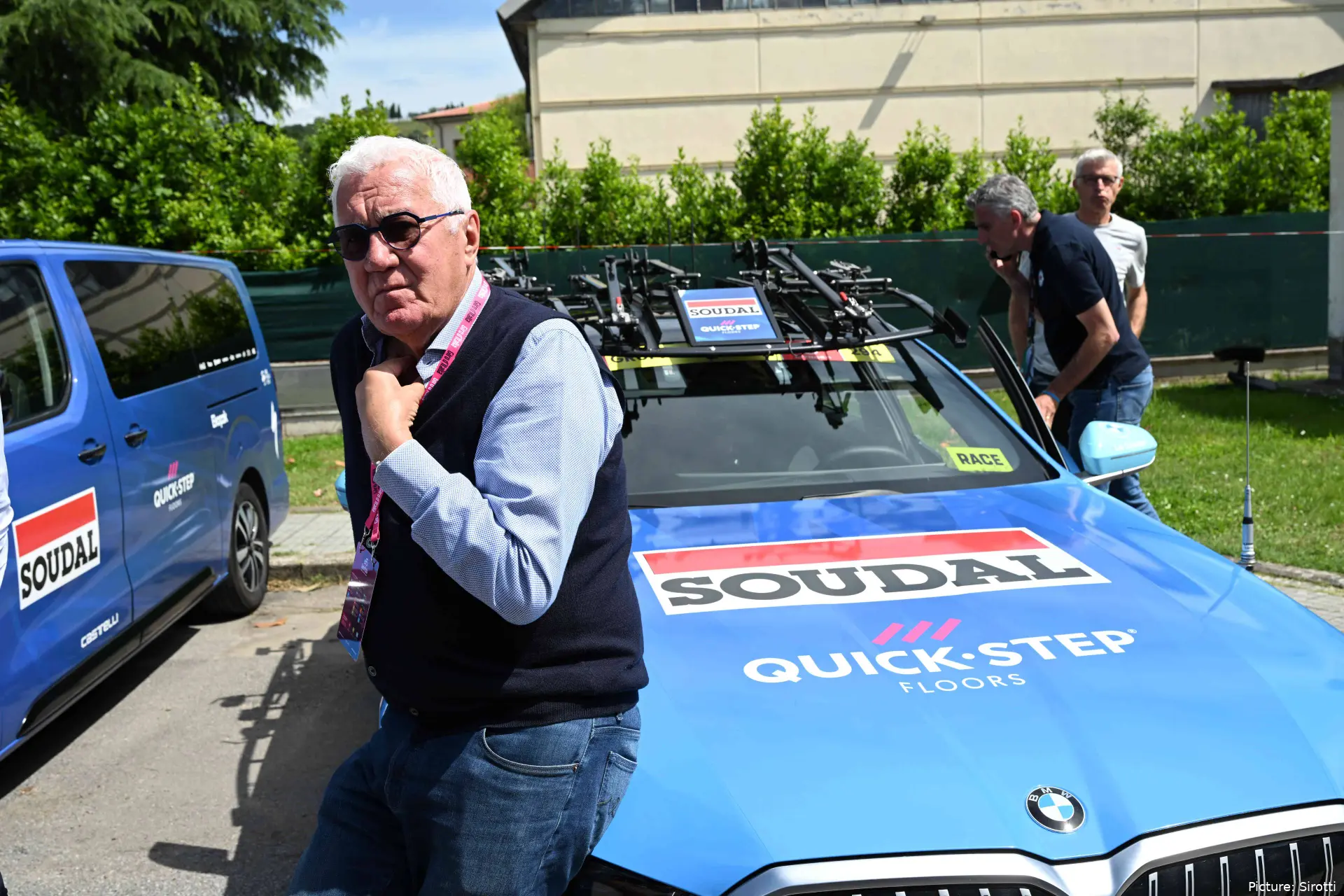
Patrick Lefevere has been left underwhelmed by the 2026 Tour de France Femmes, despite a race that has already seen the defending champion fall out of contention and the yellow jersey change hands on Mont Ventoux.
Kasia Niewiadoma-Phinney now leads Demi Vollering by just 15 seconds after blowing apart the general classification on Stage 7, while Marlen Reusser remains only 39 seconds behind. Pauline Ferrand-Prevot, meanwhile, has seen her title defence unravel across the time trial and mountains.
For Lefevere, though, dramatic changes in the standings have not necessarily translated into better racing.
“I’m curious to see what will still happen in this Tour de France Femmes,” the former Soudal Quick-Step boss wrote in his column for Het Nieuwsblad. “Personally, though, I think the level is a little lower this year than it was last year. The racing is less aggressive. I thought it would be more attractive.”
A dramatic Tour, but not enough aggression for Lefevere
There has been no shortage of decisive moments. Reusser demolished her GC rivals in the Stage 4 time trial, Vollering responded with victory on Stage 5 and Niewiadoma-Phinney then produced the biggest climbing performance of the race on Mont Ventoux. Only 54 seconds now cover the top three with two stages remaining.
Lefevere’s frustration appears to lie less with the consequences of those stages than with how races are developing before the decisive attacks arrive. “But it often remains difficult to predict what will happen in women’s races,” he said. “Sometimes you see breakaways with a huge advantage and think: they will never be caught. But then suddenly they start looking at each other at the front and, in no time at all, everything comes back together.”
That assessment places him at odds with anyone judging the Tour purely by the movement on GC. The race has changed repeatedly, but Lefevere believes the underlying racing has lacked some of the aggression he saw in 2025.
His comments also come from someone whose own involvement in women’s cycling arrived relatively late. For decades Lefevere built his reputation running one of the strongest men’s teams in the sport. He initially resisted adding a women’s operation while the financial conditions for riders remained precarious, before eventually becoming involved with the project that developed into AG Insurance-Soudal.

Lefevere was one of the founders of the Soudal - Quick-Step team
“We sometimes forget how fast everything has gone”
Lefevere now points to the financial transformation of the women’s peloton as evidence of how much has changed in a remarkably short period. “We sometimes forget how fast everything has gone,” he said. “The minimum salary in the WorldTour is now around 50,000 euros. When I became involved three years ago, I heard stories about girls earning 250 euros per month.”
His original position was characteristically blunt. “At first I said I didn’t want to start a women’s team because I didn’t want to play social services.”
That stance softened once the sport developed further and a viable project presented itself. “In the end, I did take over a team. At the beginning it was difficult and the figures were very poor. Fortunately, we eventually found a good sponsor in AG Insurance. And look where they are now...”
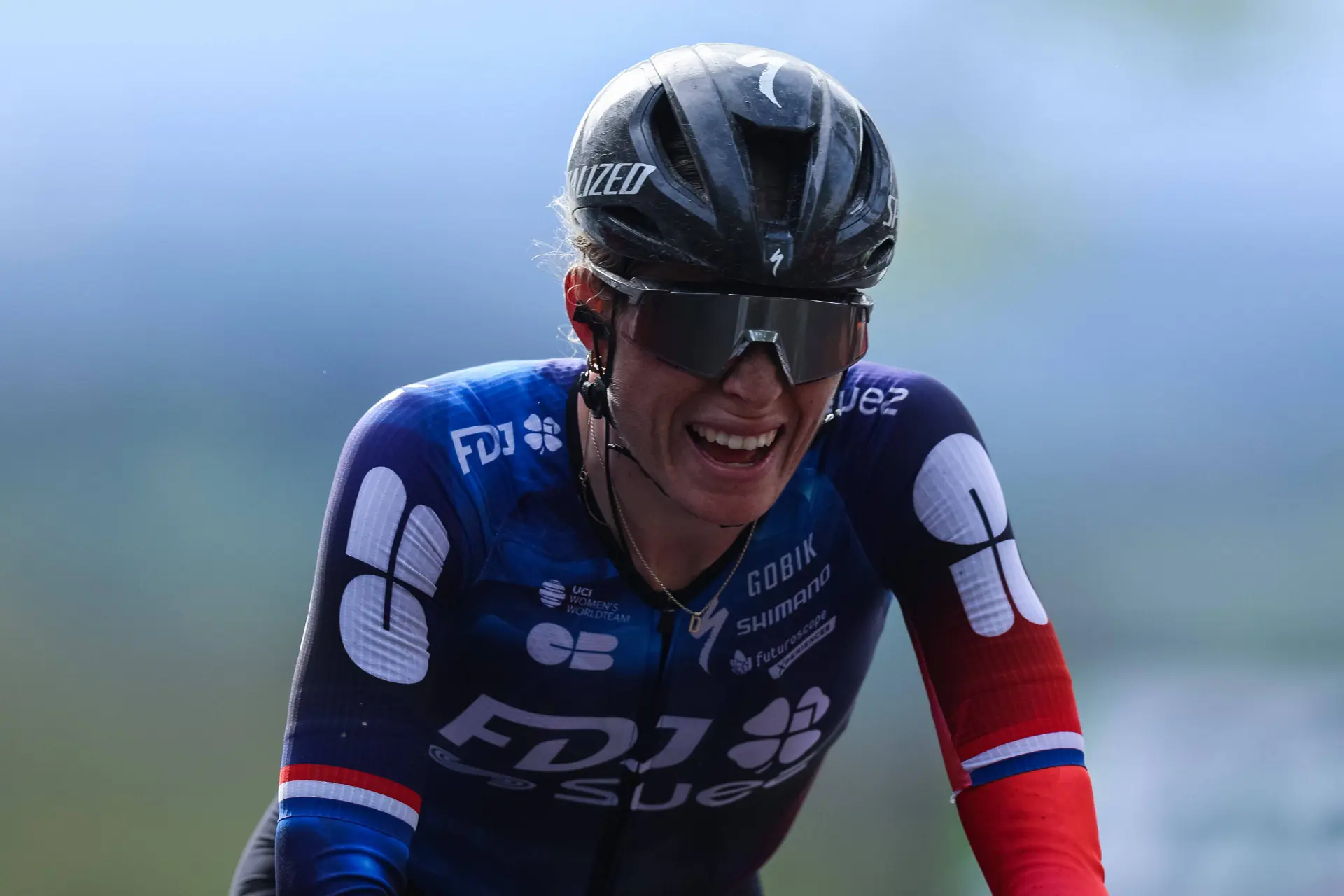
The women’s peloton Lefevere once considered too financially fragile to enter has changed substantially since then. His expectations have evidently changed with it.
With Niewiadoma-Phinney, Vollering and Reusser separated by less than 40 seconds at the top of the Tour, the 2026 edition still has plenty of scope for late drama. Lefevere’s complaint is that, seven stages in, he expected more aggression on the road before reaching this point.

Kieran WoodDeputy Editor-in-Chief
Kieran Wood is a sports journalist based in Wales and has been active in journalism since 2022. He regularly contributes to DartsNews.com and CyclingUpToDate.com, where he covers professional cycling and darts. In cycling, his work includes liveblogs from major races, including the Tour de France, the Giro d’Italia, and La Vuelta a España, alongside race reports and analysis. He has also conducted interviews with professional riders.
His reporting spans the full racing calendar, from one-day classics to stage races, with a focus on accurate, real-time coverage and clear contextual analysis. For statistics, results, and historical context, he regularly uses resources such as ProCyclingStats. To support reporting on rider activity and training context where relevant, he also references Strava.
In his work, Kieran places strong emphasis on careful sourcing, editorial accuracy, and updating articles as new, verified information becomes available.
claps 0visitors 0
Just in
Popular news
Latest comments
- I watched Il Lombardia today... :) What a loser Remco is!MajorPayne10-10-2026
- Couldn’t agree more, @RidesHills. CyclingUpToDate endeavours to ban him, but he continues to create new accounts. He was banned from CyclingNews. Whilst I used to argue against his negativity, I’ve simply lost interest. He is so utterly boring. I was initially worried he'd bully other fans, but nobody's having it. Most of us simply pay him no mind, anymore. At this point, everybody just scrolls right past him. He is quite a coward though, I’ll tell you that. His toxic comments on this site are nothing compared to what he is able to post on Twitter.anonymouscyclist10-10-2026
- C’mon, don’t follow in Horner’s footsteps. At least he had the courage to post HIS prediction ahead, I didn’t see many others disagreeing or claiming it was ridiculous.Mistermaumau10-10-2026
- @SLO: Your ridiculously rude language about riders makes it really hard to read your consistently condescending comments. "BS losers," how is it ok to talk about people like that? Also, you truly sound like you do not understand that this is a team sport, where del Toro rides for his leader and therefore doesn't follow his attacks. We can all agree that we are watching a once in a generation (really, a once in a century) rider in Pogačar, and that's great, but come on, you don't have to be a jerk when it comes to other riders. It's clear that I prefer to praise the positive in what I see, mostly because I am in awe of what these humans can do (including the ones who don't win), but your negativity about anyone but your idol is just so very very exhausting.RidesHills10-10-2026
- Huh??? You’ve obviously forgotten all the contrary you’ve been trying to sell us the last weeks. Shall I dig some out for you?Mistermaumau10-10-2026
- Doesn’t sound like it from his post-race interview. That old record you’re still playing is starting to jump a bit too often.Mistermaumau10-10-2026
- Sorry but who is this guy? If HE doesn’t know that « much » about Seixas by now, I’m recalibrating my opinion of his finish line questioning. As for PS, the most amazing thing about him so far is not what he’s won or almost won at this age, although that’s already phenomenal, it’s how consistent, numerous and long this seasons’ results have been. I don’t think there’s ever been a 19/20 year old quite as developed. Of course, you can’t expect development at this level to go backwards in time but it’s amazing to witness a rider you assume won’t be able to keep things up forever prove you wrong.Mistermaumau10-10-2026
- I agree, it was a good feeling to end the season this way... and only hope the knee injury held Del Toro back. Some how I have a feeling it wasn't just that... I wish my feelings are wrong.PogiSloFans10-10-2026
- Seixas is an amazing rider. Remco disappointed. Del Toro should rather have withdrawn if he had an injury linked to over-training. Anyway, a satisfying end to the season.Hills3310-10-2026
- History books won't care who had good legs or bad legs, or who did or didn't get laid last night; what the history books say is that Del Toro and Remco are two losers, while Seixas is a Monument winner at the age of 20. Let's not forget who was the only one that could follow Pogi in Strade Bianche. Paul Seixas, not Del Toro. Ad acta!!!PogiSloFans10-10-2026
Loading
1 Comments