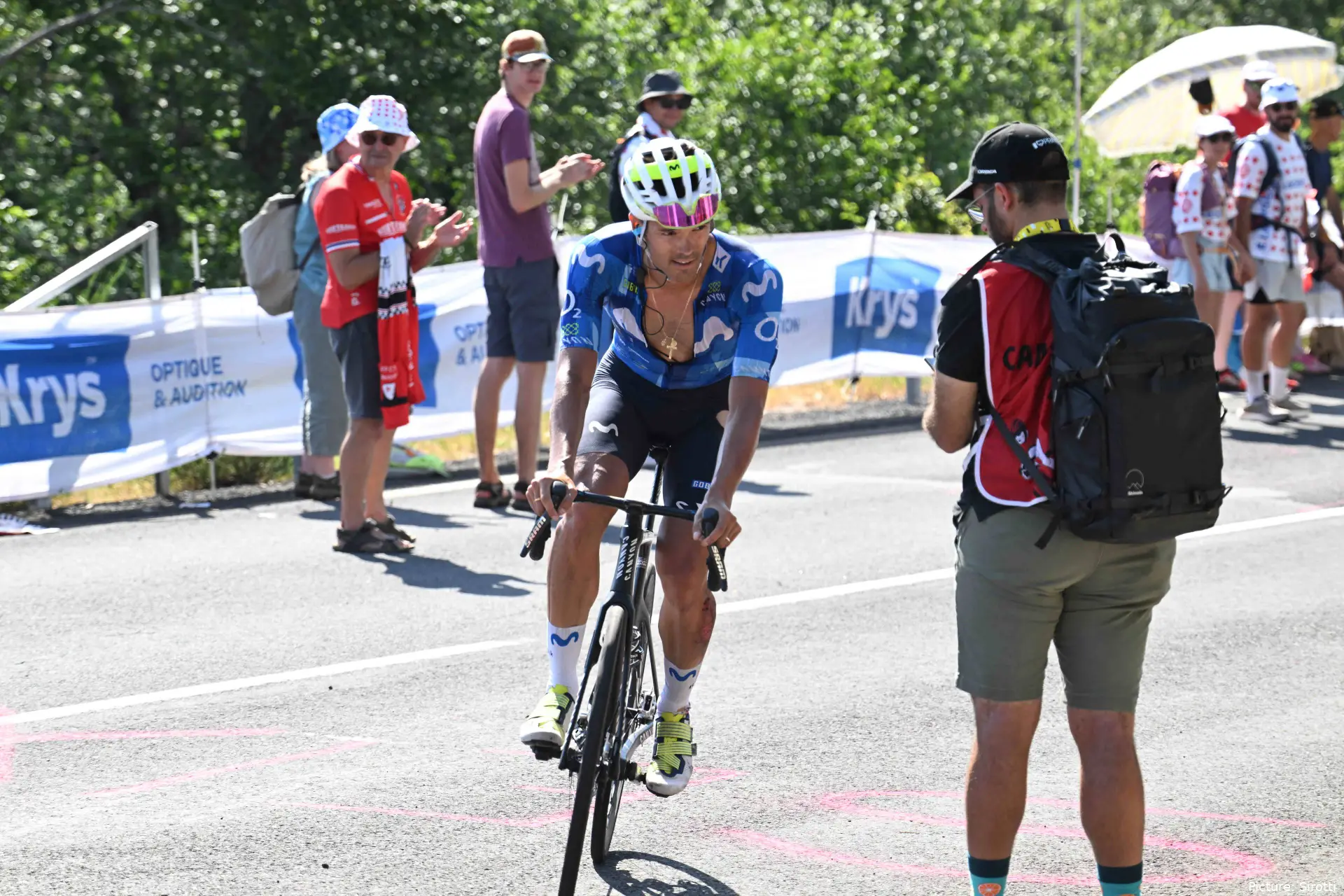
Javier Romo and Movistar Team are going their separate ways after three seasons together. The rider from Toledo and the Spanish team have mutually agreed to terminate their contract, bringing their partnership to a close after the Tour of Guangxi, Romo’s final race with the team.
The news marks the end of a professional relationship that began when Movistar backed a rider who had impressed in his early years as a professional. Romo, from Villafranca de los Caballeros, now brings his time with the team to an end after three seasons with one of the leading squads in international cycling.
The decision was reached by mutual agreement, the team said through its official channels. The Spanish squad and the rider will therefore part ways rather than continue a contract that will not carry into next season.
The Tour of Guangxi was Romo’s final race in Movistar Team colours. Held late in the season, the Chinese stage race served as his sporting farewell before the team announced the contract termination and confirmed the end of its relationship with the rider from Castilla-La Mancha.
Read also
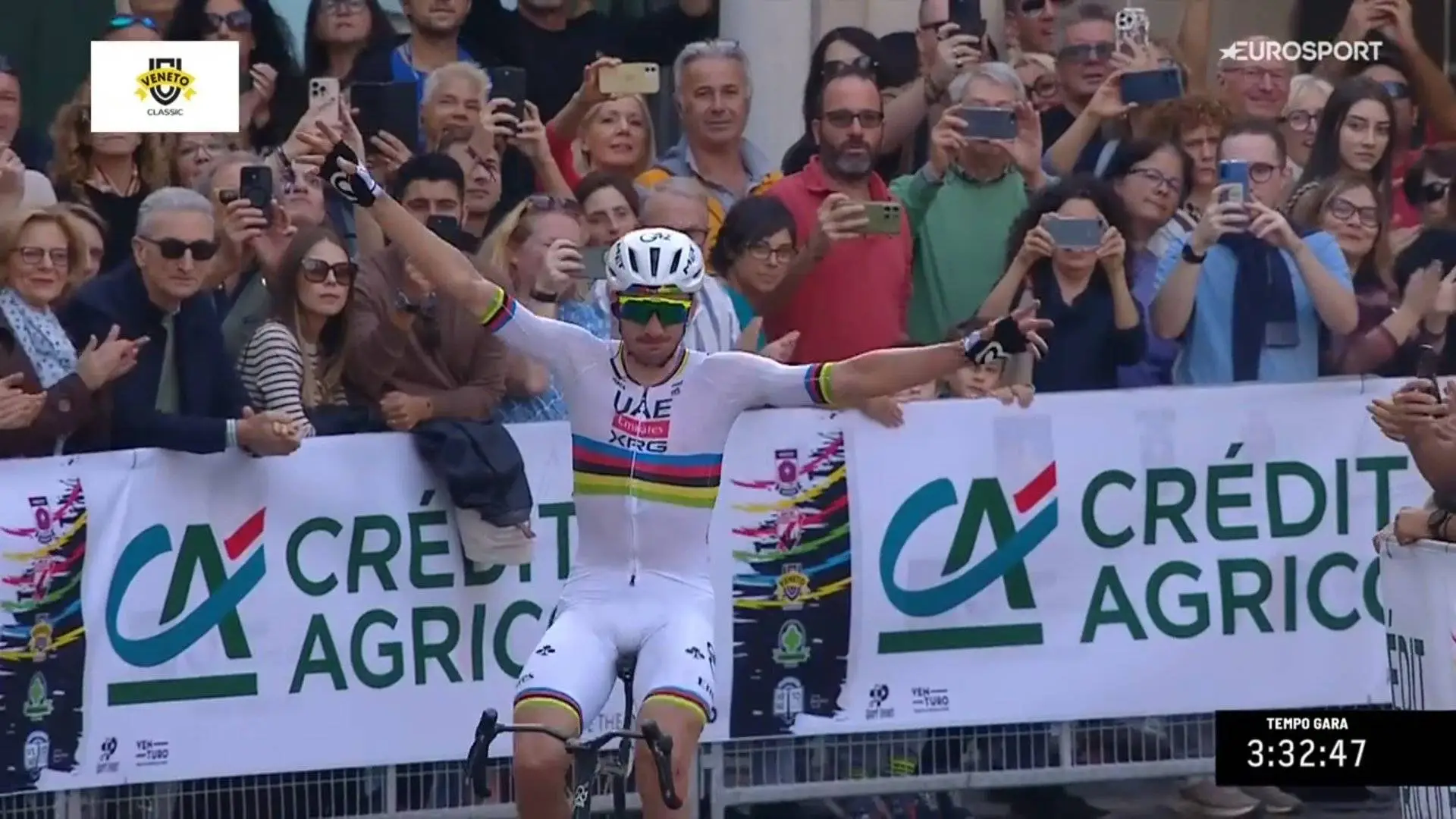
Movistar Team and Javier Romo end three-season partnership
In a brief statement, Movistar Team confirmed the rider’s departure and thanked him for his work during his time with the squad. “The whole team would like to thank him for his work and dedication over these three years and wish him every success in the future,” the team said, accompanying the announcement with a farewell message to Romo.
The agreement brings to a close three seasons in which Romo was part of Movistar’s sporting project. His departure comes amid a period of renewal and squad planning for next season, as teams finalise their rosters and riders look for new opportunities to continue their professional careers.
🔵 Javier Romo finaliza su etapa en Movistar Team Movistar Team y Javier Romo separan sus caminos tras alcanzar un acuerdo mutuo para rescindir el contrato que vinculaba al ciclista de Villafranca de los Caballeros con el equipo. El Tour de Guangxi ha sido su última carrera con nosotros. Todo el equipo quiere agradecerle su trabajo y dedicación durante estos tres años y le desea mucho éxito en el futuro. 💙🫂
— Movistar Team (@Movistar_Team) October 18, 2026
For now, the announcement has focused solely on the contract termination and has offered no details about the rider’s immediate future. Neither side has given further reasons for the decision, beyond confirming that the split was mutual.
The farewell opens a new chapter for Javier Romo, who must now decide on his next destination after concluding his time with the Spanish team. Movistar Team has wished him well in his future challenges, bringing a three-season partnership to an end. Romo now faces the task of finding a new project in the professional peloton, while the Spanish squad continues to shape its roster for the future.
Javier RampeCycling Journalist
Javier Rampe is a sports analyst with more than 15 years of experience. He holds a degree in Economics from the University of Rome and a Diploma in Business Studies from the University of Cádiz. Despite coming from an academic background not particularly associated with cycling, his passion for both cycling and journalism was instilled in him from an early age. He grew up following Miguel Indurain and José María “El Chava” Jiménez. An admirer of Michael Robinson’s communication style and journalistic approach, he was inspired to pursue a degree in Journalism at the University of Buenos Aires, which he is currently completing.
He has always maintained close ties with the worlds of sport and culture, contributing from a young age to sports blogs and film and music review websites. His work has appeared in media outlets such as Cope, RAI, and Radio Con Vos. He is also the founder of the cycling-focused podcast El Contraanálisis and the football interview channel Días De Fútbol, dedicated to conversations with professional footballers.
In addition to his work at Ciclismoaldia, Javier has interviewed some of the most influential figures in modern cycling, including Alejandro Valverde and Tadej Pogačar, as well as key voices in anti-doping policy such as Alberto Yelmo, David Varillas, and Marcelo Milano. Marcos Maynar, in relation to the ‘Operación Ílex’ case, is also among the personalities he has interviewed. He enjoys conducting in-depth analysis of the cycling ecosystem and has attended major events such as Strade Bianche, the Vuelta a Andalucía, and Itzulia, as well as numerous national cyclo-cross races.
His background in economics, combined with extensive experience in marketing and corporate communications, drives his continuous study of positioning strategies and ensures that he always keeps his focus on crafting compelling and evocative headlines.
claps 0visitors 0
Just in
Popular news
Latest comments
- While none of us know if they are doping, I prefer to believe they aren't until it comes out, if it ever does. I think it's a disservice to the top riders who constantly have to defend themselves.awp28-11-2026
- I'm surprised because he seemed pretty happy with things, at least a few years ago. He was saying the racing was believable and the teams were more open than ever.megasmacky28-11-2026
- When?
 Rafionain-Glas27-11-2026
- No need to apologize. You make excellent points!RidesHills27-11-2026
- The cycling world typically doesn't like ambition, and likes deference to team leadership deciding what to race and the team for one's win. It's uncouth, in a way, to be so blunt about desires. But I get it. He wants to win, and claims to be good enough to do so. Of course, there's that middle ground, why not become a second option for Mads? Why do I like this idea? To pick but one race each, one of them has attacked repeatedly in Lombardia, the other has attacked repeatedly in Flanders, and both are great to watch when they do it. One of them is a past world champion, and the other could have been had he not been reeled back in (while the next attack from the US squad wasn't reeled in, and there you go). Meaning: this could be fun, if it happens. Or it could be a disaster, two egos not making space. Who knows, until it happens.RidesHills27-11-2026
- Merckx raced against plumbers and pipefitters. There is no comparison, had Tadej and Jonas been racing in Merckxs' day he would have never won a grand tour.awp27-11-2026
- Is Paul writing another book? He must be..awp27-11-2026
- I don't know if they're doping, and I'm not sure I care. I almost stopped watching the sport in the early 2000's because I couldn't enjoy a race without wondering if the performances were real. So I decided I liked watching bike races more than I cared about the doping. There is, however, reason to believe that Pogacar is being honest. Besides the insane speeds today, I don't see any of the usual evidence of a heavily doped peloton that we saw in the 90's and 2000's. We're not seeing unknown riders suddenly winning big races. We're not seeing ridiculous sights like George Hincapie winning the queen stage at the 2005 Tour. We're not seeing largely Classics riders suddenly turning into the greatest GT rider of his generation(cough, Armstrong, cough). One of the problems with EPO especially was it levelled up the peloton. These days, top riders start attacking with 80kms or more left, because they know only the very best will be able to follow. If you attacked with 80 k's left in 2002, 150 riders would follow, and the DS would be screaming into your ear that you wasted energy. So we saw hard Monuments with intact pelotons 15 kms from the finish. I used to bitterly joke that LBL was a 240 km training ride with a 15 km race tacked onto the end. Roleurs were suddenly climbers, and on and on. Now the best riders win, either alone or in a small group of elite riders, just like it was before EPO. As far as the speeds go, even though we all scoff at the claims of tech and training improvements, that is true. Training programs even from half a decade ago are badly outdated. The riders are far, far lighter than they've ever been. The big thing though, and I don't see this spoken about at all, is the riders are arriving at races perfectly prepped and fresh. With the exception of the rare top rider going for the double, we're not seeing riders arriving at the Tour with the Giro and the Dauphine and the Tour de Suisse in their legs. Pogacar did the classics and Romandie, and then he buggered off for altitude training. Evenepoel spent over two months at altitude, arriving perfectly prepared and fresh. If you go back to pre-EPO days, look at LeMond in '86. He started racing in February, did all the classics including Roubaix, rode the Giro and finished 3rd, did the Dauphine and Tour de Suisse(I think), then won the Tour, did a bunch of crits, raced Worlds, and the old Coors Classic. All of those were raced hard and raced to win. There were no tune-ups, nothing, just hard racing for almost 9 months. Do you think he was ever fresh? Now they can all target and prep for individual races or race blocks. That has never happened in the history of the sport, and people are surprised the guys are crazy fast? I don't know if they're doping, maybe I'm just gullible or delusional. I doubt the sport is completely clean. But if a midlevel rider micro doses a little EPO so he can do his job, and if small-scale doping isn't really affecting the race results or the racing, then I'm fine with it. Sorry for the long comment.megasmacky27-11-2026
- let Quinn attack. it takes pressure off Mads. One of the other big players - MVDP, Tadej, WVA - will track him down. Or the team will. And Mads can profit off their work. the mano a mano thing isn't working out too well for Mads. He is winning huge races, but no monuments yet.mij27-11-2026
- I had kids later. To me, children are such a blessing, there is no wrong time to have children.mij27-11-2026
Loading
Write a comment