Roger De Vlaeminck: Four Paris-Roubaix wins, all five Monuments and the man Eddy Merckx feared most
Cycling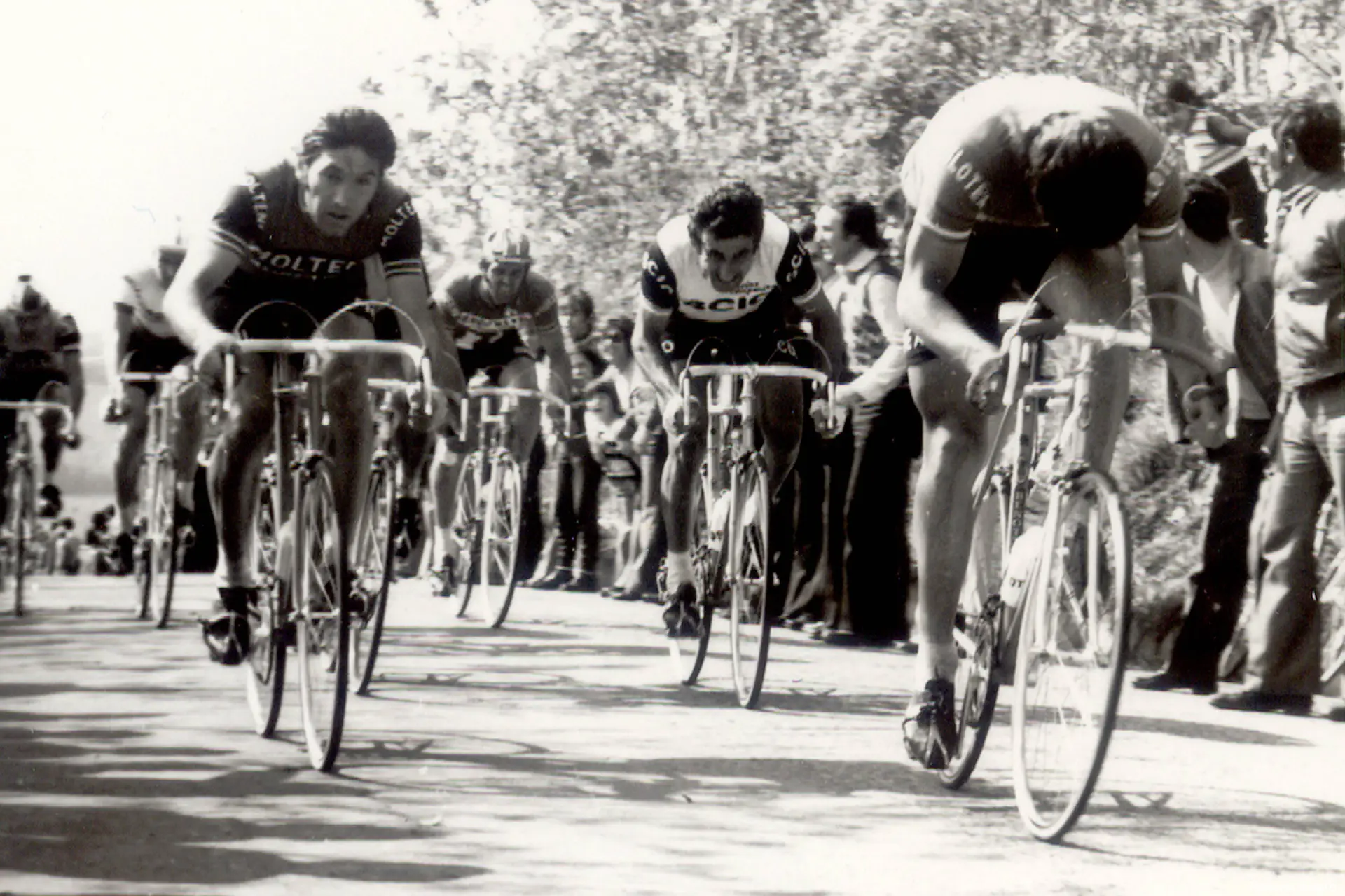
He was the rider Eddy Merckx feared, the king of Paris-Roubaix and a champion who never stopped defending the superiority of his generation. Roger De Vlaeminck conquered all five Monuments, collected 24 Grand Tour stage victories and built one of cycling's greatest careers, despite competing against arguably the strongest rider in the history of the sport.
As part of our new Cycling Legends series, in which we revisit the careers, personalities and extraordinary achievements of cycling's greatest champions, we look back at the Belgian whose brilliance on the bike was matched by his uncompromising personality away from it.
From his legendary rivalry with Merckx and his controversial Tour of Flanders victory to his uneasy relationship with Francesco Moser and his outspoken assessment of Tadej Pogacar, the story of Monsieur Paris-Roubaix is about considerably more than winning bike races.
From football to cycling: The influence of Eric De Vlaeminck and Briek Schotte
Born on 24 August 1947 in Eeklo, in the Belgian province of East Flanders, Roger De Vlaeminck grew up in a family of modest means. His father worked as a market trader, and although cycling would eventually define the family's sporting identity, Roger's first passion was football.
He was already playing in the third tier of Belgian football at the age of 16 and had little intention of following his older brother Eric De Vlaeminck into competitive cycling.
Eric would go on to become one of the greatest cyclocross riders of all time, winning seven professional world titles between 1966 and 1973. His younger brother, however, only began racing shortly before his 17th birthday, after a friend encouraged him to enter a cycling competition.
Roger finished fourth in his first race despite having completed just one training ride. According to his own recollections in an interview with Cyclist, he subsequently won 18 of his next 23 races.
There was also a rather amusing detail about his introduction to the sport. The bicycle he used for his first race belonged to Eric, who was unaware that his younger brother had borrowed it.
It did not take long for those early results to translate into international success. In 1968, Roger won the amateur cyclocross world title on the same weekend that Eric claimed the professional rainbow jersey. Roger also represented Belgium at the Olympic Games in Mexico City that year, finishing 18th in the road race.
He turned professional in 1969 with Flandria, where he came under the guidance of Briek Schotte, a two-time road world champion and one of the most respected figures in Belgian cycling.
Schotte encouraged aggressive racing, instructing his riders to attack repeatedly rather than wait for their opponents to dictate proceedings. It was an approach that suited De Vlaeminck perfectly.
His professional breakthrough came almost immediately. At Omloop Het Volk in 1969, he found himself contesting the finish against established champions, including Eddy Merckx and Patrick Sercu. De Vlaeminck initially believed that following Sercu's wheel would secure him second place, only to discover that he still had enough strength to overtake him.
Later that season, he finished second at Milan-Sanremo and defeated teammate Walter Godefroot to become Belgian national road champion. Merckx and the established Belgian champions suddenly had another serious rival.
Roger De Vlaeminck vs Eddy Merckx: The rivalry that defined Belgian cycling
For any ambitious professional cyclist in the late 1960s and throughout much of the 1970s, there was one considerable obstacle standing between them and sporting immortality: Eddy Merckx.
The five-time Tour de France winner was capable of dominating almost every type of race. Grand Tours, cobbled Classics, mountain stages, time trials and bunch sprints were all within his extraordinary range.
De Vlaeminck, however, was one of the few riders capable of confronting Merckx without feeling that defeat was inevitable. Merckx himself acknowledged the threat posed by his compatriot, in a declaration to Cyclist: "He was the only one I really feared."
Their rivalry was particularly intense in the Classics, where De Vlaeminck's superior cyclocross technique, positioning and finishing speed gave him the weapons to challenge the Cannibal.
Rather than lamenting the presence of Merckx, De Vlaeminck used him as a benchmark. Beating ordinary riders was satisfying, but defeating the greatest cyclist of his generation was something else entirely.
Asked when he had been happiest during his life in a 2022 interview, De Vlaeminck's answer was entirely predictable. "Any day when I beat Eddy Merckx!"
One particularly fond memory was the 1975 Tour de Suisse, where De Vlaeminck won both stages on the final day and secured the overall classification ahead of Merckx. Few victories gave De Vlaeminck greater satisfaction than getting the better of Merckx.
Despite their fierce sporting rivalry, the relationship between the two Belgians developed into a lasting friendship, something De Vlaeminck would acknowledge decades after their retirement.
Monsieur Paris-Roubaix: Four victories on the cobbles
No race became more closely associated with De Vlaeminck than Paris-Roubaix. The Belgian's experience in cyclocross made him particularly comfortable on the notoriously uneven roads of northern France. Where others struggled to maintain their balance and momentum, De Vlaeminck could exploit his technical ability without sacrificing speed.
He won the Hell of the North four times between 1972 and 1977, establishing a record that stood unmatched until Tom Boonen claimed his fourth victory in 2012. His first triumph arrived on 16 April 1972, when he defeated fellow Belgian André Dierickx, with Britain's Barry Hoban completing the podium.
Two years later, De Vlaeminck returned to the top step of the podium. On 7 April 1974, riding for Brooklyn, he finished 57 seconds ahead of Francesco Moser, with Marc Demeyer taking third place.
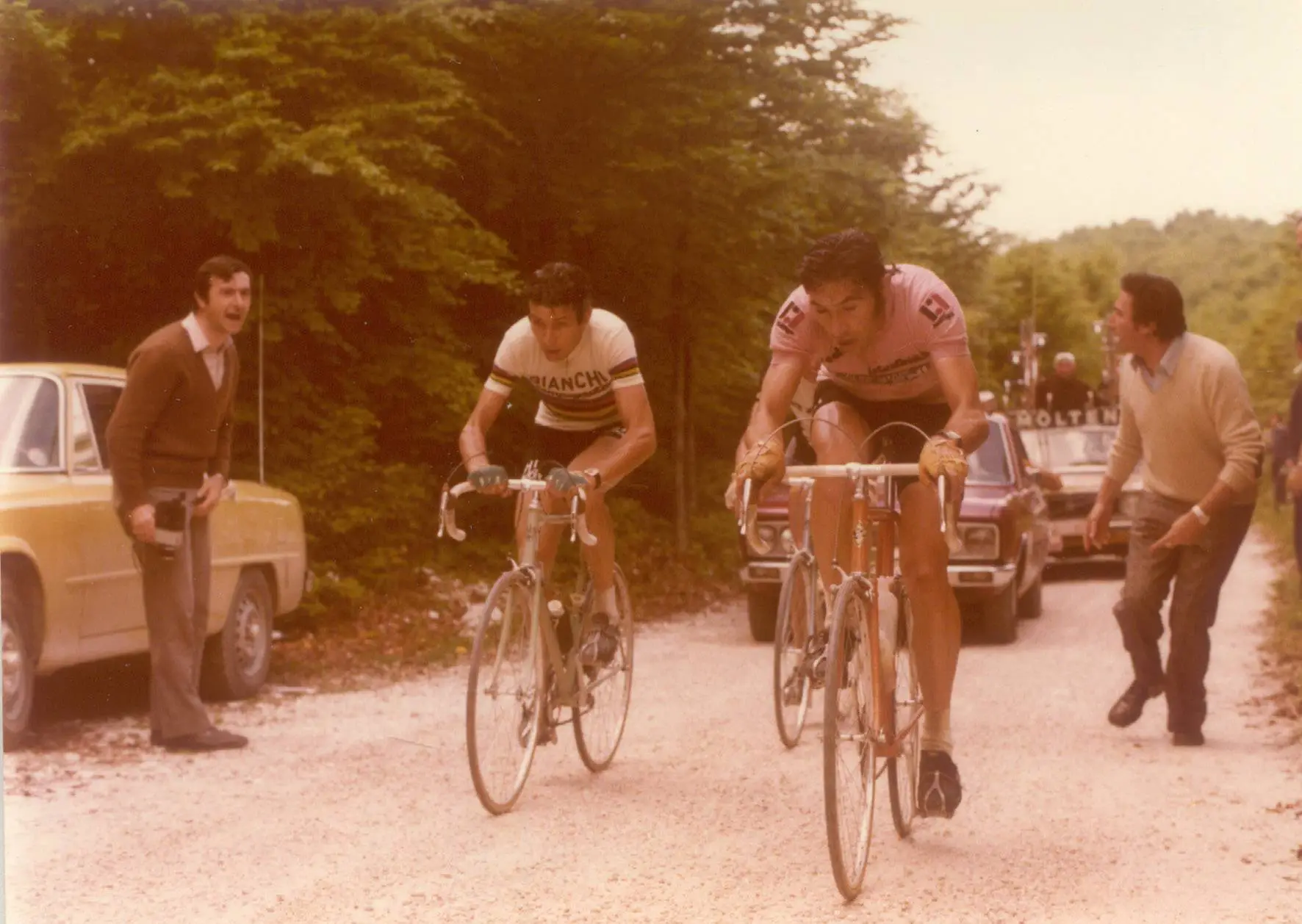
However, it was his third victory, on 13 April 1975, that held a particularly special place in his heart. Merckx arrived at Paris-Roubaix wearing the rainbow jersey of world champion. Despite suffering a late puncture, the Cannibal fought his way back into contention, setting up a showdown between the two Belgian greats.
De Vlaeminck prevailed in the sprint, with Merckx finishing second, André Dierickx third and Marc Demeyer fourth.
His fourth victory followed on 17 April 1977, when he finished ahead of Willy Teirlinck and reigning road world champion Freddy Maertens.
Even when De Vlaeminck failed to win Paris-Roubaix, he was rarely far from the winner's wheel. He also finished second on four occasions, losing to Merckx in 1970, Moser in 1978 and 1979, and Bernard Hinault in 1981.
His extraordinary record earned him the nickname Monsieur Paris-Roubaix. It was a distinction he cherished long after leaving professional cycling.
The Belgian cycling museum KOERS in Roeselare has even dedicated a digital exhibition to De Vlaeminck and Paris-Roubaix, featuring original jerseys, photographs and memorabilia from his career.

Plaque dedicated to Roger De Vlaeminck in the shower area of the Roubaix Velodrome
Eleven Monuments: Joining Rik Van Looy and Eddy Merckx in an exclusive club
Although Paris-Roubaix became his signature race, reducing De Vlaeminck to a cobbled Classics specialist would do an enormous disservice to his talent.
The Belgian won all five of cycling's Monuments, an achievement also accomplished by his compatriots Rik Van Looy and Eddy Merckx. Winning on the Poggio, in the Ardennes, on the Flemish cobbles and across the hills of Lombardy required a range of abilities few riders possessed.
His first Monument victory came at Liège-Bastogne-Liège in 1970, demonstrating that he could also succeed on the demanding climbs of the Ardennes.
In 1973, he added Milan-Sanremo to his palmarès. He would win La Primavera twice more, in 1978 and 1979, establishing himself as one of the most successful riders in the history of the Italian Classic.
De Vlaeminck also won the Giro di Lombardia in 1974 and 1976. The Italian autumn Monument, with its succession of climbs and technical descents, demanded considerably different qualities from those required to win Paris-Roubaix.
The final piece of the puzzle arrived in 1977, when he won the Tour of Flanders for the first and only time in his career.
By then, he had conquered every Monument on the calendar. He retired with 11 Monument victories, a collection that places him among the greatest one-day racers the sport has produced.
Freddy Maertens and the controversial 1977 Tour of Flanders
For all the extraordinary victories that De Vlaeminck celebrated during his career, his only triumph at the Tour of Flanders remains surrounded by controversy.
On 3 April 1977, De Vlaeminck and Freddy Maertens emerged as the two protagonists of one of the strangest editions of the Belgian Monument.
Maertens had received outside assistance on the Koppenberg following a mechanical problem. Later, the two Belgians found themselves together at the front of the race, with De Vlaeminck refusing to contribute to the workload.
For approximately 70 kilometres, Maertens rode at the front while De Vlaeminck remained on his wheel. When they reached the finish in Meerbeke, the Brooklyn rider comfortably won the sprint. What happened between the two riders remains disputed.
Maertens claimed that he had been informed of his impending disqualification and that De Vlaeminck had offered him 300,000 Belgian francs to continue riding. De Vlaeminck denied that version of events, maintaining that his refusal to cooperate was a tactical decision against a rider he considered the superior sprinter.
The controversy intensified when Maertens and Walter Planckaert, who had crossed the finish line in second and third place respectively, were subsequently disqualified following positive doping tests.
As far as De Vlaeminck was concerned, there was nothing to debate. Discussing the controversy with Cyclist decades later, the Belgian insisted: "I won the race. There is nobody second in the Ronde van Vlaanderen 1977."
The alleged financial arrangement remains contested, but the result is not. De Vlaeminck is the recognised winner of the 1977 Tour of Flanders, the victory that completed his collection of all five Monuments.
| Monument | Victories | Winning years |
| Paris-Roubaix | 4 | 1972, 1974, 1975, 1977 |
| Milan-San Remo | 3 | 1973, 1978, 1979 |
| Giro di Lombardia | 2 | 1974, 1976 |
| Liège-Bastogne-Liège | 1 | 1970 |
| Tour of Flanders | 1 | 1977 |
| Total | 11 |
Giro d’Italia: 22 stage victories and a remarkable fourth place in 1975
Italy became something of a second sporting home for De Vlaeminck. He spent much of his professional career riding for Italian teams and enjoyed considerable success in the country's biggest races. The Giro d'Italia became his most successful Grand Tour.
De Vlaeminck won 22 individual stages at the Italian Grand Tour between 1972 and 1979, as well as three points classifications. His ability to survive difficult terrain before unleashing his sprint made him particularly dangerous on stages that eliminated more conventional fast finishers.
His first appearance at the Giro, in 1972, produced four stage victories, the points jersey and seventh place in the general classification. Merckx won the race overall.
In 1973, De Vlaeminck added three more stages to his collection and finished 11th overall. He repeated that general classification result in 1974, winning another stage and reclaiming the points classification.
His finest Giro campaign came in 1975. De Vlaeminck won seven stages, secured his third points jersey and finished fourth overall. Only Fausto Bertoglio, Francisco Galdós and Felice Gimondi finished ahead of him in the general classification.
A rider better known for beating the Classics specialists had finished just outside the podium of one of cycling's toughest three-week races
He returned to win four stages in 1976 and three more in 1979, bringing his total to 22.
Tour de France and Vuelta a España: Completing the Grand Tour collection
Unlike many of the greatest cyclists in history, De Vlaeminck's reputation was not built on the Tour de France.
He participated in the French Grand Tour on three occasions, in 1969, 1970 and 1971, without reaching Paris in any of them. Nevertheless, he did manage to leave his mark on the race.
On 2 July 1970, De Vlaeminck won stage six of the Tour de France between Amiens and Valenciennes. He was still only 22 years old and riding for Flandria at the time.
His relationship with the Vuelta a España was even shorter. His only participation came in 1984, during the final season of his main professional road career.
On 25 April, De Vlaeminck won stage eight between Cardona and Zaragoza. Although he subsequently abandoned the race, that victory allowed him to join the group of riders who have won individual stages in all three Grand Tours.
At 36, De Vlaeminck had finally completed his collection of stage victories across all three Grand Tours.
Six consecutive Tirreno-Adriatico titles and a famous victory over Eddy Merckx
For all his success in the Monuments, De Vlaeminck's grip on Tirreno-Adriatico was arguably just as remarkable.
From 1972 to 1977, the Race of the Two Seas belonged to De Vlaeminck. For six successive editions, nobody could dislodge the Belgian from the top of the standings. De Vlaeminck also accumulated 15 individual stage victories at Tirreno-Adriatico throughout his career.
His combination of sprinting, time trialling and climbing ability made him particularly well suited to shorter stage races, where consistency was often more important than the ability to survive the highest mountains.
Another outstanding demonstration came at the 1975 Tour de Suisse. Fresh from his seven stage victories and fourth place at the Giro d'Italia, De Vlaeminck won six stages in Switzerland and secured the overall classification ahead of Merckx.
On the final day, he won both the road stage and the individual time trial, turning the general classification in his favour.
Six Tirreno-Adriatico titles and a Tour de Suisse victory over Merckx hardly fit the description of a mere Classics specialist.
His other stage race successes included the Four Days of Dunkirk in 1971, the Giro di Sardegna in 1976 and the Giro di Puglia in 1979.
Cyclocross world titles and the rainbow jersey Hennie Kuiper denied him
Long before riders such as Mathieu van der Poel, Wout van Aert and Tom Pidcock demonstrated the advantages of combining cyclocross with road racing, the De Vlaeminck brothers had established themselves among the finest exponents of the discipline.
Roger won the amateur cyclocross world championship in 1968 and finished second in 1969. His brother Eric, meanwhile, accumulated seven professional world titles, establishing a record that stood for decades.
Roger came close to winning the professional rainbow jersey in 1974, finishing second behind compatriot Albert Van Damme in Vera de Bidasoa, Spain.
A year later, in Melchnau, Switzerland, he finally achieved his objective. De Vlaeminck defeated Albert Zweifel by 31 seconds, with Peter Frischknecht finishing third. His brother Eric narrowly missed out on a medal, finishing fourth.
The rainbow jersey was only the beginning of what would become a spectacular 1975 season. In the same calendar year, he won the cyclocross world championship, Tirreno-Adriatico, Paris-Roubaix, seven stages of the Giro d'Italia and the Tour de Suisse. He came remarkably close to adding the road world championship to that collection.
On 31 August 1975, Belgium hosted the World Championships in Yvoir. Dutchman Hennie Kuiper escaped to claim the rainbow jersey, finishing 17 seconds ahead of De Vlaeminck, who won the sprint for silver ahead of Frenchman Jean-Pierre Danguillaume. Merckx finished eighth, while Francesco Moser was 11th.
It was the closest De Vlaeminck would ever come to becoming professional world champion on the road. Had he managed to catch Kuiper, he would have secured both professional world titles in the same year.

Roger De Vlaeminck during the 1976 Giro d’Italia
From Flandria to Brooklyn and Sanson: The uneasy alliance with Francesco Moser
De Vlaeminck began his professional career in Belgium, but his greatest successes came while representing Italian teams. After three seasons with Flandria, he joined Dreher in 1972 before moving to Brooklyn in 1973. The latter partnership would become synonymous with the Belgian's golden years.
Wearing Brooklyn's distinctive jersey, De Vlaeminck won three editions of Paris-Roubaix, two editions of the Giro di Lombardia, the Tour of Flanders and numerous stages at the Giro d'Italia.
His departure from Brooklyn at the end of 1977 brought him into an intriguing partnership with one of his greatest rivals: Francesco Moser.
The Italian had won the 1977 road world championship and was establishing himself as one of the most formidable Classics riders of his generation. Sanson had assembled two of the finest Classics riders in the world. Getting them to work together was another matter entirely.
In 1978, both riders represented Sanson. De Vlaeminck won Milan-Sanremo, but Moser defeated his Belgian teammate at Paris-Roubaix.
The following year, after De Vlaeminck had moved to Gis Gelati, Moser once again got the better of him in the Roubaix velodrome. The Belgian would eventually acknowledge that his relationship with Moser was very different from the one he enjoyed with Merckx.
Speaking at the Festival dello Sport in Trento in October 2024, De Vlaeminck explained that financial considerations had influenced his decision to join teams featuring Moser. Although he recognised the Italian's sporting greatness, he admitted that the two did not get along. "A great rider, but we didn't get along. Not at all," he recalled.
The pair became teammates again at Gis Gelati in 1984, during the closing stages of De Vlaeminck's road career. De Vlaeminck and Moser might have worn the same jersey, but their ambitions did not always align.
From Felice Gimondi to Bernard Hinault: A generation of great rivals
De Vlaeminck had to contend with several generations of champions, from Merckx and Gimondi to Moser, Saronni and Hinault.
Merckx was his principal benchmark, Moser became his great Italian adversary and Maertens was involved in some of his most controversial encounters. However, the list extended considerably further.
Walter Godefroot, Frans Verbeeck, Felice Gimondi, Jan Raas, Hennie Kuiper, Giuseppe Saronni and Marc Demeyer were among the champions with whom he shared the peloton.
Towards the end of his career, he also found himself competing against a younger generation led by Bernard Hinault.
At Paris-Roubaix in 1981, a 33-year-old De Vlaeminck finished second behind Hinault, with Moser completing the podium. The result brought together three of the most formidable competitors of their respective generations.
Despite his numerous sporting rivalries, Merckx appears to have occupied a particularly important place in De Vlaeminck's personal life. During his appearance at the Festival dello Sport, De Vlaeminck revealed that he had named his son after the Cannibal and that the two former rivals continued to see each other regularly.
Their competitive relationship had never prevented a mutual appreciation of each other's abilities. Away from the pressure of professional racing, that respect endured.
The end of a racing career and life after retirement
Although De Vlaeminck's greatest years belonged to the 1970s, he continued to produce significant results well into the following decade.
In 1981, twelve years after winning his first Belgian national road championship, he reclaimed the title. He also won Paris-Brussels and Brabantse Pijl that season, in addition to finishing second at Paris-Roubaix.
His stage victory at the 1984 Vuelta a España demonstrated that his finishing speed had not entirely deserted him. That season also produced victories at the Giro di Campania and a stage of the Settimana Ciclistica Internazionale.
The 1984 campaign effectively marked the conclusion of his sustained professional road career, although it was not the end of his competitive involvement in cycling.
Historical records document a return with Hitachi-Marc in 1987, as well as cyclocross appearances extending into 1988. Among his recorded results in 1987 was a cyclocross victory in Lutterbach, France.
After stepping away from competition, De Vlaeminck also worked on the other side of professional cycling. In later years, he settled into a quieter life in East Flanders, not far from his birthplace, where the former champion was maintaining a property of approximately 10,000 square metres, looking after animals including deer, goats and chickens.
Football, the sport that had occupied his childhood before cycling took over, remained another of his great passions. Roger De Vlaeminck identified Lionel Messi as the living person he most admired, explaining that he remained an enthusiastic Barcelona supporter. He also expressed his admiration for Muhammad Ali and the boxer's influence beyond sport.
Roger De Vlaeminck on Tadej Pogacar, Mathieu van der Poel and Wout van Aert
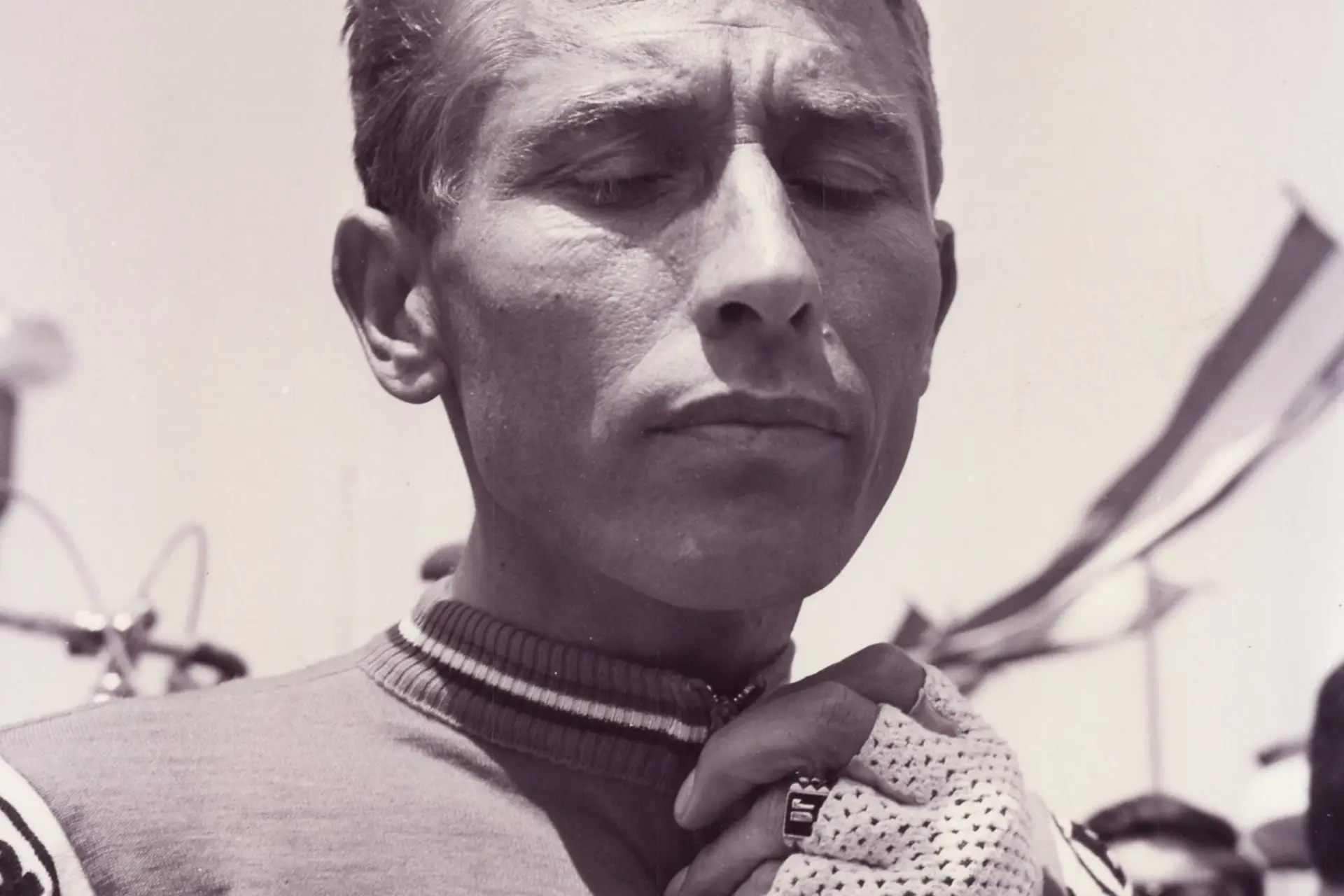
De Vlaeminck stopped racing decades ago, but he never stopped arguing about cycling. The Belgian has frequently expressed scepticism about comparisons between contemporary champions and the riders of his generation, particularly when the debate concerns Eddy Merckx.
Even the extraordinary achievements of Tadej Pogacar have not entirely persuaded him that the modern era can match the competitive depth of the 1970s.
At the 2024 Festival dello Sport, De Vlaeminck acknowledged the Slovenian's superiority over his contemporaries but rejected comparisons with his former rival. "Pogacar is the best in the world, but he doesn't match Merckx," he said.
Apparently, winning the Giro d'Italia, the Tour de France and the World Championships in the same season was still not enough to convince De Vlaeminck that Pogacar belonged on Merckx's level.
De Vlaeminck returned to the subject in April 2025, ahead of Pogacar's Paris-Roubaix debut, during an interview with Italian newspaper La Repubblica.
He argued that the Slovenian faced fewer genuine rivals than the leading riders of his own generation, identifying Mathieu van der Poel as his principal opponent on the cobbles. However, he also singled out another rider capable of disrupting that rivalry. "Only Van Aert can get between those two," he said.
One argument De Vlaeminck was unwilling to entertain, however, was that Pogacar was too light to win Paris-Roubaix. Drawing on his own experience, he explained that technical ability, determination and racing intelligence mattered more than simply being a heavyweight rider.
He also questioned whether the champions of his generation would have allowed Pogacar to dictate races so freely, suggesting that rival teams would have cooperated more effectively against such a dominant opponent.
De Vlaeminck is willing to acknowledge the brilliance of today's champions. Convincing him that they face stronger opposition than he and Merckx once did is a different proposition altogether.
For him, the greatness of Merckx was inseparable from the quality of the opposition the Cannibal had to overcome.
Read also
Tom Boonen and the battle for the title of Monsieur Paris-Roubaix
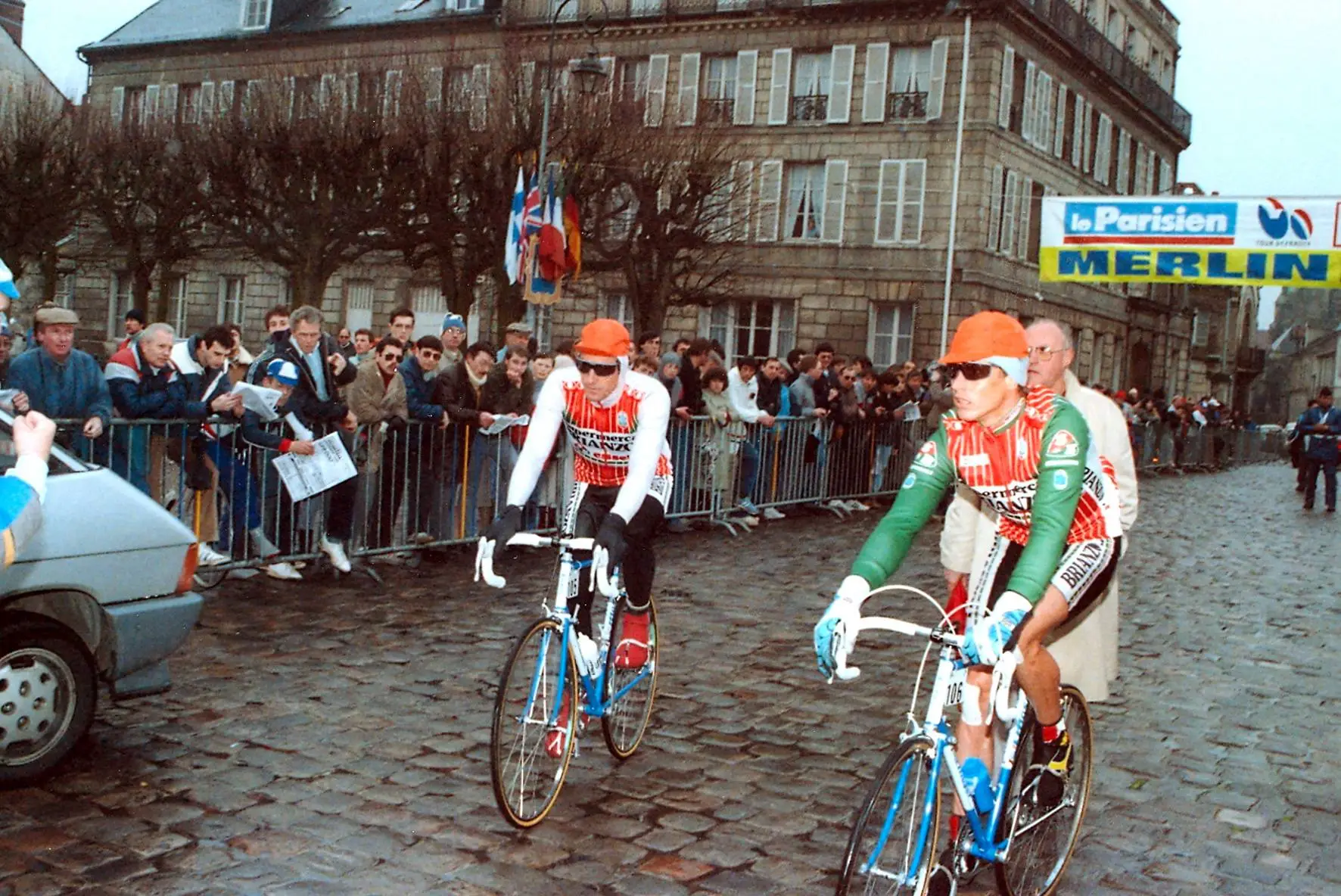
For 35 years, De Vlaeminck stood alone as the only rider to have won Paris-Roubaix four times. That changed in 2012, when Tom Boonen claimed his fourth victory after an extraordinary solo effort, matching the achievement of his illustrious compatriot.
Belgian cycling now had two four-time winners of Paris-Roubaix. Both possessed considerable sprinting ability, exceptional bike-handling skills and a natural understanding of cobbled racing. Both became national sporting icons through their performances in the spring Classics.
De Vlaeminck, however, was not always comfortable with the comparisons. He repeatedly emphasised the strength of the riders he had faced, maintaining that competing against Merckx, Moser, Maertens and the other champions of the 1970s represented a particularly demanding challenge.
In an April 2026 retrospective, French newspaper L'Équipe revisited De Vlaeminck's extraordinary dedication to preparing for Paris-Roubaix and his reluctance to surrender his unique association with the race. Boonen had matched his record, but De Vlaeminck was in no hurry to share his crown.
De Vlaeminck's career extended far beyond the races for which he is most commonly remembered. His collection of victories included Belgian semi-Classics, prestigious Italian one-day races, international stage races and national championships across two disciplines.
The legacy of the original Monsieur Paris-Roubaix
How many more races might Roger De Vlaeminck have won without Eddy Merckx or Francesco Moser standing in his way? A fifth Paris-Roubaix victory? A sixth? Perhaps an even greater collection of Monuments?
It is an intriguing question, although removing those rivals from his story would also take away much of what made his career so special. De Vlaeminck wanted to beat the best, and in the 1970s, there was certainly no shortage of champions against whom to measure himself.
Long before Mathieu van der Poel and Wout van Aert brought the combination of cyclocross and road racing back into the spotlight, the Belgian was winning world titles in the mud, sprinting to victories at the Giro d'Italia and making life uncomfortable for Merckx on the cobblestones.
Read also
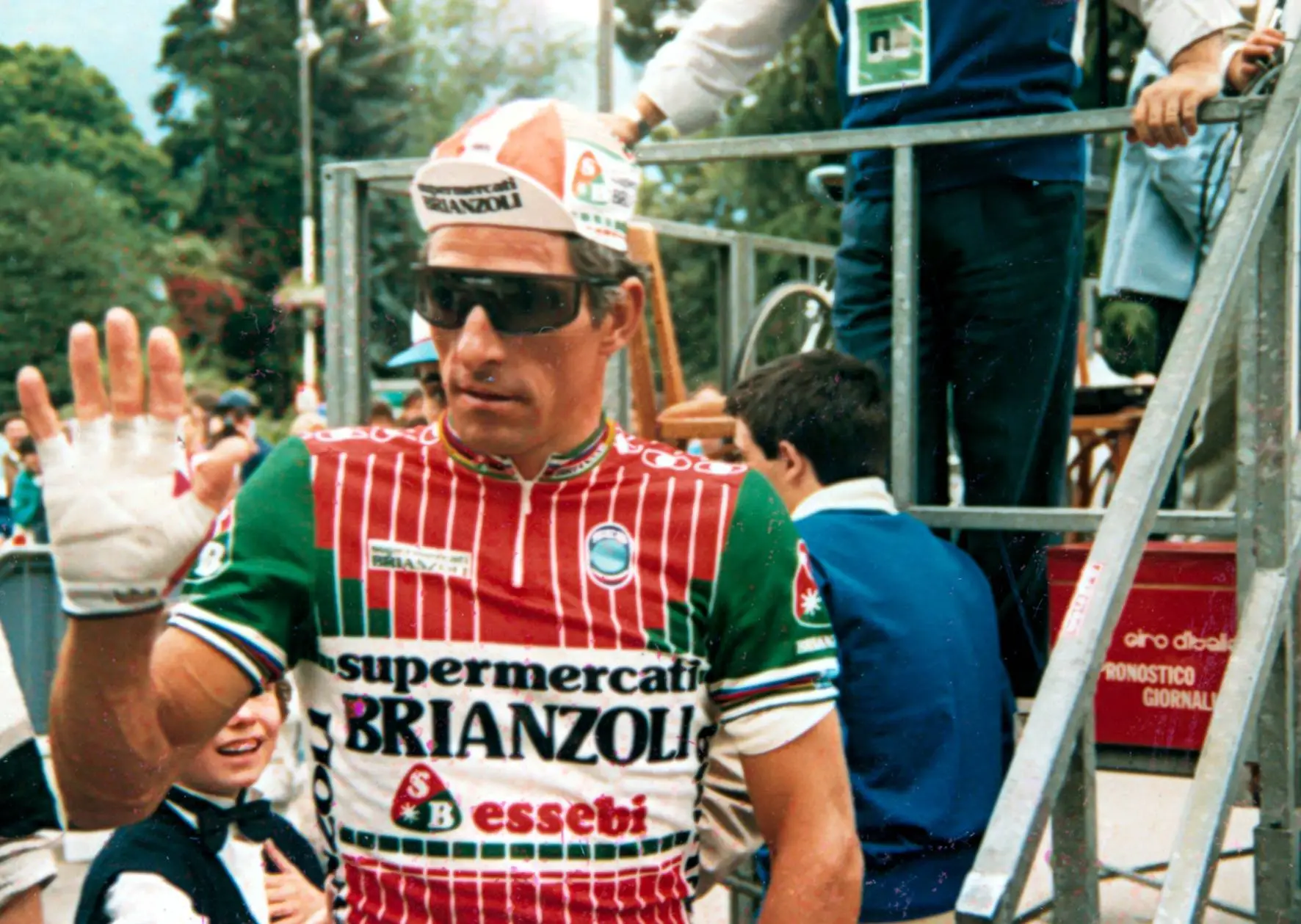
His palmarès needs little embellishment: 11 Monuments, four Paris-Roubaix victories, six consecutive Tirreno-Adriatico titles and 24 Grand Tour stage wins.
Yet the numbers alone cannot explain the fascination with De Vlaeminck. There were the disputed victories, the uneasy alliances, the fierce rivalries and, decades later, his stubborn refusal to accept that modern cycling had necessarily produced greater champions.
Even in retirement, he remained a difficult man to beat in an argument - at least as far as he was concerned.
Tom Boonen may have matched his Paris-Roubaix record, and a future champion may yet surpass it. But there will only ever be one original Monsieur Paris-Roubaix.
Carlos Silva is a writer for CyclingUpToDate.com, where he contributes race reports, interviews, analysis pieces, and live coverage of the international cycling calendar. Holding a degree in Sports from the Jean Piaget Institute, he combines academic knowledge of performance, training, and competition with hands-on journalism experience in professional cycling.
Throughout his career, Carlos has conducted interviews with leading figures in the sport, including Alberto Contador, Joaquim Rodríguez, Óscar Pereiro, João Almeida, Isaac del Toro, Derek Gee, John Degenkolb and Geraint Thomas. These conversations reflect direct engagement with Grand Tour winners, Classics specialists, and emerging talents.
He has provided on-site coverage at major events ranging from the Vuelta a España to the Tour de France, alongside stage races such as Vuelta a Andalucía, Volta ao Algarve, Volta a Portugal and O Gran Camiño. Covering the mythical climbs of the Giro d'Italia remains one of his professional ambitions.
Carlos is responsible for liveblog coverage of all major WorldTour races and beyond, including the Tour de France, Giro d'Italia and Vuelta a España. His reporting integrates verified data from ProCyclingStats to ensure statistical accuracy, contextual depth, and analytical precision.
A lifelong cycling enthusiast, he approaches storytelling across written, photographic, and video formats with a focus on credibility, tactical insight, and informed race interpretation.
claps 0visitors 0
Just in
Popular news
Latest comments
- This guy is 1 of thee most bizarre interviewees ever; 'It took a while definitely for me to figure it out and then after the season what to do, in which direction to go. And the thing was that, yeah, you know, then I started thinking and the more I was thinking the more I didn't know actually what to do. So at the end I really needed to let it go, you know, to look from a bit different perspective on some things' - can we have that in plain English and if you ever see him on video, you don't know what you've watched or get the gist lol
 leedorney28-11-2026
- Remco will go to the TDF and will request Lipo not to be there. Guilio will do the Giro but will share leadership with Lipo. Karma will strike Remco and he will flop in the TDFabstractengineer28-11-2026
- Lidl Trek is like a person who has eaten more than their stomach can accommodate and now its about to burstabstractengineer28-11-2026
- The debate on doping is the most contentious issue. I can't say for sure. Perhaps they are perhaps their not. I tend to look at the human side. Given the microscopic focus on doping, I imagine it is impossible to keep it quiet. In the movie 'Goodfellas' Robert Di Niro quotes 'The only way three people can keep a secret is if two of them are dead' Too many folks involved is pro cycling.Paggss28-11-2026
- Look at the Worlds in Montreal that Merckx won in 1974: 70 starters, 18 finishers. The 2026 Worlds that McNulty won had 184 starters, 60 finishers. Different eras, different race dynamics.
 ScottG28-11-2026
- Stage 5 also passes through Giulio's hometown of Camerino
 Rafionain-Glas28-11-2026
- If he tries that it may be too much. Just do the classics Giro and the WCabstractengineer28-11-2026
- I love this crop of US riders these days. A bunch of hard men who love to race.Occam28-11-2026
- Crazy, I thought all the riders were clean. Realize that Tejada is a second tier climber at a GT, never left in the front group. But 7w/kg is totally normal, y'all.Occam28-11-2026
- It's funny. Read the comments here and it's the same stuff they said about Lance, Ulrich, Pantanai, etc. Training, nutrition, altitude tents. Noooo waaaay could it be PED's. Remember, these guys are turning 7w/kg for 30 minutes. It used to be 6 was the gold standard and what you needed to win a tour. Also recall that every single rider in history that could turn a top TT and climb with the best was doping. Every single one. Really, Froome came out of nowhere to dominate the TdF? Totes.Occam28-11-2026
Loading
Write a comment