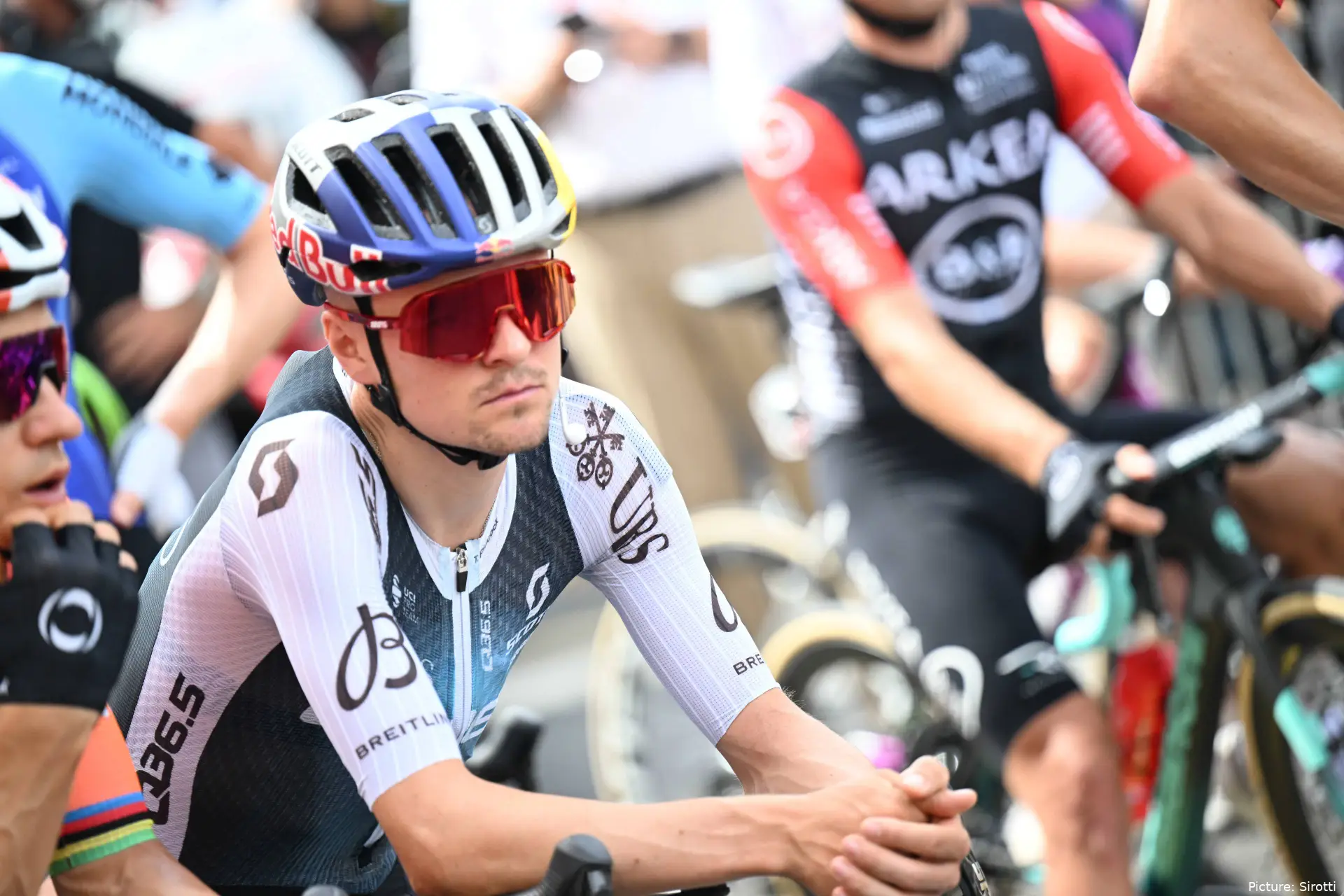
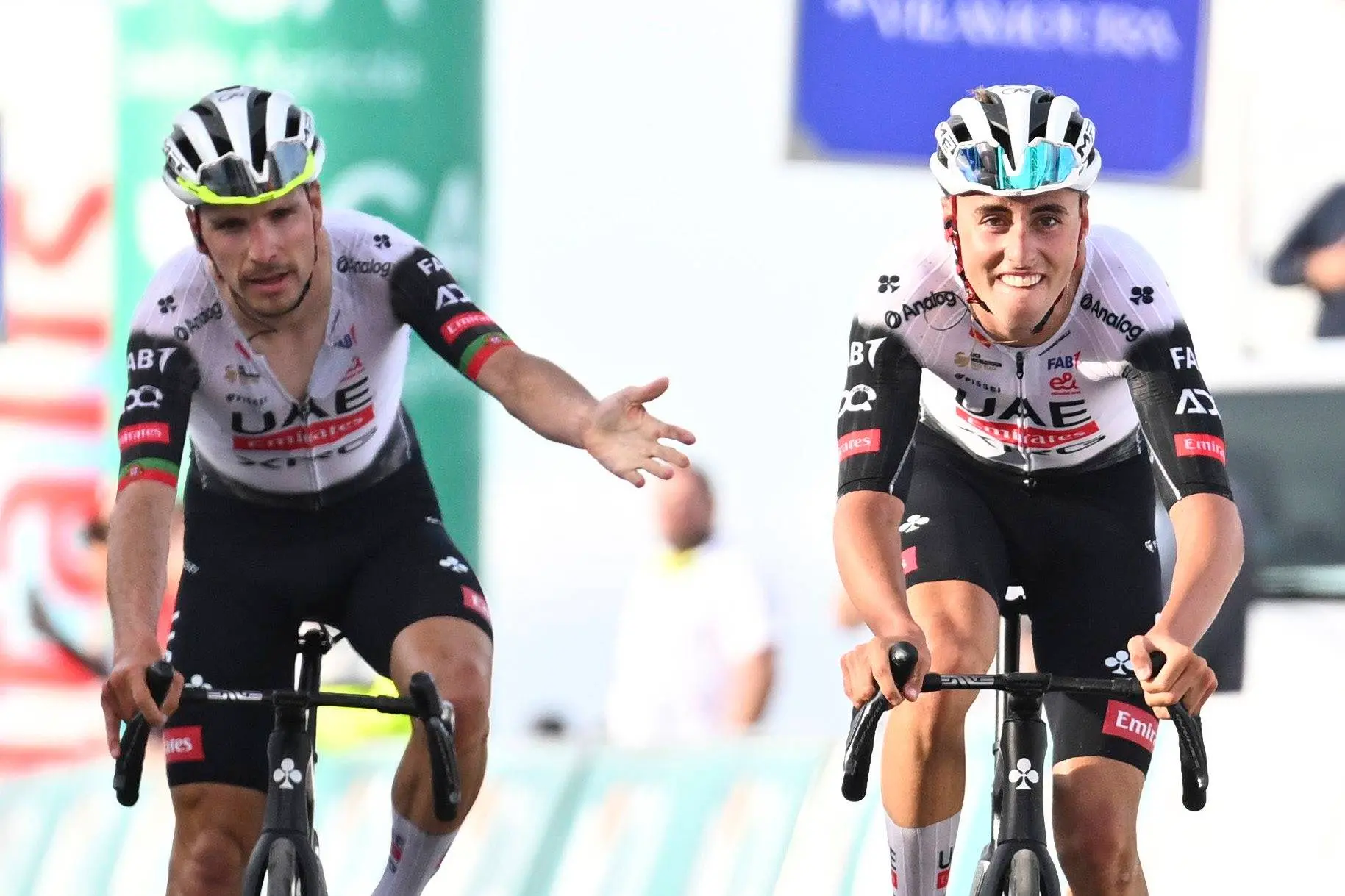
The 2026 Vuelta a Andalucia is going to take place between the 18 and 22nd of February, in the southern region of Spain where the stages are always either hilly or mountainous. This edition is no exception, with a set of stages that is set to make for some chaotic and tactical racing. We preview the race ahead.
The Spanish race carries a long history, having had its first edition in 1925, followed by a 30-year hiatus. In 1955 the race began to have consistent editions, mostly dominated by the eras' Spanish headliners. Former Belgian World Champions Jean-Pierre Monseré and Freddy Maertens brought the race more international recognition, but the race has always featured a very prominent list of Spanish winners.
Over the years we've seen riders such as Erik Zabel (1997), Erik Dekker (2001), Óscar Freire (2007), Alejandro Valverde (2012, 2013, 2014, 2016 and 2017), Chris Froome (2015) and more take victories... In 2023 it was Tadej Pogacar who decided to make the trip to Spain and dominated the race, whilst last year in 2025 it was his teammate Pavel Sivakov who took the overall win.
Profile stage 1: Benahavís - Pizarra

Stage 1: Benahavís - Pizarra, 163.9 kilometers
The race begins in Benahavís and in good Vuelta a Andalucia style, it features right in its first kilometers what might be the hardest climb of the race. This is an edition of Andalucia that does not feature mountain stages, but does have some long climbs on the menu, and here things open up with 20 kilometers at 5%.
2700 meters of climbing over 163 kilometers, not a brutal day on the bike but most of them are in the stage's first half. It is a day that should end in a sprint as the final half is mostly flat, however you can't say it's truly a sprint stage because the start is not only hard for anyone who can't climb too well, but also it is a stage that - also due to being the first day - is very prone to a breakaway succeeding.
Profile stage 2: Torrox - Otura

Stage 2: Torrox - Otura, 138.8 kilometers
Stage 2 of the race features a profile that is not too different from the opening day, only the distance of the main climbs to the finish is not as high. The day is short, starting off in Torrox and finishing in Otura, with only 138 kilometers to be raced. The opening kilometers feature a section of small short and explosive climbs that can be used to form a strong group, but again the race can explode early on in a long climb.
The Puerto de la Cabra is 25 kilometers long, averaging 4.6%, but this is including a flat section that is not very short. It's a climb that can be quite difficult, specially if attacked hard, and the summit lies 76 kilometers away from the finish - not a long distance to attack by 2026 standards. From there on it is a mix of flat roads and climbs that are not overly hard... It can be tactical, or be raced towards a sprint in the slight rise to the line in Otura.
Profile stage 3: Jaén - Lopera

Stage 3: Jaén - Lopera, 181 kilometers
Stage 3 of the race follows a different format, lacking the long climbs and favouring the shorter ones. But it is still a 'rompe-piernas' stage as the Spanish call it, not overly hard but with small climbs all day long which will slowly fatigue the riders and can make the finales more selective than what one would initially expect.
Out from Jaén, the riders find a climb early on which carries bonus seconds in its summit, in which the final 1.5 kilometers average out 7.5%. Hard terrain to control a race, and the teams with numbers may try to take advantage of it. Most of the other climbs on the stage are quite manageable. The riders find rolling terrain but also very exposed and non technical roads in the final kilometers in which it is possible to put on a good chase, so a sprint is likely in Lopera, albeit being another slight uphill drag to the line.
Profile stage 4: Montoro - Pozoblanco

Stage 4: Montoro - Pozoblanco, 166.1 kilometers
Stage 4 starts out in Montoro and is the day that is perhaps best suited to the sprinters that make the trip to Spain. As any Andalucia stage, it is not completely flat, but the main obstacle is close to the start of the stage with and the gradients are not going to go above 5% for too long. There is going to be a golden kilometer close to the finish, the only one in the race, on a flat section with 14 kilometers to go which can trigger some moves...
However preventing a bunch sprint here will be hard. The finale is also completely straightforward, but the final kilometer does tilt up once again, making it a sprint that is not pure, where having the legs is gong to be just as important as having the peak power in the final dash to the line.
Profile stage 5: La Roda de Andalucía - Lucena

Stage 5: La Roda de Andalucía - Lucena, 167.6 kilometers
The race ends with a hilly stage, however perhaps the only one where you can realistically see big attacks making differences close to the finish. The stage starts off in La Roda de Andalucia, and feature a hilly and treacherous 167-kilometer long stage which ends in Lucena.
What we find is a final circuit, where the riders will climb the Alto de la Primera Cruz on two occasions, 2.8 kilometers at 5.9% which summit with a mere 4.7 kilometers to go. The climb has bonus seconds on both occasions up it (the first coming with 26.7Km to go) and these can be key. The final time around there can be differences made, the climb is not overly hard but should be raced at a very high pace. Because the finale is fully downhill back into town, any gap over the summit can not only be key to the stage's result, but the entire overall classification.
Prediction Vuelta a Andalucia 2026 overall classification:
*** Tom Pidcock, Tim Wellens
** Jan Christen, Aleksandr Vlasov, Romain Grégoire
* Andreas Leknessund, Torstein Traeen, Iván Romeo, Jefferson Alveiro Cepeda, Maxim van Gils, Pavel Sivakov, Valentin Madouas
Pick: Tim Wellens
Original: Rúben Silva
Rúben SilvaEditor-in-Chief
A founding contributor to CyclingUpToDate since its launch in January 2022, Ruben Silva has played a central role in shaping the site’s editorial direction and long-term growth. Before joining the project, he built his experience through independent blogging at Echelons Hub and by producing race previews for Ciclismo Internacional, developing a strong analytical voice rooted in daily engagement with professional cycling.
Beyond editorial work, he has been closely involved in the expansion and coordination of CyclingUpToDate’s wider network, helping establish and support sister platforms across multiple languages. This includes ongoing collaboration with CiclismoAlDia (Spanish), CiclismoAtual (Portuguese), WielrennenUpToDate (Dutch), and RadsportAktuell (German), contributing to a shared editorial vision and consistent international coverage.
He also helps oversee editorial governance across the network, setting standards for accuracy and consistency and coordinating updates or corrections when needed.
Originally from the Porto metropolitan area in Portugal, he holds a bachelor’s degree in Geography. His path into cycling journalism was shaped not through formal media training, but through independent reporting, community engagement, and sustained on-the-ground involvement in the sport.
Over the course of his career, he has conducted approximately 100 interviews across road cycling and cyclocross, ranging from one-to-one conversations and online formats to press conferences and on-site pre- and post-race coverage. His interviews include leading riders, team managers, and prominent figures within cycling media: Tadej Pogacar, Jonas Vingegaard, Mathieu van der Poel, Primoz Roglic, Wout van Aert, Joao Almeida and Tom Pidcock; managers like Patrick Lefevere and Joxean Matxin; and YouTube personality Bryan Kennedy (BKXC)...
Within 18 months of launch, he helped grow CyclingUpToDate’s English-language platform into one of the most-read cycling news websites, built entirely from the ground up. As both a professional journalist and lifelong cycling enthusiast, his focus remains on delivering accurate, timely, and well-contextualized coverage.
claps 0visitors 0
Just in


Popular news

Latest comments
- writing about yourself in third person ... please, at least have someone else from your staff author these self-coverage articles!Ketterechts25-11-2026
- Don’t forget Yates’s podium at 2023 TdF!Lozza25-11-2026
- It was stage 14 to Morzine that Carlos Rodriguez won in 2023, not Puy de Dome. And Kwiato actually won the previous stage himself to Grand Colombier!Lozza25-11-2026
- Go Pogi!! 🐐❤️Lozza25-11-2026
- They didn’t have or need “extraordinary information”. All they needed was for a French judge to sign off on the night-time testing for it to go ahead.Lozza25-11-2026
- If the sponsors voted for Primoz then you get him, otherwise not.flyer25-11-2026
- It sure can feel or seem that way but I wonder if the same amount of prodigious performances (compared to the others) would occur if no one was ever doping at all.flyer25-11-2026
- Given the similarity of two articles (published on I think the same date), I'm reusing (copy-n-pasting) my post from the twin: I've always thought the last day of each of the grand tours was problematic mostly in that the GC is considered completed before the race starts when that is not really true. There is some tension, but not desirable tension. What saves the awkward practice is the race finish is legit for those who participate - so it's not wholly different from the other stages. That neutralizations usually make good sense demonstrates their necessity so if that has to be the way to go I agree that the design plan for the neutralization should be completed before the race starts. This years end stage in the Vuelta had one of the best first half's I've seen in that many of the riders looked to be thoroughly enjoying themselves making it a joy to watch. But I think it was slightly closer to the exception rather than the rule.flyer25-11-2026
- Even I often win without being there at all, not even breaking a sweat. Beat that!flyer25-11-2026
- It is not about rest and peaking again - 5 weeks is not enough for that. It is about recovery while maintaining form. 4 weeks is easier for that. With a Giro-Vuelta, the 12 week break is enough to rest and then peak again. Not for the Tour
 Rafionain-Glas25-11-2026
Loading
Write a comment