Miguel Ángel López and now Harold Tejada - Another anti-doping violation accusation casts a shadow over Colombian cycling
Cycling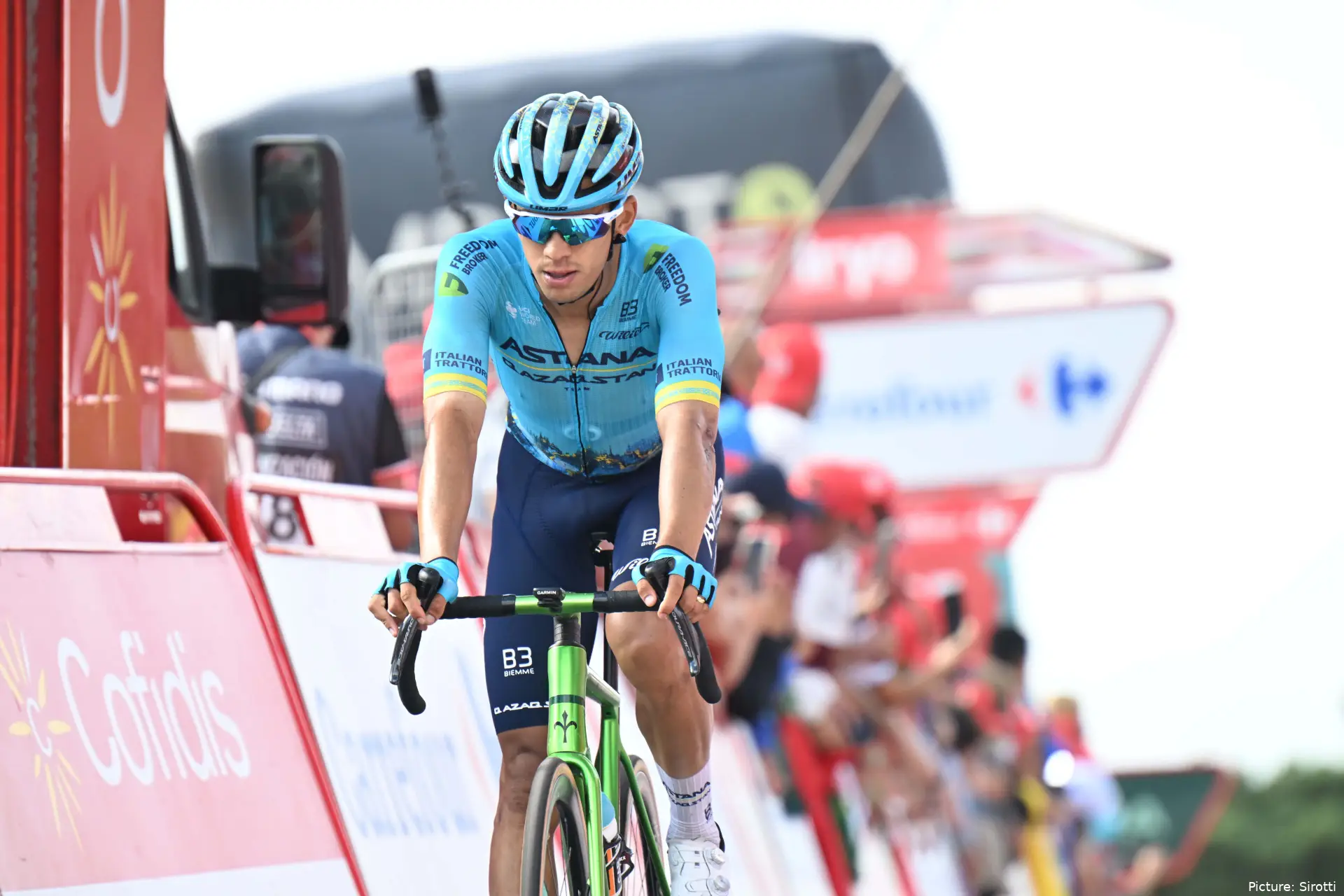
Colombian cycling is once again at the centre of the anti-doping spotlight. The International Testing Agency (ITA) has formally charged Harold Tejada with an anti-doping rule violation after detecting unexplained anomalies in his biological passport values.
The positive test has come at a heavy price for the Colombian, who has seen a major opportunity to showcase his apparent talent slip away.
The charge has had an immediate impact on his professional future. Netcompany INEOS announced that it had mutually agreed to terminate the contract signed with the Colombian climber just weeks earlier, which was due to take effect on 1 January 2027. The British team initially gave no reason for the split, but the ITA’s subsequent announcement provided context for a decision that left Tejada without his new team before he had even joined them.
The procedure calls for a mandatory provisional suspension, although the rider has the right to appeal and request that it be lifted. He can also submit additional information, accept the consequences of the violation or ask for the case to be referred to the UCI Anti-Doping Tribunal for a hearing.
A formal charge has therefore been brought, but no final sanction has been imposed. The ITA is handling the investigation after being delegated responsibility for the case by the international federation.
Tejada’s case inevitably recalls another episode that shook Colombian cycling: that of Miguel Ángel López, known as “Supermán”. The rider from Boyacá was handed a four-year ban for possessing and using menotropin during the 2022 Giro d’Italia, as part of the investigation linked to Operation Ilex and doctor Marcos Maynar.

Harold Tejada
Two different cases cast a shadow over Colombian cycling
Their shared nationality and the anti-doping context invite comparisons, but there are fundamental differences between the two proceedings. Above all, there is currently no known evidence linking the cases.
Miguel Ángel López’s case has had a much longer legal and sporting journey. The Spanish Civil Guard’s Central Operative Unit (UCO) investigation into Operation Ilex placed doctor Marcos Maynar and several associates at the centre of an alleged network distributing unauthorised medicines. In that context, the name of the then-Astana rider emerged in connection with the receipt and use of menotropin before the 2022 Giro, a substance on the World Anti-Doping Agency’s Prohibited List.
The UCI found López guilty of possessing and using the substance and imposed a four-year ban, running from 25 July 2023 to 24 July 2027. The Court of Arbitration for Sport (CAS) subsequently rejected his appeal, and the Swiss Federal Tribunal also dismissed his challenge to that ruling.
The sanction also annulled his results from May 2022 to July 2023. López has always maintained his innocence and said he would pursue every legal avenue to prove it.

Harold Tejada wearing the Colombian national team jersey
Is there any connection between Tejada and Supermán López?
The criminal proceedings arising from Operation Ilex also had consequences. Marcos Maynar and his assistant Ignacio Bartolomé were sentenced to two years in prison for trafficking unauthorised medicines, although neither will serve the sentence in prison. Maynar, however, was not convicted of sports doping.
This distinction matters: López’s sporting sanction was based on the UCI anti-doping tribunal’s ruling, while the criminal judgment dealt with the trafficking of medicines.
The question arises naturally given the proximity of the two episodes and their impact on two Colombian riders. However, the information available points to different mechanisms. López’s case centred on menotropin, its alleged receipt and use in the weeks before the 2022 Giro, and evidence gathered during Operation Ilex. Tejada’s case, by contrast, rests on abnormalities in his haematological biological passport and the assessment of an expert panel.
The ITA’s published information also makes no reference to Marcos Maynar, Operation Ilex or the people investigated in that case. There has been no announcement linking Tejada to that network or establishing a connection with López. Any link between the two cases would therefore be speculation without evidence. Their shared geography or nationality is not evidence of involvement in the same structure and does not support attributing shared responsibility.
What the two cases do share is the scale of their sporting consequences. Tejada has lost his contract with Netcompany INEOS and faces a provisional suspension while his case is resolved. López, meanwhile, is serving a four-year ban that will keep him out of professional cycling until July 2027, after losing lucrative WorldTour contracts.
XDS Astana, the link between Tejada and López
These are two different stories that have once again put Colombian cycling in the spotlight over a matter with far-reaching consequences. But any potential connection between them remains unproven.
Harold Tejada and Miguel Ángel López shared a team at Astana, where both spent part of their careers before becoming involved in anti-doping proceedings. The two Colombian riders were teammates in the same colours, and their cases have once again focused attention on a team that serves as a common link between the episodes.
Read also
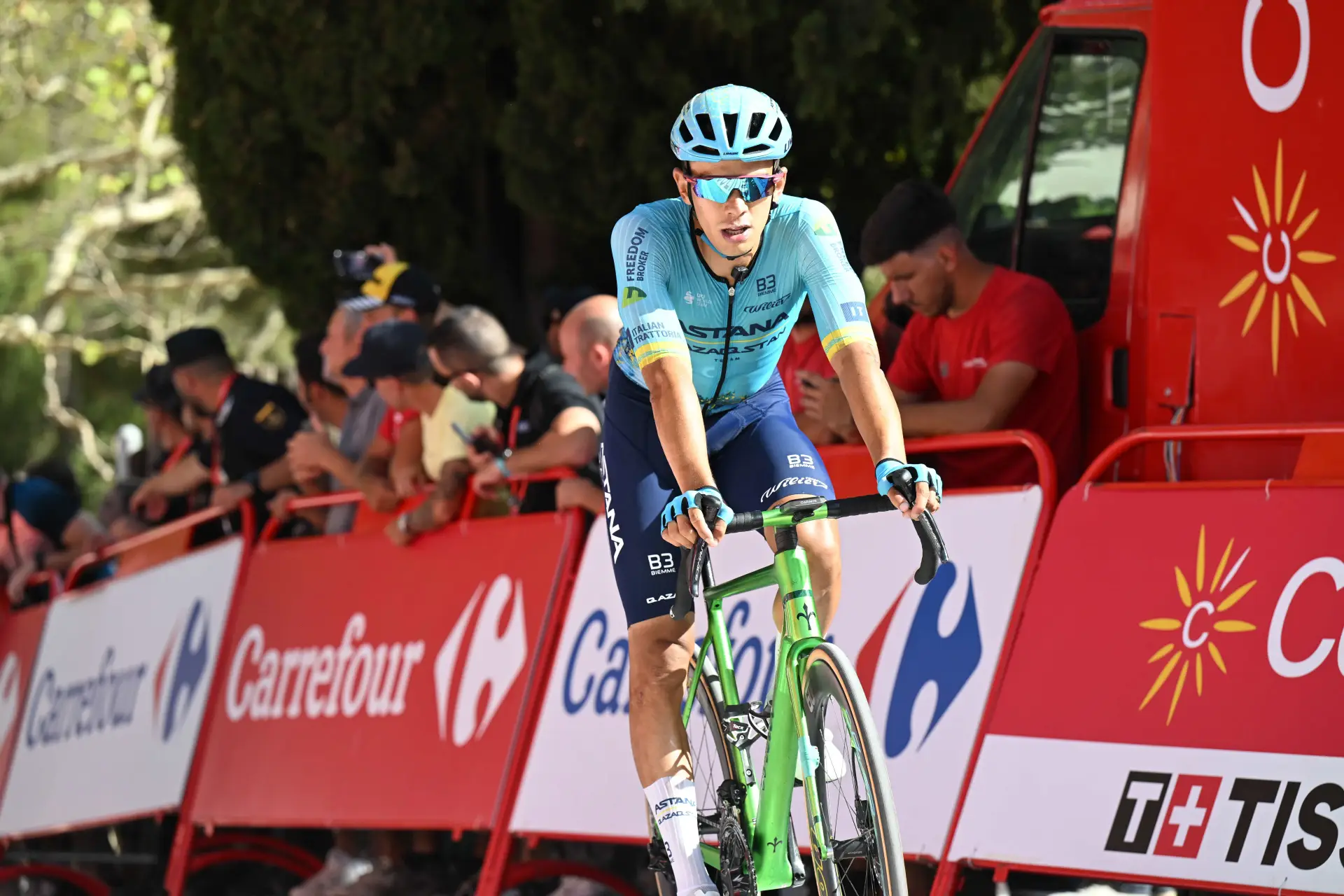
Both faced proceedings over possible violations while riding for the team. That coincidence places the Kazakh squad at the centre of two separate episodes, occurring at different times and involving different investigative methods.
López and Tejada were both part of the team in the 2020 and 2022 seasons, so their connection goes beyond having ridden for the same outfit at different stages of their careers. However, no public evidence establishes a link between their respective cases or assigns any responsibility to Astana.
Javier RampeCycling Journalist
Javier Rampe is a sports analyst with more than 15 years of experience. He holds a degree in Economics from the University of Rome and a Diploma in Business Studies from the University of Cádiz. Despite coming from an academic background not particularly associated with cycling, his passion for both cycling and journalism was instilled in him from an early age. He grew up following Miguel Indurain and José María “El Chava” Jiménez. An admirer of Michael Robinson’s communication style and journalistic approach, he was inspired to pursue a degree in Journalism at the University of Buenos Aires, which he is currently completing.
He has always maintained close ties with the worlds of sport and culture, contributing from a young age to sports blogs and film and music review websites. His work has appeared in media outlets such as Cope, RAI, and Radio Con Vos. He is also the founder of the cycling-focused podcast El Contraanálisis and the football interview channel Días De Fútbol, dedicated to conversations with professional footballers.
In addition to his work at Ciclismoaldia, Javier has interviewed some of the most influential figures in modern cycling, including Alejandro Valverde and Tadej Pogačar, as well as key voices in anti-doping policy such as Alberto Yelmo, David Varillas, and Marcelo Milano. Marcos Maynar, in relation to the ‘Operación Ílex’ case, is also among the personalities he has interviewed. He enjoys conducting in-depth analysis of the cycling ecosystem and has attended major events such as Strade Bianche, the Vuelta a Andalucía, and Itzulia, as well as numerous national cyclo-cross races.
His background in economics, combined with extensive experience in marketing and corporate communications, drives his continuous study of positioning strategies and ensures that he always keeps his focus on crafting compelling and evocative headlines.
claps 0visitors 0
Just in
Popular news
Latest comments
- By contrast, American Brandon McNulty won the men's 2026 World Championship road race, but I haven't heard him chirping about how now maybe things are going to be different at UAE because of it. He seems like a pretty humble guy, and though he may still get his chances next season, I expect we will see him in the rainbow jersey doing everything he can to help Pogi. Mads: 12 GT stages, a green Jersey, the points jersey, 5 Semi Classic wins and a Rainbow Jersey. Quinn: 0. ... Mads is a top 5 classics rider in the world. Quinn: Water Boy... Maga Quinn couldnt tie Pedersens shoe laces. He aint gonna be leading any TDF squad anytime soon. Maybe he should get into gravel racing in the US of A, and stay there. Europe cycling doesn't need an american maga Trump voter. Simmons has had rascist remarks a few years ago. Shame on him.PogiSloFans28-11-2026
- Paul Kimmage will be rubbing his hands in glee. Another page on the sports section lol🫣🫣🫣🫣🫣🫣paultryan200228-11-2026
- Cycling is so much harder now. Lots if not most of the peleton are well versed in nutrition and training methods now. The days of Paul Kimmage when the peleton were rather chunky or over weight and not really professional compared to todays riders is long gone. Better bikes equipment and training methods. Sorry Paul as much as i enjoyed your book you did not really come across as a professional rider at all just a good amateur on a mediocre French team at best.paultryan200228-11-2026
- While none of us know if they are doping, I prefer to believe they aren't until it comes out, if it ever does. I think it's a disservice to the top riders who constantly have to defend themselves.awp28-11-2026
- I'm surprised because he seemed pretty happy with things, at least a few years ago. He was saying the racing was believable and the teams were more open than ever.megasmacky28-11-2026
- When?
 Rafionain-Glas27-11-2026
- No need to apologize. You make excellent points!RidesHills27-11-2026
- The cycling world typically doesn't like ambition, and likes deference to team leadership deciding what to race and the team for one's win. It's uncouth, in a way, to be so blunt about desires. But I get it. He wants to win, and claims to be good enough to do so. Of course, there's that middle ground, why not become a second option for Mads? Why do I like this idea? To pick but one race each, one of them has attacked repeatedly in Lombardia, the other has attacked repeatedly in Flanders, and both are great to watch when they do it. One of them is a past world champion, and the other could have been had he not been reeled back in (while the next attack from the US squad wasn't reeled in, and there you go). Meaning: this could be fun, if it happens. Or it could be a disaster, two egos not making space. Who knows, until it happens.RidesHills27-11-2026
- Merckx raced against plumbers and pipefitters. There is no comparison, had Tadej and Jonas been racing in Merckxs' day he would have never won a grand tour.awp27-11-2026
- Is Paul writing another book? He must be..awp27-11-2026
Loading
Write a comment