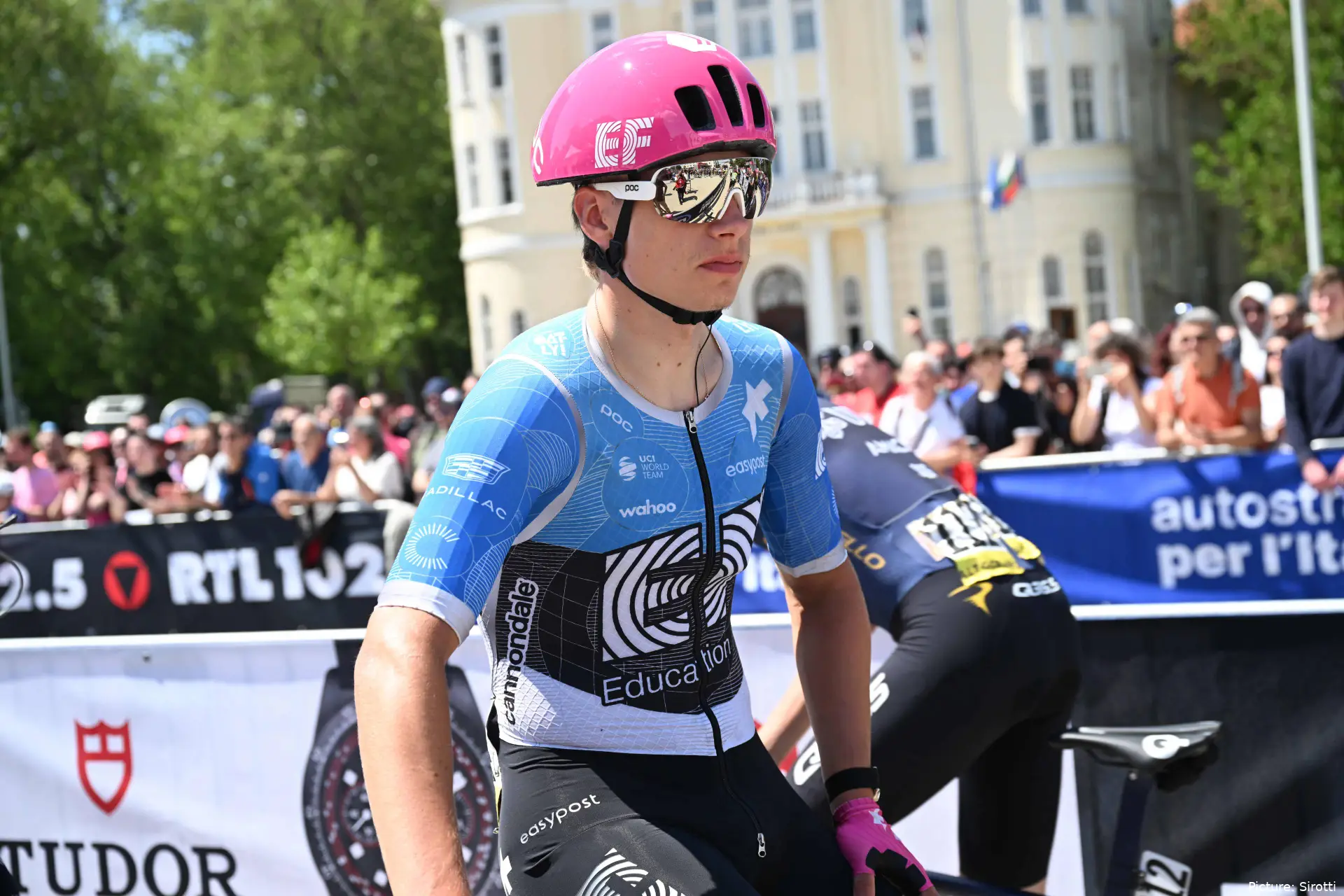
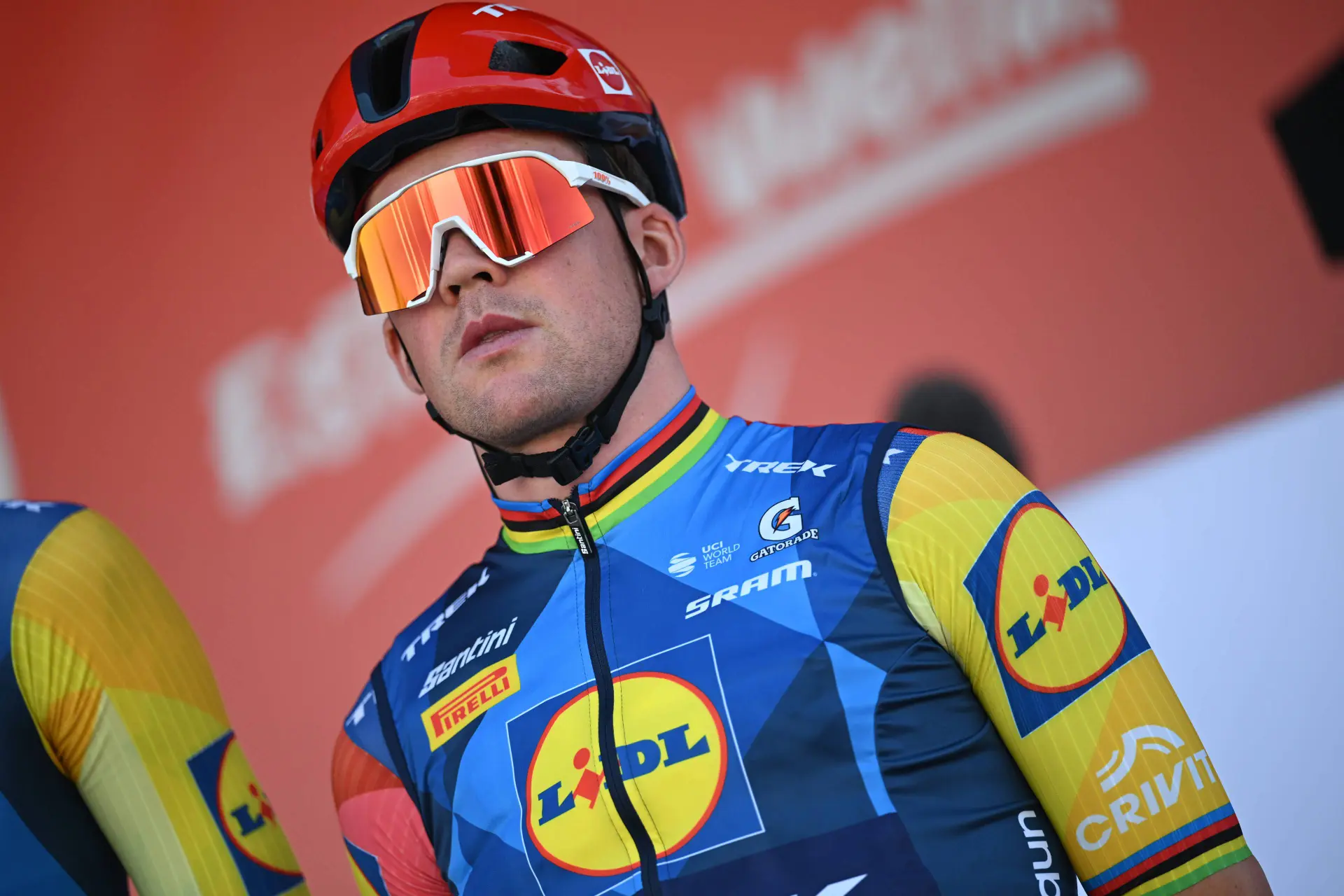
Alpecin-Premier Tech traditionally don't rank among the most active teams on the transfer market, often preferring to stick to their own development programme rather than spending a lot of money to bring leaders from outside. But Madis Mihkels might be an exception.
The Estonian sprinter emerges as a possible candidate to replace Kaden Groves (headed for Tudor Pro Cycling) as the Belgian team's second sprinter option. That role will be highly contested in 2027 with the expected arrival of former Giro d'Italia stage winner Casper van Uden.
At the age of 23, Mihkels has gradually established himself as one of the peloton's most reliable riders for both bunch sprints and the cobbled classics.
The former Estonian champion has three professional victories to his name, several top-10 sprint results across his three Grand Tour participations, a top-10 result from 2024 Paris-Roubaix, and even a European bronze medal from the same season.
Read also
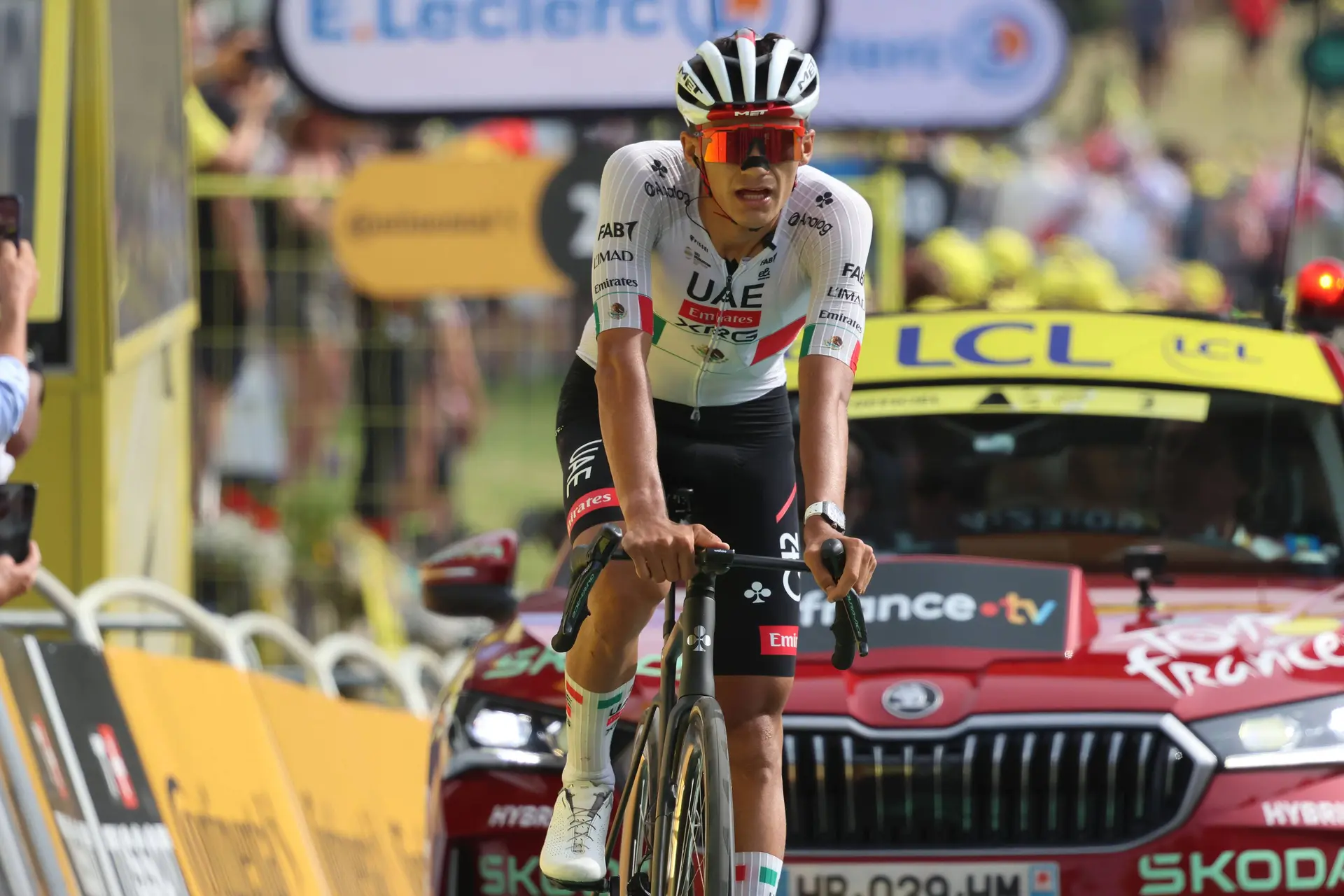
Mihkels was always recognized as a big talent, however his junior career was cut short by covid, allowing Mihkels to accumulate only 10 UCI starts in 2021 - a season finished with a bronze medal at junior World Championships.
Following this, he has been scouted by Intermarché - Wanty where he first enrolled as a stagiare in 2022, and later turned professional in 2023.
The young rider continued to steadily progress through the team's ranks, but when his contract run out at the end of 2024, he opted for a new adventure at EF Education-EasyPost.
Racing for the American outfit, Mihkels did not enjoy any further breakthrough with Classic Brugge-De Panne podium and national title the two most outstanding results. Without a strong sprint train at EF, Mihkels often had to manage on his own in stage finales. That shouldn't be the case anymore at strongly sprint-oriented Alpecin-Premier Tech where, according to WielerFlits, Mihkels agreed to a two-year contract.

Ondrej ZhasilCycling Journalist
Ondřej Zhasil is a cycling journalist at CyclingUpToDate and has been part of the team since 2023. He is based in Ostrava, the third-largest city in the Czech Republic, and covers professional cycling across the main UCI competitions, including the Tour de France, the Giro d’Italia, and La Vuelta a España. A key focus of his work is startlist analysis and pre-race coverage, where he examines team selections, rider line-ups, and tactical scenarios ahead of major events.
Alongside WorldTour coverage, Ondřej has developed specific expertise in junior cycling and in racing across East Asia, including competitions in China and Japan. He also maintains a broad working knowledge of other disciplines and levels, including cyclocross, while continuing to expand his understanding of mountain bike racing.
Ondřej holds a bachelor’s degree in Mathematics and Physics, which supports his analytical, data-driven approach to performance and race analysis. In his reporting, he regularly uses ProCyclingStats for results, statistics, and historical context. He places strong emphasis on careful sourcing, editorial accuracy, and updating articles promptly when new, verified information becomes available.
claps 1visitors 1
Just in


Popular news

Latest comments
- writing about yourself in third person ... please, at least have someone else from your staff author these self-coverage articles!Ketterechts25-11-2026
- Don’t forget Yates’s podium at 2023 TdF!Lozza25-11-2026
- It was stage 14 to Morzine that Carlos Rodriguez won in 2023, not Puy de Dome. And Kwiato actually won the previous stage himself to Grand Colombier!Lozza25-11-2026
- Go Pogi!! 🐐❤️Lozza25-11-2026
- They didn’t have or need “extraordinary information”. All they needed was for a French judge to sign off on the night-time testing for it to go ahead.Lozza25-11-2026
- If the sponsors voted for Primoz then you get him, otherwise not.flyer25-11-2026
- It sure can feel or seem that way but I wonder if the same amount of prodigious performances (compared to the others) would occur if no one was ever doping at all.flyer25-11-2026
- Given the similarity of two articles (published on I think the same date), I'm reusing (copy-n-pasting) my post from the twin: I've always thought the last day of each of the grand tours was problematic mostly in that the GC is considered completed before the race starts when that is not really true. There is some tension, but not desirable tension. What saves the awkward practice is the race finish is legit for those who participate - so it's not wholly different from the other stages. That neutralizations usually make good sense demonstrates their necessity so if that has to be the way to go I agree that the design plan for the neutralization should be completed before the race starts. This years end stage in the Vuelta had one of the best first half's I've seen in that many of the riders looked to be thoroughly enjoying themselves making it a joy to watch. But I think it was slightly closer to the exception rather than the rule.flyer25-11-2026
- Even I often win without being there at all, not even breaking a sweat. Beat that!flyer25-11-2026
- It is not about rest and peaking again - 5 weeks is not enough for that. It is about recovery while maintaining form. 4 weeks is easier for that. With a Giro-Vuelta, the 12 week break is enough to rest and then peak again. Not for the Tour
 Rafionain-Glas25-11-2026
Loading
Write a comment