“I’ve heard stupider questions from real journalists” – Brian Holm questions Erola Jons Vuelta backlash as he urges cycling to embrace change for a new generation
Cycling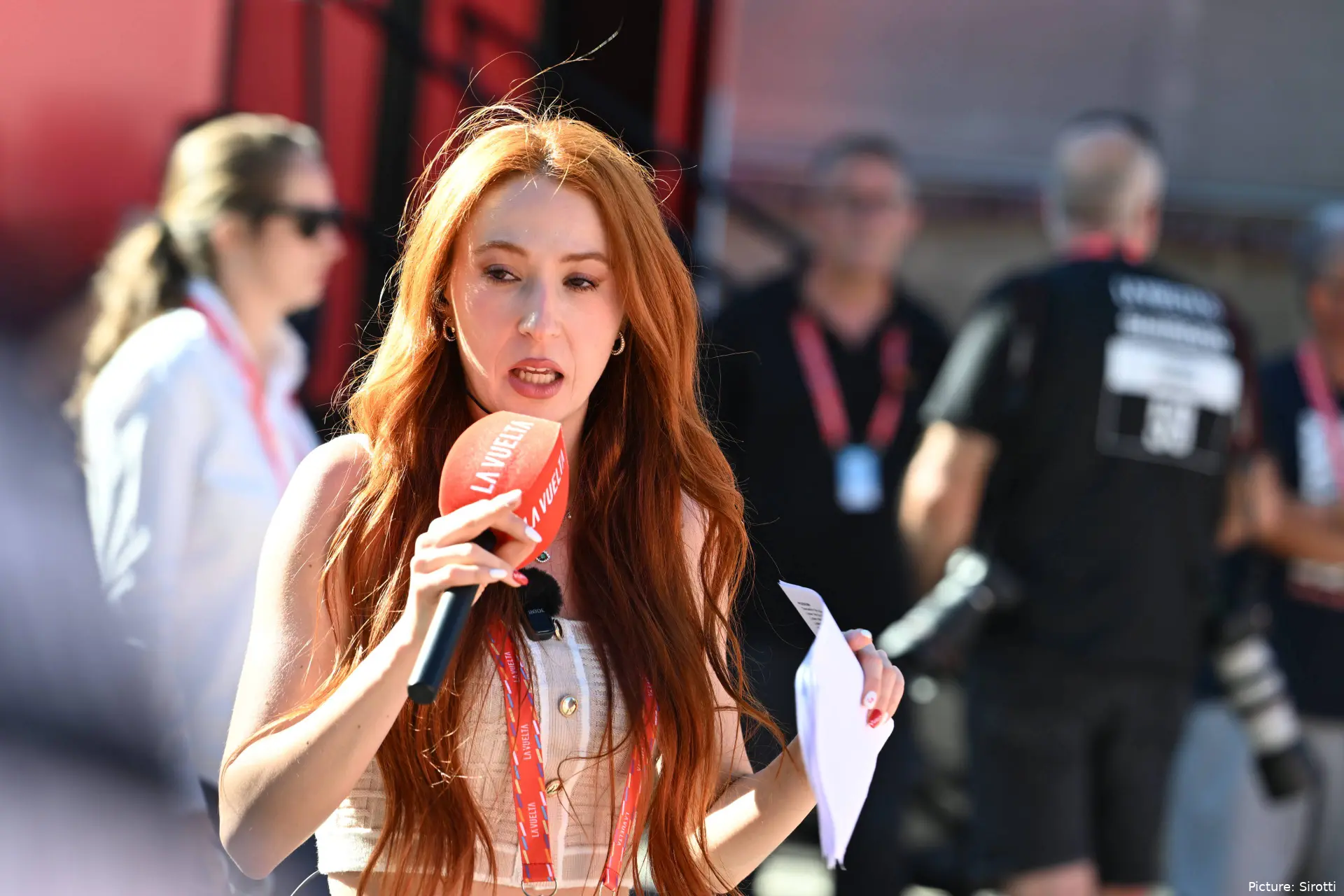
The Vuelta a Espana’s attempt to reach a younger audience produced one of the first major controversies of the 2026 race when influencer Erola Jons was given privileged access to riders during the opening stage in Monaco.
Jons was heavily criticised for flirtatious and sexually suggestive comments towards Tadej Pogacar, while UAE Team Emirates – XRG expressed its concerns directly to the race organisers. Her access has since been restricted, but former rider and sports director Brian Holm believes the debate requires more nuance.
The Dane believes the Vuelta was right to experiment with its coverage in an attempt to attract younger viewers. He also thinks some of the journalists condemning Jons should examine the quality of their own work.
“I’ve seen journalists ranting about her, but when I think about how many stupid questions journalists also ask, it surprises me a little,” Holm told Feltet. “I’ve heard stupider questions from real journalists.”
Read also
“She was out of place”
Jons, who has more than six million followers across Instagram and TikTok, was hired to produce an entertainment-led format for the Vuelta’s official YouTube and Twitch channels.
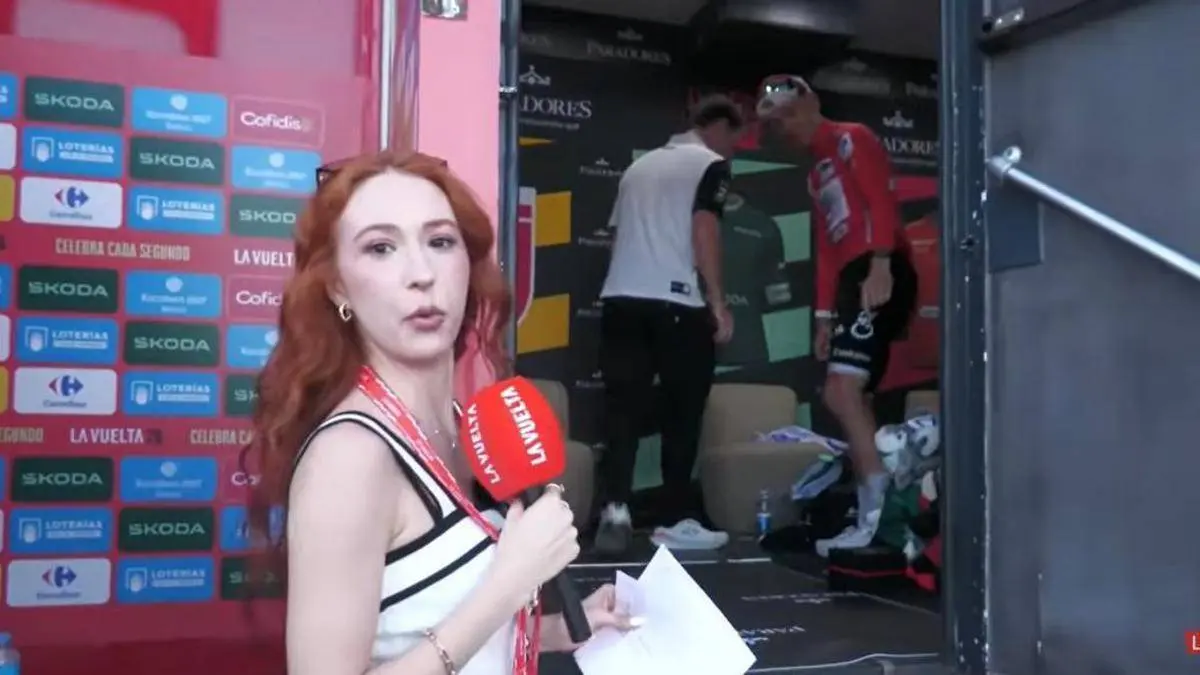
Her original role included access to restricted areas around the podium and team buses that would ordinarily be unavailable to most media. Jons brought the flirtatious style behind much of her social media success into that setting during the opening time trial in Monaco.
After Pogacar won the stage, she repeatedly called him “Pogachitar” and attempted to approach him while he was changing into his classification jerseys. She eventually asked the confused Slovenian: “Why do you hyperventilate every time you see me?”
Pogacar replied that he “breathes 24/7” before continuing towards the podium ceremony. Jons also commented on his appearance and clothing, flirted with a Netcompany INEOS staff member and spoke about trying to “win over” Joshua Tarling, who was racing shortly after the death of his younger brother Finlay.
UAE Team Emirates – XRG subsequently expressed its concerns to the race organisers, while prominent journalists including Laura Meseguer and Carlos de Andres publicly criticised the content.
Holm did not dispute that Jons had misjudged the situation. “She was out of place. She didn’t handle it particularly well, but I think it is part of the sport,” the Danish Eurosport expert said. “The fact that she crossed the line and it became inappropriate is regrettable. But I definitely believe that, given the way the world looks today, there has to be room for it.”

Erola Jonas at the Vuelta a Espana
“Extremely conservative” cycling must find a new audience
Asked whether cycling was too conservative about introducing unfamiliar styles of coverage, Holm replied: “Yes, for God’s sake. Extremely conservative.” “In the modern world, there has to be room for thinking differently. There simply has to be.”
For race organisers, attracting people beyond cycling’s established audience carries considerable commercial value. Holm believes the Vuelta deserves credit for attempting to reach a younger generation, even though its first execution created controversy.
“I think it was a smart move by the Vuelta to try something new and reach a new audience,” he said. “I like the basic idea, and it was clever of them. People rarely like anything new.”
Holm conceded that every attempt to modernise cycling coverage would not necessarily appeal to him personally. “I don’t like it either. Personally, I’d rather do without it. But we simply have to accept it,” he said. “Plenty of things catch on that I don’t like, but you have to keep up if you want to remain relevant.”
The Vuelta has retained Jons but removed her unrestricted access to mixed zones, team buses and rider-only areas. Any further interviews with riders require permission from their teams, while her content is now subject to greater coordination and oversight for the remainder of the race.

Kieran WoodDeputy Editor-in-Chief
Kieran Wood is a sports journalist based in Wales and has been active in journalism since 2022. He regularly contributes to DartsNews.com and CyclingUpToDate.com, where he covers professional cycling and darts. In cycling, his work includes liveblogs from major races, including the Tour de France, the Giro d’Italia, and La Vuelta a España, alongside race reports and analysis. He has also conducted interviews with professional riders.
His reporting spans the full racing calendar, from one-day classics to stage races, with a focus on accurate, real-time coverage and clear contextual analysis. For statistics, results, and historical context, he regularly uses resources such as ProCyclingStats. To support reporting on rider activity and training context where relevant, he also references Strava.
In his work, Kieran places strong emphasis on careful sourcing, editorial accuracy, and updating articles as new, verified information becomes available.
claps 0visitors 0
Just in
Popular news
Latest comments
- I’m sorry but generally the coverage on your site is first class but this incident highlights something I just don’t get with cycling journalism. This accident should never have been allowed to happen, it comes uncomfortably close to the Finlay Tarling tragedy and two other incidents took place within days of this. I checked all of the cycling websites and you all put out basically the same story. Pidcock gave journalists the perfect opening to blow this sky high, what has the UCI got to say? What is Adam Hansen doing? What do the organisers say? Nothing, you all trot out the same easy quotes taken from Pidcocks interview after the race but do nothing to follow it up. I see it time and time again, journalists taking the easy way out but being outraged when it happens again as it surely will. Riders can’t do this but journalists should be independent and should be able to raise these uncomfortable questions but cyclinguptodate and every other on line publication prefer to take the easy way out. That’s the real tragedy here.Paul53108-10-2026
- Happy to help :-)Mistermaumau08-10-2026
- Well, ok but, it’s also a structural, team, budgeting, direction and all sorts of other issueMistermaumau08-10-2026
- I wouldn’t call it an analogy but maybe his criticism is a little unfair. On the other hand, the fact Cicco made a public affair out of it despite having received all the explanations and proof makes me feel he now deserves being criticised for not accepting there is nothing to discuss.Mistermaumau08-10-2026
- Much as I like him (one of my favourites), I do want to attract a little attention to the coincidence of his recent performances in the current context. Not the first time a rider improves noticeably when there’s a job interview to prepare. In the same lighthearted humour of his, i hope the UCI will let him wear it at home as the rules quite strictly state you can only wear it during participation in the discipline you won in, and we all know how capable they are of interpreting rule interpretation ;-) Also, if it’s going to be retirement (please not), I wouldn’t call that an agreement as somebody will probably feel they didn’t get what they wanted.Mistermaumau08-10-2026
- Agreed. There used to be a team willing to pay though. I take all these figures (that vary enormously according to who is publishing) with handfuls of salt. We don’t know how salaries are treated (especially between a UK employer and Andorran resident), we don’t know how numbers are derived and from where, if deductions have been taken into consideration, etc. but if he returns to Colombia, he’s going to need quite a bit in protection money.Mistermaumau08-10-2026
- And another one gone, another one gone, another one bites the dust. Ah gonna get you too…Mistermaumau08-10-2026
- Top marks RidesHills. A great post that sums up exactly Egan Bernals situation.Cyclingsbestfan08-10-2026
- Thanks for pointing out that typo. Now ammended.Prorodsandstuff08-10-2026
- Great signing by Uno-X. Hope he develops and can get som great results.
 Vikingrider08-10-2026
Loading
Write a comment