"If cycling from A to B is no longer feasible, then we must switch to circuits" - Plugge proposes a radical solution to race safety issues
Cycling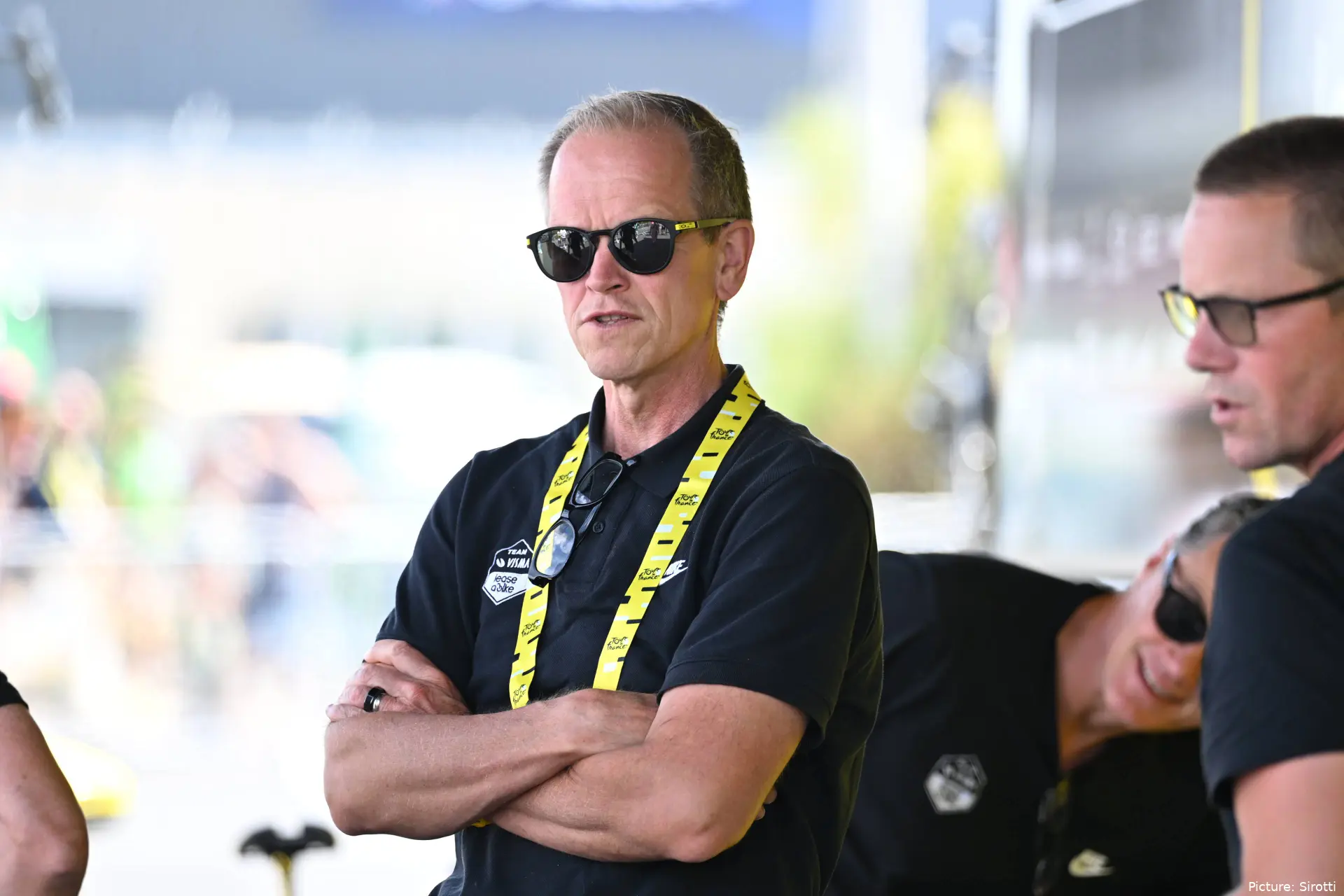
Cycling encountered an enormous tragedy just a week ago, yet the peloton keeps moving almost as if nothing had happened. At least that is the assessment of Visma | Lease a Bike manager Richard Plugge, who finds the lack of response from peloton rather disheartening.
"Need to stop looking for excuses"
"We are just carrying on. What disappoints me enormously is that everyone says it is terrible, but then immediately a 'but' follows. I would say: we need to skip everything after the 'but'. This simply cannot happen. That is the attitude we must adopt as the cycling community," states decisively Plugge in an interview with WielerFlits.
Plugge reiterates that while it might not be an attractive solution (for spectators), it might become a necessity that cycling shifts from "A to B" stages to circuit racing. That is already the case in the Netherlands where even the Amstel Gold Race runs its final phase on a (quite large) circuit.
"We have already indicated to the authorities, organizers, and teams: if cycling from A to B over public roads over 200 kilometers is no longer feasible, then we must ride laps of 15, 20, or 25 kilometers. Provided those routes can be secured one hundred percent. Ultimately, it is simply about our riders. They must be certain that they can race on a safe course."
This could not happen in F1
Plugge is particularly infuriated by the failure that is allowing non-race car onto the course while there are riders yet to pass. He then draws comparison to if such event were to occur during even more high-speed sport.
"This boy encounters a car on a descent. Can you imagine this happening during Formula 1 in Zandvoort? That a car is suddenly driving on the track in the opposite direction? Of course, everyone says that this doesn't happen at Zandvoort. But this actually does happen in a cycling race."

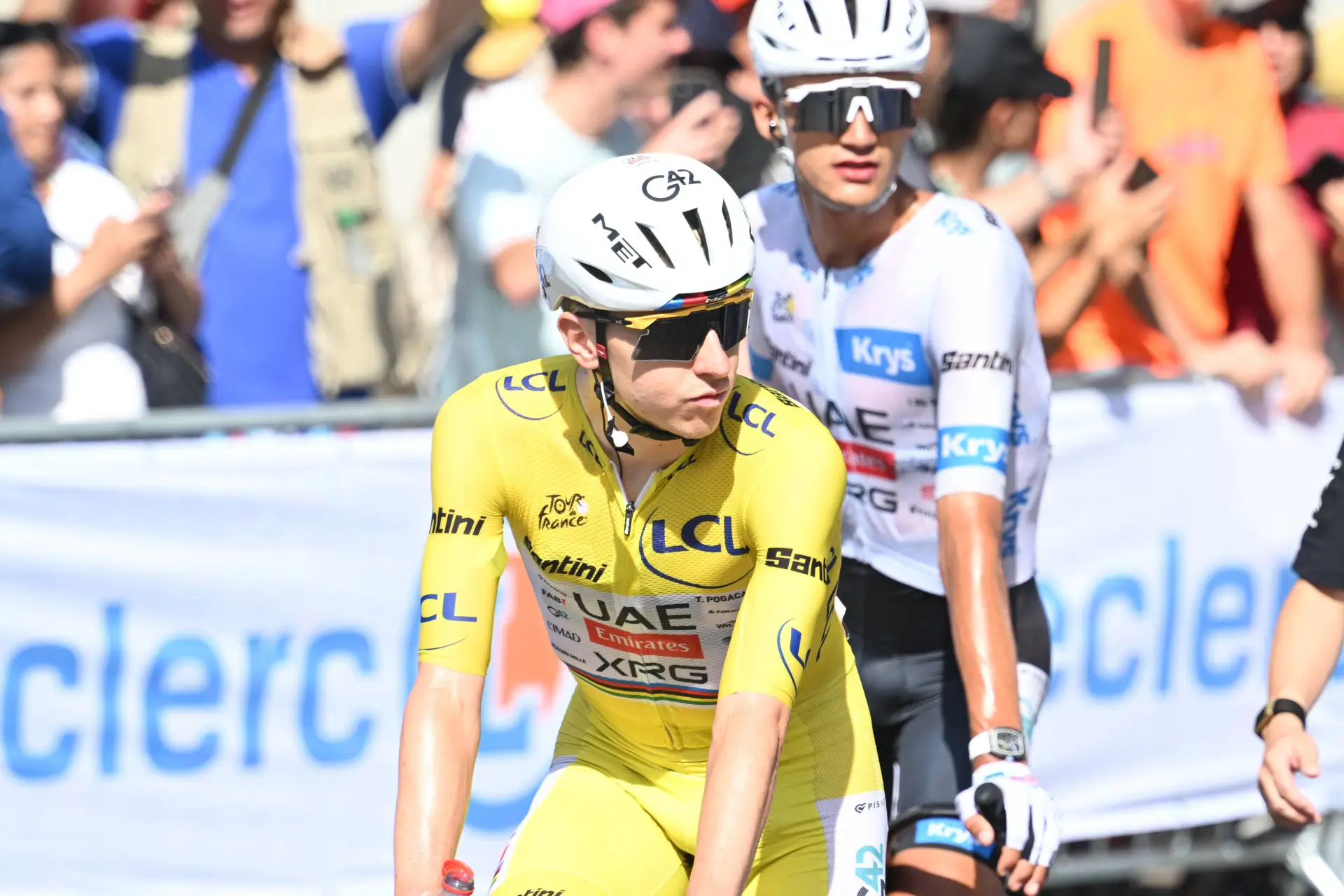
Tadej Pogacar in the streets of Monaco
Lack of outrage
Plugge would've liked it more to see some reaction - a fierce statement - from people in charge of cycling... but none of that happened. Few quick words to pay respect and the authorities have moved on while no visible changes have been made to prevent such event from occuring again.
"That neither UCI President David Lappartient nor anyone else from the umbrella organizations stands up and says: 'Yes, but wait a minute, we really need to get together now and think about how we are going to prevent this from happening in the future?' We had a fantastic initiative with SafeR, but I don't hear much about that anymore either."
"Maybe we as teams need to take responsibility for safety in races ourselves again. I don't know, but the lack of anger about what has happened again is very disappointing to me."
Read also
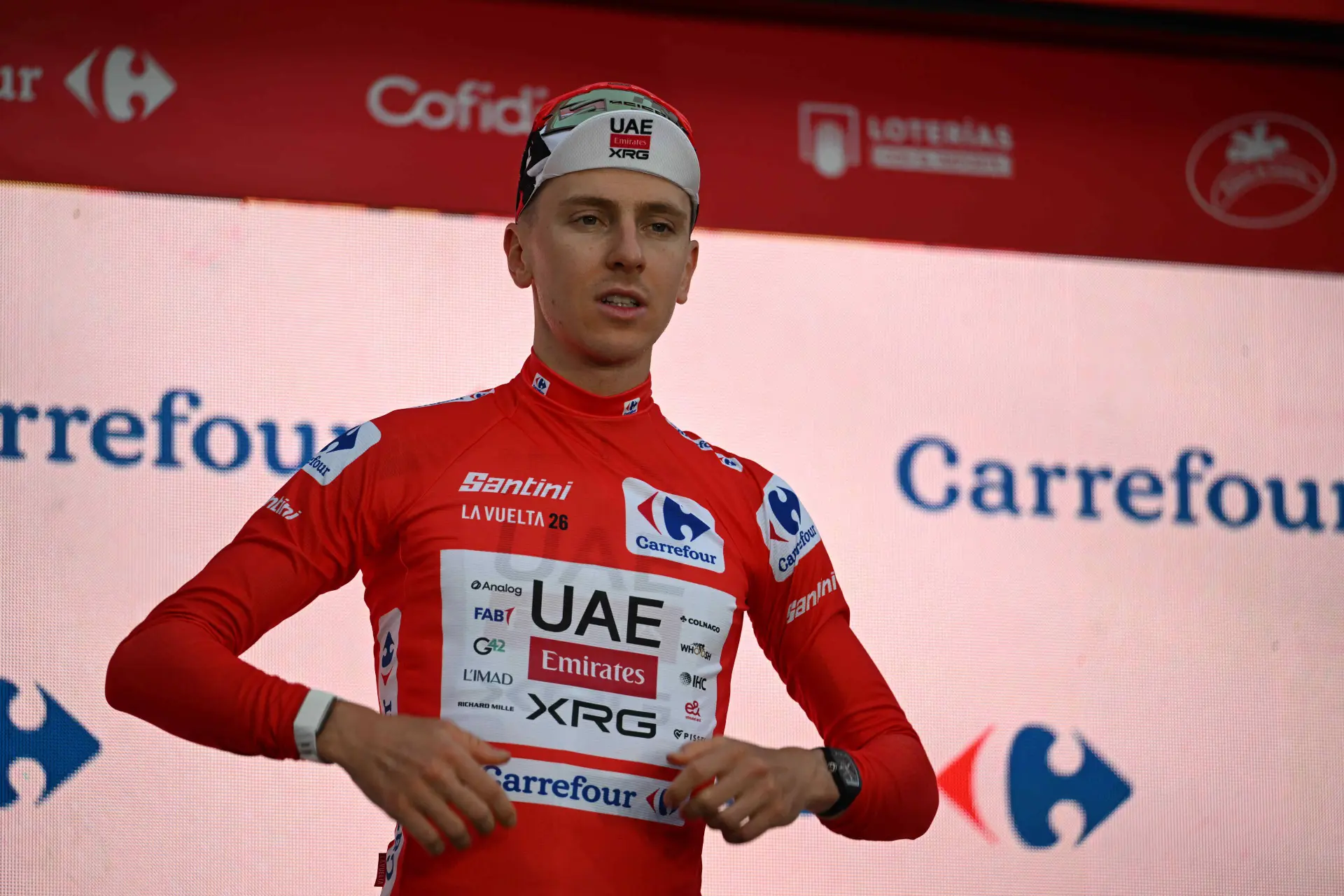

Cycling does have it's own agency in charge of securing safety of riders during a race; and the safety nets which saved Sepp Kuss on Col de Sarenne, or modifications to Monaco time trial course were its doing. But the results of their only seem to emerge sporadically, and at the most followed events. Meanwhile smaller races still suffer from critical flaws.
"I have said it before: SafeR has become a political construct where compromises are made simply to ensure that the church remains in the middle. But it is about ensuring that riders can do their job safely. It is about safety. It is about ensuring that you can do your job safely. And that is uncompromising! It is either safe, or it is not safe. We provided a fantastic starting point for this when SafeR was founded, but it is no longer being acted upon. It has since become a completely different construct."
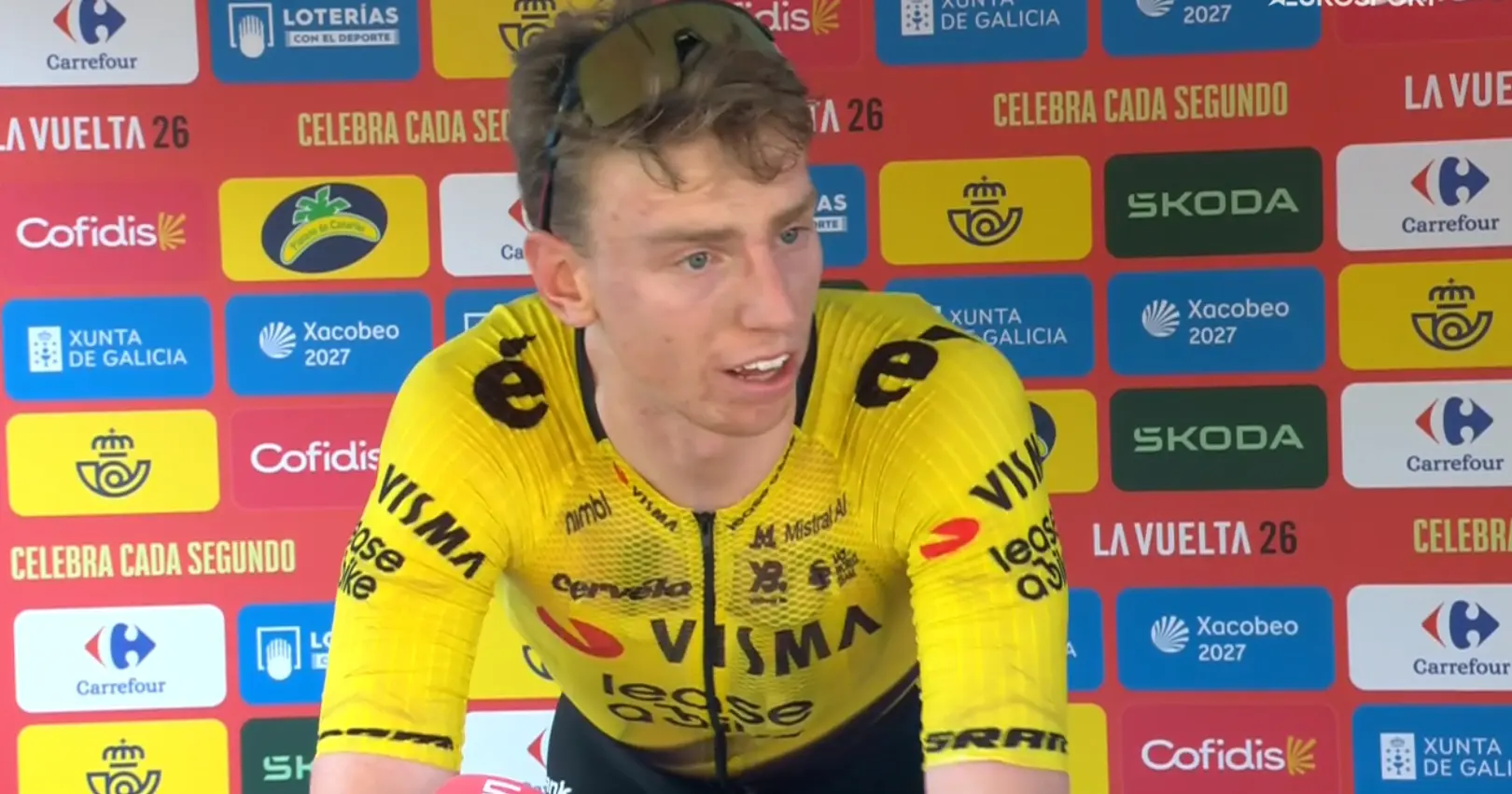
"We are standing here at the start of the Vuelta a España in Monaco. The area around Nice and Monaco is full of traffic. We need to think now about how we can still organize a cycling race here in five years. What will our sport look like in five years? Will we still be able to drive 200 kilometers from A to B? Probably not, because then you would need a thousand traffic controllers. Whereas, if you ride laps of 20 kilometers… Everyone is super enthusiastic about the World Cycling Championships being held on a local circuit. And rightly so! Because that is at least manageable," Plugge concludes.
Ondrej ZhasilCycling Journalist
Ondřej Zhasil is a cycling journalist at CyclingUpToDate and has been part of the team since 2023. He is based in Ostrava, the third-largest city in the Czech Republic, and covers professional cycling across the main UCI competitions, including the Tour de France, the Giro d’Italia, and La Vuelta a España. A key focus of his work is startlist analysis and pre-race coverage, where he examines team selections, rider line-ups, and tactical scenarios ahead of major events.
Alongside WorldTour coverage, Ondřej has developed specific expertise in junior cycling and in racing across East Asia, including competitions in China and Japan. He also maintains a broad working knowledge of other disciplines and levels, including cyclocross, while continuing to expand his understanding of mountain bike racing.
Ondřej holds a bachelor’s degree in Mathematics and Physics, which supports his analytical, data-driven approach to performance and race analysis. In his reporting, he regularly uses ProCyclingStats for results, statistics, and historical context. He places strong emphasis on careful sourcing, editorial accuracy, and updating articles promptly when new, verified information becomes available.
claps 3visitors 2
Just in
Popular news
Latest comments
- OK, stop all the BS below!!! Don't you guys have anything better to do than to get on Pogi's case (injury)? The only thing I read from your comments was: blah blah blah ... and BLAH !!! Y'all remember one thing: Next year... 2027 ... Pogi - Baby Hulk will "smash" everyone!!! Remco will have nonstop excuses... Jonas is going to once again say to Skjelmose : "I'm doing my best numbers ever but Pogačar just rides away. What else can I do???" ... Everyone else will fight for second place. Pogi doesn't give a sh** about what podcasters and different cycling sites are saying or "barfing up" senseless words of foolishness and ignorance about him. He will chew up everyone and spit him out. Ad acta!!!PogiSloFans26-10-2026
- Concussion is being recognised as having a life-long impact on many athletes, with effects on the brain and links to mental health and cognitive decline being investigated. It can't be dismissed as being in the past (and obviously isn't a joke, though I realise you didn't mean it that way).Hills3326-10-2026
- Arrieta I think has more potential than Frigo and Balderstone. Ramírez is one who can become a GC rider, Fabries is more of a diesel climber. He only really does well in MTTs. When you add Molano and Sivakov, it seems a transfer loss overall. However, comparing the transfer season of a stacked team like UAE to lower teams isn't fair anyway. Riders tend to diffuse outwards anyway
 Rafionain-Glas26-10-2026
 - There's quite a large range of time where van der Poel is less likely to race than not, possibly a month. The Worlds sit in that window. So it seems that its more likely than not that he'll not race.Rafionain-Glas26-10-2026
- Maybe ruben silva still dont get it but visma is broke they aint signing anyone. They desperately need tier one climberse but all they can buy is fabio jakobsen..Typing is on the wall there to say the least...:(miguel26-10-2026
- I didn't say Tadej should ride it. I'm stating HE wanted to ride it and as a matter of fact had to be talked out of it. The other accidents mentioned in this headline were so much worse.mij26-10-2026
- I'm not downplaying the impacts. He would have been a fool to ride EU. I'm commenting that Roll's position is idiotic - to compare Tadej's two broken bones and a concussion to what Froome/Bernal/Jonas went through and suggest it could hold Tadej back is equally foolish. As bad as it might have been, Tadej's accident was a joke compared to what the others went through.mij26-10-2026
- If others agree and you do the same, maybe we have a shot at getting them to reverse the obvious deterioration they’ve decided to embark on. It would also leave you know mou more or less in an echo chamber.Jumpyjohn26-10-2026
- if you have three leaders , it has never worked in cycling properly. If you have two, one attacks the other follows as the US did it to perfection in the worldsabstractengineer26-10-2026
- Besides Pogi they dont need anybody else. I think that UAE is a bad team for development. One is the race is done at Pogi's intensity which is bad for a developing rider and you can only do part of the race, no energy left for the rest.abstractengineer26-10-2026
Loading
1 Comments