“I wasn’t far from Jonas Vingegaard, but people were looking at each other more than actually riding” - Kevin Vauquelin frustrated by lack of cooperation at Paris-Nice
Cycling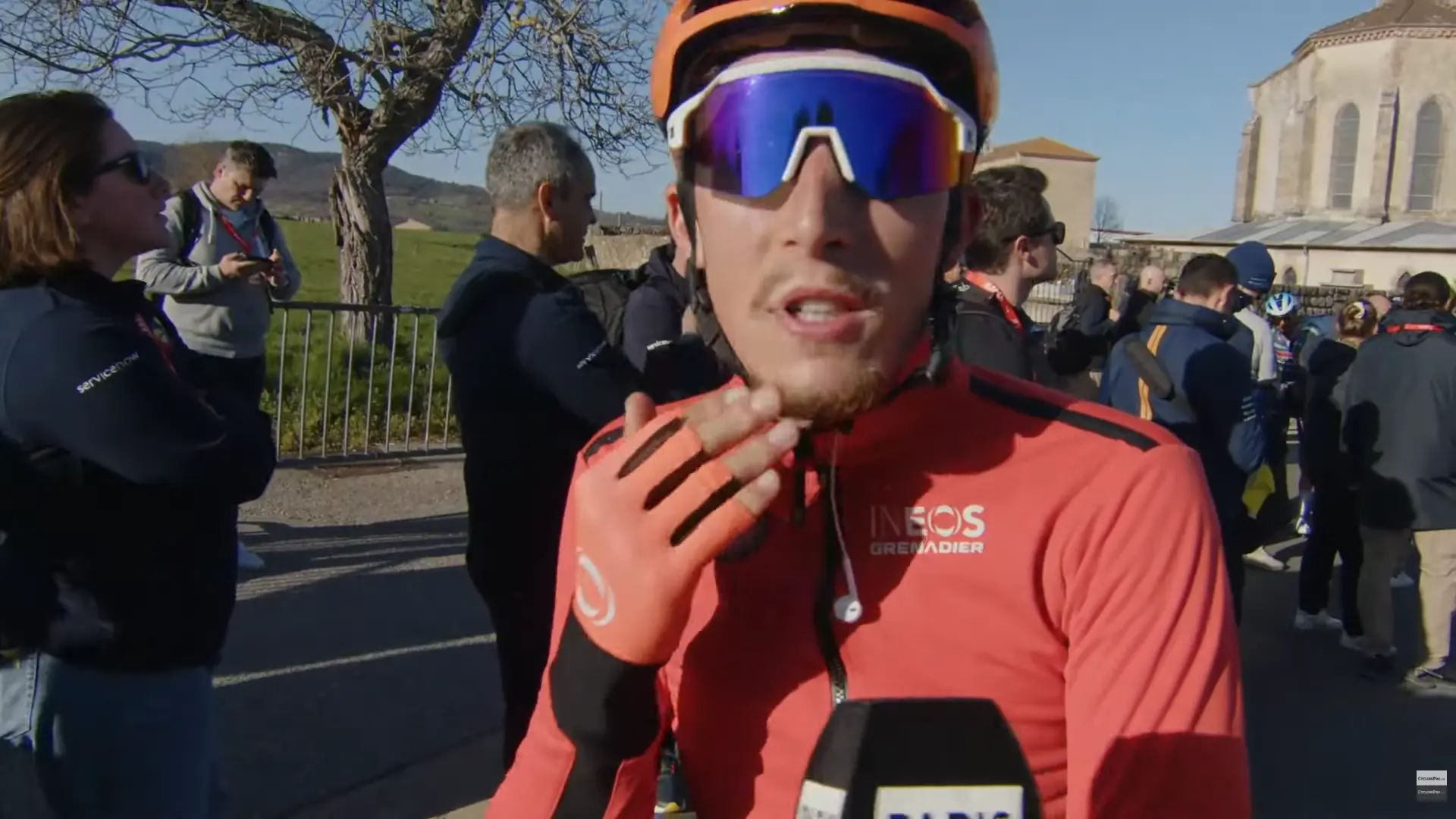
Kevin Vauquelin admitted frustration after a key moment slipped away during the latest stage of Paris-Nice, with the French rider revealing that hesitation in the group prevented what could have been a decisive move in the race.
The INEOS Grenadiers rider was active during a fast and aggressive stage that gradually built towards a brutal finale in the Ardèche hills. The rapid tempo and constant attacks created the kind of chaotic racing that Vauquelin and his team had hoped for, allowing them to conserve energy while positioning themselves for the decisive climbs later in the stage.
“It started really fast, which actually suited us quite well,” Vauquelin explained after the stage to Cycling Pro Net. “We wanted the race to be animated and have a lot of movement, and that allowed us not to spend too much energy ourselves.”
Missed opportunity in the key moment
The plan worked well for much of the day. With INEOS riders active earlier in the breakaway, Vauquelin was able to approach the decisive climbs without having to respond to every attack himself.
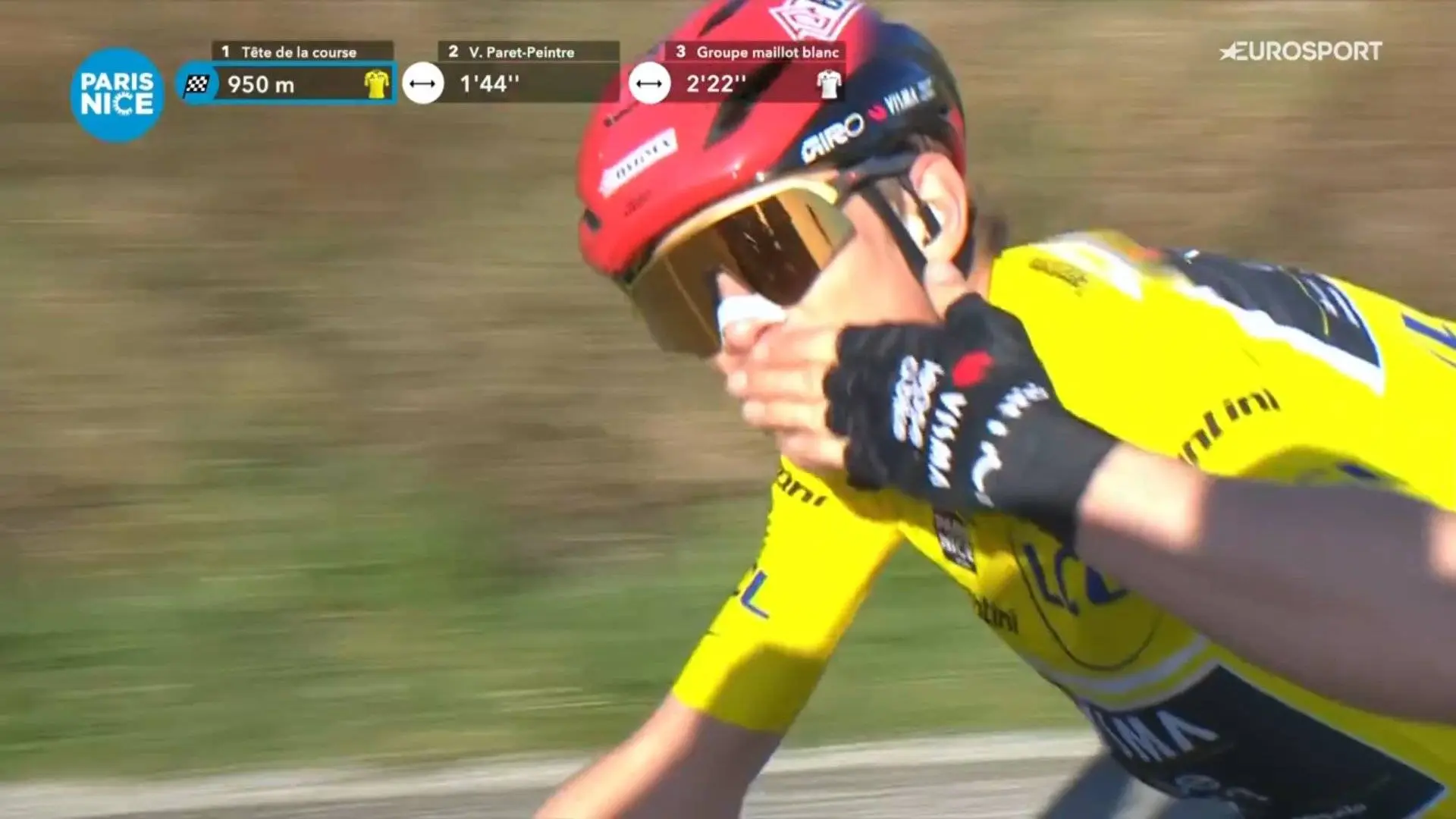
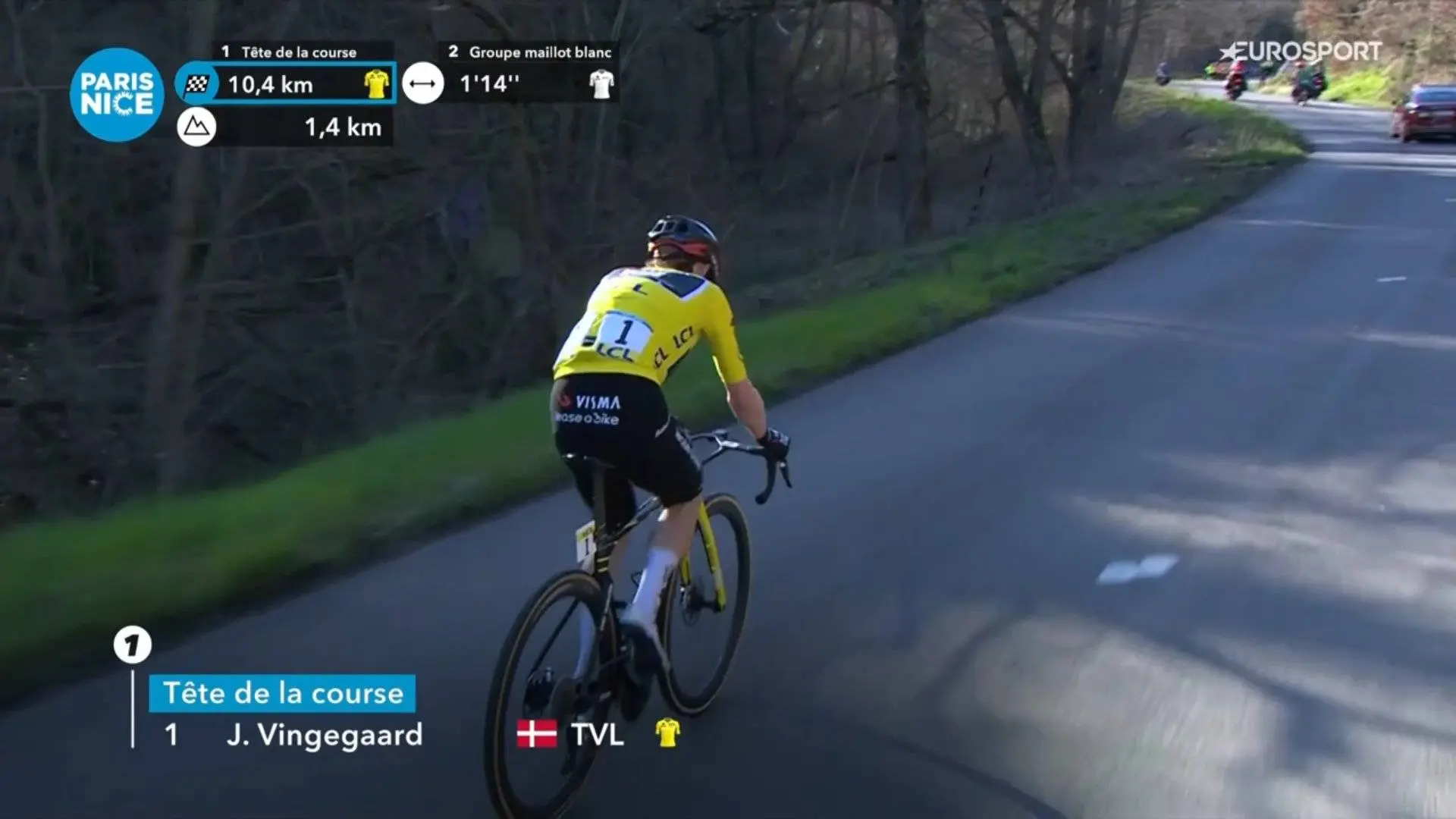
That set the stage for a decisive moment when the race began to split among the favourites. “I wasn’t far from Jonas Vingegaard at one point,” Vauquelin said.
But instead of pushing on to consolidate the move, the riders in the group hesitated. “People were looking at each other more than actually riding.”
That hesitation allowed riders from behind to regain contact, neutralising what could have been a race-defining move
Attacks that helped the wrong riders
As the regrouped riders began attacking again, the dynamics of the group became even more complicated. “Unfortunately, the group with Steinhauser and Martinez came back, which didn’t really help us,” Vauquelin said.
At the same time, repeated accelerations from Lenny Martinez made the racing more explosive but did little to establish a stable breakaway. “Lenny was very strong and attacked several times,” he explained. “I think maybe that wasn’t the best thing to do, because it just created a lot of surges and it helped the riders who weren’t working.”
In Vauquelin’s view, those repeated bursts of acceleration played into the hands of the more passive riders in the group rather than helping those trying to force a decisive selection.
Encouraging signs despite fatigue
Despite the frustration over the missed opportunity, Vauquelin still saw positives in his performance after another demanding day of racing.
Coming just one day after another hard stage, fatigue inevitably began to creep in as the race approached its conclusion. “The legs weren’t too bad,” he said. “Of course, at the end, I could feel that I had already had a big day yesterday.”
Even so, the Frenchman believes his form throughout the race has placed him firmly among the strongest riders in the field. “I’m still happy with my legs. I think I’m really among the stronger riders in this race.”
With several stages still remaining, Vauquelin is hopeful there will be further opportunities to turn that form into a result. “Now we still have a few stages left, so the goal is to keep improving and try to do even better.”
Read also
Vauquelin’s criticism of Lenny Martinez’s tactics reveals a subtle tension in French cycling. While Martinez is the pure, explosive climber who rides on instinct, Vauquelin—now leading the data-driven INEOS machine—prefers the calculated, steady-state chase. By pointing out that Martinez’s surges 'helped the passive riders,' Vauquelin is highlighting the difference between 'show-stopping' attacks and the cohesive work required to reel in a rider of Vingegaard's caliber. In the 2026 season, this rivalry for 'Best Frenchman' is becoming just as tactical as it is physical.
Kieran WoodDeputy Editor-in-Chief
Kieran Wood is a sports journalist based in Wales and has been active in journalism since 2022. He regularly contributes to DartsNews.com and CyclingUpToDate.com, where he covers professional cycling and darts. In cycling, his work includes liveblogs from major races, including the Tour de France, the Giro d’Italia, and La Vuelta a España, alongside race reports and analysis. He has also conducted interviews with professional riders.
His reporting spans the full racing calendar, from one-day classics to stage races, with a focus on accurate, real-time coverage and clear contextual analysis. For statistics, results, and historical context, he regularly uses resources such as ProCyclingStats. To support reporting on rider activity and training context where relevant, he also references Strava.
In his work, Kieran places strong emphasis on careful sourcing, editorial accuracy, and updating articles as new, verified information becomes available.
claps 3visitors 3
Just in

Popular news
Latest comments
- yeah your point about accidents happening in a chain of events, not a single event, is key. no police or barriers at a crossing. a car gets on the road. a trailing cyclist doesn't have an escort. no radio and GPS is being used to track stragglers. and tragedy. break one thing in the chain and it could be accident avertedmij26-10-2026
- The doctors called the concussion severe, even at the scene of the accident, because that is the term for it. The concussion protocol is the best they can do right now, with further research being done. It makes sense for Tadej's concussion to be severe because the freak circumstances lead to twisting of his head (and body) as he fell at high speed. Look at reports on the Toronto research published in early 2025 for starters, with images of the brain showing the effects that persist after symptoms clear up. Btw if Tadej had ridden the EC and fallen, he could have suffered more serious injury to the spine as the vertebra would not have been fully healed. Also serious consequences if he had hit his head. Don't know why you are so keen to downplay the impacts.Hills3326-10-2026
- Complete bullshit headline. The best thing this website can do is commit suicide.Renz26-10-2026
- If he wants to retire, he can spend a couple of non intensive low key seasons at UNO-X for lower salary as well.abstractengineer26-10-2026
- we need facts about these accidents and see the stats about these facts to find what can be done and what cannot be done. That is the job of the UCI. This has been done in many industries, Airlines, and Spacecrafts. Once teh UCI sets the rules, then the organizers can decide upfront whether or not they want to hold the race or not. UCI also needs to make the rules applicable to all stakeholders including riders and staff about what to do and not do, for safety. Parachutes are the safest to exit a jet fighter/bomber but none are provided on a passenger aircraft. most safety mechanisms are not viable on a spacecraft. in industries most accidents are the result of a chain of events, a single link not happening will not cause that accident. all these things are thoroughly investigated. inspite of all the safeguards, accidents happen and will happen, because humans remain inherently flawed but following rules/procedures minimize the risk and stats, not an individual accidentabstractengineer26-10-2026
- yeah total joke. It isn't at all attributed to MVDP, but you would never know it looking at the headlinemij26-10-2026
- there are no races, we gotta talk about something! The clickbait works, look at how many comments are here. I see these inane comments and can't hold my tongue. To compare Tadej's injuries to the others is an insult to all.mij26-10-2026
- exactly, it isn't even close. Tadej had a broken collarbone, standard issue cyclist break. he had a stable fracture at C7. since it was a stable fracture, it is no more serious than a broken wrist, in particular after it heels. And he had a concussion. the concussion itself will not hold him back at all. C7 is at the neck/shoulders, it won't affect his flexibility for a TT bike at all. the list of injuries for Froome, Bernal and Jonas are so much more extensive.mij26-10-2026
- he didn't break his back. he had a stable fracture at C7mij26-10-2026
- he broke a bone in his neck, a stable fracture. are you referring to the broken back comment?mij26-10-2026
Loading
2 Comments