How Paul Seixas almost missed his Tour de France debut as father tells all - “We kept it quiet so as not to alert the competition, but it was a very difficult situation"
Cycling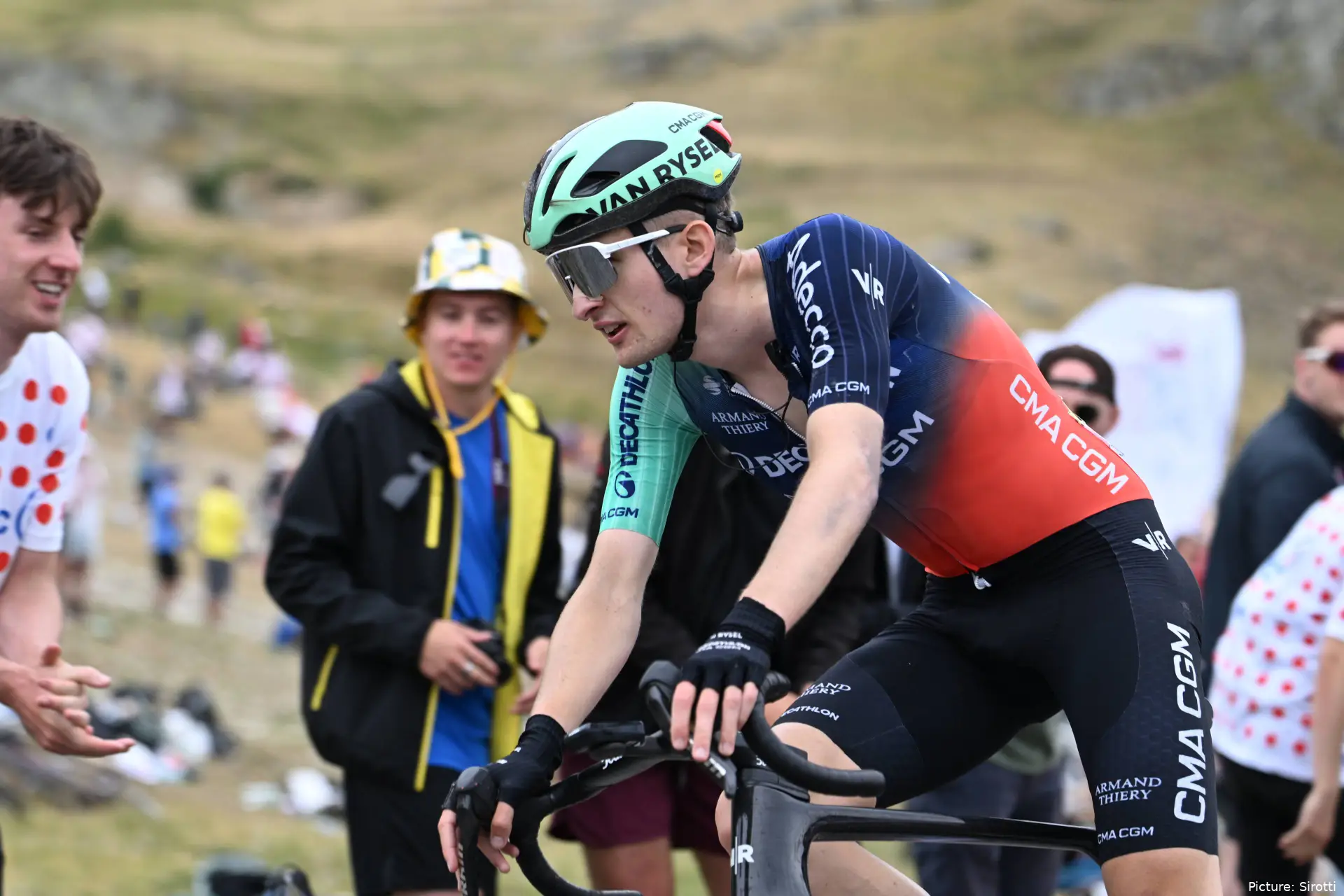
Paul Seixas’s Tour de France debut nearly went awry before the race had even begun. The young French rider crashed while reconnoitring the route in Barcelona on the eve of the opening time trial, and even considered withdrawing before the start.
His father, Emmanuel Seixas, has revealed details of the incident in an interview with French newspaper L'Équipe. He also described the mental toll his son experienced during the final days of the race.
The incident happened when Paul Seixas slipped on tram tracks while reconnoitring the course. The crash reopened wounds he had sustained about a month earlier in another fall at the Tour Auvergne-Rhône-Alpes. The situation caused considerable concern in the hours before the French Grand Tour began, and the rider even considered not taking the start.
The possibility that Seixas might not start meant the team had to handle the situation carefully. The French team's management chose to keep the incident under wraps so rivals would not learn of the young climber's physical problems before the race. “We kept it quiet so as not to alert the competition, but it was a very difficult situation,” Emmanuel Seixas said, recalling those uncertain moments.
In the end, the rider was able to start the Tour, and the effects of the crash did not hamper his performance over the three weeks. Seixas had arrived in top form and completed the race despite the setback in Barcelona. Physical exertion, however, was not the only challenge he faced in his first appearance at the French race.
As the stages went by, the pressure grew and the psychological strain became increasingly apparent. His father said Seixas began to feel particularly stressed after the second week, largely because of what he encountered on the climbs, where large crowds of fans made him feel unsafe.

Paul Seixas, Decathlon CMA CGM’s breakout in 2026.
Seixas stressed in final week
“He started to feel stressed after the second week,” Emmanuel Seixas explained. Spectators on the mountain passes, crowding around riders to cheer them on, became a source of concern for the young Frenchman, who feared being caught up in another crash.
His father explained just how much those thoughts affected him during the closing stages of the race. “During the final week, he would think, ‘Something crazy could still happen to me.’ Sometimes he was afraid people would push him on the climbs and cause him to crash,” he said. The accumulated tension took its toll in the Tour’s final days, when the rider was mentally exhausted.
“He was mentally exhausted during the last two or three days,” Emmanuel Seixas added. His comments offer a glimpse of a less visible side to his son’s debut in the French Grand Tour. Beyond the sporting demands, he had to cope with the fear of crashing again and the pressure of taking on one of the toughest races on the calendar.
Read also
Winning the Tour remains his great dream
Despite the difficulties he faced in his first experience of the race, Paul Seixas remains determined to win the Tour de France one day. The goal is among his ambitions, although his father believes it is important to stay grounded and understand the scale of the challenge ahead.
“It’s his dream, but he still has a long way to go because winning the Tour is an enormous achievement,” Emmanuel Seixas said. His words balance the young rider’s ambition with the caution of those around him, who know that victory in the French Grand Tour demands years of development and preparation.
His debut, marked by the crash before the start and the mental strain of the final week, gave him first-hand experience of some of the challenges that come with the Tour. Despite that difficult beginning, Seixas completed all three weeks. The experience now forms part of his development as a rider and his journey towards the goal he is pursuing.
Jorge BorregueroWriter
Jorge Borreguero is a journalist with a degree from the Complutense University of Madrid and has been a writer for Cyclinguptodate and Ciclismoaldia since early 2023. In this role, he has played a key part in the evolution of the website, particularly as a specialist covering Movistar Team. He regularly writes race reports, analytical pieces, and in-depth features about the team, and has conducted exclusive interviews and attended multiple team presentations, providing readers with firsthand insights into one of the leading professional cycling squads.
Throughout his career, Jorge has maintained a strong focus on sports journalism, gaining experience across a variety of disciplines, including basketball and football. However, his current work is almost entirely dedicated to cycling, contributing extensively to Ciclismoaldia and its sister website Cyclinguptodate. For these platforms, he combines thorough research with detailed reporting to deliver high-quality content, ranging from race previews and results to expert analysis of teams and riders.
Jorge’s reporting is marked by accuracy, depth, and a commitment to providing readers with reliable and authoritative information. His direct engagement with teams, athletes, and events ensures that his coverage reflects firsthand knowledge and professional insight. Through his work, he has established himself as a trusted voice in professional cycling journalism, bridging the gap between the sport and its global audience while maintaining rigorous editorial standards.
claps 2visitors 2
Just in


Popular news
Latest comments
- he is fun - he goes back to the Sagan days with his showmanshipmij23-11-2026
- he doesn't sound ready to retire anytime soonmij23-11-2026
- U17 and juniors on national races are routinely using caffeine tablets before races. They are also using creatine and the like. sure, it's legal. the point is, it is performance enhancing and they are 14-17 years old. as juniors it will be decided whether they have a chance to move towards some sort of (semi-)professional cycling, no matter which discipline. what do you think they will regard acceptable to reach this goal and then to sustain it?Ketterechts23-11-2026
- Both of them, Geraint Thomas and Alberto Contador said if Pogi had gone to the Vuelta in 2024, he would have won. Ofcourse considering he wouldn't crash. They were right.PogiSloFans23-11-2026
- Merckx said that Pogi could race the Giro, Tour and Vuelta in a single season? Pogi said: "I can’t rule that out. In fact, I’ll try it sooner or later, but certainly not in 2027. I'm feeling great at the moment. I'm training and eagerly looking forward to getting back to racing. I'm confident that I can return to the same level, or even a higher one. Life moves fast, very fast. Sometimes you need a break; you need to stop for a while. That's what I needed. If I hadn't taken a break, my body would simply have forced me to.”PogiSloFans23-11-2026
- One of the most tenacious and entertaining riders in the peloton. His (and Jorgensen's) work at the world championships was elite craftmanship.Occam23-11-2026
- I'd add being seriously annoying to your self-description.Occam23-11-2026
- Meh. For whatever their sins, the boys at The Move know cycling strategy, building a team and tactics. You don't win the TdF 7 times in a row if you're a hack.Occam23-11-2026
- Of course there is doping in any professional sport. Game theory dictates that someone will do it for an advantage. Human nature always wins. And for all those who criticize, imagine what you'd do if you were facing the possibility to be a pro but you had to dope to do it. Almost everybody would do it at that point.Occam23-11-2026
- It's not nice to think about all the stuff that athletes must take to return to the top level long before they could heal naturally (Jonas after the Itzulia crash, for example). But it's not doping.Hills3323-11-2026
Loading
Write a comment