History made in Como: at 20 years and 16 days, Paul Seixas becomes the youngest Il Lombardia winner ever — and one of the most precocious Monument winners since the Second World War
Cycling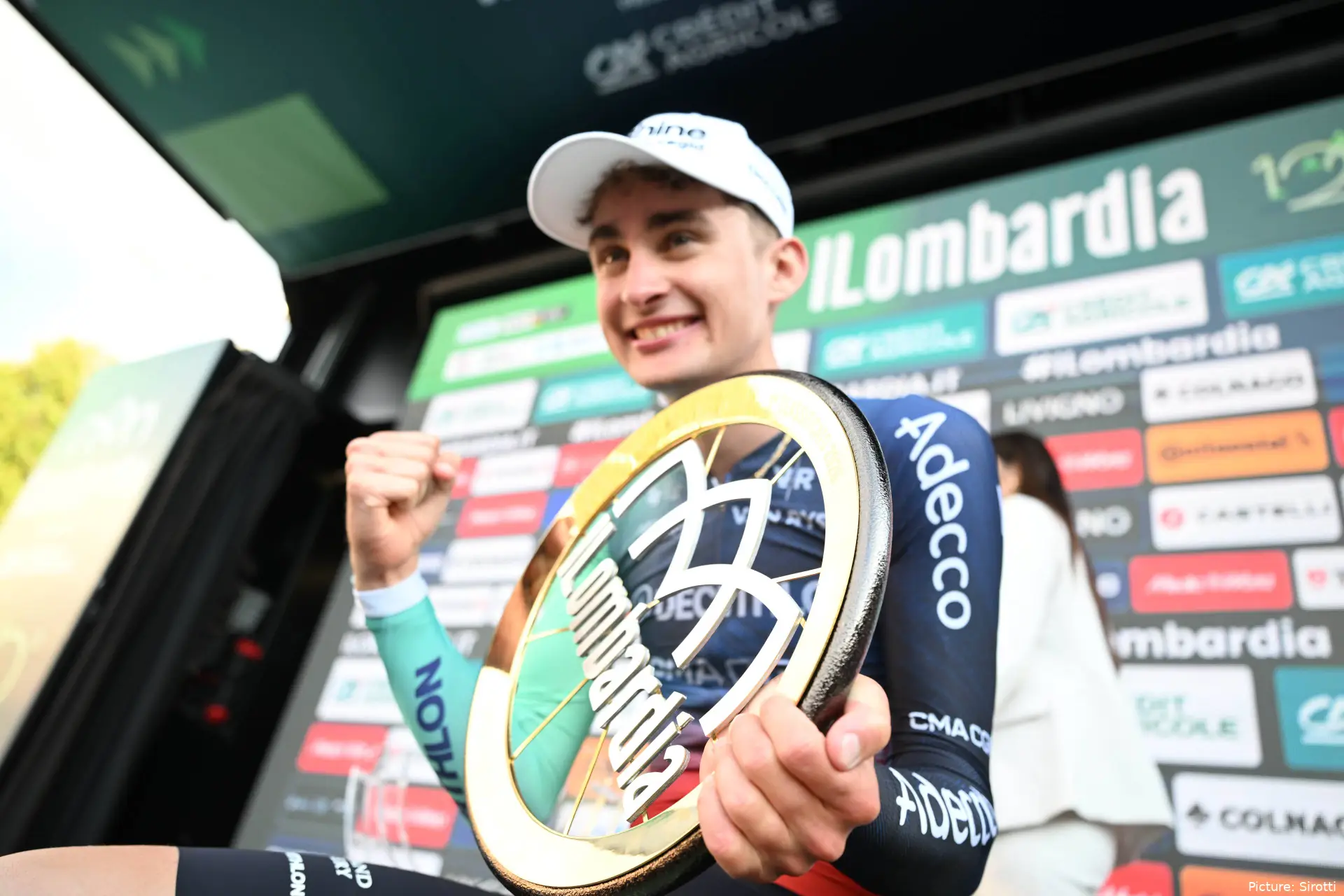
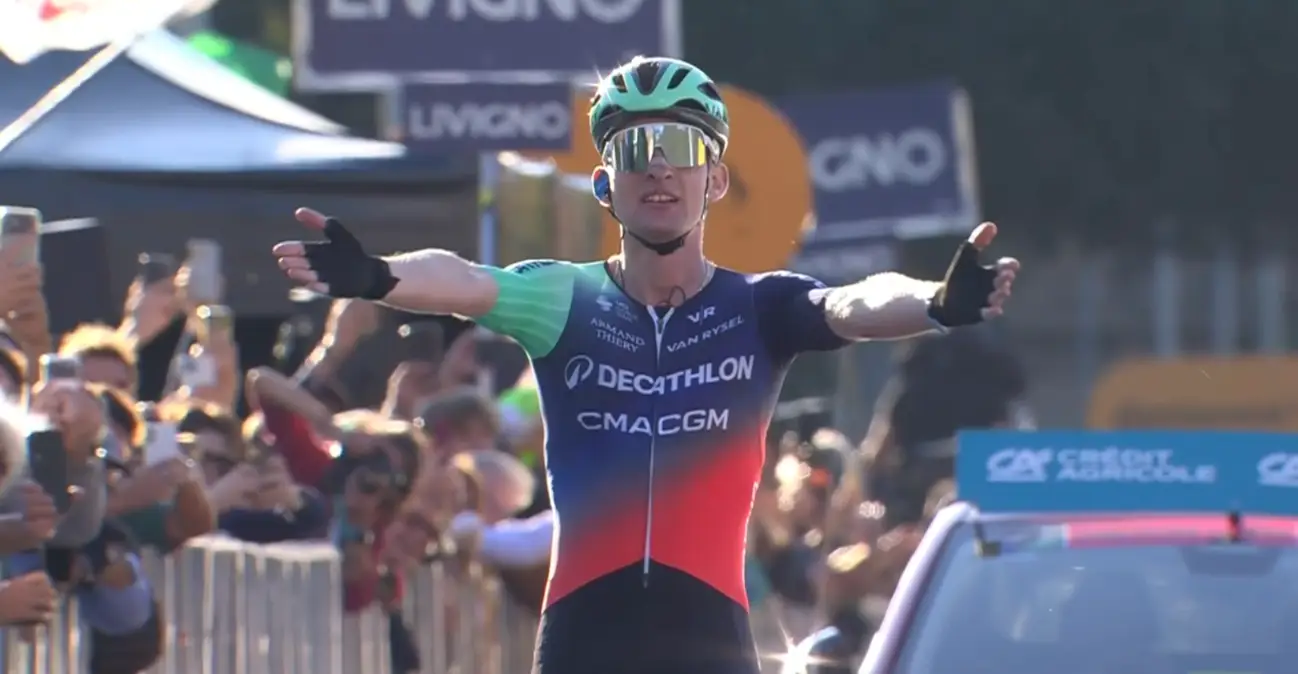
There are young winners, and there are historic ones. Paul Seixas just became both at once. On a cool autumn afternoon in Como, the 20-year-old Frenchman rode away from some of the best riders in the world on the steep slopes of the Civiglio, stayed away for 18 kilometres, and crossed the finish line alone to claim the first Monument of his career.
In doing so, he became the youngest winner in the 120-year history of Il Lombardia, and the youngest winner of any Monument since Rik Van Steenbergen took the Tour of Flanders in 1944. The season is (almost) over, the record books have been rewritten, and French cycling has found the figure it has been waiting decades for.
The race itself followed a familiar script right up until the moment it did not. Pogacar, the five-time defending champion, was absent - he crashed out of the Vuelta a Espana in August with a broken collarbone and fractured vertebrae, ending his season before the final Monument. Without him, the race was wide open in theory.
In practice, once Seixas moved on the Civiglio with around 19 kilometres remaining, there was nothing wide open about it. Tom Pidcock and Giulio Ciccone tried to follow, but neither could. Evenepoel and del Toro had already been dropped. By the top of the climb, Seixas had 20 seconds in hand. By the final ascent of the San Fermo della Battaglia, it was 50. He rode into Como alone, savoured the final kilometres, and punched the air at the line. Enric Mas finished second at 48 seconds, Ciccone third at 1:05.

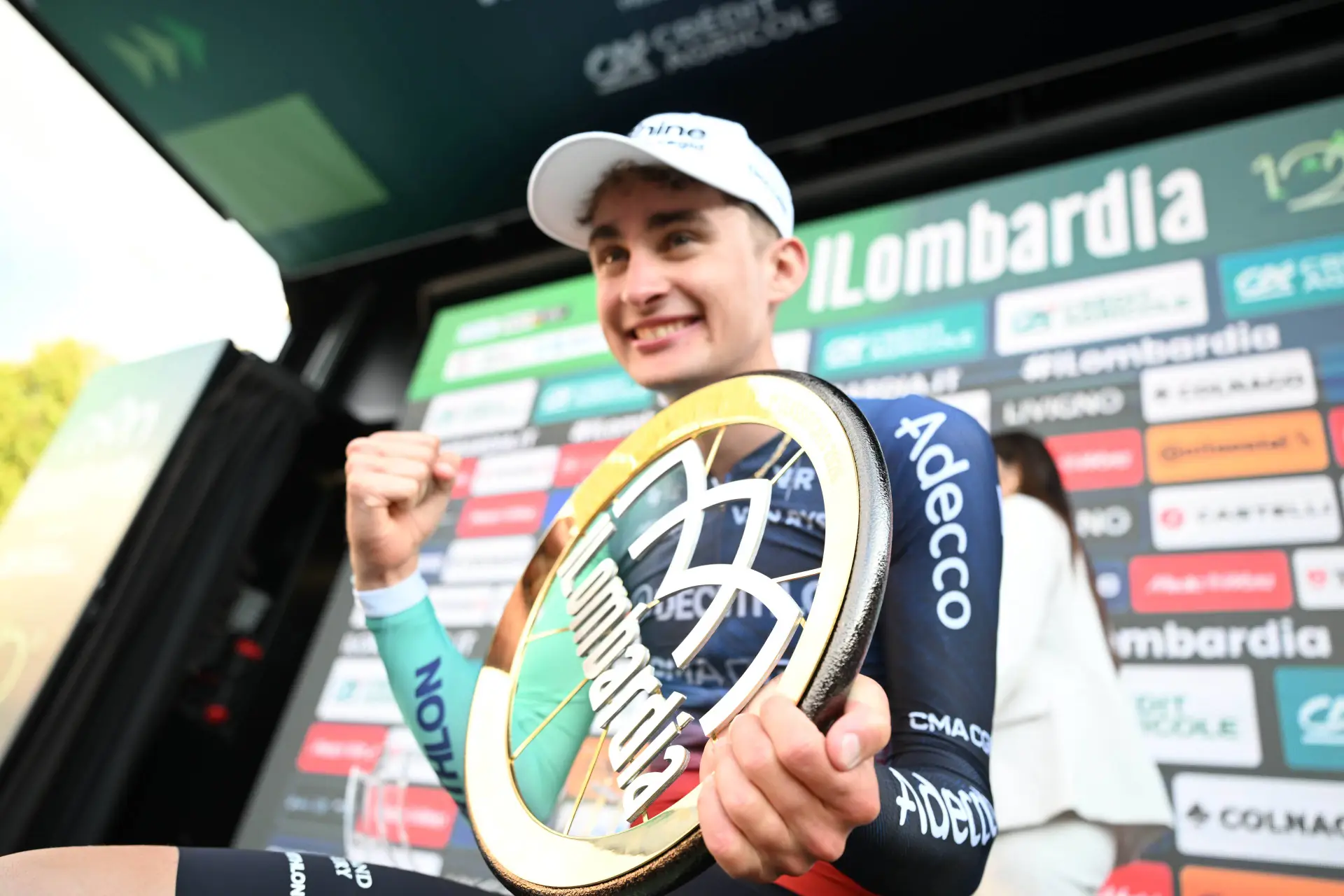
Paul Seixas, Enric Mas and Giulio Ciccone on the final podium of Il Lombardia 2026
A season of records before this one
To understand just how remarkable today’s result is, it helps to put the whole season in context. Seixas turned 20 in September, less than one month ago. He turned professional in 2025, as an 18-year-old, having won the junior world time trial title in Zurich in September 2024 - at just 17 years old - and the junior Liège-Bastogne-Liège in the same year. He was so good as a junior that Decathlon-AG2R bypassed the traditional under-23 development route entirely and handed him a WorldTour contract straight away.
His first professional season, 2025, was already eyecatching. He finished third at the European Road Race Championships, behind Pogacar and Evenepoel. He won the Tour de l’Avenir. He was clearly not a normal 18-year-old, but 2026 has been something else entirely.
In February he won the Ardèche Classic. In March he finished second overall at the Volta ao Algarve. In April he won the Tour of the Basque Country - overall, three stages, points classification, mountains classification and best young rider all at once. Four days later he won La Flèche Wallonne on debut, becoming the youngest winner in the history of that race.
The following Sunday he finished second at Liège-Bastogne-Liège, beaten only by Pogacar. In July he made his Tour de France debut and finished fourth overall, becoming one of the youngest top-five finishers in Tour de France history. In September he finished second at the GP de Montreal to del Toro. And now this.
His palmares at 20 years old reads like the career highlights of a rider ten years his senior: the Basque Country overall, Flèche Wallonne, second at Liège, fourth at the Tour, second at the Worlds time trial in Montreal, and now a Monument. In 2026 alone he has taken eight victories.
What the history books say
Seixas sits fourth in the all-time rankings at 20 years and 16 days, behind Victor Fastre at Liège-Bastogne-Liège in 1909 (18 years and 362 days), Georges Ronsse also at Liège in 1925 (19 years and 102 days), and Rik Van Steenbergen at the Tour of Flanders in 1944 (19 years and 206 days). All of them predate the modern era of cycling by many decades.
In the context of Il Lombardia specifically, the previous youngest winner was Giovanni Gerbi in 1905, at 20 years and 161 days. Seixas is 145 days younger than that. The record had stood for 121 years.
For a more recent frame of reference: Eddy Merckx won his first Monument, Milan-Sanremo, in 1966 at 20 years and 275 days - two and a half months older than Seixas is today. Merckx went on to win 19 of them.
That comparison is made not to suggest Seixas will do the same, but to illustrate where this result sits in the broader arc of cycling history. The youngest rider to win a Monument in the modern era just won one of the most prestigious races on the calendar in his third attempt.
A Frenchman ending a long wait
There is another dimension to this win that French cycling will not let pass quietly. Seixas is the first French winner of Il Lombardia since Thibaut Pinot in 2018. More broadly, he is the first French Monument winner since Julian Alaphilippe at Milan-Sanremo in 2019.
France has spent seven years waiting for a rider capable of winning at this level on a regular basis, and the wait has produced mounting anxiety around whether the next great French champion would ever actually arrive.
The comparisons to Bernard Hinault were already circulating after La Flèche Wallonne. Hinault won his first Monument, Liège-Bastogne-Liège, in 1977 at age 22. Seixas has already beaten that benchmark by two years. The hype may be enormous, but so far the results have justified every word of it.
It is also worth noting what this means for Decathlon CMA CGM as a team. This is their first Monument victory, and it arrived in only Seixas’s second full professional season. The team has been building patiently around its young French core, and today that investment paid off in the most emphatic way possible.
Read also
Only his third Monument - and he won it
A detail worth noting: Seixas had only raced a Monument three times before today. He finished seventh at Il Lombardia last year. He finished second at Liège-Bastogne-Liège in April, losing only to Pogacar. And today he won. Three Monuments, seventh, second, first. The learning curve has been almost absurdly steep, and it has gone in one direction only.
In the post-race interview, Seixas admitted he had not quite absorbed what he had done. “I don’t think I realise what I’ve done yet,” he said. Given what has happened in the 12 months since he was watching this race on television as a teenager, that is perhaps understandable.
It took Thibaut Pinot years of near misses before winning Lombardia in 2018. It took Alaphilippe four attempts before his first Monument. Seixas did it at his third try, at 20, in only his second year as a professional.
What comes next
The natural question after a season like this is where the ceiling is. At 20, Seixas is already a Monument winner, a Grand Tour top-five finisher, the winner of multiple Ardennes and stage race titles. He is a genuinely complete rider, capable in time trials, ferocious on steep climbs and tactically aware beyond his years. He will turn 21 in 2027, but he is already the fourth-ranked rider in the world.
Pogacar remains the dominant force in this generation of cycling, and it would take a significant leap for Seixas to challenge him consistently for Grand Tour wins. But Lombardia today showed that on a hard enough parcours, at the right moment, with the right legs, the gap between the two may not be as vast as it appears on paper. And Seixas is improving fast.
Today belongs to him. The 120th edition of Il Lombardia has a new and historic champion - the youngest in the race’s existence, the youngest Monument winner since the Second World War, and almost certainly not done yet.

Félix SernaCycling Journalist
Félix Serna is a writer at CyclingUpToDate and has been part of the team since 2025. He covers professional cycling across both the men’s and women’s calendars, with a focus on UCI rankings, race developments, and rider performance. His work includes interview-based reports, liveblogs, and tournament coverage designed to provide clear, accurate context throughout the season.
In his reporting, Félix regularly uses ProCyclingStats for results, statistics, and historical reference. He places strong emphasis on careful sourcing, editorial accuracy, and updating articles promptly when new, verified information becomes available. He holds a bachelor’s degree in International Studies.
claps 0visitors 0
Just in

Popular news
Latest comments
- Absolutely not. The guy has finished so many races 2nd to Pogi so absolutely not a shocker that when Pogi isn't there he wins a fewmobk11-10-2026
- GOATmij11-10-2026
- ugh god just leave the rest of the peloton with some riders heywrsty11-10-2026
- The next Tadej in a few years. Great job Paul!awp11-10-2026
- "I think today I also suffered from not knowing the route so well," i have no words, if you are racing for the win in a GT stage or a monument, your marginal gains comes from knowing the route. this is just unprofessional. It is also upto his team to ensure that their leader knows the finale and the tactics. Paul's team had already decided where to attack before the race. In contrast to Piddie, Mas did brilliantly remaining within limitsabstractengineer11-10-2026
- Mas was nowhere in the worlds, This also confirms that the Vuelta riders had the form but jet lag/non-acclimatization ruined their chancesabstractengineer11-10-2026
- Dont start Del Toro if he will not be a full domestique. Its just useless o watch Pogi slave for a weak Del toro and not take the stage win.abstractengineer11-10-2026
- What is funny is the Redbull's Insta post is celebrating 4th PLACE and Remco did not win. After the work that the team put in. This is what I said, when you put your team to work , at least make sure you have the legs and not make your team hurt yourself.abstractengineer11-10-2026
- Safety is everybody's responsibility. Riders too need to take responsibility for risky racing. Most incidents happen at the back of the race, no cameras, downhills. Once out of the peloton, slow down on the downhills and start obeying traffic rules to minimize risk.abstractengineer11-10-2026
- Won? He almost lost the Euro to Ciccone because he has no tacticsabstractengineer11-10-2026
Loading
Write a comment