“He was basically asleep” - Thijs Zonneveld tears into Isaac Del Toro and Paul Seixas tactics as Mathieu van der Poel thrives in chaotic Worlds finale
Cycling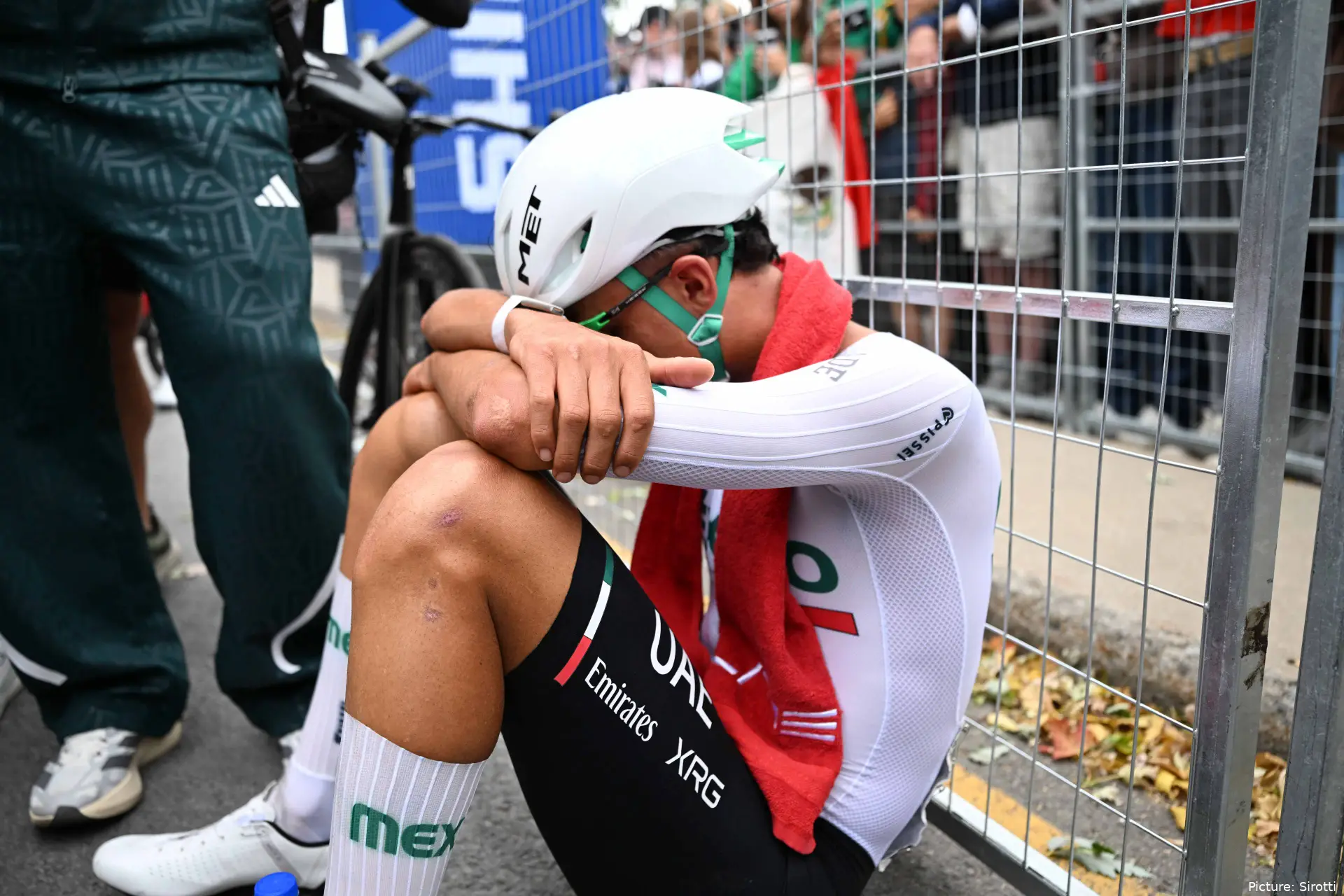
Isaac del Toro and Paul Seixas went into the 2026 World Championships among the riders most naturally suited to Montreal's brutal climbing circuit. Yet when the race first properly exploded with more than 90 kilometres remaining, both found themselves chasing a move packed with riders they could hardly afford to let disappear.
Mathieu van der Poel had already made sure he was on the right side of it.
Thijs Zonneveld was left particularly baffled by the response of Del Toro and Seixas after France's long spell of control had helped turn the race into a wide-open battle from distance. The Dutch analyst had considered the Mexican and the 20-year-old Frenchman the two leading favourites before the start, with Tom Pidcock close behind.
Del Toro eventually finished fifth, just 14 seconds behind new world champion Brandon McNulty, after spending much of the finale repeatedly trying to repair the damage. Seixas stayed in the medal fight until the final lap before cramping and eventually fading to 16th.

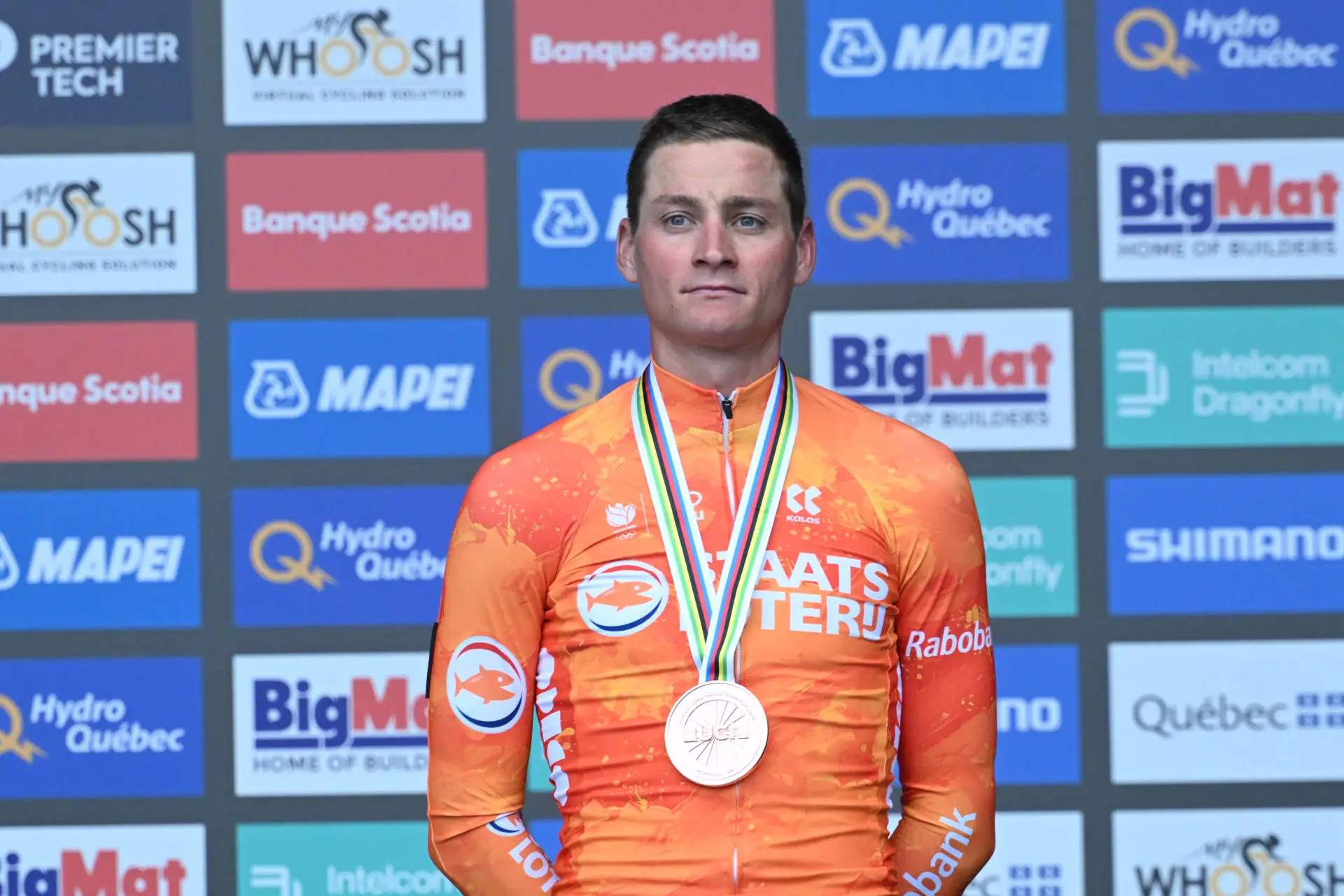
Van der Poel crossed the line in 3rd to claim bronze
Del Toro and Seixas caught out as the favourites move
France had done much of the work to bring the original 16-man break under control, with Bruno Armirail spending several laps driving the pace before a succession of French riders began attacking.
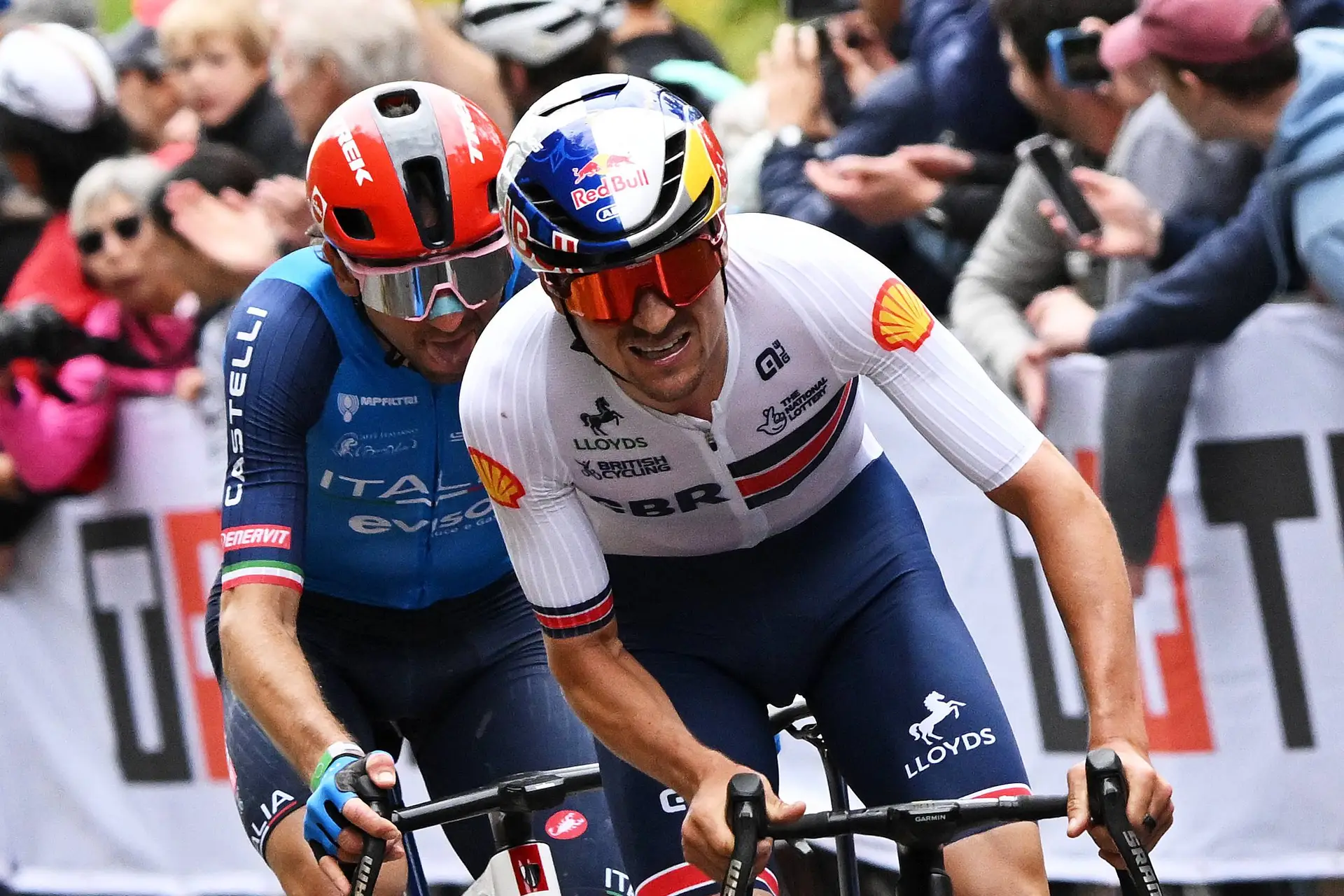
Once that control disappeared, the race changed almost immediately. Van der Poel jumped into the action, Wout van Aert attacked and Primoz Roglic, Oscar Onley, Anthon Charmig and Quinn Simmons eventually joined them in a dangerous six-man front group.
Ben Healy had also been one of the prominent riders trying to move before that selection formed, while Remco Evenepoel remained among the major names further behind.
“Surely a light has to go on for Del Toro or Seixas at that point?” Zonneveld argued on In De Waaier. “Surely they have to think: what is that tall guy in orange doing up there? They do not have that many riders to watch. There are a few you simply cannot allow to ride away: Van der Poel, Van Aert, and I would personally also include Healy and Evenepoel.”
Del Toro eventually responded in typically aggressive fashion, repeatedly accelerating on the Cote Camillien-Houde and forcing Seixas, Evenepoel and others into a long pursuit. By then Van der Poel and the riders around him already had the opportunity to begin racing from the front rather than waiting for the strongest climbers to dictate the contest.
“Then a group rides away with Healy, Van der Poel and Van Aert... that cannot be true, can it?” Zonneveld continued. “So from 100 kilometres out, they were already being forced onto the defensive.”
Del Toro went on to cover an enormous amount of ground as the race repeatedly split and regrouped, something Zonneveld readily acknowledged. His criticism was aimed at how much of that work became necessary in the first place.
“He was basically asleep,” he said. “You cannot do that when you are effectively a one-man team. He looks at Seixas and thinks: he is not up there either. They were already neutralising each other at that point.”
Read also
Van der Poel turns Montreal into the race he wanted
Van der Poel had approached the circuit from almost the opposite direction. Rather than waiting to discover whether he could match Del Toro, Seixas and the other climbers deep into the race, he wanted the decisive phase stretched across far more than a handful of climbs.
“What Mathieu really wanted was for it to become a very open race with a very long finale,” Zonneveld said. “Then it is no longer about one effort on the climb, but about the whole thing becoming one big chaos, where the effort is spread across the entire lap.”
Once Van der Poel reached the front, he kept pushing that strategy. His first major acceleration left only Simmons and Onley immediately able to follow, with Roglic forced to ride back at his own pace. Van der Poel attacked again later, dropped Onley and spent a long spell at the head of the race alongside Simmons and Roglic before Healy eventually bridged across.
The repeated attacks behind eventually brought the favourites back together and opened the door for McNulty's winning move, but Van der Poel was still attacking on the final lap after the American's advantage had been slashed towards ten seconds.
“He got the finale he wanted,” Zonneveld said. “In the end he almost sprinted for the victory, which you would not have expected on this circuit against these riders. I think Van der Poel read the race incredibly well. He understood that the race had become uncontrollable, that there was no team deciding whether it was going hard or easy. It became one big fireworks display.”
Zonneveld went further, describing that instinct as one of Van der Poel's greatest strengths. “I think, of all the riders in the men's peloton, he is the best at sensing that and knowing where that moment is,” he said, although he also pointed towards the Paris Olympics as an occasion when the Dutchman had failed to catch the decisive tactical moment.
Montreal was different. Van der Poel recognised the loss of control early enough to spend much of the final 90 kilometres racing ahead of riders who should theoretically have held an advantage over him on the climbs. “On such a hard course, he was still able to shape the race to suit himself. That is incredible,” Zonneveld concluded.
McNulty ultimately escaped from a later regrouping to claim the rainbow jersey, with Michael Matthews taking silver and Van der Poel bronze 13 seconds behind. Del Toro followed in fifth one second later, having spent much of the afternoon chasing back towards moves that Van der Poel had already anticipated.

Kieran WoodDeputy Editor-in-Chief
Kieran Wood is a sports journalist based in Wales and has been active in journalism since 2022. He regularly contributes to DartsNews.com and CyclingUpToDate.com, where he covers professional cycling and darts. In cycling, his work includes liveblogs from major races, including the Tour de France, the Giro d’Italia, and La Vuelta a España, alongside race reports and analysis. He has also conducted interviews with professional riders.
His reporting spans the full racing calendar, from one-day classics to stage races, with a focus on accurate, real-time coverage and clear contextual analysis. For statistics, results, and historical context, he regularly uses resources such as ProCyclingStats. To support reporting on rider activity and training context where relevant, he also references Strava.
In his work, Kieran places strong emphasis on careful sourcing, editorial accuracy, and updating articles as new, verified information becomes available.
claps 5visitors 4
Just in
Popular news
Latest comments
- You can add weight to a bike and limit gears or make it single speed if you like. I doubt that would reduce crashes. It would just add another dymanique. All good and well, but It wont stop cars getting on to the course.Cyclingsbestfan18-10-2026
- Seixas is probably second best in the World on short climbs. But that hasn't translated as well to long climbs
 Rafionain-Glas18-10-2026
 - Idiotic fellaRafionain-Glas18-10-2026
- Nothing. Against Pogi nothingabstractengineer18-10-2026
- He didn't even try to sprint all outvappaxbipmv18-10-2026
- Campenaerts looked like a rolling pumpkin with that all orange leaders skinsuit !frieders318-10-2026
- He can take his dumb a$$ politics somehwere else !frieders318-10-2026
- good to have her back. fingers crossed she‘ll be able to stay!Ketterechts17-10-2026
- A tenner and he wins the Tour next year, too 😂anonymouscyclist17-10-2026
- the answer is either stick to classics or GTs but not bothabstractengineer17-10-2026
Loading
2 Comments