“Everything has to change” - Vuelta champion Enric Mas already turns focus to Montreal World Championships
Cycling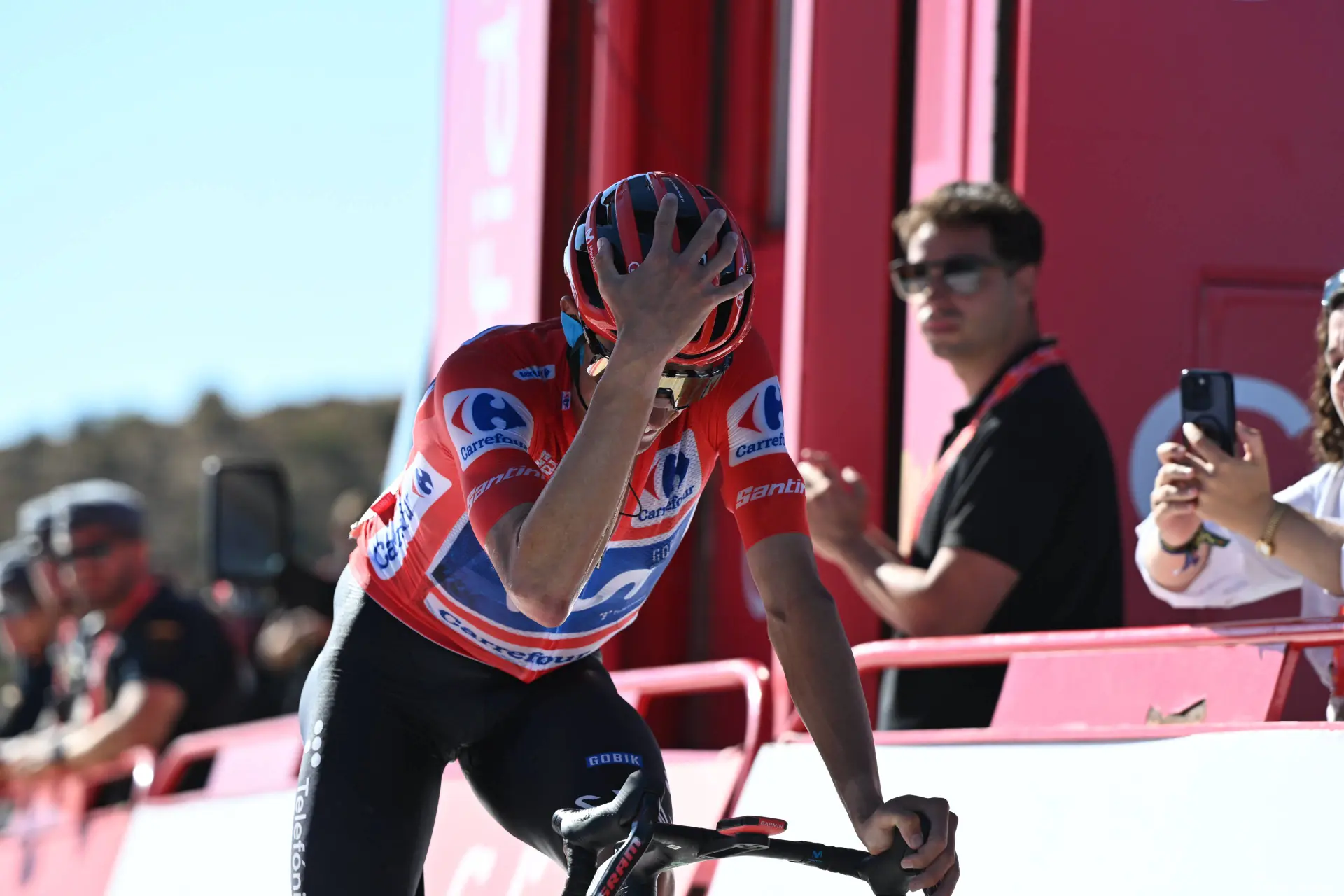
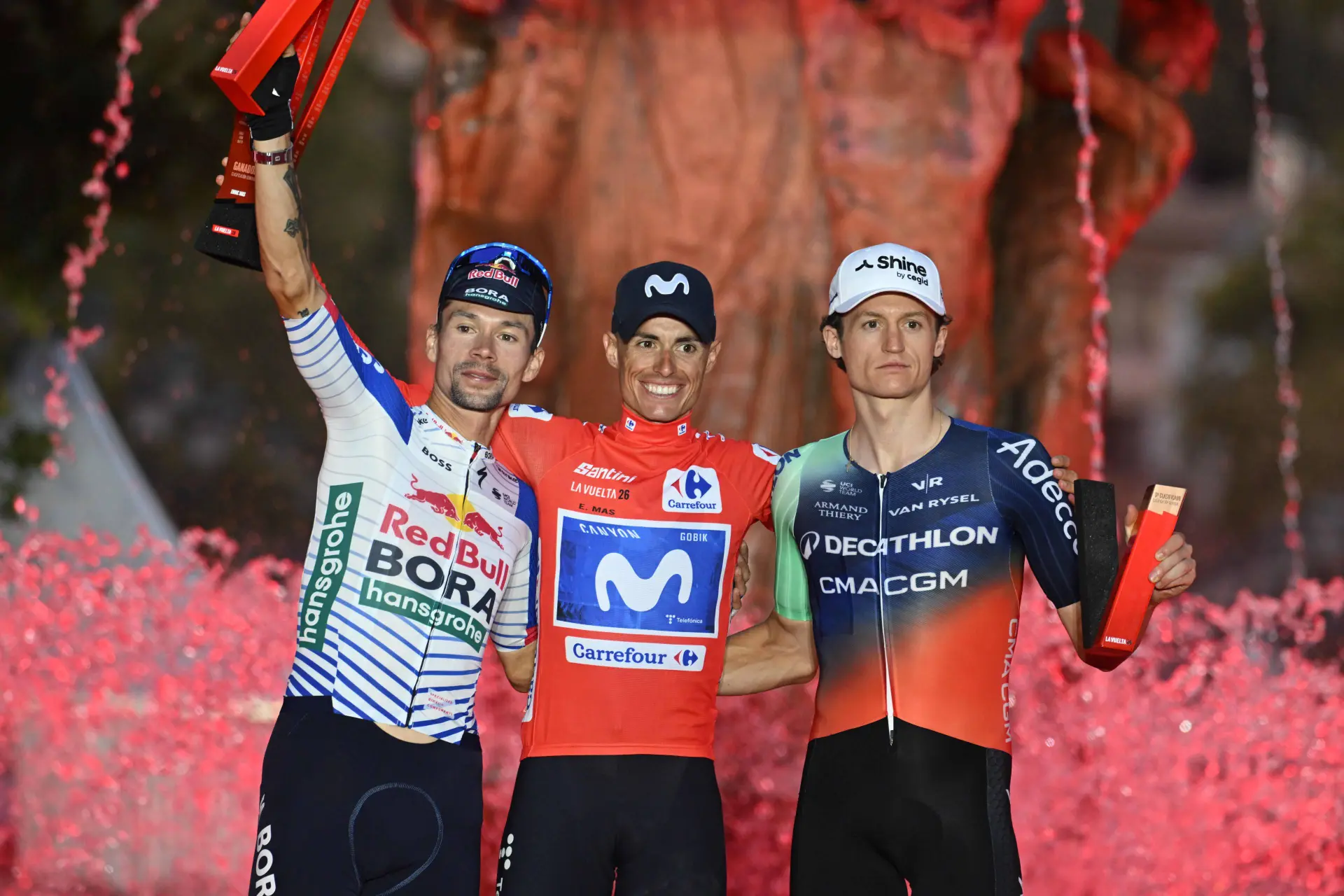
Enric Mas had to wait years, come through difficult moments and slowly rebuild confidence he had once lost before finally achieving the biggest goal of his career. At 31, the Spaniard has now won the Vuelta a Espana, a victory which has allowed him to close one chapter and look ahead with a very different feeling. His attention is already beginning to turn towards the Montreal World Championships.
“I don’t know if it will change my life, but I feel more at peace with the sport. So many years trying to achieve it, and now that I have, it does change you a little,” Mas admitted in an interview with Spanish newspaper AS.
The victory came after a particularly demanding season and a recovery process that stretched over several months. Mas recalled spending “almost four months unable to do any sport”, a period which ultimately gave him the chance to reset.
“It did me good to have a few quiet months and start again. It was incredibly difficult to get back into shape and return to 100 per cent, and almost a year later it has arrived. I spoke about it with my coach, that it would take us a year to get back to 100 per cent, and that’s how it turned out,” he explained.

Enric Mas took the first Grand Tour win of his career
A year to get back to his best
According to Mas, the hardest part of that process came between January and the Giro d’Italia. “I think it was from January until the Giro, that was the hardest part,” he said.
The Spaniard believes peace of mind played a major role in helping him rediscover his best level. “I haven’t seen many different things, but I have been very calm since after the Giro, and that really helped me a lot. That was the most important thing. Having mental calm throughout all this time is what helped me most.”
His recovery also demanded patience. “Yes, it came several months later, but it was worth waiting all this time,” he said.
Mas also refused to speculate over whether the procedure to treat a varicose vein had contributed to his improved performance. “That’s impossible to know. The numbers I achieved at this Vuelta are my numbers. It’s not that I was able to perform better because I had a varicose vein removed or not. The truth is we’ll never know because it’s impossible to calculate.”
Read also
“I would have signed up for it”
Even Mas had not expected his season to end quite like this. “I would have signed up for it,” he admitted with a laugh. “You never expect something like this, but it happened.”
He also placed his success in the wider context of how much professional cycling has changed in recent years, particularly with younger riders establishing themselves earlier than before.
“Cycling has evolved a lot since COVID. Everything has changed enormously and there are more and more promising riders who are already established and performing so well,” he said.
Mas' own career has followed a much longer path. “I got my first Grand Tour podium at 23 years old, at the 2018 Vuelta, and I’ve spent many years fighting and working, and in the end, at 31, I’ve achieved it.”
Family support through the difficult moments
Mas also gave considerable credit to his family for helping him through the most difficult periods of his career. “Everything. They’re the ones who put up with me every day. The nerves when things aren’t going well, the highs and lows when there are crashes, this year’s Giro, waiting so long to get back into shape... The people who mainly live through all of that are my family,” he explained.
Those difficult years have also shaped the rider who finally reached the top step of a Grand Tour podium. “The people who know me know that I try to work at 100 per cent, I try to do everything I can, and that’s how it has been throughout all these years. There have been setbacks, some bigger than others, but we’ve been able to come through them.”
Now, after so many months of work, the fatigue is beginning to catch up with him. “I’m tired, really tired. The same day I celebrated with my family, the team and friends, and yesterday it was time to travel home to Andorra, where I arrived in the afternoon. It was time to unpack and be with the family,” he said.
The deeper physical comedown has not arrived yet, although Mas knows it will. “I haven’t had the crash yet, but I will. After one-week races you have a few days where you’re down, and here, after a Grand Tour, which is 21 very intense days of racing, the body has to recover and the only way to recover is by sleeping.”
Aitana remains a special memory
Although the overall victory is the biggest result of his career, Mas still singled out his win on Aitana as one of the most meaningful moments of the race. “I think the victory on Aitana was more beautiful. In the battle I had with Tadej at the finish I was second, and on Aitana I was able to take the victory. Aitana will always be special,” he said.
The race changed dramatically after Tadej Pogacar's crash and subsequent abandonment, something Mas readily acknowledged. “Without Pogacar, the race changed. We already know who he is and what he does in every race he goes to.”
He also accepted that Pogacar's absence opened the race up for everybody else. “With Tadej’s misfortune, the race changed a lot. It helped make the race more open and made the fans believe in us, and that’s how it turned out.”
Read also
Montreal already on the horizon
After years spent chasing a Grand Tour victory, Mas can now look ahead from a very different position. “I don’t know if it will change my life,” he repeated, “but I feel more at peace with the sport.”
For now, the priority is recovery, time with his family and allowing the achievement to sink in. The next target, however, is already waiting.
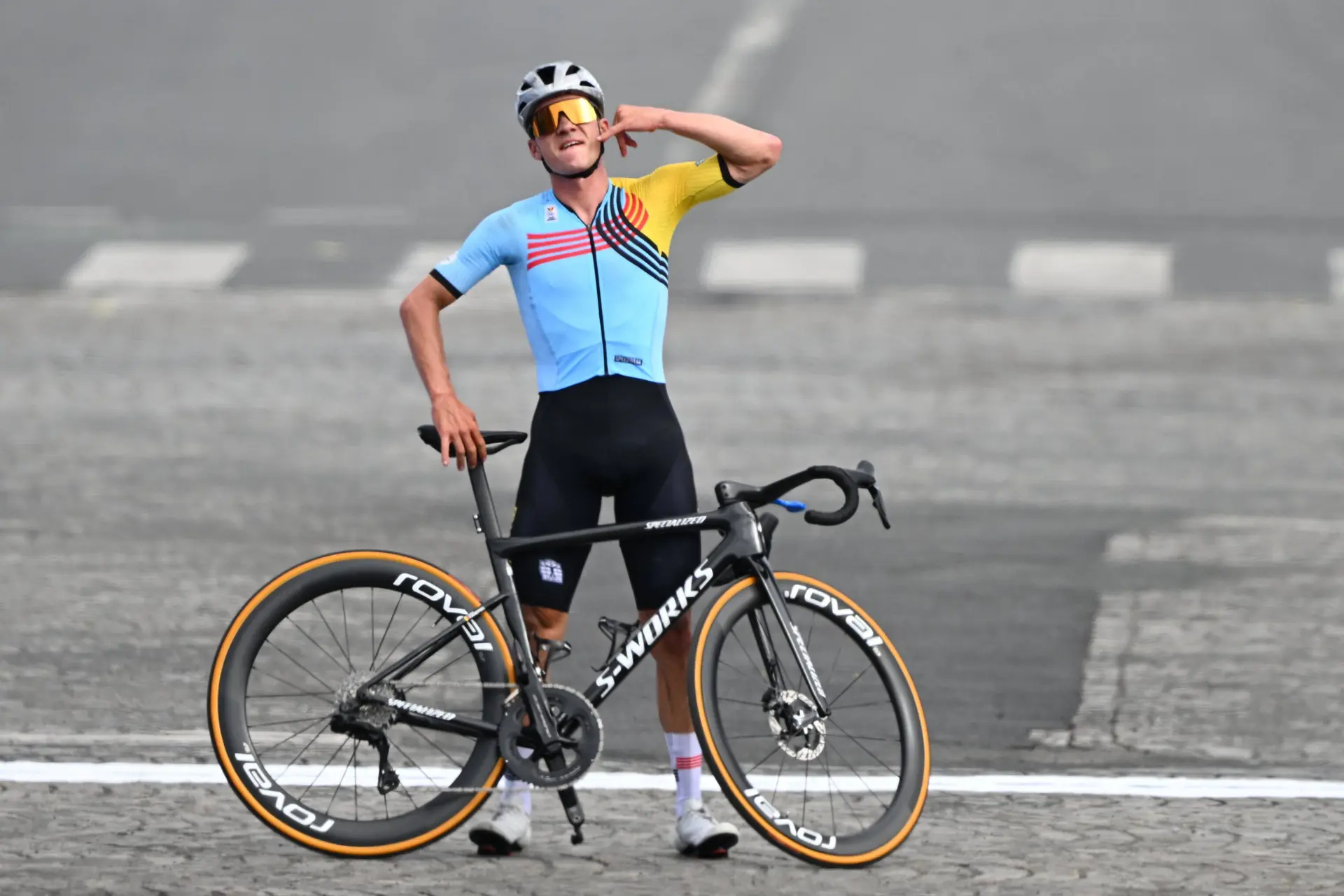
The Spanish national team will soon turn its attention towards the Montreal World Championships, and Mas knows that will require a complete reset. “That’s it, but you have to change it, because when you go with the national team, everything has to change.”
Juan LarraCycling Journalist
Juan Larra is a writer for Cyclinguptodate and editor-in-chief of Ciclismoaldia, where he has played a central role since its inception. Under his leadership, the website has become a trusted source for professional cycling coverage, offering in-depth analysis, news, and feature stories.
A sports journalist with over 20 years of experience, Juan earned his degree in Journalism from the University of Seville in 2007. He began his career covering a wide range of sports—including football, basketball, Formula 1, MotoGP, tennis, and cycling—for platforms such as the official La Liga app, Vodafone and Movistar websites, NBA Blogdebasket, and Cadena Cope, honing his skills in writing and editorial management.
In addition to his work at Ciclismoaldia, Juan contributes to Cyclinguptodate and serves as editor-in-chief for the tennis-focused site Tenisaldia. Throughout his career, he has conducted exclusive interviews with cyclists and sports figures, provided detailed analysis of competitions ranging from local Spanish races to major international events, and acted as a special correspondent at prestigious races including Paris-Roubaix, the Tour de France, and the Vuelta a España.
Juan’s combination of experience, expertise, and direct access to athletes has established him—and the platforms he leads—as authoritative voices in professional cycling.
claps 1visitors 1
Just in
Popular news

Latest comments
- I'm not a fan of any of those riders but c'mon these guys are just talking out of their bums. Bernal and froome's crashes were waaay worse. Pog and Jonas will be finebruins3026-10-2026
- Tadej had a bad crash. A concussion can be horrific. He also had a stable vertebra break so no threat to his spinal cord and a broken collar bone. This headline, like most on this site, is a joke. To even compare Tadej to the others is ridiculous. Froome: • Fractured right femur (thigh bone) • Fractured hip / pelvis • Fractured right elbow • Multiple fractured ribs • Collapsed lung Lost 2 liters of blood. Hospitalized for 3 weeks. Couldn't get back on a bike for 3 months. And that was limited. On crutches for longer than Tadej was off a bike. Bernal • Fractured vertebrae (spinal trauma) • Fractured right femur • Fractured right patella (kneecap) • Punctured lung & chest trauma • Multiple fractured ribs • Serious facial trauma and broken hand/finger Lost 2.3 liters of blood, hospitalized for 13 days, not on a bike for months. He had a 95% chance of being paralyzed. Jonas • Collapsed lung (Pneumothorax) • Pulmonary contusion (bruising and bleeding of the lung tissue) • Seven broken ribs • Fractured sternum (breastbone) • Shattered collarbone (clavicle) Vingegaard coughed up blood and had lung injuries, including a pneumothorax and pulmonary contusion. He required a chest drain for approximately eight days. This was life threatening. Sorry Bob Roll, and all others, Tadej won't be affected. his accident was minor compared to these. Not saying he should ride. Not saying a concussion isn't serious. but nothing like what these guys went through.mij26-10-2026
- I think we are heading towards a style of Tour de France with two days of celebrations - stage 20 the sprinters' day and stage 21 the Champs-Elysées day where GC riders can get involved
 Rafionain-Glas26-10-2026
 - ““Pogacar is something I have never seen before" - World Tour veteran puts Slovenian above Froome, Contador and Wiggins” - Uhh? I can feel a Popes in the woods and bears in silly hats moment coming on!Lozza26-10-2026
- Not sure what to do with these guys. Most of the articles here have random sentences and are chock full of "AI slop".Occam26-10-2026
- what does this mean? "whilst in 2014 he crashed ahead of the spring in Harrogate - a day for the sprinters. " love what you're trying to do, but this stuff is pretty unreadable sometimes.Occam26-10-2026
- It’s not as if he races every race! Also, the developing riders are unlikely to be in the team with him anyway.Lozza26-10-2026
- OK, stop all the BS below!!! Don't you guys have anything better to do than to get on Pogi's case (injury)? The only thing I read from your comments was: blah blah blah ... and BLAH !!! Y'all remember one thing: Next year... 2027 ... Pogi - Baby Hulk will "smash" everyone!!! Remco will have nonstop excuses... Jonas is going to once again say to Skjelmose : "I'm doing my best numbers ever but Pogačar just rides away. What else can I do???" ... Everyone else will fight for second place. Pogi doesn't give a sh** about what podcasters and different cycling sites are saying or "barfing up" senseless words of foolishness and ignorance about him. He will chew up everyone and spit him out. Ad acta!!!PogiSloFans26-10-2026
- Concussion is being recognised as having a life-long impact on many athletes, with effects on the brain and links to mental health and cognitive decline being investigated. It can't be dismissed as being in the past (and obviously isn't a joke, though I realise you didn't mean it that way).Hills3326-10-2026
- Arrieta I think has more potential than Frigo and Balderstone. Ramírez is one who can become a GC rider, Fabries is more of a diesel climber. He only really does well in MTTs. When you add Molano and Sivakov, it seems a transfer loss overall. However, comparing the transfer season of a stacked team like UAE to lower teams isn't fair anyway. Riders tend to diffuse outwards anywayRafionain-Glas26-10-2026
Loading
Write a comment