"Basic standards I think, in this case, weren’t being met" - Alberto Contador critical of Vuelta's "Erola Jons situation"
Cycling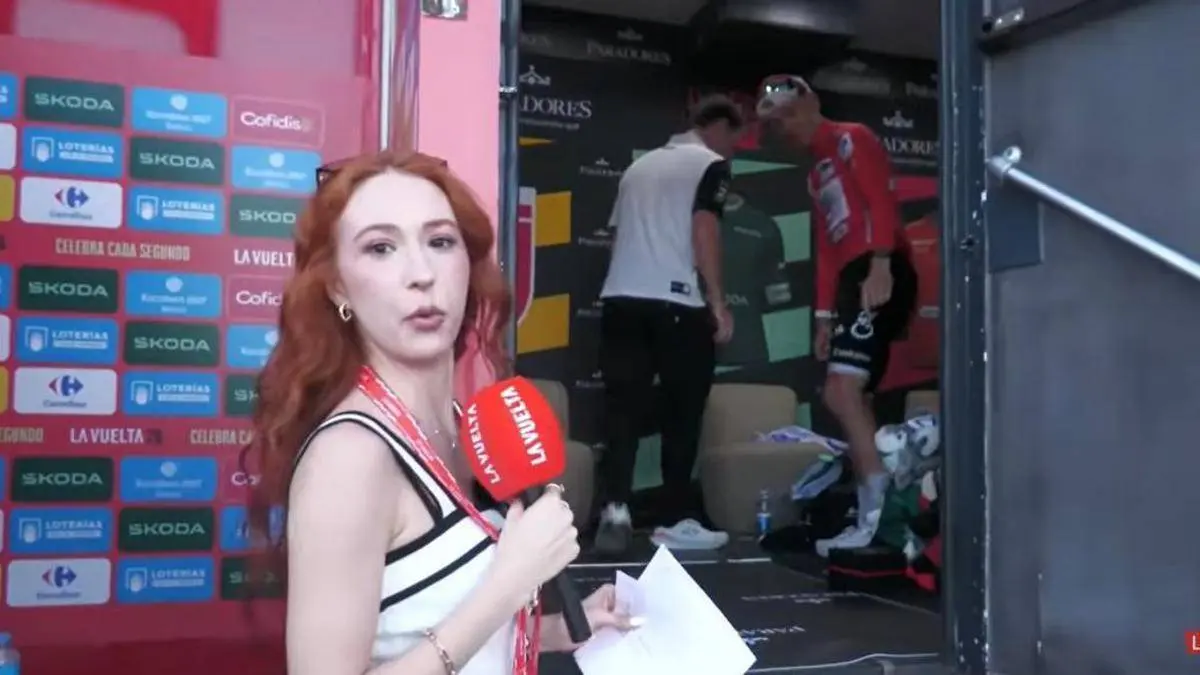
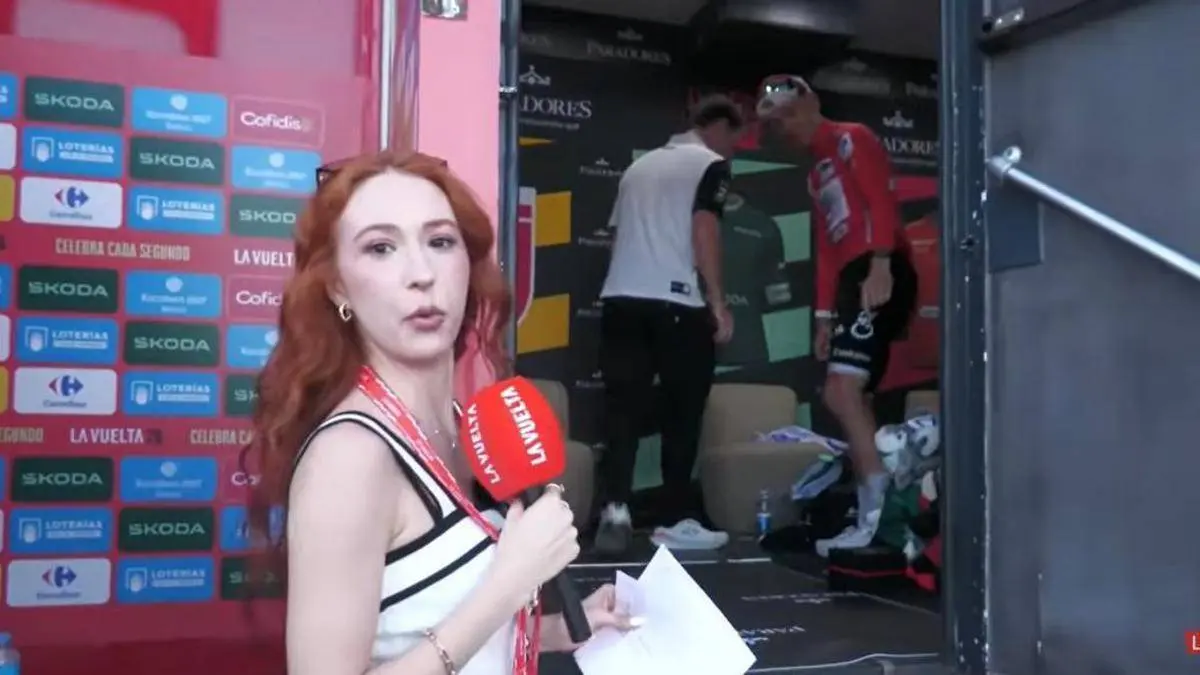
The controversy sparked by the presence of content creator Erola Jons at La Vuelta a España has reached Eurosport’s broadcast. The organization’s decision to bring in an influencer with a huge social media audience to generate content around the race has drawn heavy criticism, especially for the tone of some of her interactions with riders.
The debate intensified after an interview that caused unease among professionals and fans. Journalist Laura Meseguer had already voiced her indignation in public and questioned why duties traditionally linked to journalism were handed to a content creator without specific experience in cycling.
The discussion, however, went beyond the individual at the center of those images. Javier Ares, Juan Antonio Flecha, and Alberto Contador agreed the main issue lay in the choice of profile and how her involvement was framed. At the same time, Ares raised a point about the responsibility of traditional media in amplifying a controversy that was born and grew on social networks.
During the broadcast, the three analyzed the situation from different angles, but shared common ground: bringing in influencers can help connect cycling to new audiences, yet there must be alignment between the chosen profile, the content to be produced, and the image a race like La Vuelta seeks to project.
“They chose the wrong person and the wrong approach”
Javier Ares was blunt in assessing the organizers’ decision. He argued that the idea of involving a content creator is understandable, especially as social media plays a growing role in promoting sport. “As content creators, of which there are so many, I think it’s fine,” he explained.
Read also
The problem, according to Ares, was the execution. “They picked the wrong person, they picked the wrong approach,” he said on air. He sought to separate Jons’s responsibility from the decision to hire her, arguing that if the organizers assigned her that role, the influencer was simply doing the job she had been given.
Ares also focused on the content of one interview that triggered the backlash. Without personally attacking Jons, he felt some of the methods used could be problematic within the context of a professional race. “I don’t want to question the poor woman, she’s not to blame,” he noted, before insisting responsibility should rest with those who designed the strategy.
His reflection went beyond La Vuelta itself. Ares criticized the apparent contradiction of outlets that condemn such content while helping it go viral. “If we’re reproducing it to gain traction, then we shouldn’t complain,” he said. In his view, the controversy feeds on itself precisely because traditional media rebroadcast what they claim to deem inappropriate.

Erola Jonas at the Vuelta a Espana
“It’s interesting to bring in content creators”
Juan Antonio Flecha agreed that involving content creators can be a useful tool for any major sporting event. The former rider argued that opening the door to different profiles can help cycling reach viewers who do not usually follow a race through traditional channels.
“I think it’s interesting at certain times to bring in some content creators, influencers, whatever we want to call them,” Flecha said. However, he immediately added a caveat: “When the profile perhaps matches what the race is and what you really want to convey.”
For the Eurosport pundit, that was where the main mistake lay in this case. Flecha said the organization itself understood the choice had not been the best and that, after the controversy, new restrictions were set on what content could be produced during the race.
“I know for a fact that La Vuelta acknowledges the mistake, that the profile wasn’t the right one,” he stated. His view again placed the emphasis on the organizers rather than the individual hired, arguing the core responsibility lies with those who shape the communication strategy.
Flecha also stressed the ability of influencers to attract new audiences. “It’s interesting to bring in new people or from different sectors,” he said. The key, in his opinion, is to ensure that extra audience joins cycling without sacrificing basic standards of professionalism and coherence with the competition.
Six million followers, an opportunity
Alberto Contador rounded out the analysis by highlighting one argument that likely led La Vuelta to back Jons: her vast reach on social media. Having a creator with millions of followers can be a way to connect the race with a young audience that consumes sport mainly on digital platforms.
“They have six million followers, for young people,” Contador noted, acknowledging that scale can be a major opportunity for a competition seeking to expand its audience. The former rider, however, made it clear that a large community should not be the sole criterion when choosing a profile.
🗣️ La reflexión de @javierares y @albertocontador sobre la polémica en #LaVuelta26 con la influencer Erola Jons.#LaVuelta26 #LaCasadelCiclismo pic.twitter.com/btqZyTpmF7
— Eurosport.es (@Eurosport_ES) August 24, 2026
“Obviously always with basic standards that I think, in this case, weren’t being met,” he concluded. That view sums up the shared position of the three pundits: social networks are now inseparable from modern cycling, but the pursuit of virality cannot be divorced from the nature of the competition.
Eurosport’s debate thus ended without rejecting new formats at La Vuelta, but questioning how to use them. Ares, Flecha, and Contador agreed that content creators can play a role in cycling’s growth, but also that the choice of profile and the limits of their work must be carefully defined. The Erola Jons controversy has therefore become a broader discussion about the collision between journalism, entertainment, social media, and professional sport.
Ondrej ZhasilCycling Journalist
Ondřej Zhasil is a cycling journalist at CyclingUpToDate and has been part of the team since 2023. He is based in Ostrava, the third-largest city in the Czech Republic, and covers professional cycling across the main UCI competitions, including the Tour de France, the Giro d’Italia, and La Vuelta a España. A key focus of his work is startlist analysis and pre-race coverage, where he examines team selections, rider line-ups, and tactical scenarios ahead of major events.
Alongside WorldTour coverage, Ondřej has developed specific expertise in junior cycling and in racing across East Asia, including competitions in China and Japan. He also maintains a broad working knowledge of other disciplines and levels, including cyclocross, while continuing to expand his understanding of mountain bike racing.
Ondřej holds a bachelor’s degree in Mathematics and Physics, which supports his analytical, data-driven approach to performance and race analysis. In his reporting, he regularly uses ProCyclingStats for results, statistics, and historical context. He places strong emphasis on careful sourcing, editorial accuracy, and updating articles promptly when new, verified information becomes available.
claps 0visitors 0
Just in
Popular news
Latest comments
- Not sure what to do with these guys. Most of the articles here have random sentences and are chock full of "AI slop".Occam26-10-2026
- what does this mean? "whilst in 2014 he crashed ahead of the spring in Harrogate - a day for the sprinters. " love what you're trying to do, but this stuff is pretty unreadable sometimes.Occam26-10-2026
- It’s not as if he races every race! Also, the developing riders are unlikely to be in the team with him anyway.Lozza26-10-2026
- OK, stop all the BS below!!! Don't you guys have anything better to do than to get on Pogi's case (injury)? The only thing I read from your comments was: blah blah blah ... and BLAH !!! Y'all remember one thing: Next year... 2027 ... Pogi - Baby Hulk will "smash" everyone!!! Remco will have nonstop excuses... Jonas is going to once again say to Skjelmose : "I'm doing my best numbers ever but Pogačar just rides away. What else can I do???" ... Everyone else will fight for second place. Pogi doesn't give a sh** about what podcasters and different cycling sites are saying or "barfing up" senseless words of foolishness and ignorance about him. He will chew up everyone and spit him out. Ad acta!!!PogiSloFans26-10-2026
- Concussion is being recognised as having a life-long impact on many athletes, with effects on the brain and links to mental health and cognitive decline being investigated. It can't be dismissed as being in the past (and obviously isn't a joke, though I realise you didn't mean it that way).Hills3326-10-2026
- Arrieta I think has more potential than Frigo and Balderstone. Ramírez is one who can become a GC rider, Fabries is more of a diesel climber. He only really does well in MTTs. When you add Molano and Sivakov, it seems a transfer loss overall. However, comparing the transfer season of a stacked team like UAE to lower teams isn't fair anyway. Riders tend to diffuse outwards anyway
 Rafionain-Glas26-10-2026
 - There's quite a large range of time where van der Poel is less likely to race than not, possibly a month. The Worlds sit in that window. So it seems that its more likely than not that he'll not race.Rafionain-Glas26-10-2026
- Maybe ruben silva still dont get it but visma is broke they aint signing anyone. They desperately need tier one climberse but all they can buy is fabio jakobsen..Typing is on the wall there to say the least...:(miguel26-10-2026
- I didn't say Tadej should ride it. I'm stating HE wanted to ride it and as a matter of fact had to be talked out of it. The other accidents mentioned in this headline were so much worse.mij26-10-2026
- I'm not downplaying the impacts. He would have been a fool to ride EU. I'm commenting that Roll's position is idiotic - to compare Tadej's two broken bones and a concussion to what Froome/Bernal/Jonas went through and suggest it could hold Tadej back is equally foolish. As bad as it might have been, Tadej's accident was a joke compared to what the others went through.mij26-10-2026
Loading
Write a comment