"At times, it has meant losing the hope of winning" - Pello Bilbao on racing against Pogacar, Gino Mäder's passing and reasons for retirement
Cycling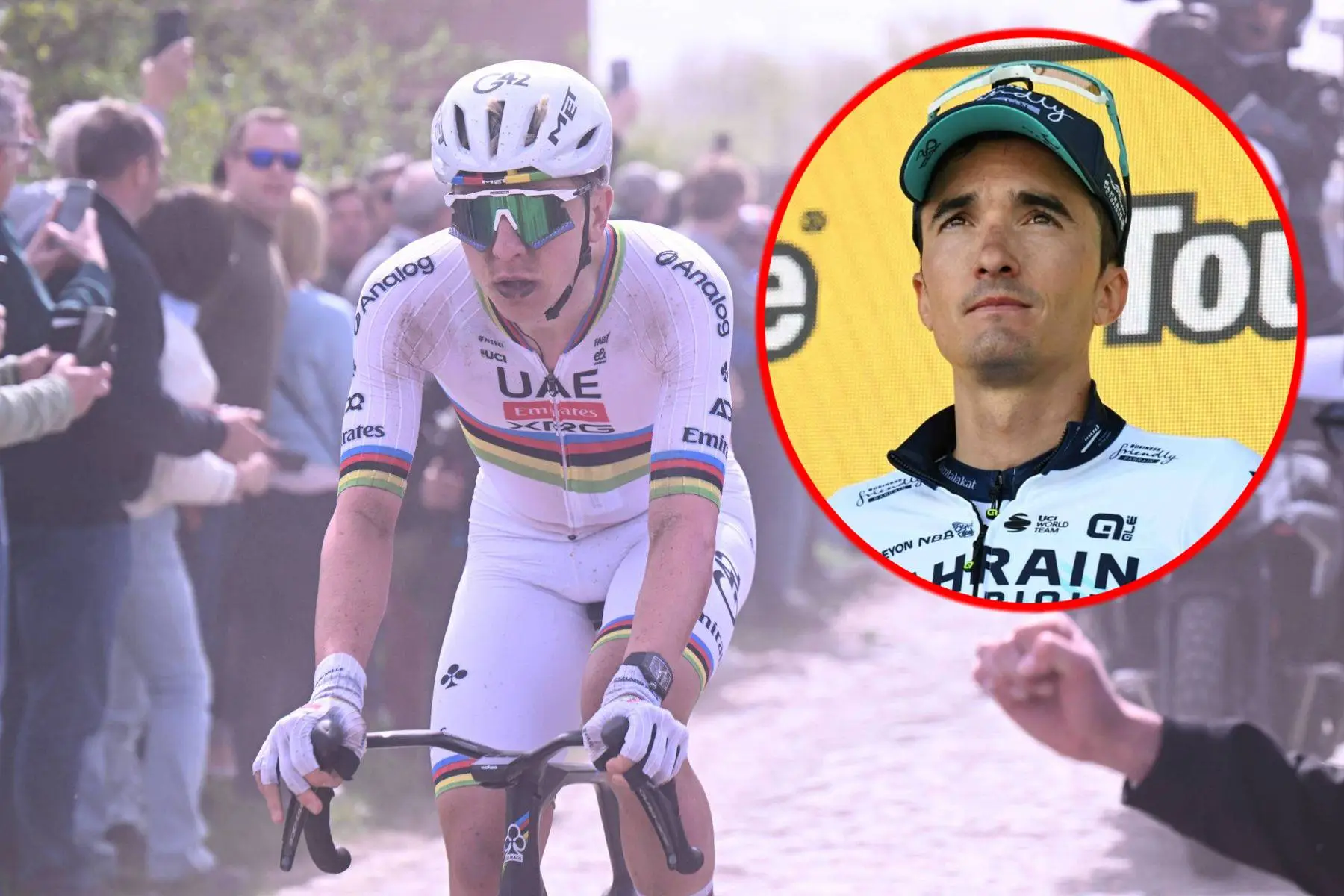
Pello Bilbao has brought his professional cycling career to a close with a mix of emotion, satisfaction and eagerness to begin a new chapter. His farewell at Il Lombardia, where he finished seventh, was the perfect ending to a career that exceeded his own expectations. The Basque rider now wants to make up for lost time with his family and enjoy cycling without the demands of elite competition.
Bilbao’s final professional race was full of surprises. His wife arrived at the last minute with their children, while several friends came to support him without his knowledge. It made his farewell an especially emotional occasion. In an interview with Marca, he reflects on saying goodbye.
“It was very emotional and special, right from the surprises that morning. My wife turned up at the last minute with the kids, and I had no idea. Knowing it was my last race was already enough, but then having the kids there on the bus and so many friends come to see me without me knowing... My emotions were running high.”
Despite the emotional weight of the occasion, Bilbao wanted to sign off by competing at the highest level and securing a strong result in one of the biggest Classics on the calendar.
“I knew those were my last 240 kilometers as a professional, my last agonizing efforts on the bike. I wanted to push myself to the limit, enjoy it and have a good result to finish on. Luckily, everything went as I had planned. I was able to make the most of my form and finish seventh. Given the level of the field and the fact it was a Monument, I’m extremely satisfied.”

Pello Bilbao is retiring this year
A retirement two years in the making
The decision to leave professional cycling did not come overnight. Bilbao had been reflecting on his future for some time, although he admits there were moments when he came close to changing his mind.
“I’d say I made the decision two years ago, but there were moments of doubt. Mikel Landa’s plans came up, as did Fran’s... and at that point I was almost ready to come back. It was before the Clásica de Donosti. But in the end, I changed my mind, remembered all the reasons I wanted to leave cycling and decided this was the right time.”
The sport’s relentless demands were one of the decisive factors. A professional’s life is not limited to training and racing; every decision has to be weighed against its impact on performance.
“It’s not simply about having to watch what you eat. In the end, you know that anything you do in your day either helps you get the best possible training in the next day, or it isn’t the right thing to do. You’re constantly weighing it up.”

Pello Bilbao and Ion Izagirre at Il Lombardia 2026
Making up for lost time with his family
Bilbao describes himself as a perfectionist who is committed to his work, but admits that this mindset also makes it difficult to switch off when he is at home.
“I’m a perfectionist. I like to do my job well, and I don’t know any other way to be a professional or to stay in the professional world. But I also want to spend as much time as possible with my children. When I’m at home, I want to focus on them, play with them and not be thinking about cycling. That’s one of the hardest things about our sport.”
Bilbao’s new life is about regaining the freedom professional cycling restricts. He wants to stop monitoring every meal, weighing himself constantly and sending training data to his coaches.
“Simply not having that burden, that exclusivity cycling demands. Being able to wake up without thinking about what you’re going to have for breakfast, and just eat what you feel like. Not getting on the scales, not having to send all your data to the coaches.”
He also wants to change his relationship with the bike and make it a source of enjoyment again, without schedules or obligations.
“Seeing the bike as something to enjoy, whether that means riding around here in the local area or pushing hard when I feel like it. Above all, having time for my friends, my wife and my children. Being at home in peace, without constantly thinking about what is or isn’t good for my cycling.”
Gino Mäder and a special Tour de France victory
Among the hardest moments of his career, Bilbao remembers the death of Gino Mäder most vividly, along with those of Michele Scarponi and Víctor Cabedo. Losing three fellow riders brought home the risks of a sport in which tragedy is always a possibility.
“The hardest was what happened to Gino Mäder, along with Scarponi and Víctor Cabedo. These are things we know can happen, and could happen to any of us, but you always hope they happen as far away from you as possible. They ended up affecting me quite deeply. Losing three fellow riders makes the risks of our sport feel very close. It was hard.”
Just a month after Mäder’s death, Bilbao claimed a stage victory at the Tour de France. The win brought personal and collective relief after an especially difficult period.
“After the tragedy of losing Gino Mäder, the Tour de France victory came about a month later. For me, winning a stage at the Tour was a chance to pause and find some relief, given what it meant to me personally and to the whole team.”
Bilbao was able to dedicate the victory to his teammate and find a reward for all the hard work that had gone into preparing for the French Grand Tour.
“Being able to dedicate that win to Gino and make all the energy we had invested in preparing for the Tour worthwhile. We showed that when you race with special energy and motivation, things can turn out brilliantly.”

Pello Bilbao, Bahrain Victorious rider.
Competing against Pogacar and the sport’s dominant riders
The Basque rider also reflects on how cycling has evolved and on the arrival of figures such as Tadej Pogacar. Exceptional riders have raised the level of spectacle, but they have also made victory harder to achieve for the rest of the peloton.
“At times, it has meant losing the hope of winning, or not believing you can really win, and having to aim for second or third—or the best result possible.”
Bilbao believes scientific and nutritional advances have transformed riders’ preparation, making the sport’s greatest talents even harder to beat.
“Before these exceptional riders came along, I’d say every great talent had a bad day, or could have one. Nobody was invincible, or at least that’s how it felt to me. But in recent years, with advances in science and nutrition in particular, everything is measured and controlled so closely. A prodigious engine that never fails and has everything under control is a winning machine.”
Read also
Even so, he acknowledges that competing against these riders has also been a source of motivation and helped elevate the sport.
“On the one hand, racing alongside these exceptional riders has been an incentive, because you see the spectacle grow and they have helped make cycling great. But you also carry the knowledge that fighting for victory is extremely difficult.”
Juan LarraCycling Journalist
Juan Larra is a writer for Cyclinguptodate and editor-in-chief of Ciclismoaldia, where he has played a central role since its inception. Under his leadership, the website has become a trusted source for professional cycling coverage, offering in-depth analysis, news, and feature stories.
A sports journalist with over 20 years of experience, Juan earned his degree in Journalism from the University of Seville in 2007. He began his career covering a wide range of sports—including football, basketball, Formula 1, MotoGP, tennis, and cycling—for platforms such as the official La Liga app, Vodafone and Movistar websites, NBA Blogdebasket, and Cadena Cope, honing his skills in writing and editorial management.
In addition to his work at Ciclismoaldia, Juan contributes to Cyclinguptodate and serves as editor-in-chief for the tennis-focused site Tenisaldia. Throughout his career, he has conducted exclusive interviews with cyclists and sports figures, provided detailed analysis of competitions ranging from local Spanish races to major international events, and acted as a special correspondent at prestigious races including Paris-Roubaix, the Tour de France, and the Vuelta a España.
Juan’s combination of experience, expertise, and direct access to athletes has established him—and the platforms he leads—as authoritative voices in professional cycling.
claps 0visitors 0
Just in
Popular news
Latest comments
- He didn't even try to sprint all outvappaxbipmv18-10-2026
- Campenaerts looked like a rolling pumpkin with that all orange leaders skinsuit !frieders318-10-2026
- He can take his dumb a$$ politics somehwere else !frieders318-10-2026
- good to have her back. fingers crossed she‘ll be able to stay!Ketterechts17-10-2026
- A tenner and he wins the Tour next year, too 😂anonymouscyclist17-10-2026
- the answer is either stick to classics or GTs but not bothabstractengineer17-10-2026
- the exodus already stared with Ciccone. Already they were struggling with two sprinters, now there are three. Also Ganna will demand leadership. Gall is the most proven GC, Ayuso has the most potential. GC leadership for everybody will be impossible. Literally a UAE style mess without pogi.abstractengineer17-10-2026
- I raced as an amateur for 12 years, including six years on my country’s national road cycling team. I secured two national titles and competed in three World Championships plus more than 15 international stage races. At 23, we travelled to Italy for a training camp—or so I assumed. On a rest day, we watched a presentation about adopting a more “professional” training approach. It was crystal clear what “professional” meant. That moment first exposed me to this dilemma. After returning from Italy, I left cycling—at least at the competitive level I had known. Over the following two years, the whole team was caught doping. I hold that everyone is innocent until proven guilty. In my view, current stakeholders operate on a different scale, and the sums involved are vast. I am unsure whether any doping would ever be revealed. I try to stay positive and enjoy the show. My 2c.
 vannpelt17-10-2026
 - Fiver he wins 🤣
 leedorney17-10-2026
 - “…measures to reduce speeds.” Might as well shorten the race course to just 50km as well? ASO generates at minimum €300m a year and 30- 40% profit. Maybe stop being greedy and spend more of the profit to protect the riders instead.b3tlla17-10-2026
Loading
Write a comment