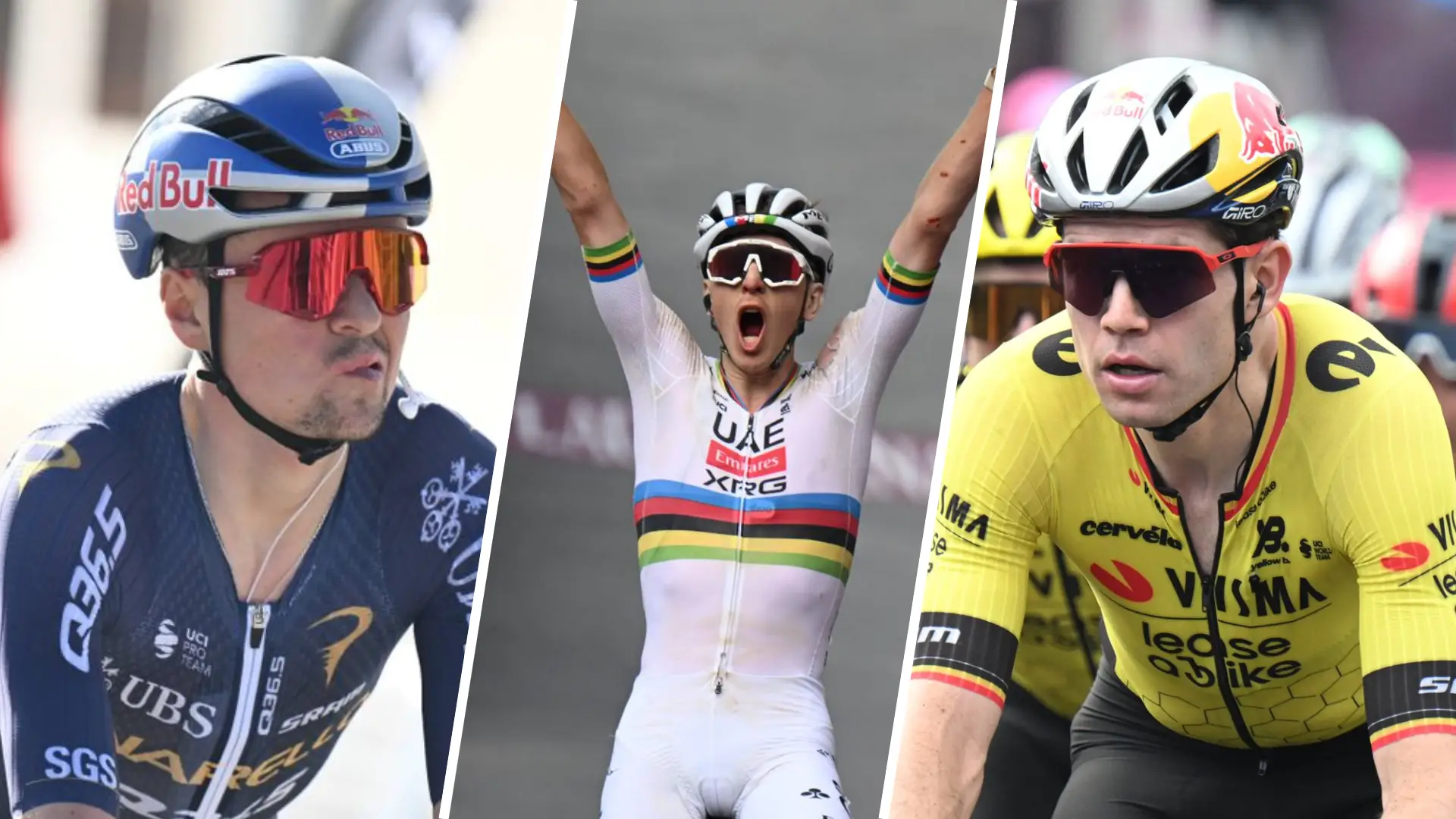
It feels almost pointless to ask the question. When Tadej Pogacar lines up at Strade Bianche, the script usually writes itself.
The Slovenian has already won the Tuscan showpiece three times and arrives once again as the overwhelming favourite. In truth, it would be a shock if he did not lift his arms in Siena’s Piazza del Campo on Saturday afternoon. It is rare enough for Pogacar to lose a one-day race. It is even rarer when Mathieu van der Poel is not there. And defeats on his seasonal debut are hardly part of the pattern.
Strade Bianche may not have the history of a Monument, but in prestige, spectacle and rider ambition, it now sits just beneath that tier. For many fans, this is the true start of spring.
Still, even in a race that often bends to Pogacar’s will, there are riders capable of testing him. Here are five names who could make Strade Bianche 2026 uncomfortable for cycling’s most dominant force.
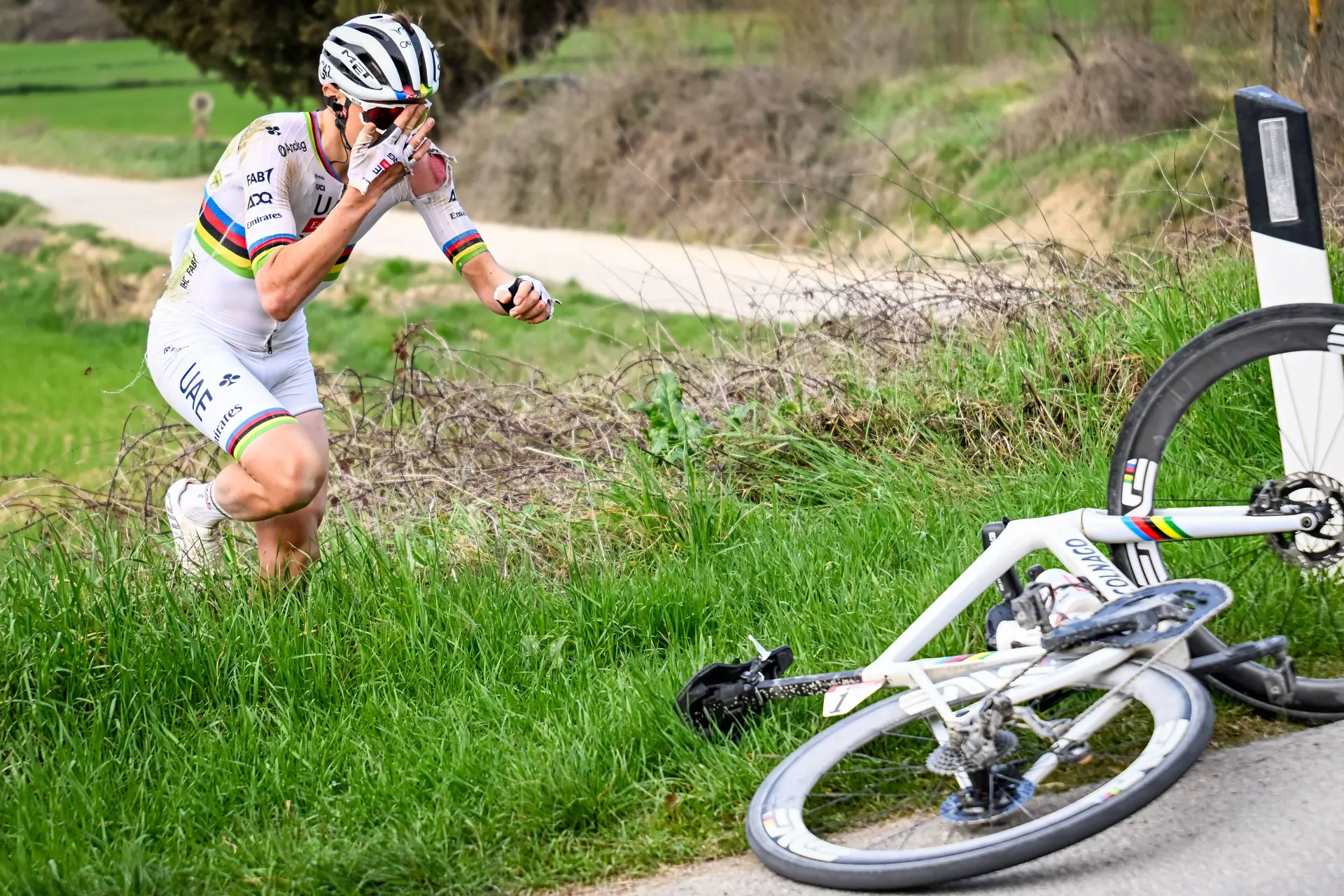
Matteo Jorgenson
The American from Team Visma | Lease a Bike comes into the race in sharp condition after an impressive French campaign. He finished fourth at the Faun Ardeche Classic, the rider who held out longest behind a flying Paul Seixas, and then took second at the Faun Drome Classic, only beaten in a two-up sprint by Romain Gregoire.
Jorgenson traditionally hits form early in the season and thrives in demanding terrain. While he is expected to support Wout van Aert, his engine and racing instinct make him a dangerous card to play. An aggressive early move on the sterrato would not be out of character.

Can Jorgenson help Visma mount a two-pronged attack against Tadej Pogacar?
Ben Healy
Ben Healy’s early season has been quieter than Jorgenson’s, with no standout result in the recent French classics. Even so, Strade Bianche suits him perfectly.
The Irishman finished fourth last year, and the race’s explosive gravel sectors play to his strengths. With Tim Wellens, who edged him off the podium in 2025, absent through injury, a top-three finish should be a realistic ambition.
Winning would require something extraordinary, likely an early move that sticks despite the strength of UAE Team Emirates behind. That is a big ask, but Healy has never been afraid of big risks.
Tom Pidcock
If anyone can match Pogacar on gravel, it is Tom Pidcock. The Briton seized his opportunity in 2023 when Pogacar was absent and claimed victory, and in 2025 he was the only rider able, for a time, to live with the Slovenian’s acceleration.
Pidcock’s handling, punch and race craft make him a natural contender here. If the question were who is most likely to finish second, he would be an obvious answer. To win, he would probably need either a rare off day from Pogacar or a slice of racing fortune. Either way, expect him to be present when the decisive attacks fly.
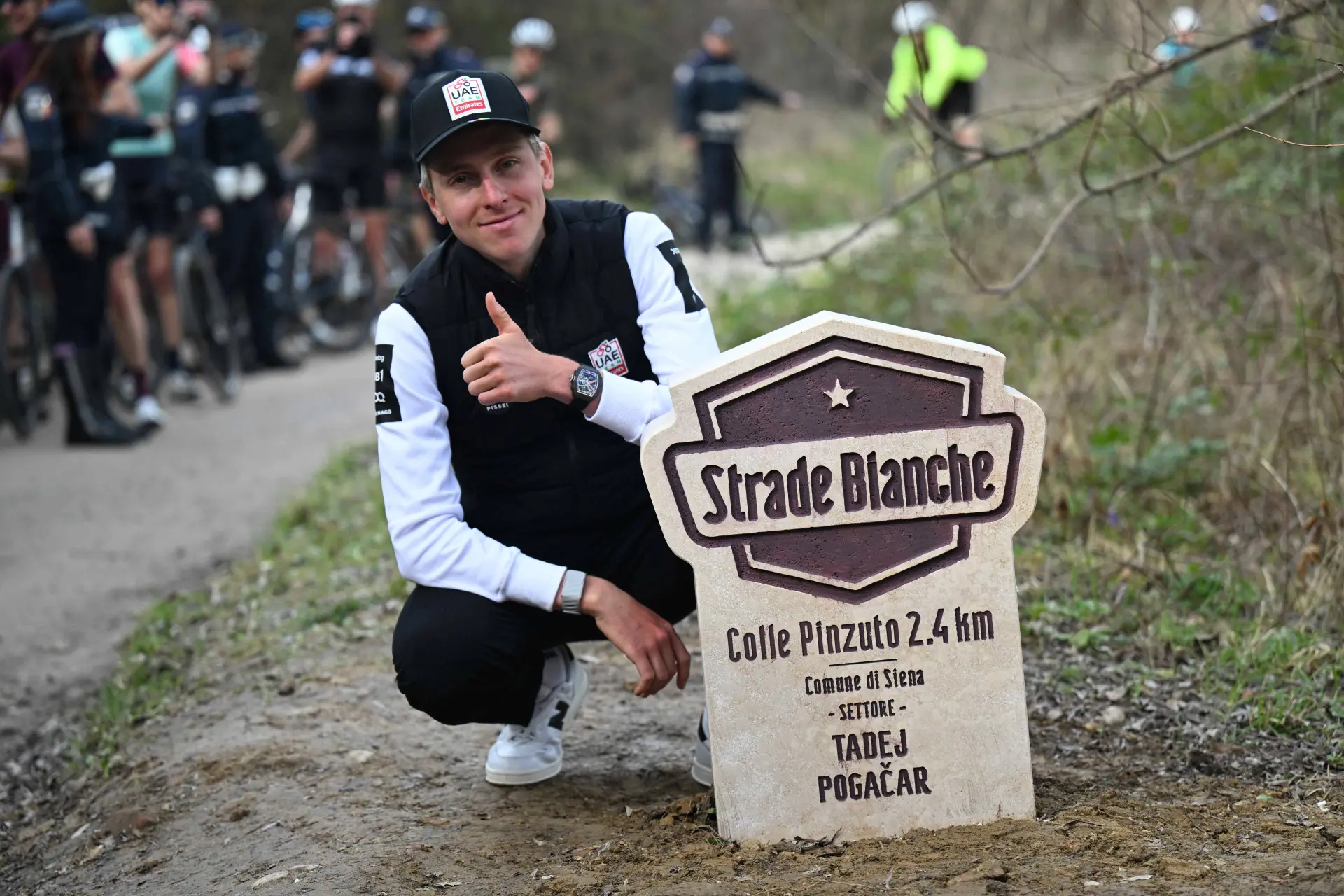
Isaac del Toro
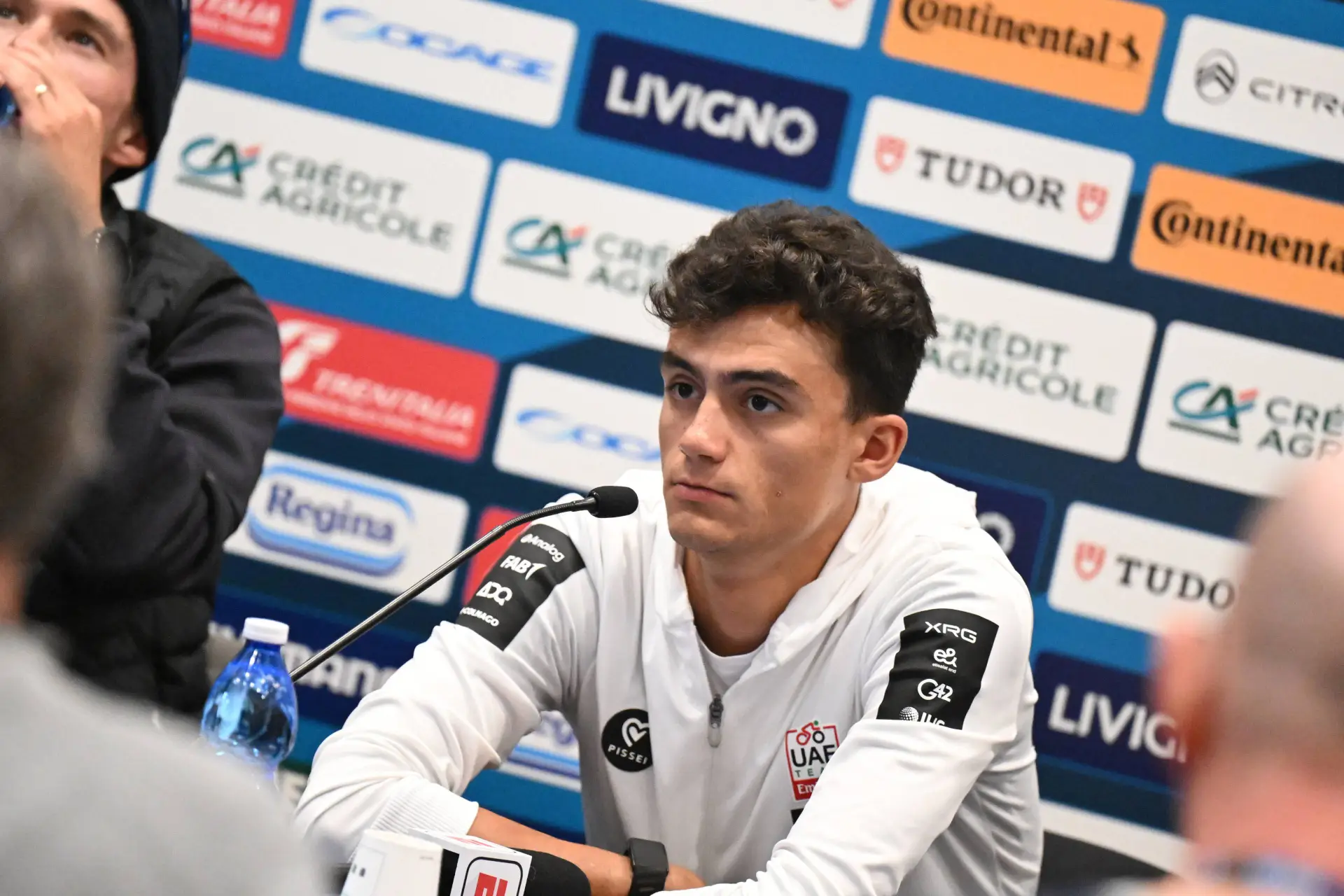
Isaac del Toro’s gravel credentials were clear at the 2025 Giro d'Italia and again in support of Pogacar at this race last year. The Mexican has shown he can handle the chaos and positioning battles that define Strade Bianche.
Realistically, his route to victory would depend on finding himself alongside his team leader deep into the finale and then benefiting from team dynamics. His strong level at the UAE Tour only strengthens the case that he is ready for a major performance.
He has already shown a willingness to sacrifice for Pogacar on the biggest stage, most notably at the World Championships in Kigali. If he brings his very best legs to Tuscany, he could be more than just a helper.
Wout van Aert
Wout van Aert remains the most credible threat on paper. His record here speaks for itself: one victory, two third places and a fourth in four appearances before 2021. Few riders combine power, endurance and technical skill on gravel like the Belgian.
He also carries a psychological marker. On the final stage of last year’s Tour de France, he was the rider who managed to overpower Pogacar. Context matters, but beating him at all is a statement.
The question is condition. Crashes and illness have interrupted his preparation, and it is unclear whether he can reach peak form in time. If he does, Strade Bianche 2026 could be far less predictable than it currently appears.
Juan LarraCycling Journalist
Juan Larra is a writer for Cyclinguptodate and editor-in-chief of Ciclismoaldia, where he has played a central role since its inception. Under his leadership, the website has become a trusted source for professional cycling coverage, offering in-depth analysis, news, and feature stories.
A sports journalist with over 20 years of experience, Juan earned his degree in Journalism from the University of Seville in 2007. He began his career covering a wide range of sports—including football, basketball, Formula 1, MotoGP, tennis, and cycling—for platforms such as the official La Liga app, Vodafone and Movistar websites, NBA Blogdebasket, and Cadena Cope, honing his skills in writing and editorial management.
In addition to his work at Ciclismoaldia, Juan contributes to Cyclinguptodate and serves as editor-in-chief for the tennis-focused site Tenisaldia. Throughout his career, he has conducted exclusive interviews with cyclists and sports figures, provided detailed analysis of competitions ranging from local Spanish races to major international events, and acted as a special correspondent at prestigious races including Paris-Roubaix, the Tour de France, and the Vuelta a España.
Juan’s combination of experience, expertise, and direct access to athletes has established him—and the platforms he leads—as authoritative voices in professional cycling.
claps 1visitors 1
Just in


Popular news

Latest comments
- Go Pogi!! 🐐❤️Lozza25-11-2026
- They didn’t have or need “extraordinary information”. All they needed was for a French judge to sign off on the night-time testing for it to go ahead.Lozza25-11-2026
- If the sponsors voted for Primoz then you get him, otherwise not.flyer25-11-2026
- It sure can feel or seem that way but I wonder if the same amount of prodigious performances (compared to the others) would occur if no one was ever doping at all.flyer25-11-2026
- Given the similarity of two articles (published on I think the same date), I'm reusing (copy-n-pasting) my post from the twin: I've always thought the last day of each of the grand tours was problematic mostly in that the GC is considered completed before the race starts when that is not really true. There is some tension, but not desirable tension. What saves the awkward practice is the race finish is legit for those who participate - so it's not wholly different from the other stages. That neutralizations usually make good sense demonstrates their necessity so if that has to be the way to go I agree that the design plan for the neutralization should be completed before the race starts. This years end stage in the Vuelta had one of the best first half's I've seen in that many of the riders looked to be thoroughly enjoying themselves making it a joy to watch. But I think it was slightly closer to the exception rather than the rule.flyer25-11-2026
- Even I often win without being there at all, not even breaking a sweat. Beat that!flyer25-11-2026
- It is not about rest and peaking again - 5 weeks is not enough for that. It is about recovery while maintaining form. 4 weeks is easier for that. With a Giro-Vuelta, the 12 week break is enough to rest and then peak again. Not for the Tour
 Rafionain-Glas25-11-2026
- I fully agree that "2027 could completely reshape the pecking order" because this competition is a mix of skill, team support, luck opposition, and health. (What BS - as I start writing this post a popup hides what I've written so my only sane options are to hit POST prematurely or leave or reload the page. What a pathetic operation. I forgot where I was so I'm getting out of this crap trap.)flyer25-11-2026
- I've always thought the last day of each of the grand tours was problematic mostly in that the GC is considered completed before the race starts when that is not really true. There is some tension, but not desirable tension. What saves the awkward practice is the race finish is legit for those who participate - so it's not wholly different from the other stages. That neutralizations usually make good sense demonstrates their necessity so if that has to be the way to go I agree that the design plan for the neutralization should be completed before the race starts. This years end stage in the Vuelta had one of the best first half's I've seen in that many of the riders looked to be thoroughly enjoying themselves making it a joy to watch. But I think it was slightly closer to the exception rather than the rule.flyer25-11-2026
- Apparently that week is a MAJOR training disadvantage as "three major benefits" were claimed. When I read a proposal such as this, I want to also read the reasons why changing might not be so good - the CONS.flyer25-11-2026
Loading
2 Comments