ANALYSIS - Five of the 2026 Vuelta a España's stages that can end up being decisive for Tadej Pogacar
Cycling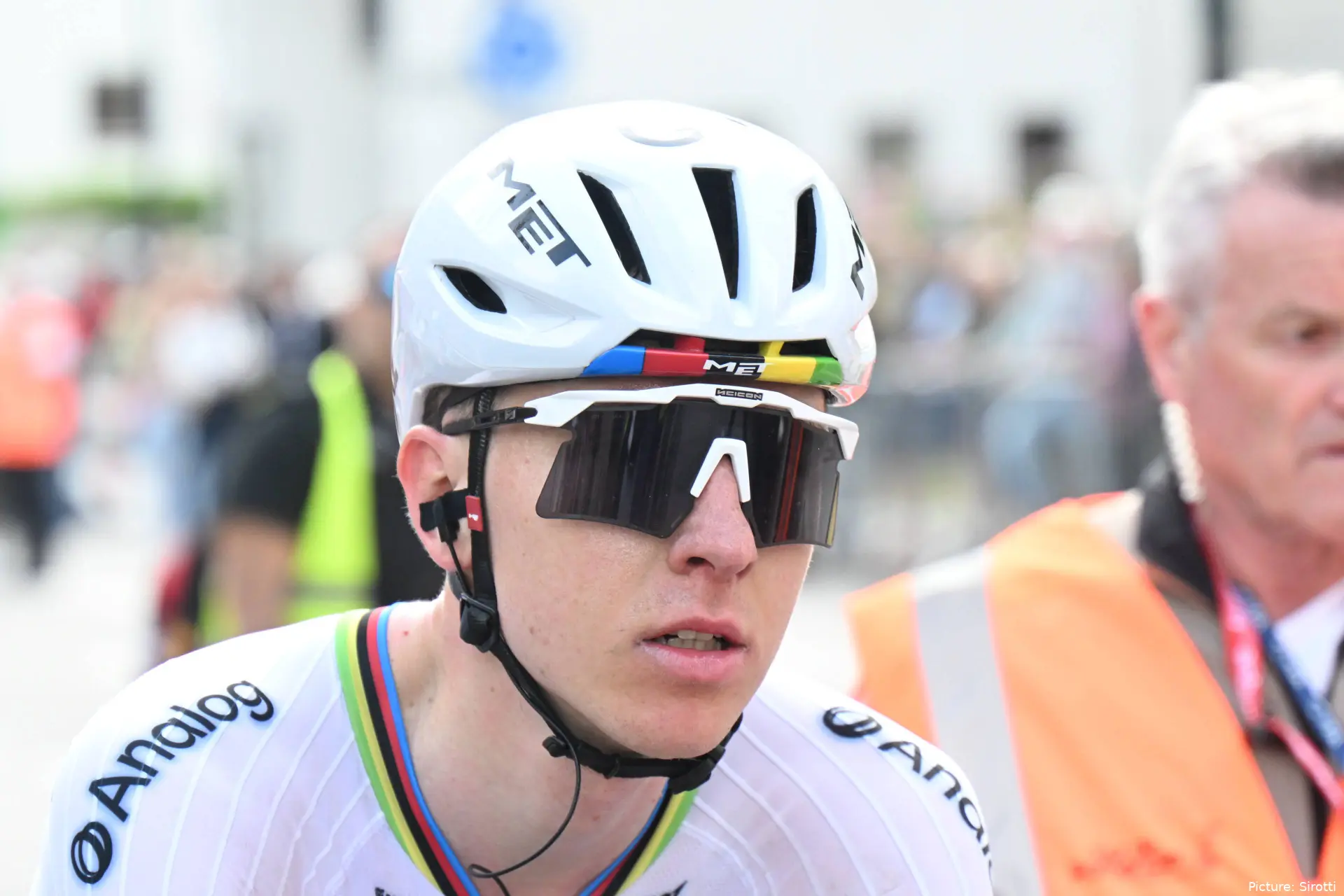
The 2026 Vuelta a España is about to start. On Saturday, 22nd of August, Monaco will fire the starting gun for an edition entirely shaped by the presence of Tadej Pogacar, the outright favourite to win the Spanish Grand Tour for the first time and complete the set of all three Grand Tours. Below, you'll find some of the most interesting stages that can decide the race outside of the obvious days.
The Slovenian, winner of five Tours de France and one Giro d’Italia, lines up clearly ahead of the rest. Felix Gall, Oscar Onley, Mattias Skjelmose, Richard Carapaz, Mikel Landa, Enric Mas, Cian Uijtdebroeks, and Carlos Rodríguez are among the riders expected to fight for the podium places.
The race opens with a short individual time trial in Monaco, but the route ramps up steadily towards one of the most demanding Vueltas in recent years. Five stages stand out for their potential to create gaps, invite attacks, and deliver a show.
Stage 3: the first serious test for Pogacar

Gruissan - Aude > Font Romeu 174 km
Stage three, from Gruissan to Font-Romeu, covers 174 kilometres and is the first truly interesting day for the general classification contenders. The profile is a distinctive medium-mountain layout, with Mont-Louis, roughly 19 kilometres at 4.8%, followed almost immediately by the final climb to Font-Romeu, around 10 kilometres at 5%.
In total, the riders will face close to 30 kilometres of climbing at fairly steady gradients. It suits both a strong breakaway and the favourites, depending on Pogacar’s intentions.
That is the key unknown. It will be the first chance to see whether the Slovenian wants to stamp his authority from the opening days or, instead, save energy and wait for the high mountains. In any case, it is the first stage where the general classification can begin to take meaningful shape.
Stage 6: A Castellón classic inside the Vuelta

Alcossebre > Castelló 177.4 km
Stage six, finishing in Castelló, is among the most attractive days in the first half of the Vuelta. It is a true leg-breaker, with multiple climbs and a route that echoes the local Castellón classic.
The main focal point is the climb to El Bartolo, around 9 kilometres at 7%, placed in the decisive phase of the day, which features gravel roads towards its summit and hence a different challenge than what the riders are used to.
Before that, the peloton must clear three more climbs of second and third category. The profile makes it ideal terrain for a quality break to contest the win, though the favourites could also be tempted to move.
The twist is that, after cresting El Bartolo, there is still ground to cover to Castellón, so anyone who opens a gap will need to defend it to the line. It has the feel of a one-day classic and could produce one of the first big tactical battles of the Vuelta.
Stage 9: Alicante tests the favourites

La Vila Joiosa/Villajoyosa > Alto de Aitana.Costa Blanca 187.4 km
Stage nine runs from La Vila Joiosa to the Alto de Aitana, a day raced entirely in the province of Alicante. It is one of the first truly demanding summit finishes of the Vuelta and strings together a comprehensive loop around Alicante, with numerous mountain sectors and several climbs before the final ascent.
The Alto de Aitana, a first-category climb, averages around 6%, though its steepest ramps can open significant gaps. The mix of first-category and up to three second-category ascents will ensure the riders hit the final climb with plenty of fatigue.
It is therefore a key stage to gauge who has arrived capable of fighting for the general classification and, above all, how tightly Pogacar intends to control the race in the early days.
Stage 20: the queen stage with the Collado del Alguacil

La Calahorra > Collado del Alguacil 186.8 km
If one day stands out above the rest for sheer difficulty, it is stage 20, deep in Granada and just one day from the finish.
Even if the general classification looks almost settled, the route offers a last chance for a full mountain spectacle. The stage strings together multiple first-category climbs and finishes at the Collado del Alguacil, a hors-catégorie ascent with an average gradient close to 10%.
Before the final climb, the peloton must clear the Purche twice, around 8 kilometers at 8%, followed by El Duque, roughly 7 kilometers at 8%.
The accumulated fatigue will be brutal. The chain of ascents turns this day into the true queen stage of the Vuelta a España 2026 and one of the toughest of the entire season.
With extraordinary elevation gain throughout the stage, this could become the last major platform for the climbers to shake up the general classification.
Stage 21: Granada delivers the grand finale

Carrefour Granada > Granada 112 km
The Vuelta will finish in Granada, with a final stage aiming to offer a different spectacle from the traditional Madrid curtain call.
The day will have a distinctly urban flavor, with a climb through the streets of Granada that showcases a spectacular setting and privileged views of the city and the Alhambra.
Although the finish will not sit at the summit, the route will deliver a finale very different from the Vuelta’s classic bunch sprints. From a sporting perspective, it looks tailor-made for the fast men who survive the course’s hurdles, though a breakaway cannot be ruled out.
And another name looms large: Wout van Aert. The Belgian could be a prime contender to chase victory on this last day, while it would be no surprise to see Pogacar trying to seal the Vuelta with another win.
The Vuelta a España 2026 will offer plenty of intrigue beyond whether Pogacar completes the Grand Tour treble. These five stages mark potential flashpoints where the race can split, gaps can widen, and the leading contenders can show their true ambitions. With Pogacar on the start line, the spectacle feels guaranteed.

Juan LarraCycling Journalist
Juan Larra is a writer for Cyclinguptodate and editor-in-chief of Ciclismoaldia, where he has played a central role since its inception. Under his leadership, the website has become a trusted source for professional cycling coverage, offering in-depth analysis, news, and feature stories.
A sports journalist with over 20 years of experience, Juan earned his degree in Journalism from the University of Seville in 2007. He began his career covering a wide range of sports—including football, basketball, Formula 1, MotoGP, tennis, and cycling—for platforms such as the official La Liga app, Vodafone and Movistar websites, NBA Blogdebasket, and Cadena Cope, honing his skills in writing and editorial management.
In addition to his work at Ciclismoaldia, Juan contributes to Cyclinguptodate and serves as editor-in-chief for the tennis-focused site Tenisaldia. Throughout his career, he has conducted exclusive interviews with cyclists and sports figures, provided detailed analysis of competitions ranging from local Spanish races to major international events, and acted as a special correspondent at prestigious races including Paris-Roubaix, the Tour de France, and the Vuelta a España.
Juan’s combination of experience, expertise, and direct access to athletes has established him—and the platforms he leads—as authoritative voices in professional cycling.
claps 0visitors 0
Just in

Popular news
Latest comments
- This Remco-friendly (and Seixas-friendly?) route was almost certainly designed to reduce Pog's dominance. But as Prudhomme has said straight out, now he thinks Pog's accident will have reduced his dominance anyway.Hills3323-10-2026
- We also don't know how much Pog was really putting into gaining time. Feels like watching Usain Bolt, where you can only wonder how much faster he'd have gone if he was sprinting 100% to the line, instead of being two feet ahead and starting to pull up with ten yards to go. If any of the other riders really started to close in on Pog, I do think he'd simply have gone even deeper and crushed them. I would really like that kind of race though, none of this "4 minutes lead by the first rest day" trouncing. So if introducing more TT and less summit finish makes the race go more to the wire, I'm all for that. I don't think it'll change the outcome necessarily, but it'll make the whole thing less of a foregone conclusion by week 2.wrsty23-10-2026
- That nearly is 7 mins and you win GTs comfortably by 2 mins. Remco fans - he almost won the TDF, He beat Pogi twice in the mountains this year.abstractengineer23-10-2026
- What would be your preferred Tour design then? Just out of interestwrsty23-10-2026
- I like Remco but even I'll admit he didn't get anywhere close to Pogacar, just like everyone else.megasmacky23-10-2026
- That's what y'all said this year, "remco will come fifth"bruins3022-10-2026
- That used to be the norm, 100 kms of TTs. Now look at the '87 route...acem8222-10-2026
- Well, crashes can happen, so it's not impossible...acem8222-10-2026
- that would be kinda cool. there is a lot of untapped potential. which I'm sure the UCI will overlook. in order to get sock length correct.mij22-10-2026
- Nice! Now Remco can finally show that he cannot win the Tour!!! 😂😂😂PogiSloFans22-10-2026
Loading
Write a comment