“An unnecessary risk for Tadej Pogacar” – Alberto Contador advises world champion against rushing back to defend Rainbow Jersey in Montreal
Cycling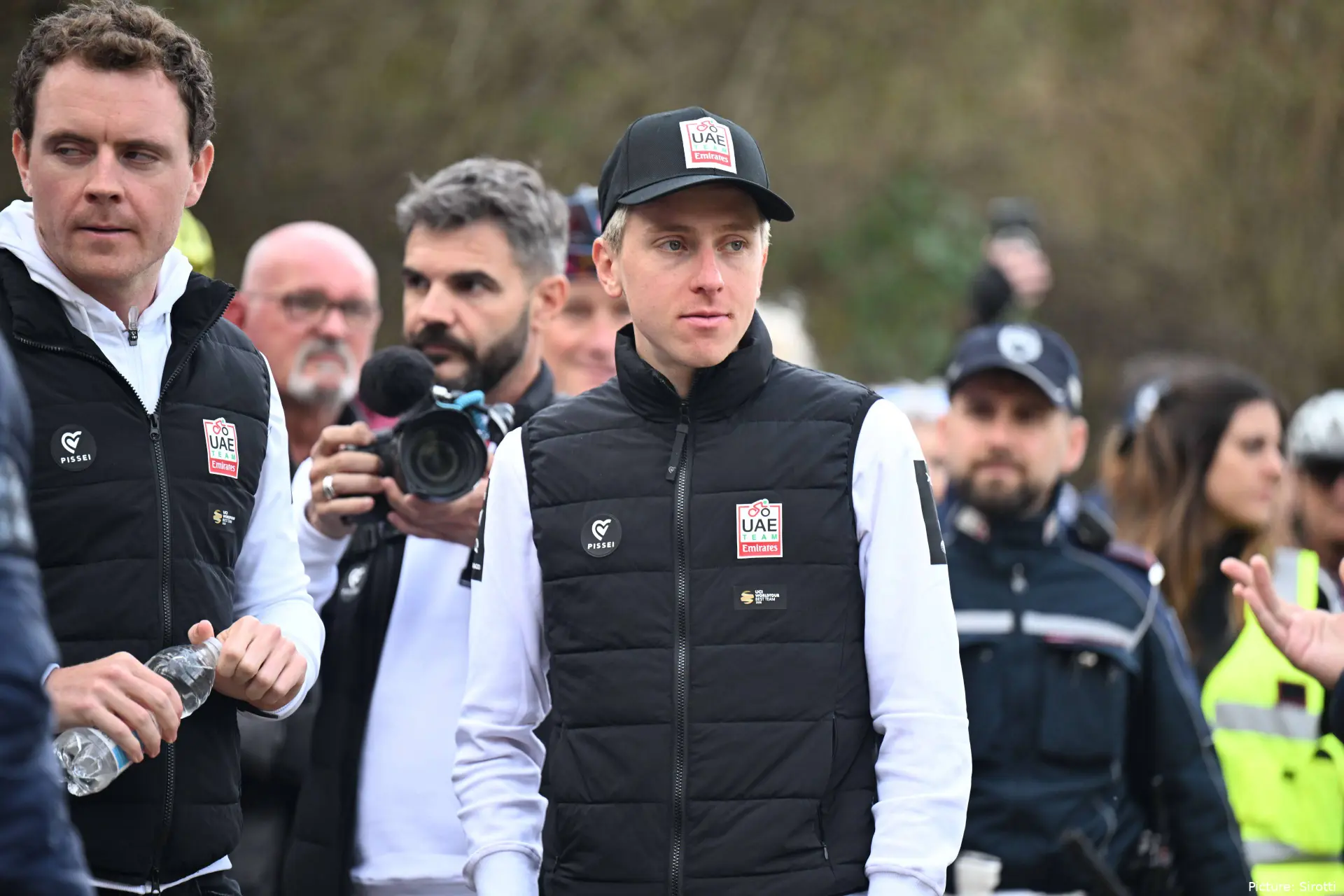
Alberto Contador believes Tadej Pogacar would be taking an unnecessary risk by attempting to defend his Rainbow Jersey at the 2026 World Championships, warning that the fractured C7 vertebra suffered in his Vuelta a Espana crash changes the entire calculation around his recovery.
Pogacar faces a race against time after crashing out of the Vuelta on Stage 8 while holding a commanding 3:50 lead. The two-time world champion suffered concussion, a displaced fracture of his left collarbone, a stable C7 fracture and multiple abrasions, with surgery initially delayed under concussion protocols.
The elite men’s road race in Montreal takes place on September 27, leaving Pogacar less than four weeks between the accident and his planned title defence. His UAE Team Emirates - XRG and Slovenian teammate Domen Novak has retained some hope of a comeback, while insisting that Pogacar must be completely recovered before considering a start.
Contador understands why Pogacar will explore every possible route back to competition. Speaking on Eurosport Spain after Stage 10, the seven-time Grand Tour winner argued that the strongest pressure to return is likely to come from Pogacar himself.
“When you have an injury like this, the person who really puts pressure on the rider is the rider himself,” Contador said. “He thinks: ‘I want to remain world champion, and until I see that it’s impossible, I’m going to try. I’m going to do everything within my power to recover.’”
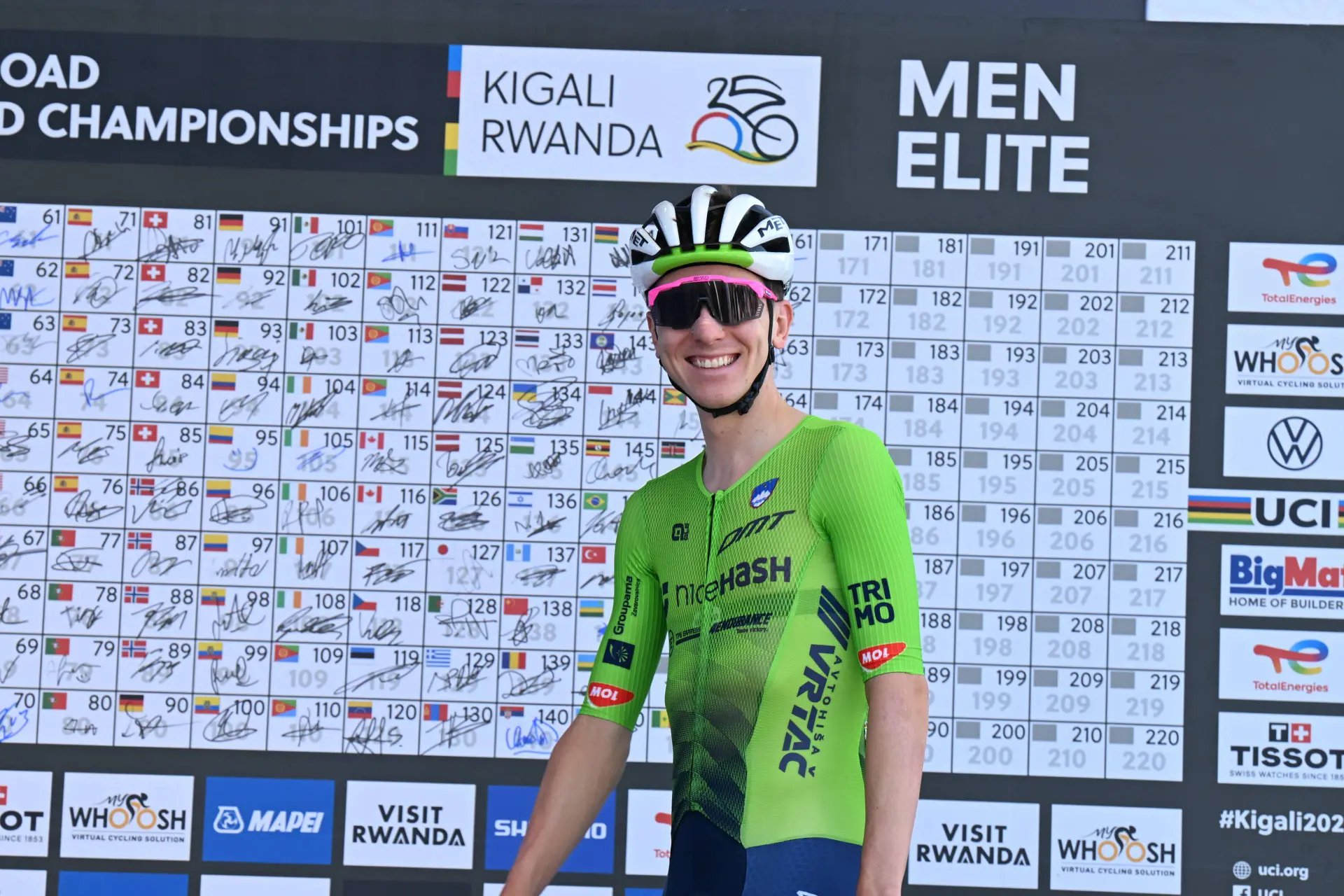
C7 fracture complicates Pogacar’s recovery
A surgically repaired collarbone would not necessarily prevent Pogacar from maintaining some form on an indoor trainer. The cervical fracture presents a far more delicate obstacle because the affected area must remain immobilised.
“But it’s true that the fracture of the C7 vertebra is what complicates everything,” Contador explained. “You have to keep that immobilised and it’s a delicate injury. We don’t know exactly where the fracture is, but it requires a period without movement.”
Pogacar may be able to begin limited training while his collarbone heals, although riding indoors with a neck brace is very different from preparing to contest a World Championship road race. “You can get on the turbo trainer with an operated collarbone and while wearing a neck brace,” Contador continued. “That is possible. But the question is whether you can be ready in time.”
Contador placed the normal timeframe for bones to fuse at approximately six weeks, more than twice the effective preparation period available before Pogacar would need to travel.

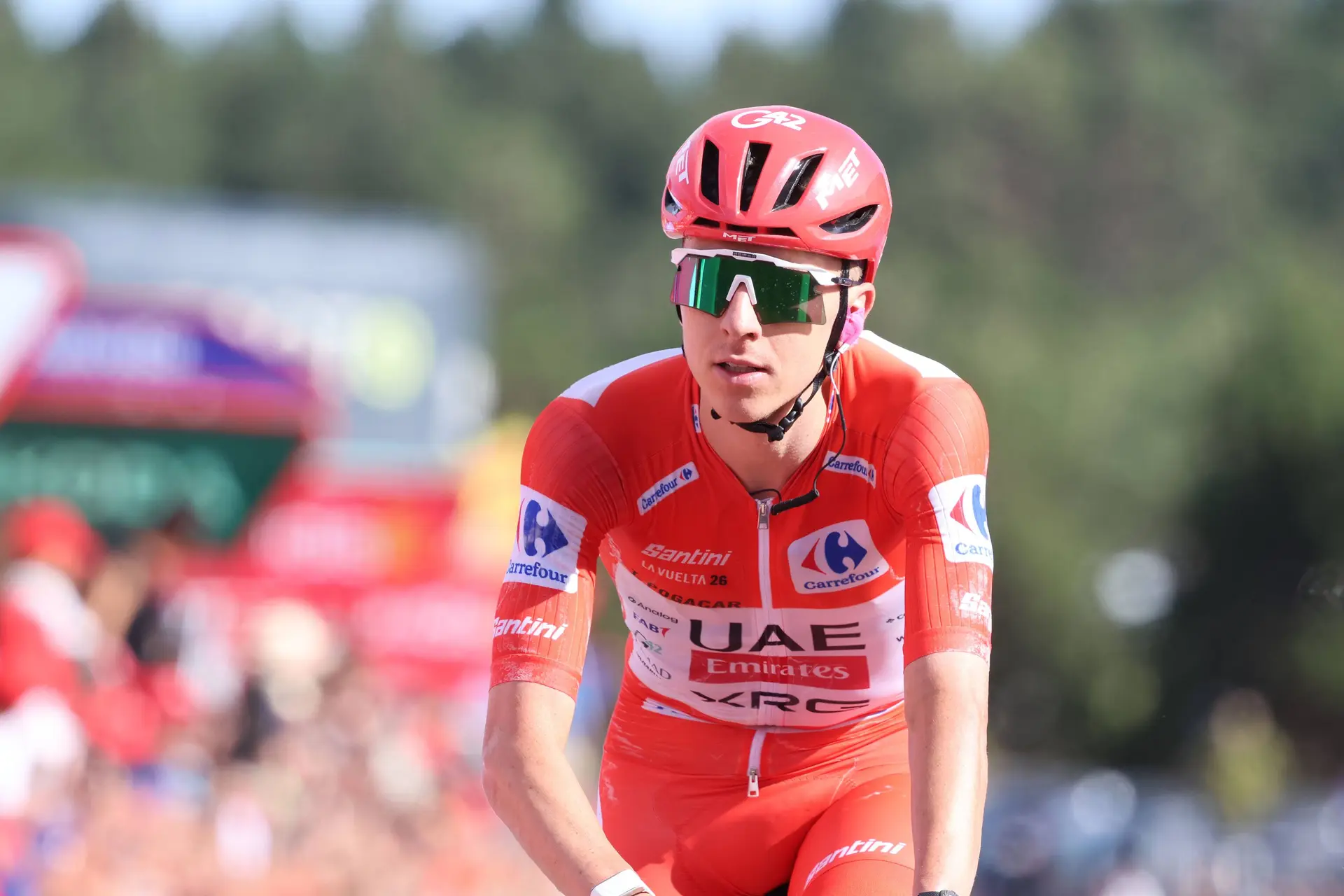
Pogacar claimed his second successive Rainbow Jersey in Kigali
Journey to Montreal shortens an already tight window
The trip to Montreal would bring Pogacar’s practical recovery deadline forward by several more days. Contador estimated that the defending champion would need to reach Canada at least five days before the road race to recover from the journey and adjust to the time difference.
“We’re talking about a flight of around ten hours, and you then have to acclimatise to the time difference,” he said.
A European World Championships would allow Pogacar to delay his decision until much closer to race day. Canada requires an intercontinental flight and sufficient time on the ground before confronting a World Championship road race immediately upon his return to competition.
“That isn’t the same as being in Monaco and travelling to a World Championships in Belgium, the Netherlands, France or Spain, where you can travel the day before, pin on your race number and compete,” Contador explained. “In that situation, you can wait until the very last moment before making the decision.”
The gap between those two timelines underpinned Contador’s warning. “Looking at everything and considering that bones normally require around six weeks to fuse, I think it would be risky,” he said. “It would be an unnecessary risk for Tadej to travel there.”
Following Contador’s minimum five-day acclimatisation plan would require Pogacar to leave Europe around September 22, approximately three and a half weeks after his Vuelta crash and well before the six-week healing benchmark outlined by the former Tour de France winner.

Kieran WoodDeputy Editor-in-Chief
Kieran Wood is a sports journalist based in Wales and has been active in journalism since 2022. He regularly contributes to DartsNews.com and CyclingUpToDate.com, where he covers professional cycling and darts. In cycling, his work includes liveblogs from major races, including the Tour de France, the Giro d’Italia, and La Vuelta a España, alongside race reports and analysis. He has also conducted interviews with professional riders.
His reporting spans the full racing calendar, from one-day classics to stage races, with a focus on accurate, real-time coverage and clear contextual analysis. For statistics, results, and historical context, he regularly uses resources such as ProCyclingStats. To support reporting on rider activity and training context where relevant, he also references Strava.
In his work, Kieran places strong emphasis on careful sourcing, editorial accuracy, and updating articles as new, verified information becomes available.
claps 2visitors 2
Just in

Popular news
Latest comments
- Firstly, someone who says parenting is babysitting is delusional and shouldn't be taken seriously. Secondly, with pro athletes it is not the same as a normal worker. They are being rewarded for doing something for which they have a talent which doesn't actually help people (besides inspiration). It's quite a different dynamic
 Rafionain-Glas12-10-2026
 - only way for him to effectively learn to microdose is to go to uae. other than that there is no reason for him to go to uae.whkman12-10-2026
- that was a great win, and quite a surprise at the time. That was a loaded field, and he held of Valverde for the win. Still shocking that Valverde never won Lombardia. He seemed perfect for it. Mollema just went to work every day.mij12-10-2026
- I hope he races Volta a Majorca. We'll really be able to see if he can do one-day-races (but do they count?)Rafionain-Glas12-10-2026
- See, you can write a sensible comment without just slagging off everyone else! Well done!👏😆 🫣Lozza12-10-2026
- Seixas best chance is obviously UAE. They are the best team in history of the sport and they developed pogacar into the goat. They also developed Del Toro to be nr 2 in world. Seixas would become unstoppable at UAE. Lets see if Seixas stays at decathlon but if UAE comes knocking its impossible to say no. Barcelone and real madrid combined into one team, thats UAE in cycling it feels like..miguel12-10-2026
- I think he does or goes to whichever team gives him the scope to become the rider everyone thinks he'll be when Tadej stops.. that simpleslappers6612-10-2026
- I remember at one time he was mentioned in the same breath as Seixas. no more. Onley has a lot of work to do to be deserving of that.mij12-10-2026
- I hope he goes to Bahrain-Victorious to mentor JakobRafionain-Glas12-10-2026
- I hope he stays! Cycling is more fun with Primoz, even if he is not winning.mij12-10-2026
Loading
Write a comment