“A circuit is less dangerous”: 2027 Giro d’Italia features three motor circuit stages in bid for safer finishes
Cycling
The 2027 Giro d'Italia will offer an unusual sight for the peloton, with three stages taking place partly on famous motor racing circuits. Two stages are scheduled to finish at permanent racing venues, while another will begin its individual time trial at the legendary Monza circuit. The initiative is part of a wider effort by race organizers to explore safer environments for professional cycling, following concerns raised by riders and teams about the dangers of road racing.
The first circuit finish will come on stage four, at the Marco Simoncelli World Circuit in Misano Adriatico, in the Emilia-Romagna region. A week later, the race will return to a motor racing venue for the finish of stage 11 at the Mugello Circuit in Scarperia, Tuscany. The third appearance will come on stage 15, when the individual time trial starts at Monza, in Lombardy.
The unusual concentration of racing circuits is no coincidence. Luca Guercilena, the former Lidl-Trek team manager who recently took over as head of RCS Sport, has made the initiative one of his first notable decisions in his new position. During the presentation of the 2027 route, he explained that the idea emerged from discussions with riders and teams about the need to make race finishes safer.
“This initiative stems from discussions with riders and teams, who expressed the need for safer finishes. A circuit is less dangerous, with much wider roads,” Guercilena explained.
Guercilena wants cycling clubs to use circuits for training
The Giro's use of motor racing venues is also intended to encourage a broader discussion about cycling safety, particularly at grassroots level.

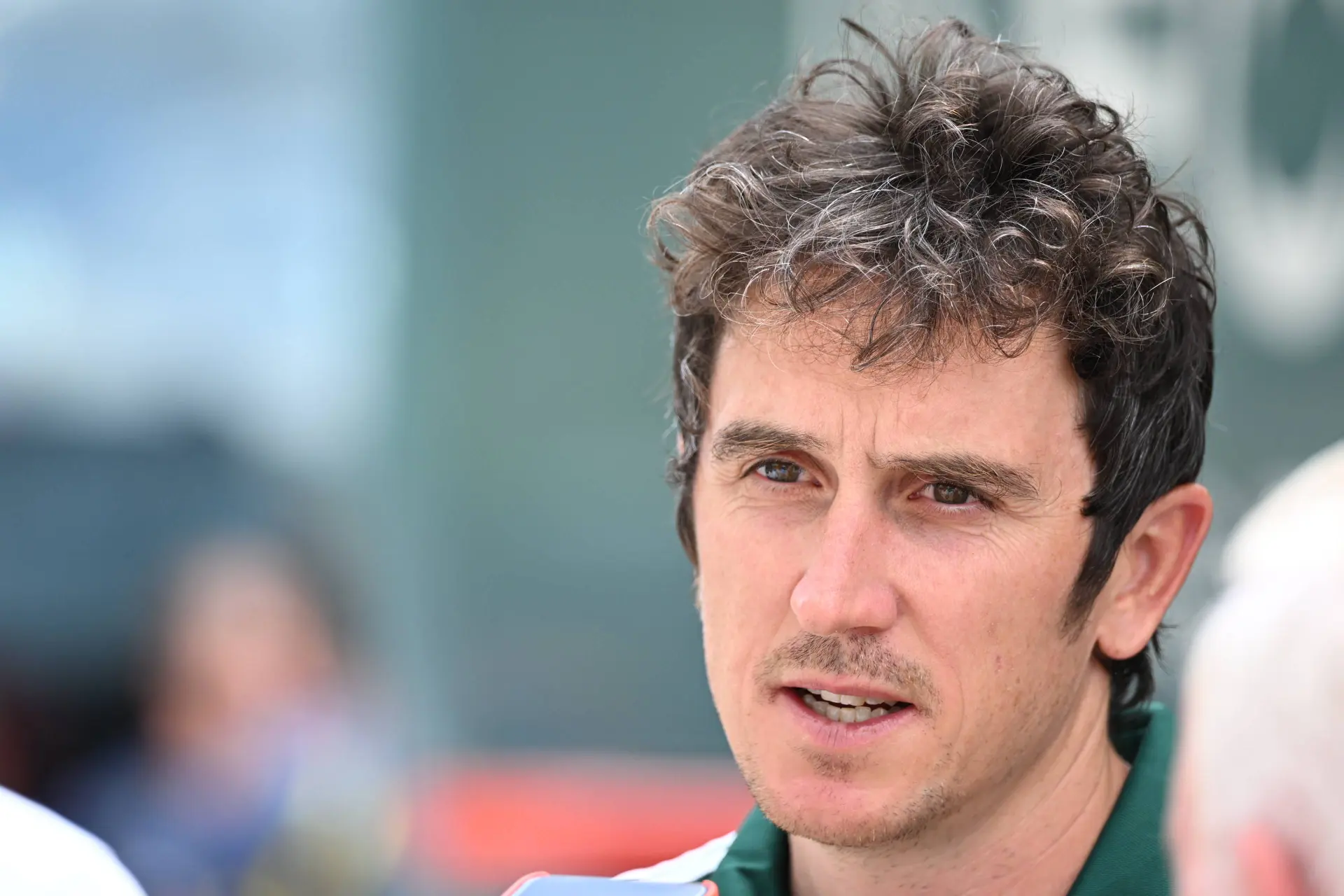
Luca Guercilena at Gran Piemonte 2026
Guercilena believes the facilities could provide valuable training environments for young riders, allowing them to develop their skills away from public traffic.
“This choice is part of a broader reflection on the need to have environments where even children can train safely. We have a role to play in promoting these types of places for cycling. We are thinking about training for youth teams, for example. This would allow families to have peace of mind, knowing that their children can ride in a safe environment,” he said.
Read also
The Tour de France's Nogaro experience offers a cautionary example
The idea is not entirely new in professional cycling. During the fourth stage of the 2023 Tour de France, the peloton finished on the Paul Armagnac Circuit in Nogaro, in southwestern France. Jasper Philipsen won the sprint, but the finale was also marked by several crashes.
The experience highlighted that wider roads do not automatically guarantee safer racing. Some riders pointed out that the width of the circuit allowed several groups to move forward simultaneously from different sides of the road, creating additional competition for position in the sprint.
The two stages will therefore provide an opportunity to assess whether motor racing circuits can offer a safer alternative for mass finishes. Their success could influence how organizers and teams approach the use of existing sporting infrastructure in the future.
Félix SernaCycling Journalist
Félix Serna is a writer at CyclingUpToDate and has been part of the team since 2025. He covers professional cycling across both the men’s and women’s calendars, with a focus on UCI rankings, race developments, and rider performance. His work includes interview-based reports, liveblogs, and tournament coverage designed to provide clear, accurate context throughout the season.
In his reporting, Félix regularly uses ProCyclingStats for results, statistics, and historical reference. He places strong emphasis on careful sourcing, editorial accuracy, and updating articles promptly when new, verified information becomes available. He holds a bachelor’s degree in International Studies.
claps 0visitors 0
Just in


Popular news

Latest comments
- Hopefully it was just a particularly bad year!Lozza05-11-2026
- He has the Twin combo of being vulnerable to germs and prone to crashes on top of not heeding the complaints from his body. Thats just crash and burn career.abstractengineer05-11-2026
- You can't complete a journey without taking next step. He has to do that or start looking for another job. I hope he can get his act together. It's a make or break next season for him. I wish him well.Cyclingsbestfan05-11-2026
- does anyone really think he is taking a next step?mij05-11-2026
- in the team’s defense, Bernal is 29. when he won his first TdF people were talking about him winning a record # of GTs. Where would they be if that crash had never happened. I’m not saying he would compete with Tadej, but he did podium Strade Bianche, and certainly could have won a GT that Tadej wasn’t in.mij05-11-2026
- "c'mon Jonas!"wrsty05-11-2026
- I see I missed a lot during my boycott.Jumpyjohn05-11-2026
- What kind of sauce is on that rice? Ketchup?Kbd05-11-2026
- 18 broken bones. 78 crashes, among 30 rider per year is a lot. so for a rider over 15 seasons, they will break their bones 7-8 times and crash 38 times.abstractengineer04-11-2026
- i dont think he is ready ot win against the top 2 or the 2nd rung of evenepoel, del toro , Almeida. In the third week in the TDF he was very very defensive, no attacks. i think he was exhausted. right now he needs time not the brutal Giro or the intense TDF.abstractengineer04-11-2026
Loading
Write a comment