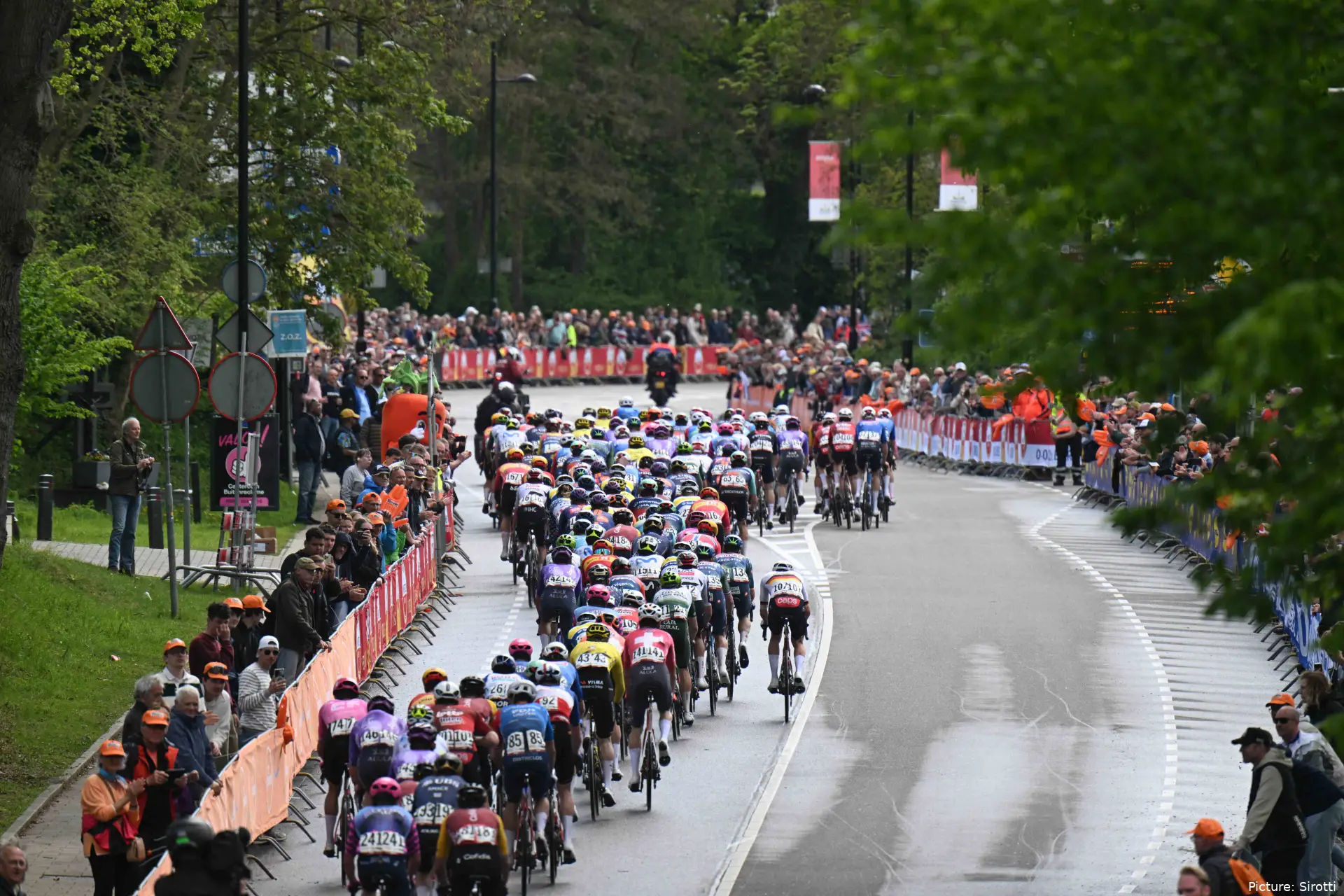
The global surge in sports betting has significantly reshaped the world of professional cycling, transforming fan engagement, expanding team revenue models and forcing strict integrity overhauls by the sport's governing body. Once a niche betting market, cycling has experienced a surge in betting since the legalization of sports betting across the US, triggering distinct changes across the entire competitive profession.
The economic lifeblood of the peloton once relied almost entirely on traditional corporate sponsorships, with team budgets constantly being exposed to the unpredictable marketing whims of consumer brands. But now that global sports betting has experienced an unprecedented level of expansion thanks to widespread legalization, digital integration and advanced data analytics, professional cycling tournaments have been subject to a total transformation in their engagement and commercial viability.
The modern world of competitive cycling, defined by multi-week Grand Tours like the Tour De France and demanding single-day Spring Classics, is uniquely positioned to benefit from this betting revolution as advanced sportsbooks move to redefine how modern audiences experience high-end endurance sport.
The Analytical Growth of the In-Play Cycling Markets
For the longest time, betting on professional cycling felt like a rudimentary exercise that was largely confined to predicting the final winner of a general classification or individual stage. The complete unpredictability of road racing, where a single puncture, crosswind or minor tactical error can instantly derail an elite favorite, made the traditional markets a bit challenging for casual fans.
But now the digital transformation of international sportsbooks has managed to solve this issue by capitalizing on:
- Telemetry data
- Live power data
- Advanced mathematical modelling
Modern algorithms are capable of instantly processing live biological and environmental variables, transforming the viewing experience through intricate, interactive markets.
Instead of just speculating about who will eventually stand on the podium in Paris or Madrid, modern fans can participate in complex, in-play micro-betting.
These bets pertain to aspects of the race like:
- King of the Mountain (KoM) Summit Sprints, since the live odds tend to fluctuate as breakaway riders approach categorized climbs, allowing you to track the mechanical pacing and energy expenditure before placing a highly accurate tactical bet.
- Head-to-head rider matchups where sportsbooks isolate specific rivalries within the peloton to generate localized bet types that pit specific sprinters or time-trial specialists directly against each other, independent og the overall race standings.
- Time-trial split benchmarks during solo races against the clock, when the live markets adjust their odds at intermediate time-check stations, capturing incremental momentum swings over fractional distances.
This deep analytical layer is perfectly aligned with the editorial profile of modern cycling media outlets where technical race breakdowns, detailed rider profiles and strategic previews often form the foundation of fan discussions.
Integrating high-quality sports data into cycling has facilitated tactical analysis, which has helped to sustain the attention of fans across grueling six-hour flat stages and mountain transitions.
Commercial Realities and Sponsorship Paradigms
Aside from fan engagement, the economic realities of the professional peloton have also been feeling the direct impact of this sudden surge in sports entertainment. According to the recent financial assessments of World Tour operations, corporate sponsorships account for approximately 85% to 90% of a standard team's annual operating revenue.
This extreme dependence creates persistent financial instability, and this reality is highlighted by the frequent structural overhauls and title sponsorship transitions that have been seen across high-profile squads like INEOS Grenadiers or EF Education-EasyPost.
With traditional retail and energy conglomerates continuing to tighten their marketing budgets, international sportsbooks and state-regulated lotteries have stepped in to offer some vital financial stability. State-run lotteries have maintained an institutional presence in professional cycling for many years, supporting iconic projects like the Lotto-Dstny and Groupama-FDJ.
The modern wave of commercial sportsbook investment is a logical, highly capitalized extension of this legacy, diversifying the financial portfolio of professional cycling through:
- Race partnerships
- Online broadcasts
- Team operations
These global betting firms are helping to ensure long-term institutional health for both organizers and athletes.
A More Analytical and Data-Driven Approach to Viewing Professional Cycling Races
The global surge in sports betting has helped to bring so many previously underappreciated niche sports into the limelight, and professional cycling id one of them. The inclusion of advanced metrics has made it possible for even casual viewers to gain a deeper understanding of this high-end endurance sport, and the rising popularity of live betting has also made it easier for fans to stay attentive throughout the sometimes incredibly long tournaments.
The convergence of professional cycling and the global sportsbook market has become a core component of the sport's modern economic and interactive network. It has helped to create some semblance of financial stability for teams and organizers who have long lived at the mercy of their corporate sponsors and their marketing budgets, injecting vital commercial capital into team structures and contributing to the growth of a highly analytical global fanbase.
18+ | Hjælpelinje: StopSpillet | Selvudeluk dig via ROFUS | Spil Ansvarligt

Kieran WoodDeputy Editor-in-Chief
Kieran Wood is a sports journalist based in Wales and has been active in journalism since 2022. He regularly contributes to DartsNews.com and CyclingUpToDate.com, where he covers professional cycling and darts. In cycling, his work includes liveblogs from major races, including the Tour de France, the Giro d’Italia, and La Vuelta a España, alongside race reports and analysis. He has also conducted interviews with professional riders.
His reporting spans the full racing calendar, from one-day classics to stage races, with a focus on accurate, real-time coverage and clear contextual analysis. For statistics, results, and historical context, he regularly uses resources such as ProCyclingStats. To support reporting on rider activity and training context where relevant, he also references Strava.
In his work, Kieran places strong emphasis on careful sourcing, editorial accuracy, and updating articles as new, verified information becomes available.
claps 0visitors 0
Just in


Popular news

Latest comments
- All journalists should start asking the UCI uncomfortable questions, sending inquiries about the interpretation of the rules and the justification of the results. This is the only way to change anything.averagecyclist09-11-2026
- OFF TOPIC: OK, don't get mad with me... I have some very important news, something that can't be overlooked, something that can't be ignored!!! In the new documentary Anatomy of a G.O.A.T. (released in November 2026), legendary Belgian cyclist Eddy Merckx spoke about Tadej Pogačar: “He has revived a style of cycling that we had almost forgotten. He is now better than me.” Key statements by Eddy Merckx about Pogačar in 2026: - Acknowledging his superiority: This time, Merckx openly admitted, without any subsequent backtracking or reservations, that Pogačar had surpassed him and was now above him. This contrasts with 2024, when he quickly softened his remarks about Pogačar being faster. - The possibility of a historic treble (Giro, Tour and Vuelta): During the July Tour de France (where Pogačar claimed his fifth title), Merckx stated that Pogačar was the only cyclist in history capable of winning all three Grand Tours (the Giro d'Italia, Tour de France and Vuelta a España) in a single season, provided the conditions were right and he had sufficient team support. - Lack of serious competition: Merckx emphasised that Pogačar has no real rivals in the mountains, thanks to his extraordinary climbing ability and the fact that he continues to improve despite still being under 28 (he turned 28, or passed that age, in autumn 2026). - Praise for his racing style: He highlighted how Pogačar is bringing back the aggressive, uncompromising spirit of cycling's golden era, when races were not merely about calculated stages and tactical conservatism, but about attacking from long distances. PS: Now, this is real important cycling news. Capish?PogiSloFans09-11-2026
- how else is there to look at things? we are responding to words and pictures, we are not there. your long winded replies make zero sense to anyone. pretty much everyone but you says the same thing. MS was robbed. somehow you think you're so smart to dig beneath the surface and discover something no one else, including the opposing coach and cyclist, saw. lol. you are a tool.mij09-11-2026
- Pidcock finished 9th place, 29 minutes down. he is a helluva rider, so gutsy. and he is amazing at all disciplines. but this headline is . . .mij09-11-2026
- I know, watch the video. and listen to her competitors. it was a tricky tacky call at best. WTF is this guy talking about??? my original comment was from the picture it didn't look like anything.mij09-11-2026
- I dunno what you're talking about. you make no sense. MS's competitor and the competitors coach said it was BS. she didn't deviate in a way that relegation should be required. revel LOL. you're so cool, in your own mind.mij09-11-2026
- deviation lol, watch the videomij09-11-2026
- the 'No different than women who follow and discuss celebs through gossip magazines' comment was unfortunately a bit off. didn't you just boast about your principles in the comments section of another article?Ketterechts08-11-2026
- Are you MrMauMau 2.0? Nothing you are saying is really relevant. Vaguely connected, but irrelevant. The conversation is whether Schreiber impeded Brand or not.
 Rafionain-Glas08-11-2026
- He is boring
 leedorney08-11-2026
Loading