Vuelta a España's five greatest champions - From Roberto Heras to Primoz Roglic; These riders have won the most titles
Cycling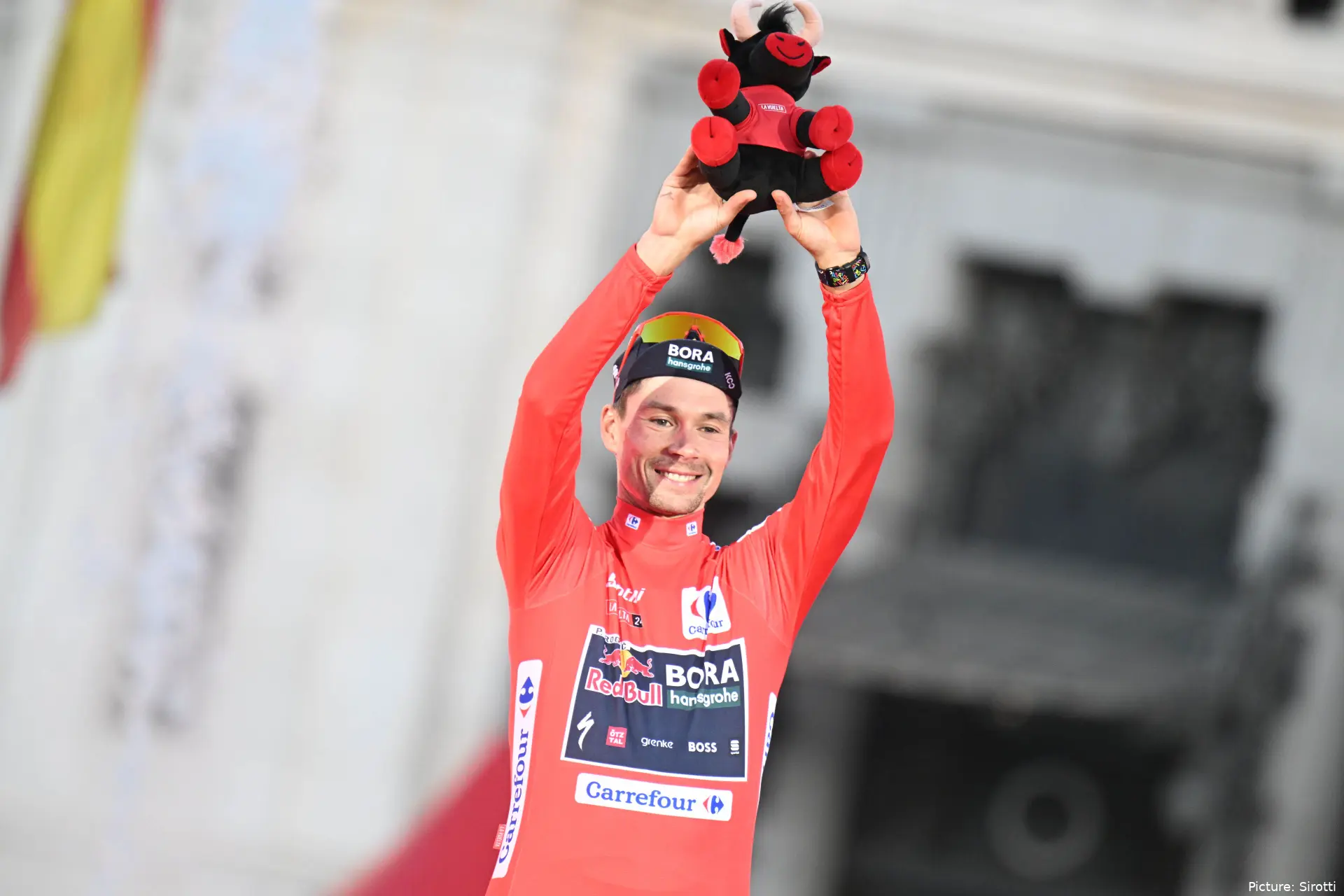
The Vuelta a España has reinvented itself many times across more than nine decades of history. From the early editions dominated by Spanish and Belgian riders to today’s international field, the fight for the red jersey — previously yellow — has gathered some of the sport’s biggest names. Yet only a very select group has repeated the feat often enough to become true specialists of the Spanish Grand Tour.
The roll of honour sets a stern benchmark. Roberto Heras and Primož Roglič share the record with four wins, while Alberto Contador and Tony Rominger reached three. One rung below is Chris Froome, a two-time winner. Behind them sits a long line of champions with two titles, including Gustaaf Deloor, Julián Berrendero, José Manuel Fuente, Pedro Delgado, and Alex Zülle.
But winning a Vuelta has not always meant the same thing. Each era posed a different challenge, and each champion found a unique way to prevail. Some ruled the high mountains; others built gaps in the time trials; some leaned on consistency, and others survived wide-open races decided by seconds.
This is therefore a journey through five of the great names in Vuelta history. Five riders from very different generations, united by one shared ability: to read the race, withstand the pressure, and, over three weeks, find the road to Madrid.
Roberto Heras: king of the mountains
Roberto Heras is, according to the official record, the rider with the most victories in Vuelta history, with four titles. The Spaniard built much of his legend on a terrain seemingly made for him: high mountains. Light, resilient, and especially effective when the gradients bit, he turned climbs into his main weapon to break general classifications. His first success came in 2000, after finishing third in 1999.
Heras reclaimed the Vuelta in 2003, beating Isidro Nozal and Alejandro Valverde, and repeated in 2004 ahead of Santi Pérez and Paco Mancebo. In 2005 he completed his dominance with a fourth win, this time in front of Denis Menchov and Carlos Sastre. These were years when the Spanish race found in the rider from León one of its marquee protagonists, able to make differences on the climbs and then manage his advantage.
His hallmark was consistency. Heras did not need to win many stages to control a race: his goal was to whittle down the group in the mountains, pounce on any moment of weakness from rivals, and turn small gaps into decisive leads. In an era that featured Valverde, Menchov, Sastre, Casero, Beloki, and Tonkov, he imposed a steadiness that allowed him to set a record of four victories.

Roberto Heras in the Vuelta a España’s former golden leader’s jersey
Primož Roglič: precision for a new era
Primož Roglič has matched Heras’s record with four victories and is the defining force of the Vuelta in the contemporary era. His first win came in 2019, ahead of Alejandro Valverde and a young Tadej Pogačar. Far from a one-off, that success opened a period of overwhelming control by the Slovenian in the Spanish race.
Roglič won again in 2020, in an edition marked by his duel with Richard Carapaz, and prevailed once more in 2021, this time ahead of Enric Mas and Jack Haig. His fourth title arrived in 2024, when he defeated Ben O'Connor and Enric Mas. In between, he was second in 2023, in an edition won by Sepp Kuss, underscoring how regularly he featured in the fight for overall victory.
The Slovenian’s winning method combines several strengths. He is a complete rider, exceptionally effective in time trials and solid in the mountains, but he also excels at managing slim margins. In his battles with Carapaz, Mas, Pogačar, Valverde, or Vingegaard, Roglič has shown he does not need overwhelming superiority: being the most precise over three weeks is enough.
Alberto Contador: attack and spectacle
Alberto Contador won the Vuelta three times, in 2008, 2012, and 2014. His first triumph came in a race he controlled with authority ahead of Levi Leipheimer and Carlos Sastre. That victory confirmed the Madrilenian as one of the premier stage racers of his generation and made the Vuelta a perfect stage for his offensive style.
In 2012 he lifted the trophy again after a memorable battle with Alejandro Valverde and Joaquim Rodríguez. Two years later he repeated the feat against Chris Froome and Valverde. Those editions showed a Contador capable of changing pace mid-climb, launching long-range attacks, and turning an apparently balanced GC into a war of attrition.
His signature was exactly that: attacking. Contador saw Grand Tours as a succession of chances to gain time, not merely as tests of endurance. His climbing ability, coupled with bold, aggressive tactics, allowed him to take on some of the best riders of his era. Three victories and several unforgettable battles explain his place among the Vuelta greats.

Alberto Contador, one of the kings of the Vuelta a España
Tony Rominger: the Swiss who ruled for three years
Tony Rominger authored one of the most emphatic reigns in the modern history of the Vuelta. The Swiss won three editions in a row, in 1992, 1993, and 1994. His first victory came ahead of Jesús Montoya and Pedro Delgado, while in 1993 he beat Alex Zülle and Laudelino Cubino. In 1994 he prevailed again, this time over Mikel Zarrabeitia and Pedro Delgado.
Rominger was a notably complete rider. His time trial prowess gave him a decisive tool to gain time, and he had enough climbing level to defend himself and even extend his margins. In his years of dominance he faced rivals of enormous pedigree, such as Delgado, Zülle, Jalabert, and other Grand Tour specialists.
His great virtue was consistency turned into superiority. Rominger did not rely on a single day of inspiration: he could build an advantage in the time trials and then control the mountains. Winning three Vueltas in a row demands far more than one great season, and the Swiss achieved it by turning the Spanish race into his backyard during a period when his name became synonymous with success.
Chris Froome: the British era of dominance
Chris Froome rounds out this top five with two victories, achieved in 2011 and 2017 according to the official record provided. His first triumph came in an edition where he finished ahead of Bradley Wiggins and Bauke Mollema, while in 2017 he defeated Vincenzo Nibali and Ilnur Zakarin. Between those wins he also collected several podiums and starred in some of the decade’s major battles.
Froome was built for Grand Tours. His ability to hold a steady tempo in the mountains, combined with formidable time trial strength, allowed him to control races through consistency. His 2017 victory carried special weight: it arrived after several attempts and a direct duel with Nibali, one of his great generational rivals.
His style was less explosive than Contador’s, but just as effective. Froome preferred to impose a sustained rhythm, whittle down the group, and use the clock to open gaps. Although his Vuelta palmarès is slimmer than those of Heras, Roglič, Contador, and Rominger, his two wins belong to an era when British cycling came to dominate Grand Tours. Above all, they left a lasting imprint on the history of the Spanish race.

Gavin QuinnCycling Journalist
Gavin Quinn is a cycling journalist and ultra-distance cyclist with a BA in Journalism from Dublin City University. Formerly the Press & Communications Officer for Cycling Ireland, Gavin has worked inside the national team at the World Championships and has reported for the Irish Mirror, Mirror UK, and The42.
His expertise is backed by elite-level access, having interviewed stars like Sam Bennett and Ben Healy, as well as immense personal endurance. In 2025, he completed a 12,000km solo cycle from Ireland to Vietnam, following a 4,600km tour across Europe. From the cobbles of Paris-Roubaix to the gradients of the Tourmalet, Gavin’s writing focuses on the "romance and brutality" of the sport. Having visited 50+ countries, he brings a global, cultural perspective to his coverage of the pro peloton for CyclingUpToDate.
claps 0visitors 0
Just in
Popular news
Latest comments
- Campenaerts looked like a rolling pumpkin with that all orange leaders skinsuit !frieders318-10-2026
- He can take his dumb a$$ politics somehwere else !frieders318-10-2026
- good to have her back. fingers crossed she‘ll be able to stay!Ketterechts17-10-2026
- A tenner and he wins the Tour next year, too 😂anonymouscyclist17-10-2026
- the answer is either stick to classics or GTs but not bothabstractengineer17-10-2026
- the exodus already stared with Ciccone. Already they were struggling with two sprinters, now there are three. Also Ganna will demand leadership. Gall is the most proven GC, Ayuso has the most potential. GC leadership for everybody will be impossible. Literally a UAE style mess without pogi.abstractengineer17-10-2026
- I raced as an amateur for 12 years, including six years on my country’s national road cycling team. I secured two national titles and competed in three World Championships plus more than 15 international stage races. At 23, we travelled to Italy for a training camp—or so I assumed. On a rest day, we watched a presentation about adopting a more “professional” training approach. It was crystal clear what “professional” meant. That moment first exposed me to this dilemma. After returning from Italy, I left cycling—at least at the competitive level I had known. Over the following two years, the whole team was caught doping. I hold that everyone is innocent until proven guilty. In my view, current stakeholders operate on a different scale, and the sums involved are vast. I am unsure whether any doping would ever be revealed. I try to stay positive and enjoy the show. My 2c.
 vannpelt17-10-2026
 - Fiver he wins 🤣
 leedorney17-10-2026
 - “…measures to reduce speeds.” Might as well shorten the race course to just 50km as well? ASO generates at minimum €300m a year and 30- 40% profit. Maybe stop being greedy and spend more of the profit to protect the riders instead.b3tlla17-10-2026
- he also had quite the life off the bike during his pro years. he used his celebrity status to full affect.mij17-10-2026
Loading
Write a comment