'Purito' Rodríguez, Iban Mayo... - Five Spanish Grand Tour specialists who never managed to win one
Cycling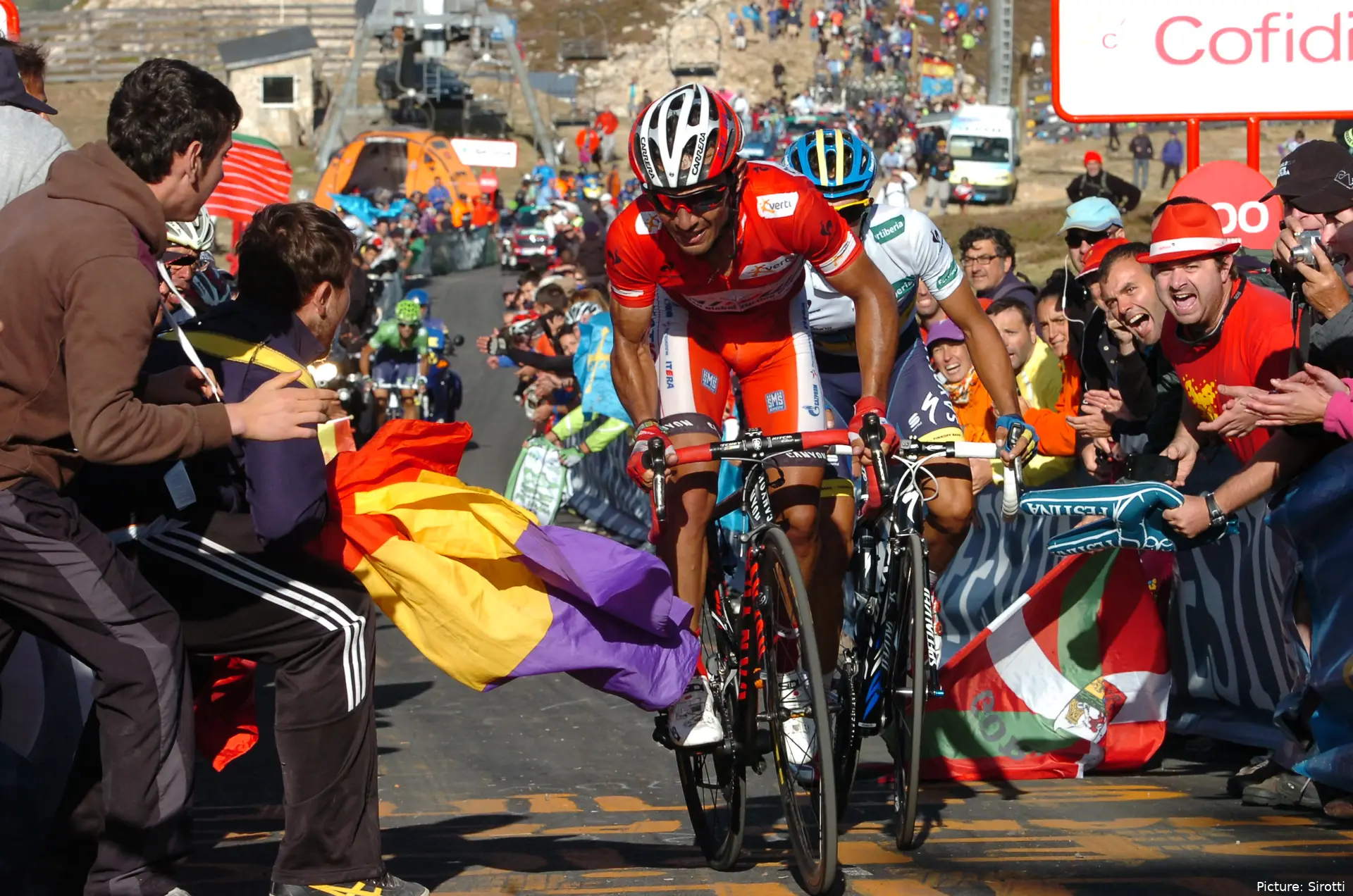
Spanish cycling has written much of its history through great climbers capable of challenging the world’s best on the roads of the Giro d’Italia, the Tour de France and the Vuelta a España. Yet reaching the podium of a Grand Tour does not always mean coming close to winning it, and some of the peloton’s most memorable talents ended their careers without lifting any of the three trophies.
Competition across different generations, time-trial limitations, crashes and the arrival of exceptional rivals shaped the careers of several Spanish stage racers. Some came agonisingly close to overall victory after memorable battles; others found the mountains to be the perfect stage on which to shine but never managed to maintain the consistency required over three weeks.
Among them are Joaquim “Purito” Rodríguez, José María “Chava” Jiménez, Iban Mayo, Fernando Escartín and Laudelino “Lale” Cubino. Five distinct riders, linked by the same paradox: they could win stages, challenge for the general classification and put some of their era’s dominant riders under pressure, yet never managed to add their names to a Grand Tour winners’ list.
Their stories also reflect the evolution of Spanish cycling, from the years when Miguel Indurain, followed by riders such as Jan Ullrich and Marco Pantani, set the standard; to the generation that had to take on Alberto Contador, Chris Froome and Vincenzo Nibali.

Joaquím Rodríguez climbing Cuitu Negru with Alberto Contador at the 2012 Vuelta a España
Purito Rodríguez: two chances lost by seconds
Joaquim Rodríguez was one of the finest climbers of his generation and made explosive finishes his greatest weapon. His ability to accelerate on brutally steep gradients brought him stage wins in all three Grand Tours, but time trials and a few tactical missteps ultimately undermined his hopes of winning the general classification.
The 2012 season brought his two biggest opportunities. At the Giro d’Italia, Purito wore the maglia rosa and reached the final time trial in Milan with a 31-second advantage over Canada’s Ryder Hesjedal. But the race against the clock became a nightmare, and he finished second, just 16 seconds behind the winner.
Months later, the Vuelta a España gave him another chance. “Purito” defended his lead against Alberto Contador, but the Madrid-born rider’s attack at Fuente Dé, launched when Katusha showed signs of weakness, changed the race. Purito finished third behind Contador and Alejandro Valverde. In 2015, he was second in the Vuelta again, this time beaten by Fabio Aru. His Grand Tour record closed without an overall victory, despite coming close several times.
Chava Jiménez: extraordinary talent without consistency
José María Jiménez was one of the most charismatic climbers in Spanish cycling during the 1990s. His attacking instinct in the mountains, competitive flair and knack for winning stages made him a rider who could get spectators out of their seats. But inconsistency prevented him from turning those performances into a Grand Tour victory.
His best opportunity came at the 1998 Vuelta a España. The rider from Ávila finished third behind Abraham Olano and Fernando Escartín, after winning four stages and the mountains classification. He shone again a year later, with more stage victories and fifth place overall. His main rivalry unfolded in a Spanish peloton that also featured riders such as Olano and Escartín, while at the Tour he faced international stars including Jan Ullrich and Marco Pantani.
Chava never found the consistency needed to sustain a bid for overall victory over three weeks. At his best in the mountains, he could drop almost anyone, but the general classification demanded more than flashes of brilliance. He died in December 2003, aged 32, leaving the sense that his climbing talent deserved a longer story in the Grand Tours.
Iban Mayo: the dream of dethroning Armstrong
By 2003, Iban Mayo had become one of Spanish cycling’s great hopes. His victory at the Itzulia Basque Country and, in particular, his outstanding ride at the Dauphine Libéré fueled expectations that he could challenge Lance Armstrong at the Tour de France. A pure climber, explosive and aggressive, the rider from Biscay offered an alternative to the American’s dominance.
His best opportunity came at the 2003 Tour itself. Mayo won the stage finishing at Alpe d’Huez, one of the most memorable victories of his career, and finished sixth overall. Armstrong withstood the attacks to claim his fifth consecutive Tour, while riders such as Jan Ullrich also finished ahead of the Spaniard in the battle for the podium.
Mayo’s progress stalled in the seasons that followed. He abandoned the Tour in 2004 and never managed to carry his best form through a full Grand Tour. His ride in the 2007 Giro d’Italia ended with 38th place, well below the expectations he had raised. He never again challenged for the overall title with the force he had shown in the summer of 2003, when he seemed capable of contesting Armstrong’s dominance.

Fernando Escartín, the Spanish climbing great
Fernando Escartín, twice second at the Vuelta
Fernando Escartín was one of Spain’s leading stage racers in the late 1990s. His style, built on endurance and climbing, allowed him to go head to head with the best specialists in three-week races. Unlike some of the other riders on this list, his consistency kept him among the main contenders for the podium for years.
The 1997 Vuelta a España was his first major opportunity: he finished second behind Alex Zülle. He repeated that result in 1998, this time beaten by Abraham Olano. Competition was fierce, with riders such as Jan Ullrich, Marco Pantani, Alex Zülle and Olano battling for the era’s biggest races. Escartín also reached the Tour de France podium in 1999, finishing third behind Lance Armstrong and Alex Zülle.
His career shows that extraordinary consistency is not always enough to win a Grand Tour. Escartín was able to fight for victory in different races and eras, but never found the right mix of superiority and circumstances to seal the overall title. His two second places at the Vuelta and third place at the Tour remained his best results.
Lale Cubino, a climber who came close
Laudelino “Lale” Cubino was one of Spain’s finest climbers in the 1980s. At a time when Spanish cycling was beginning to establish itself in the Grand Tours, the rider from Salamanca stood out for his ability to attack on climbs and pursue stage wins. He had the profile of a rider who could transform a race in the mountains, though sustaining that level for three weeks was another challenge.
His big opportunity came at the 1988 Vuelta a España, where he finished third overall. The race was won by Ireland’s Sean Kelly, with Colombia’s Fabio Parra also in contention for the top places. Cubino showed he could compete with the world’s best climbers, but could not make up enough ground to fight for victory to the end.
He also produced notable performances at the Tour de France and other stage races, but never won one of the three Grand Tours. He belonged to a generation that paved the way for Spain’s great stage racers in the years that followed. A superb climber, he nevertheless fell short of what his talent had promised in three-week races.
Read also
Bonus: Joseba Beloki, the crash that changed history
Joseba Beloki deserves special mention for how close he came to winning the Tour de France. He finished third in 2000 and 2001, then second in 2002, each time in an era dominated by Lance Armstrong. The Basque rider was a strong alternative thanks to his consistency, climbing ability and time-trialling. He also finished third at the 2002 Vuelta a España.
His greatest opportunity came at the 2002 Tour, where he finished 7 minutes and 17 seconds behind Armstrong, who controlled the race. A year later, while again contesting the top places, he crashed on the descent of La Rochette during the stage to Gap. Armstrong had to leave the road to avoid him, cutting across a field, while Beloki suffered serious injuries that changed the course of his career.
Beloki never regained the form that had made him one of Armstrong’s leading rivals. Unlike the other five riders featured here, he did more than come close to a Grand Tour win: he finished second in the Tour and remained a genuine contender for several seasons. His story reflects cycling’s cruelest side, where a crash can change a rider’s destiny forever.
Taken together, Purito Rodríguez, Chava Jiménez, Iban Mayo, Fernando Escartín and Lale Cubino represent different ways of coming close to glory. Some were beaten by extraordinary rivals; others by their own limitations or circumstances beyond their control. Beloki is a reminder, too, that even the best are not guaranteed another chance. They all left their mark on Spanish cycling without winning the Giro, the Tour or the Vuelta.
Javier RampeCycling Journalist
Javier Rampe is a sports analyst with more than 15 years of experience. He holds a degree in Economics from the University of Rome and a Diploma in Business Studies from the University of Cádiz. Despite coming from an academic background not particularly associated with cycling, his passion for both cycling and journalism was instilled in him from an early age. He grew up following Miguel Indurain and José María “El Chava” Jiménez. An admirer of Michael Robinson’s communication style and journalistic approach, he was inspired to pursue a degree in Journalism at the University of Buenos Aires, which he is currently completing.
He has always maintained close ties with the worlds of sport and culture, contributing from a young age to sports blogs and film and music review websites. His work has appeared in media outlets such as Cope, RAI, and Radio Con Vos. He is also the founder of the cycling-focused podcast El Contraanálisis and the football interview channel Días De Fútbol, dedicated to conversations with professional footballers.
In addition to his work at Ciclismoaldia, Javier has interviewed some of the most influential figures in modern cycling, including Alejandro Valverde and Tadej Pogačar, as well as key voices in anti-doping policy such as Alberto Yelmo, David Varillas, and Marcelo Milano. Marcos Maynar, in relation to the ‘Operación Ílex’ case, is also among the personalities he has interviewed. He enjoys conducting in-depth analysis of the cycling ecosystem and has attended major events such as Strade Bianche, the Vuelta a Andalucía, and Itzulia, as well as numerous national cyclo-cross races.
His background in economics, combined with extensive experience in marketing and corporate communications, drives his continuous study of positioning strategies and ensures that he always keeps his focus on crafting compelling and evocative headlines.
claps 0visitors 0
Just in

Popular news
Latest comments
- 😆 “I’m your number one fan!”Lozza17-11-2026
- I pity the fools!Lozza17-11-2026
- I'm sure he would, but the reality is he is second fiddle to Mathieu as well. Recently when MVDP was asked to name the characteristics of his dream cyclist, he gave Merlier's name for the sprinter. not that it means anything for this, but kinda telling. MVDP does what he wants w/o regard to his teammates. the teammates exist to support him.mij17-11-2026
- except LA did it on drugs to cheat, so pretty major difference. there is no comparison to be made between Tadej and the doper.mij17-11-2026
- OK @frieders3, just you and me... 1 2 3 ... POGI = BABY HULK = SMASH !!! PS: Now, was that so hard?PogiSloFans17-11-2026
- I also like watching Pogi win, but more than half of fools on this site are saying that the G.O.A.T. is making cycling boring !?!?PogiSloFans17-11-2026
- Well many of us love watching Pogi winning and hope he’s back to his winning ways soon!Lozza17-11-2026
- 😆 Finished 6 seconds behind Pogi on Alpe d’Huez after starting 3 plus minutes ahead of him!Lozza17-11-2026
- It is impossible not to love WVA.mij17-11-2026
- I wonder what SD Worx was thinking. they made such a bad choice in the rider to keep. I love Lotte, she is so good. but Demi - wowmij17-11-2026
Loading
1 Comments