POLL: Enric Mas, Primoz Roglic, Oscar Onley or someone else - Who wins wide-open 2026 Vuelta a Espana after Tadej Pogacar’s exit?
Cycling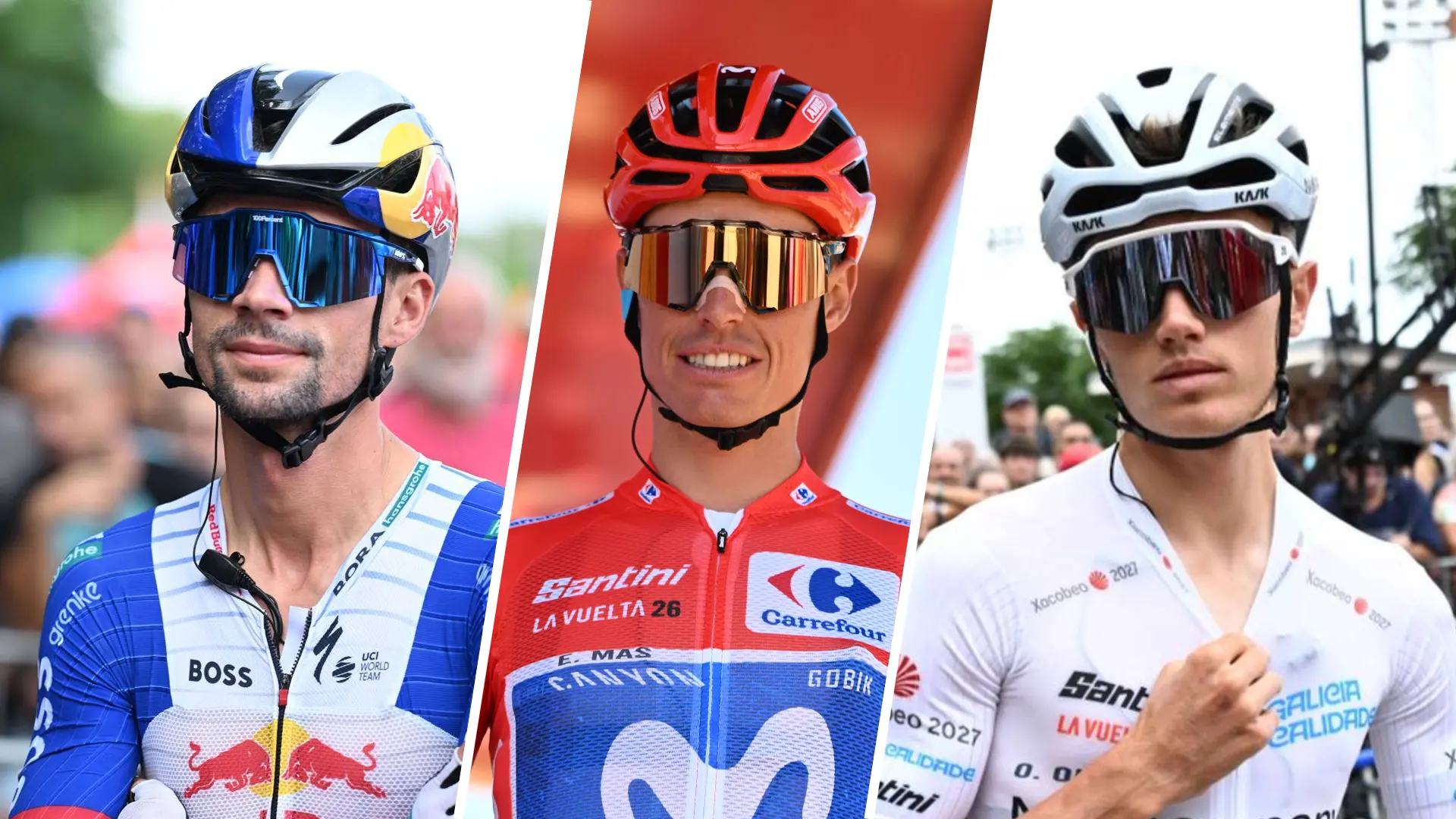
The overwhelming favourite is gone and the 2026 Vuelta a Espana has been transformed. Tadej Pogacar’s Stage 8 crash removed the rider who had won three stages, worn red from the opening day and built a 3:50 advantage before the race had completed its first week.
Enric Mas has inherited the red jersey, but not the security Pogacar possessed. Primoz Roglic is only 1:00 behind, Felix Gall sits at 1:11 and the next four contenders remain separated by little more than a minute.
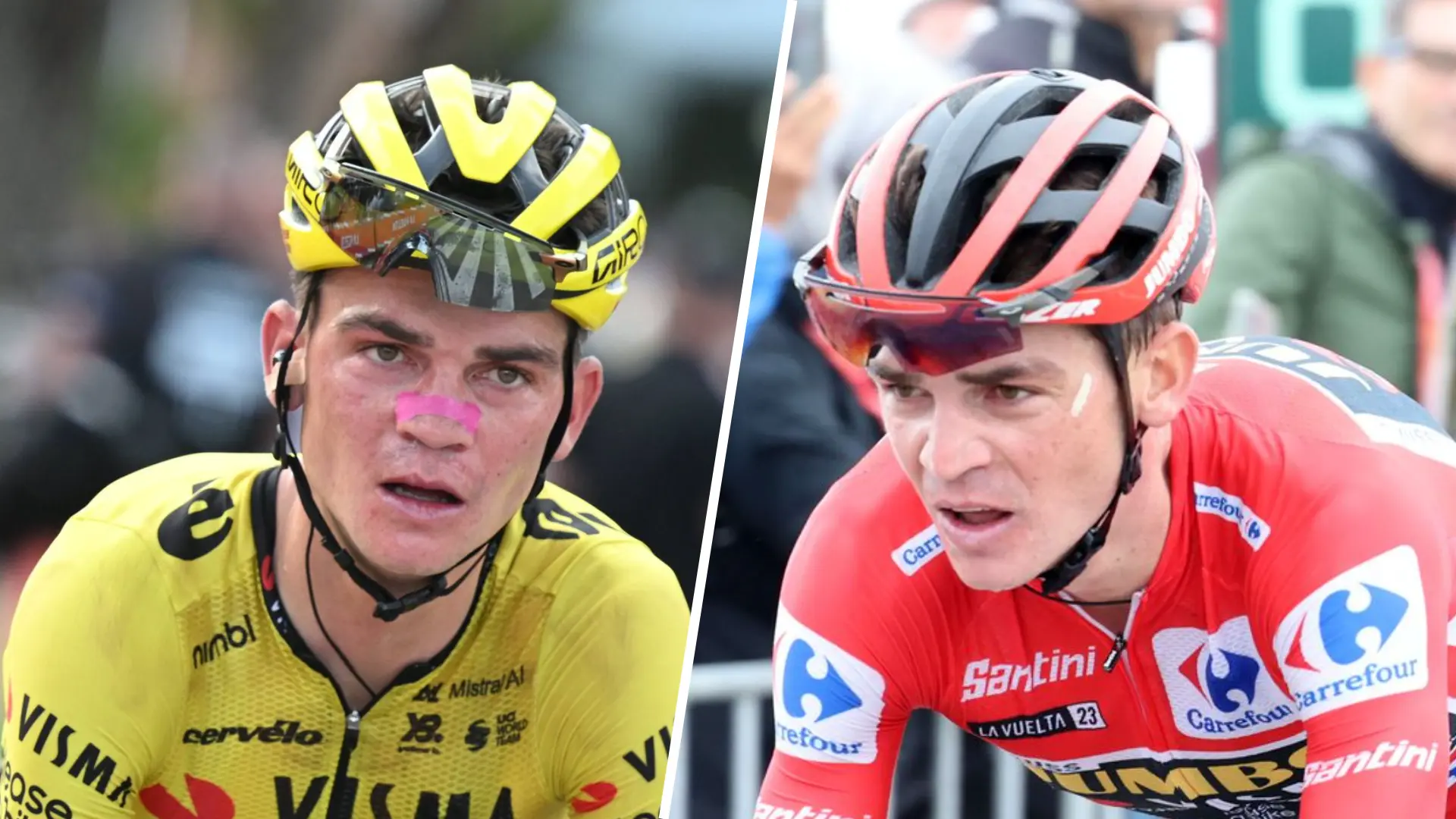
Mas has the jersey, Roglic and Sepp Kuss have won this race before, Gall finished second at the Giro d’Italia, Oscar Onley leads the youth classification, Richard Carapaz is a Grand Tour winner and Mattias Skjelmose still has a long individual time trial to target. All seven begin the post-Pogacar contest within 3:27.
For the first time since the Vuelta began in Monaco, supporters can realistically disagree over who will wear red in Granada. Cast your vote below before assessing the case for each contender.
POLL: Who will win the 2026 Vuelta a Espana?
Mas holds red, but Gall has the climbing form
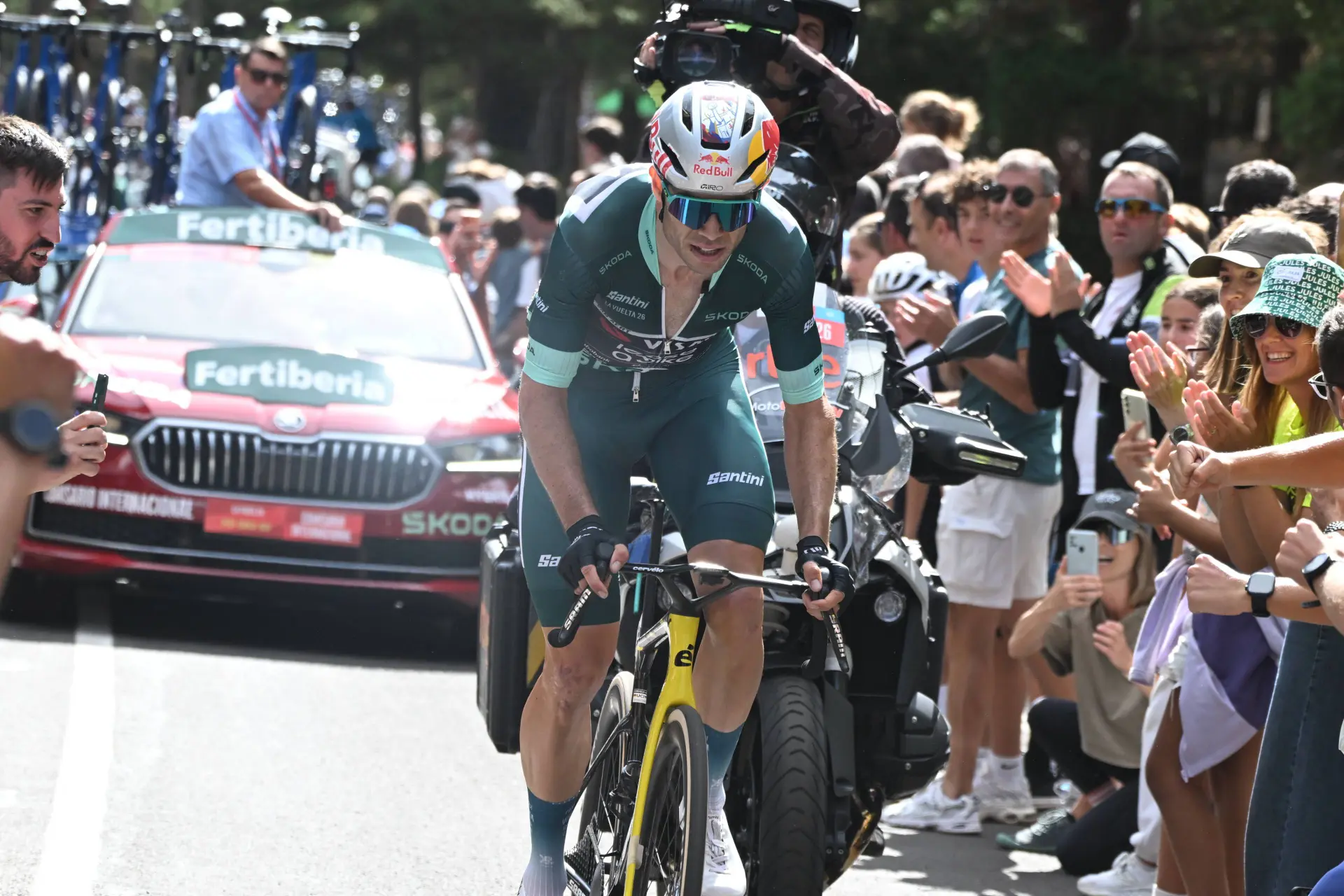
Mas enters the new phase of the Vuelta from the strongest position. His one-minute advantage over Roglic gives Movistar something tangible to defend, while his performance alongside Pogacar on Stage 6 provides the clearest evidence that he can protect it.
The Spaniard caught Pogacar towards the summit of El Bartolo, passed him to collect the bonus seconds and stayed with him until the final sprint. He then limited his losses when Pogacar attacked again at Valdelinares one day later.
Mas has finished second at the Vuelta three times and possesses more experience of contending for red than almost anyone still in the race. The question is whether Movistar can control two weeks of aggressive racing now that UAE Team Emirates – XRG no longer has a dominant leader compelling everybody else to follow its tempo.
Gall may represent the greatest threat in the mountains. The Austrian finished second at the 2026 Giro d’Italia and has repeatedly shown a willingness to attack during the opening week of this Vuelta.
Decathlon CMA CGM Team also carries considerable strength around its leader. Gall begins only 11 seconds behind Roglic and 1:11 from Mas, leaving him close enough to transform the classification with one successful attack.
His weakness is the remaining 32.1-kilometre individual time trial on Stage 18. Gall may therefore need to gain considerably more than the bare minimum in the mountains before the race reaches Jerez de la Frontera.
Can Roglic complete an unprecedented Vuelta comeback?
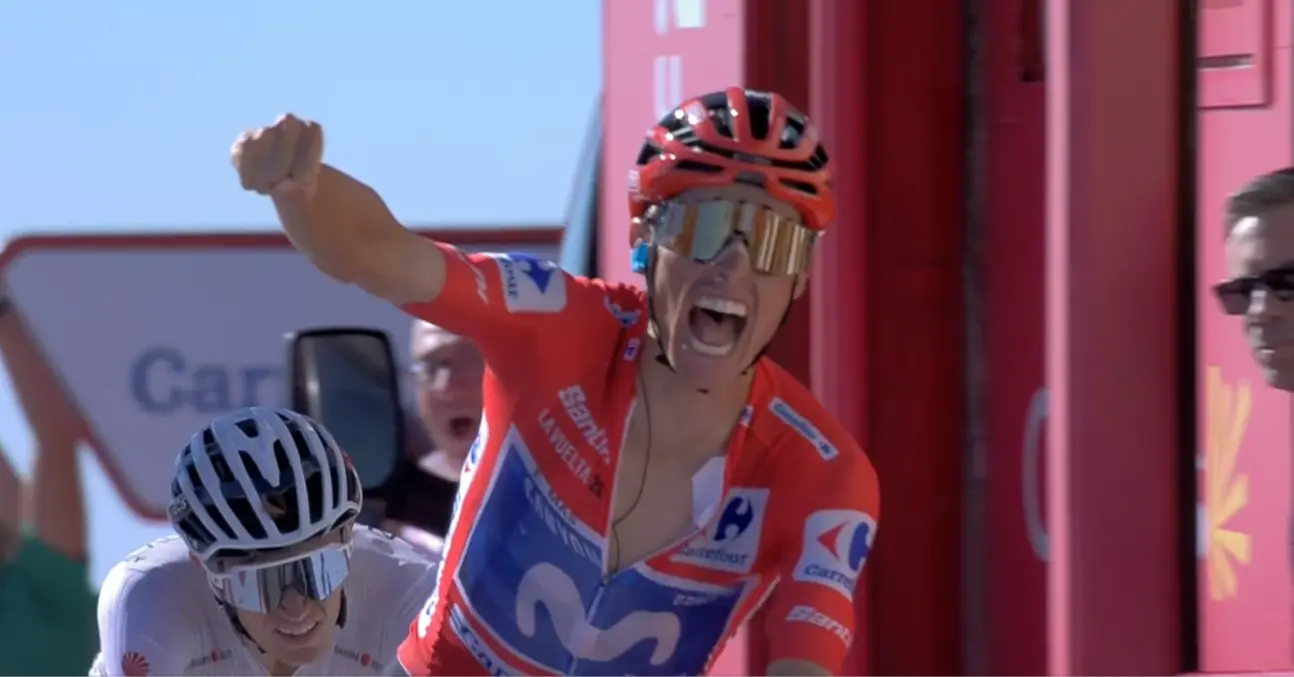
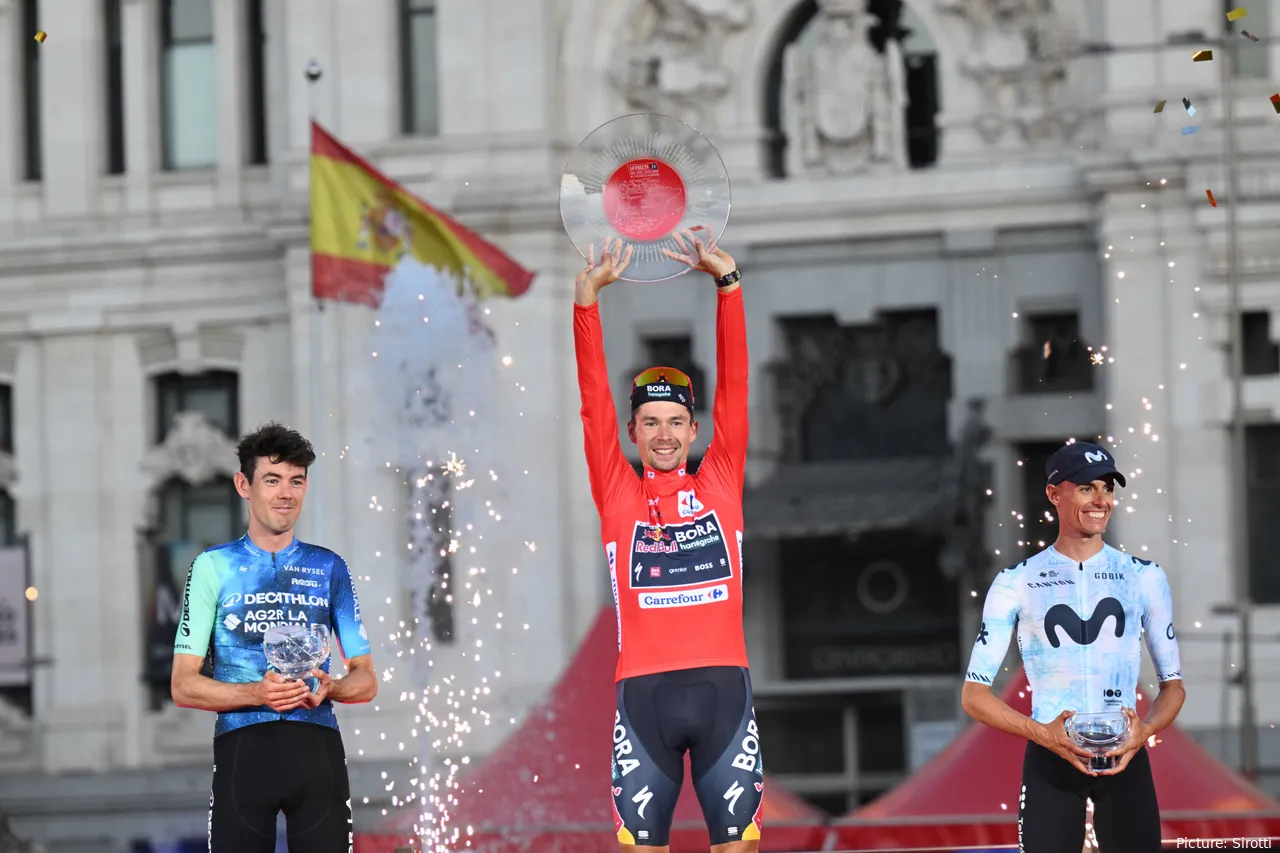
No contender possesses a stronger Vuelta record than Roglic. The Slovenian has won the race four times and is now chasing the outright record that appeared almost inaccessible while Pogacar was still controlling the general classification.
His preparation was disrupted by a training crash, and he has openly avoided making bold predictions about how his condition will develop across three weeks. Nevertheless, Roglic reached the end of Stage 8 second overall and just one minute from another red jersey.
Roglic also has a significant weapon waiting in the final week. Among the leading climbers, he should expect to gain time during the long individual time trial, meaning Mas, Gall and the other contenders cannot afford to arrive there with only slender advantages.
At 36, Roglic may no longer possess the climbing acceleration that defined his previous Vuelta victories. His experience, finishing speed, ability against the clock and record of improving deep into Grand Tours nevertheless make him impossible to dismiss.
Roglic is a record-equalling four-time Vuelta winner
Kuss and Onley lead the next wave
Kuss begins Stage 9 at 2:15. That deficit is large enough to free Team Visma | Lease a Bike from defending every movement, but small enough for the 2023 winner to return to the centre of the contest with one exceptional mountain stage.
Pogacar’s departure changes the calculation, offering Kuss a realistic opportunity to pursue a second Vuelta victory without facing the rider who had dominated every significant GC test.
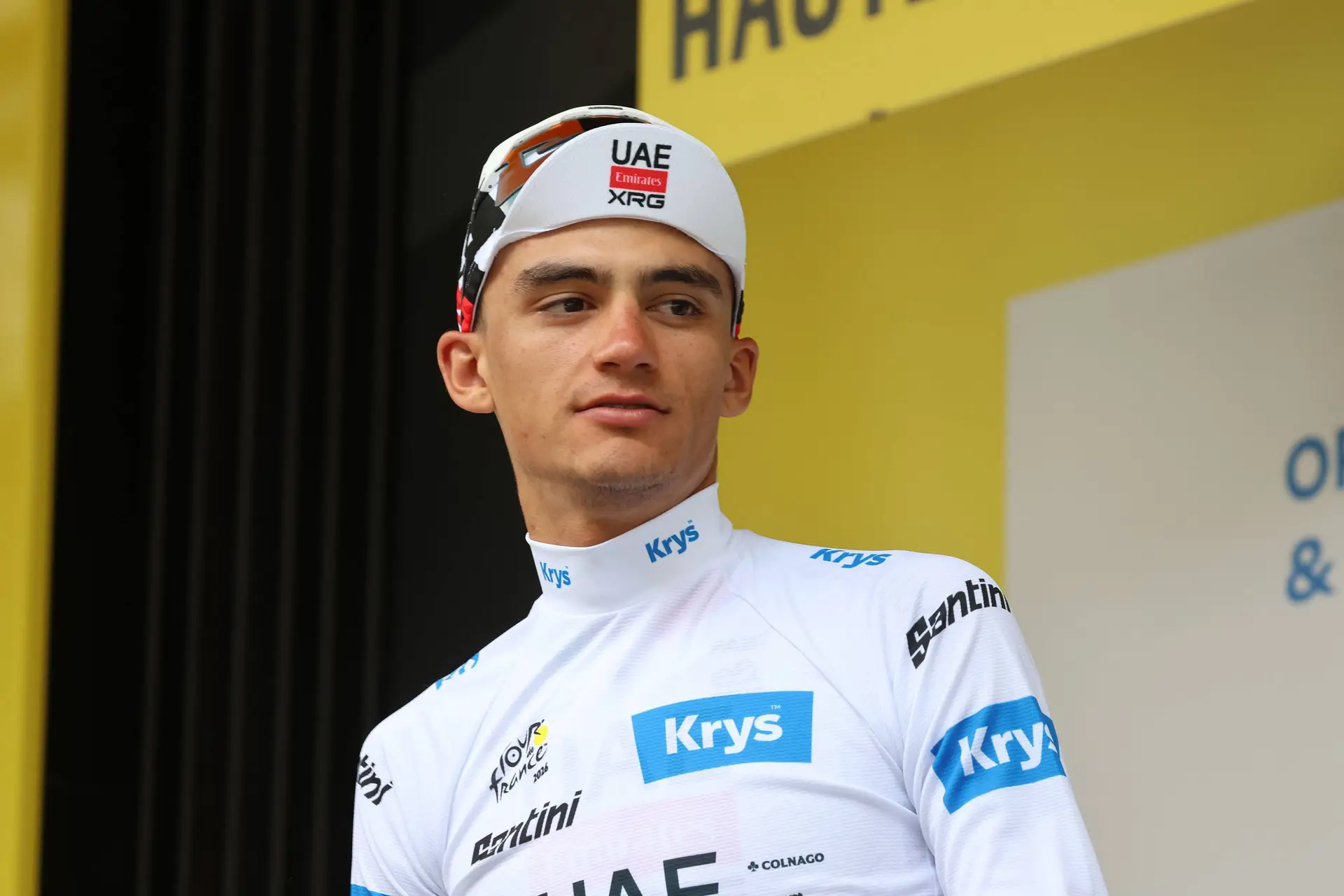
Onley sits one second further back and retains the white jersey. His opening week has included illness, cramps and a costly attempt to follow Pogacar on the gravel climb of El Bartolo, yet the British rider remains fifth overall and firmly inside the winning conversation.
The removal of Pogacar could be particularly important for Onley. Instead of being forced to respond to accelerations from the strongest rider in the world, he can measure his efforts against rivals operating within a much narrower performance range. If his health continues improving, the 23-year-old has time to recover the 2:16 separating him from Mas.
Carapaz and Skjelmose still have routes back
Carapaz is only six seconds behind Onley and has already won the Giro d’Italia, reached Grand Tour podiums and built a career around turning mountainous races into contests of endurance and improvisation.
The Ecuadorian is unlikely to win this Vuelta by waiting for the final time trial. His route towards red requires attacking Mas, Roglic and Gall before then, making him one of the riders most likely to exploit the tactical freedom created by Pogacar’s absence.
Skjelmose has more ground to recover at 3:27, but the Dane remains close enough to benefit if the leading teams begin watching one another. His own time-trial ability offers another possible route back towards the podium, although his first Tour-Vuelta double has already raised questions about how much fatigue he carried into Spain.
Stage 9 will test the reshaped hierarchy immediately. The 187.4-kilometre mountain stage finishes on the 22-kilometre Alto de Aitana after almost 5,000 metres of climbing, giving Mas his first opportunity to defend red and each of his six principal rivals their first chance to attack it.
Kieran WoodDeputy Editor-in-Chief
Kieran Wood is a sports journalist based in Wales and has been active in journalism since 2022. He regularly contributes to DartsNews.com and CyclingUpToDate.com, where he covers professional cycling and darts. In cycling, his work includes liveblogs from major races, including the Tour de France, the Giro d’Italia, and La Vuelta a España, alongside race reports and analysis. He has also conducted interviews with professional riders.
His reporting spans the full racing calendar, from one-day classics to stage races, with a focus on accurate, real-time coverage and clear contextual analysis. For statistics, results, and historical context, he regularly uses resources such as ProCyclingStats. To support reporting on rider activity and training context where relevant, he also references Strava.
In his work, Kieran places strong emphasis on careful sourcing, editorial accuracy, and updating articles as new, verified information becomes available.
claps 1visitors 1
Just in
Popular news
Latest comments
- Yes, question is, why is Ineos so easy to convince ?Mistermaumau09-10-2026
- Or maybe they’ll just abandon the sport and focus on RE, unless they can revive MU. Maybe it’s all just about budget adjustments in preparation for takeover by the new sponsor who might have no use for some people in their idea of a projectMistermaumau09-10-2026
- Sounds like management did their job pretty well then ;-)Mistermaumau09-10-2026
- Tour down under awaits... and nothing beyond that
 Rafionain-Glas09-10-2026
 - God, what a crowd gathers in these comments. You post a quote from a true champion—a quote that has nothing to do with his tragic accident (on the contrary, with his very passion)—and people interpret it however suits them.MajorPayne09-10-2026
- What needs to be understood? That you're linking a single statement to his death? Could it get any more stupid?MajorPayne09-10-2026
- Are you saying that statement led him somewhere related to religion? Could it get any more stupid?MajorPayne09-10-2026
- A broken contract by mutual agreement is perfectly fine. The problem is if one side does it without the other agreeing which isn't the case in this situationvappaxbipmv09-10-2026
- Maybe Ineos are planning to concentrate on GC after recent statements about getting back to winning the Tour?Lozza09-10-2026
- lol maybe a better questionmij09-10-2026
Loading
Write a comment