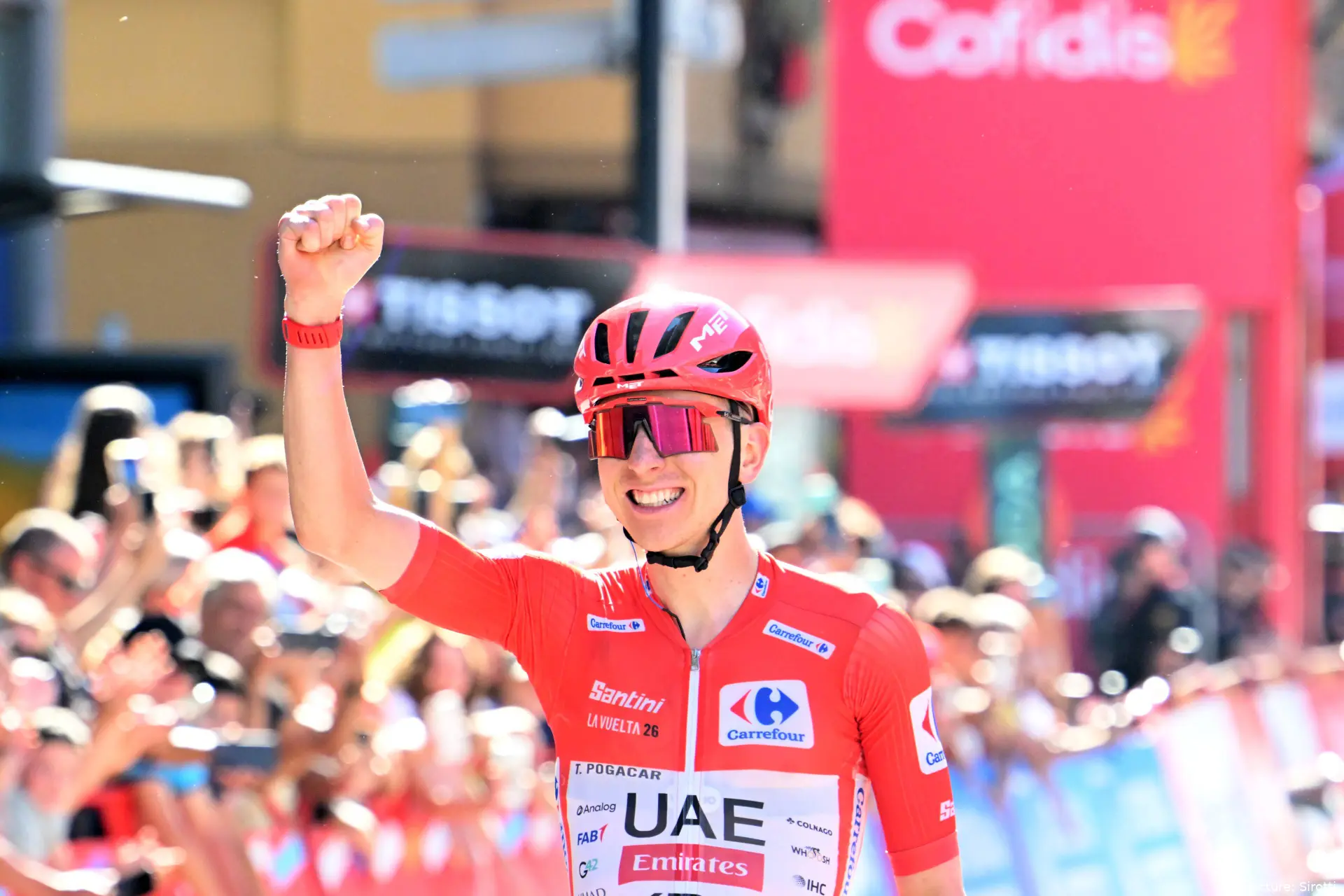
The Vuelta a España 2026 delivered a race defined by the spectacular breakthrough of Enric Mas, the early dominance of Tadej Pogacar, the resurgence of Mikel Landa, and the outstanding collective work of Movistar Team and Visma.
There were disappointments too, although picking major losers in such a competitive and thrilling edition is not easy. These, in our view, are the race’s main winners and losers.
The standout winner of the Vuelta a España 2026 can only be Enric Mas. The Mallorcan claimed the overall classification and added a stage victory that completely changes the perception of his season and his recent trajectory in the Spanish race.
Enric Mas
Few backed Mas at this point in his career. Even the Vuelta’s own narrative did not include him among the top favorites when discussing contenders for the win. And that was despite arriving with four podiums in the race behind him. This time, however, Mas took the step that had eluded him for so many years.
Three moments were especially important to understand his victory. The first was his ability to follow Tadej Pogacar on the Bartolo. While the Slovenian showed from the start he was several levels above his rivals, Mas managed to hold his pace. That day he probably began to realize he could do something big in this Vuelta.
The situation changed for good after Pogacar’s crash and subsequent withdrawal. And on Alto de Aitana, in stage nine, Mas confirmed he was the strongest rider in the race. His win was a genuine exhibition and cemented him as the outstanding candidate for the red jersey.
The third key moment came in the time trial between El Puerto de Santa María and Jerez de la Frontera. During his previous Vuelta podiums, his struggles against the clock had been a major weakness compared with Primoz Roglic and Remco Evenepoel. This time was different: Mas finished inside the top 15 and lost barely half a minute to Roglic, a result that allowed him to keep the lead and take a near-decisive step towards victory.
There was still time for further masterclasses, such as his attack 12 kilometers from the line and his command in the mountains. In the final two stages, Mas even raced with a style reminiscent of the great grand tour winners of the past: controlling his rivals and managing his advantage until he became the Vuelta champion.

Enric Mas, winner of the Vuelta a España 2026
Movistar Team
Movistar Team deserves its own chapter. Enric Mas’ triumph is also the result of outstanding collective work, especially considering the difficulties the Spanish squad faced during the race.
The loss of Cian Uijtdebroeks left the team without its other top climber almost from the start. Movistar appeared to be left with a roster too limited to control a three-week race in which Enric Mas ended up in red.
However, the team responded superbly from a strategic standpoint. On the flat, riders like Arcas, Orluis Aular, and Carlos Canal were fundamental. In the mountains, Movistar used riders intelligently who are not pure climbers but know how to defend themselves very well on demanding terrain.
Iván Romeo, Pablo Castillo, and a sensational Raúl García Pierna joined breakaways and later became support pieces for Mas when the race required it. The strategy allowed the team to avoid taking full responsibility for control from the peloton while having riders up the road when the decisive moments arrived.
Behind this triumph we should also highlight the work of Chente García Acosta, José Joaquín Rojas, Iván Velasco, and the entire technical staff. The final outcome is proof that Movistar knew how to race an extremely complex event despite losing one of its key cards for the mountains.

Movistar Team, en la Vuelta a España 2026
Visma, Matthew Brennan and Wout van Aert
Visma was another of the standout teams in this Vuelta a España. After winning the race in 2025 with Jonas Vingegaard, the Dutch squad came into 2026 without such a clear leader for the general classification. That did not stop it from once again becoming one of the main protagonists.
Matthew Brennan was one of the race’s brightest stars thanks to multiple victories, while Wout van Aert once again showcased his immense versatility. The Belgian was almost omnipresent and heads to the World Championships in Montreal in a particularly intriguing position after his Vuelta display.
But the best example of Visma’s tactical punch came on the penultimate stage. The team’s strategy allowed Sepp Kuss to slip into a break that ended up having a huge impact on the general classification. The American climbed from 11th to fifth overall thanks to a perfectly executed move.
Visma were also the dominant force in the sprints and stacked wins and headlines across the three weeks. Without a leader initially set to fight for the overall, the Dutch squad ended up as one of the big names of the Vuelta.

Wout Van Aert was a headliner at the Vuelta a España
Mikel Landa
Mikel Landa also earns his place among the winners. The Basque rider needed just one victory to change the feel of a difficult season, and he found it precisely on one of the Vuelta’s key stages.
Landa had gone more than a year without a win, and his previous Vuelta stage victory dated back 11 years. He arrived after almost two seasons marked by crashes and physical issues, at a time when even his future at the top level seemed in doubt.
On the penultimate stage, with chances running out, Landa delivered an exhibition in the Sierra Granadina. A day featuring three first-category climbs and one hors catégorie ascent became one of the standout moments of his recent career.
At 36 and having signed with Euskaltel-Euskadi, it remains to be seen whether this was his last Grand Tour. That is precisely why his triumph carries extra weight. Winning a queen stage after everything he has endured in recent years makes Landa one of the big winners of this Vuelta.

Mikel Landa, ganador de etapa en La Vuelta
The losers
Tadej Pogacar
It may seem harsh to place Tadej Pogacar among the losers, but the term must be read within the context of this ranking. While he was in the race, the Slovenian was the Vuelta’s strongest rider by a wide margin.
Pogacar dominated the race emphatically, won three stages, and opened a huge gap on riders like Enric Mas, Primoz Roglic, and Felix Gall. In the opening days, none of them looked capable of challenging him for the win.
But Pogacar’s objective was to win the Vuelta a España. After conquering the Giro d’Italia and the Tour de France five times, the Spanish race was the Grand Tour still missing from his palmarès.
The crash he suffered on stage eight ended his bid to close the circle. His withdrawal not only denied him the chance to fight for the Vuelta, but also to start a World Championships in Montreal that suited him perfectly, and to approach the season finale and Il Lombardia with confidence.
Pogacar appears on the losers’ list only because he could not achieve the goal he was chasing. Not because of his performance, which was outstanding, but because a crash ultimately denied him victory when it seemed almost under control.

Tadej Pogacar, estrella de UAE
Carlos Rodríguez
Carlos Rodríguez is another name that inevitably features among this Vuelta a España’s losers. The Andalusian is living through one of the toughest spells of his career, largely shaped by injuries and a series of crashes that have cost him continuity.
In modern cycling, consistent racing is essential to maintain and improve performance levels. Rodríguez has spent almost two years without stringing together several top-level races, and the results have reflected that.
His Vuelta was far from what was expected of one of Spanish cycling’s brightest prospects. He rarely featured, never made the key breakaways, and failed to play a meaningful role alongside Oscar Onley.
It was especially striking given the race passed close to Granada, where Rodríguez had extra motivation and a chance to shine in front of his home fans. Instead, he was largely anonymous.
Netcompany INEOS' decision to leave him off the Tour de France roster is easier to understand after this Vuelta. Rodríguez needs to regain continuity, confidence, and form to get back to the level that once made him a great hope for Spanish cycling.

Carlos Rodríguez, en la Vuelta 2026
Decathlon CMA CGM Team
If we must pick the team that raced the 2026 Vuelta a España the worst, Decathlon CMA CGM Team stand out as the clearest candidate. On paper, the French squad brought one of the strongest rosters in the race, especially for high mountains, but failed to turn that potential into results.
Their issue was not a lack of quality riders, but how they used their resources. In the opening stages, the team inadvertently aided Tadej Pogacar’s attacks, allowing the Slovenian to go clear and win with an authority that later proved decisive.
Things did not improve when Enric Mas emerged as the Vuelta’s strongest man. Decathlon never found a way to put the Mallorcan under real pressure or to create the conditions Felix Gall needed to fight for the overall.
On some days, several riders burned matches early only to run out of support when the decisive moments arrived. On others, riders like Leo Bisiaux, Gregor Mühlberger, or Matthew Riccitello pulled too long and too hard without enabling Gall to capitalise.
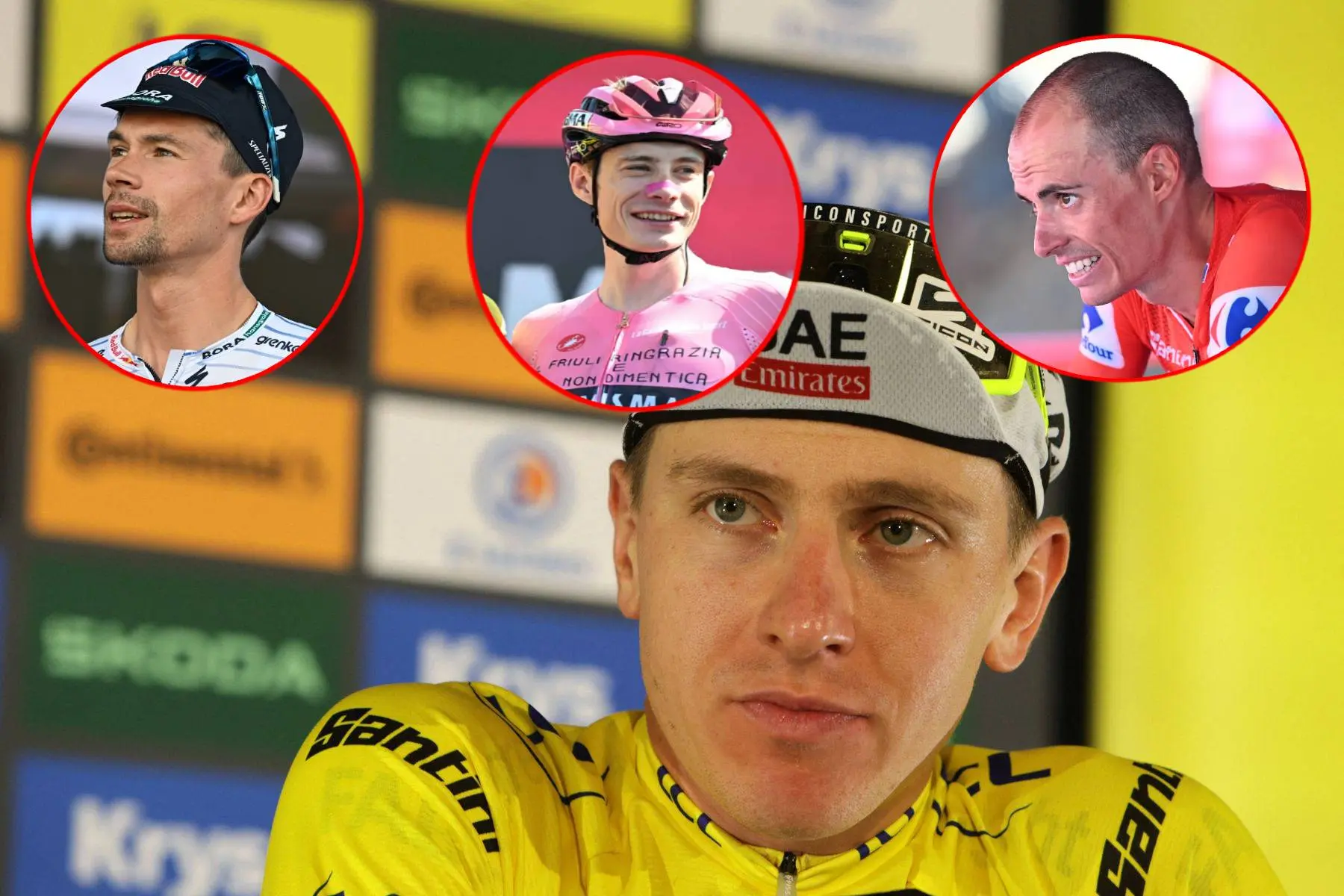
With a roster that, on paper, was built to be one of the race’s dominant forces, the collective outcome fell well short of expectations. The problem was not the riders’ quality, but the execution of the strategy.
And in a Vuelta a España as tight and complex as this one, racing poorly can prove as decisive as having less in the legs than your rivals.
Juan LarraCycling Journalist
Juan Larra is a writer for Cyclinguptodate and editor-in-chief of Ciclismoaldia, where he has played a central role since its inception. Under his leadership, the website has become a trusted source for professional cycling coverage, offering in-depth analysis, news, and feature stories.
A sports journalist with over 20 years of experience, Juan earned his degree in Journalism from the University of Seville in 2007. He began his career covering a wide range of sports—including football, basketball, Formula 1, MotoGP, tennis, and cycling—for platforms such as the official La Liga app, Vodafone and Movistar websites, NBA Blogdebasket, and Cadena Cope, honing his skills in writing and editorial management.
In addition to his work at Ciclismoaldia, Juan contributes to Cyclinguptodate and serves as editor-in-chief for the tennis-focused site Tenisaldia. Throughout his career, he has conducted exclusive interviews with cyclists and sports figures, provided detailed analysis of competitions ranging from local Spanish races to major international events, and acted as a special correspondent at prestigious races including Paris-Roubaix, the Tour de France, and the Vuelta a España.
Juan’s combination of experience, expertise, and direct access to athletes has established him—and the platforms he leads—as authoritative voices in professional cycling.
claps 9visitors 3
Just in

Popular news
Latest comments
- One very respected current coach recently reminded of a very important physio psychological factor often overlooked which is the way the body sneaks its neglected needs back in as you destress. We all know this phenomenon, it’s what explains why you can overwork right until the last minute with no side effects and then fall ill as soon as you relax and arrive on holiday. It’s why pros are reluctant to relax before big races, not because they don’t need the recovery but because a proper chance at recovery increases the likelihood of falling ill which is fatal before race day, better to partially recover but keep that stress that forces the body to keep going longer. There is a huge difference between the potential effects from expected recovery like knowing the off season is coming where your body knows it doesn’t have to impose itself immediately because your mind tells your body it will have plenty of time to do its chores and unexpected recovery due to e.g. an accident where the mind will convey that the duration is unknown and the body will try to immediately install its maintenance program. If you’ve been abusing your body for years without unexpected breaks, always keeping it in that stressed state so it couldn’t do its long-term work, you may find all sorts of problems coming out off the wood work, new injuries, new thoughts, new resistance, new barriers to performance, etc. It’s like we continue to carry our unresolved childhood experiences as adults and can mostly ignore them as long as we have control of our routine but when something unexpected triggers us, it all comes out and complicates things.Jumpyjohn25-10-2026
- MVDP was hampered in performance for almost 2 years. Pog has already hinted at having a new mindset since. It has to be considered that if he loses just a part of his past competitive spirit (which was crucial in many of his wins and needless efforts), it could affect his results negatively. Nobody knows in advance and nobody stays the same or on top forever. He may even be the type to retire and then make a comeback.Jumpyjohn25-10-2026
- C’mon, give the guy a break ;-) He has to write so much way faster than he can check to keep up the banter that he hardly realises what he’s saying half the time. He’d make a great populist politicianJumpyjohn25-10-2026
- I think there are more people who feel sorry for you than hate you. As the challenge, what is it exactly, trying to change people’s minds? At least if we’re not able to get rid of you it means you’ll keep discourse to a generally acceptable level, already quite some improvement.Jumpyjohn25-10-2026
- Racing the TT bike bike will be different, he will not be able to keep a super aero position as he has in the past, he will need to find a new postion on the bike where he can make power and limit his losses. He broke his C7 for God's sake. This is basic medical knowlege. Of course, he is different than most, I hope he can recover, the problem is he may be 2% ish less efficient on his TT bike.awp25-10-2026
- He broke his back, as compared to what happened to my back, his is minor but it could affect him negatively, specifically on the TT bike. We will have to see.awp25-10-2026
- Riders are coming in younger and younger. I think it will be tougher on the riders who are older. Some will be getting 'aged out'.Paggss25-10-2026
- I agree. I think Taddy will recover and compete at his previous level. I will say his crash will be in the back of his mind however, I think in a good way also. I believe he'll be looking for ways to remain safer. He's still young and it was a tough crash but not a life threatening one. As a road bike rider myself, all my crashes have affected me mentally although it's not a major factor. What has affected by level is age. I can't beat 'father time'Paggss25-10-2026
- yeah I don’t think so. Tadej’s accident was really no big deal relatively speaking. a couple of broken bones.mij25-10-2026
- Froome was super old compared to Tadej, and his crash was SO much worse. Not even a comparison. Jonas’s crash was also much worse. As was Bernal’s. Tadej had a concussion, broken collar bone, and a stable fracture of a vertebra. Terrible for sure, but NOTHING compared to what the other guys went through. Tadej was healed and ready for Euros, but why bother. Had it been a bigger appointment, and 2 weeks of training, he would have been there and won. Tadej’s accident was a freak thing on the road, in the peloton, happens to all of them. The other accidents were all super high speed and much scarier. Froome lost tons of blood. Bernal needed spinal fusion and had a 95% chance of being paralyzed. Jonas had a collapsed lung. the only scary thing in Tadej’s accident was the vertebrae, but replace that with a wrist and this is no big deal. it was a stable vertebrae so no real risk. people are just trying to create drama. there is no comparison in these accidents.mij25-10-2026
Loading
Write a comment