OPINION: Why Paul Seixas should NOT ride the 2027 Tour de France and what he should do instead
Cycling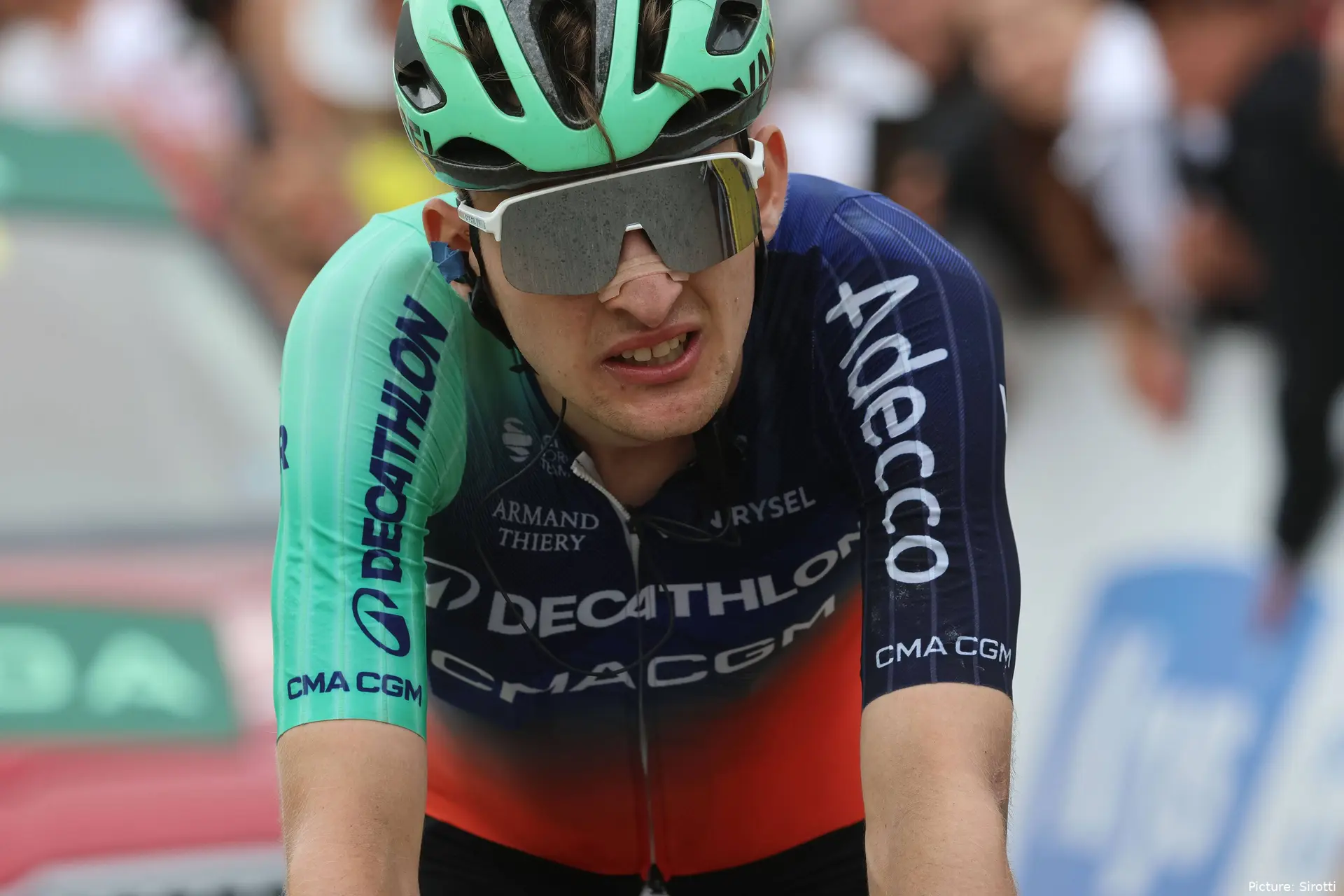
As the sun sets on July during the second season of Paul Seixas' professional career, the monkey is off the back. Not only has he confirmed that he can win a Grand Tour in the near future, he was able to mix it with the best in the world.
Decathlon CMA CGM took a risk in calling up the 19-year-old up to the Tour de France circus. However, with high risk comes high reward as the great French hope dually delivered a measured, consistent and crucially an enduring three weeks at La Grand Boucle.
With the ultimate goal to win the Tour de France with a French team, perhaps an immediate return to the top table may not be the best move for Seixas at this point. There's an argument to be made that he would be better served holding off a return to the Tour and focus on other races in 2027.
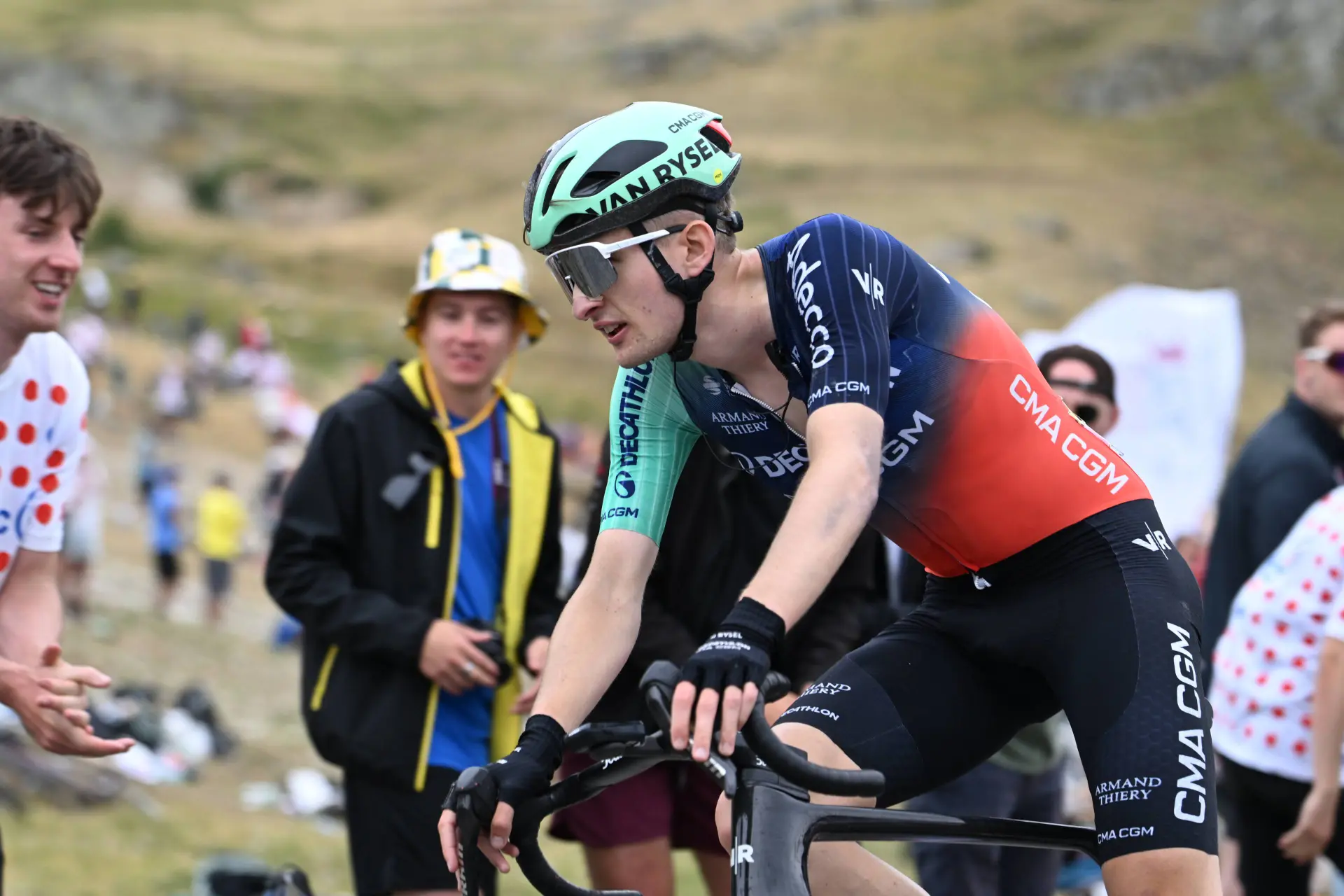
Seixas' 2026 Tour de France performance
There's no other way to assess the Tour de France 2026 than acknowledging the yellow-wearing, record-equalling, smiling assassin that is Tadej Pogacar as the benchmark. He dominated this race with perhaps ease we have never witnessed before. He's a level above the rest, but by how much?
Remco Evenepoel would be the closest to his high tide mark at +6:26, you would imagine Jonas Vingegaard would have been somewhere around here or a little closer than Evenepoel had he not crashed out of the race. Next was Isaac del Toro at +9:42 - although he did take a big helping hand from his generous leader over the course of the three weeks.
Then there's Seixas in fourth place. Pogacar aside, two riders performed better than him over the course of the Tour and a further one would also likely have placed above. However, at +11:56, he's not at all far behind that core Pogacar-chasing pack. Looking over his shoulder, this Tour showed there's not much to worry about.
Of the top ten behind, Lenny Martinez back-doored fifth position with a stage 19 breakaway effort, Florian Lipowitz had been close to his level but crucially never took time off the 19-year-old in the 15 stages before he also suffered a race-ending crash. When Seixas looks back on his Tour, he also wouldn't have lost much sleep over Juan Ayuso, Mattias Skjelmose, Tom Pidcock and the rest.
With Paul Seixas' expected development and improvements, these comparisons could quickly become obselete. His Tour participation served some crucial masters, however. The first being drawing back the curtain and sending him out into the raucous arena of the Tour de France.
An Alpe d'Huez finish as epic as they come, extreme heat never seen before and perhaps the best rider the sport has ever seen in all his pomp is a spoonful and a half for a Tour rookie to swallow in the grupetto, never mind in a general classification dogfight.
There's no argument against the fact that this Tour de France has been a success, proving that he can ride consistently across three weeks in a Grand Tour and that his team were able to provide strong support. And you can be sure he'll know exactly what to expect of the media and cycling's great travelling circus.

Paul Seixas at the Tour de France
What's next for 19-year-old?
Physically, the man needs a rest. His team has confirmed that there will be negoatiations on renewing his contract in the coming weeks. We're not here to dwell on that and speculate on whether he remains at Decathlon. However, we can follow his current situation which is he's a French rider on a French team, which is a factor in priorities when it comes to Grand Tours.
Physically, Seixas has ticked all the boxes he could have possibly wanted to before the Tour. Could he get immediately up to hang with the explosive efforts of the first week when Pogacar opens the taps? In general, yes despite leaking some seconds here and there. How does he fare on long climbs? Capable of following Vingegaard's pace up Le Markstein on stage 14 and well within the GC group on most other climbs.
He put in a firm time trial to start the final week and even had the bullish intent to attack Isaac del Toro on the penultimate stage. However, in doing so, essentially biting the dust for the first time in his career and losing almost two minutes to the Mexican on the queen stage. A harsh lesson, but perhaps the only crack that showed on the grandest stage.
The mental and strategic lessons are perhaps the biggest he can take away. Split his season in two and you see a potential for a more mature and dangerous Seixas to come out of the Tour de France.
The first part being Strade Bianche to his Tour Auvergne-Rhone-Alpes crash. In this period we see a Seixas riding a wave. After tasting his first pro victory, he tries to follow the Pogacar attack on the white roads, doesn't quite make it but confidently takes second ahead of the rest. At Faun Ardeche and Itzulia, he burns everyone off his wheel as he surfs climbs for fun. At La Fleche Wallone, his knockout blow sets him up for Liege.
At the monument, he perhaps sets a checkpoint in a developing rivalry with Pogacar by withstanding his Cote de la Redoute surge, but ultimately fading in a seismic performance. His early season builds a wave of momentum built on a confidence and fearless-ness that only comes with youth.
He crashed on a descent on stage 7 of the Tour Auvergne-Rhone-Alpes, ultimately abandoning the next day but recovering for the Tour. In many ways, the Tour we saw from Paul Seixas was nothing like the rider we saw at the start of the season.
With the emphasis on conserving energy over fears he couldn't last three weeks, we see a slight over-correction as he rarely puts a foot forward, choosing to follow the leads of others. His usual blazing descents less-frequent perhaps after his crash in June.
In essence, we saw a student with a note book, in what Decathlon would hope can help him measure his racing. Knowing when to stamp on the pedals, who's wheel to follow and which corner to dive into is race craft learned over time.

Fans will want to see Paul Seixas at the 2027 Tour de France
2027 Tour de France
Naturally, fans will want to see Paul Seixas at the 2027 Tour de France. So will his team and sponsors, and with recency bias - so would he. But in terms of his long term development and helping him win La Grand Boucle, he shouldn't return until 2028.
So, let's imagine that Paul Seixas returns a more measured and improved rider. Is he going to be able to close the massive gap to Tadej Pogacar? Is he going to shore up the time gap of the guts of ten minutes in twleve months? Unlikely. What's more likely is that the Slovenian is once again in the best shape of his career.
What's more realistic is we see Seixas developing into a rider capable of going toe-to-toe with Jonas Vingegaard, Remco Evenepoel and Isaac del Toro. That puts him once again in the bracket of second to fifth place, but trending upwards over time.
From a sporting perspective, the podium is on paper the logical improvement we can see from Paul Seixas in 2027 if all riders showcase their best at the Tour. From a French perspective, that's a success, but I think that it's a little-short sighted.
A different approach to 2027 could help deliver a Paul Seixas to the Tour de France as a potential yellow jersey challenger, refined and with stronger support around him.
Aim for the Giro and Vuelta
Simply put, the Giro d'Italia and then even the Vuelta a Espana could be a better schedule for Seixas next year for a number of reasons. First one being, he would be a legitimate contender to win both of them.
Would a repeat of the 2026 Tour with a similar result and the same amount of effort and stress appeal to Seixas? Or would a pink jersey, stage wins and a more active role in the front end of a general classification fight seem more appetising?
The pitch is simple. 21 or even 42 more days of Grand Tour riding in the legs. Perhaps several days in leaders' jerseys, young riders' jerseys and even a handful of stage wins. Making decisive moves as the focal point of the race. Defending leads against attackers. All elements of riding he may not get at the expected 2027 Tour de France Pogi show.
Read also
Even putting the French attraction to the Tour aside, it makes sense for the rider to solidify his status. The gap between the Giro and Vuelta also offers a chance for a consistent block of training and rest mid-season for latter season goals.
For Decathlon, it earns them an entire extra season to further develop their project around Seixas. Romain Bardet will have more time to mentor and two winters worth of transfers could help bolster their mountains and rouleur support. Riding two grand tours as perhaps one of the major players in the peloton responsible for controlling stages will also be beneficial.
Will Seixas win the Giro or Vuelta if he goes? It's certainly possible. Remco Evenepoel, Isaac del Toro and Jonas Vingegaard could be at the start lines, but his chances of winning without Pogacar present improve dramatically.
Of course the goal would then to be all-in for the 2028 Tour de France.
A 21-year-old already with multiple Grand Tours under his belt and used to the dynamics and pressure that come with them, paired with his expected physical development. It makes for a recipe that would certainly worry a Tadej Pogacar two years further down the road.
I can argue all I want, but we have to acknowledge it's a debate about a French rider, riding for a French team and wanting to win the Tour de France. But ironically, he can give himself a better chance of doing so by not returning to the Tour next year.
Gavin QuinnCycling Journalist
Gavin Quinn is a cycling journalist and ultra-distance cyclist with a BA in Journalism from Dublin City University. Formerly the Press & Communications Officer for Cycling Ireland, Gavin has worked inside the national team at the World Championships and has reported for the Irish Mirror, Mirror UK, and The42.
His expertise is backed by elite-level access, having interviewed stars like Sam Bennett and Ben Healy, as well as immense personal endurance. In 2025, he completed a 12,000km solo cycle from Ireland to Vietnam, following a 4,600km tour across Europe. From the cobbles of Paris-Roubaix to the gradients of the Tourmalet, Gavin’s writing focuses on the "romance and brutality" of the sport. Having visited 50+ countries, he brings a global, cultural perspective to his coverage of the pro peloton for CyclingUpToDate.
claps 6visitors 5
Just in
Popular news
Latest comments
- I would prefer him to do the Giro and Vuelta, and leave Seixas, Remco and Jonas to fight it out in France. Btw 'redemption' implies he has disappointed us and has something to prove. I don't think he has anything to prove, but of course ticking off the Vuelta would be good. Pity he can't get a 'prior learning credit' for the first week in the Vuelta, and join in for the last two weeks!Hills3320-10-2026
- Bet you 90% of Slovenians will stop watching cycling once your boy stops. But. More pertinently, have you prepared for his retirement? I think you have extreme difficulties in understanding the difference between being a fan of cycling and being fan of a cyclist.Jumpyjohn20-10-2026
- I would keep a VERY open mind.Jumpyjohn20-10-2026
- Listen, maybe he did, maybe it’s more complicated but unless there are images* or witnesses, I wouldn’t go on stats alone. There are so many factors, terrain, wind, pacing, psychological/hormonal effects, etc. and that’s without consideration of Remco maybe changing his effort. As a rider I know all too well the effect of being overtaken can have, just like it’s always easier to push yourself when you are racing instead of training where you have no target to catch or pressure from behind. * obviously there is going to be a lack of commissaires in TTs to keep a constant eye on things but hey it’s 2026, these problems can be solved cheaply with on-board cameras or drones, they could even increase revenue and attractiveness through broadcasting right.Jumpyjohn20-10-2026
- Do you watch dog racing too? Do you remember what Einstein said about madness? What are you watching specifically, the way his ass moves over the saddle more efficiently? You should really ask yourself some psychological questions if what you enjoy is watching someone do exactly the same as all the others only slightly faster some of the time but not in any way noticeably without the immediate proximity of competitors. Would you watch time trials if no results or times were taken? You should really think about the real reasons why you enjoy watching someone much more than others (or why you can’t enjoy watching others doing the same). If you would argue it was for other reasons than simply wanting to watch the best (and I’m pretty sure you don’t watch e.g. cyclocross or kayaking because you want to dictate a hierarchy in sport) I would have more understanding (nothing else) for your choices (nationalism, ego, prediction talents, etc.)Jumpyjohn20-10-2026
- In theory you’re right but sometimes news is sparse or not funny or the discussion rather limited or predictable so a little lighthearted mocking can be a welcome distraction. Also, it doesn’t hurt to attract to agendareers and schemers.Jumpyjohn20-10-2026
- A suggestion to commentators, prepare to include interesting unrelated material when there’s little to report on. This is why the TdF grew an audience, it attracted more than hardcore cycling fans or fans of particular riders who’d find it interesting to hear or even discuss their choice of toilet paper at home. If you can’t keep viewers’ attention with surroundings, history, tourist information, etc. there’s always, highlights, best of past races, betting odds, international newsflashes, weather forecasts, etc. or the suggestion to go make a cup of tea. In fact, maybe the whole idea of one long live broadcast is the problem, a general sports update during the race would probably interest many, like the format in football where they flip across matches where goals or interesting events happen. Can’t see the point of comparing watching a guy turning his pedals in a constant fashion on an empty road with one hitting a tennis ball in a different strategic place each time or moving around a football field in an infinite number of unpredictable combinations wrt teammates and opponents every minute.Jumpyjohn20-10-2026
- Says Mr Non-stop repeating himselfJumpyjohn20-10-2026
- Phew I hope we do not get Jiffygate 2🤣🤣🤣🤣🤣 oh and by the way Bradley still has not answred the question re jiffygate even in his latwst book🙄🙄🙄🙄paultryan200220-10-2026
- What a stupid comment. If they are as good and if not better why should they sit on seasoned pros wheels. Sexias is a prime example . Move with the times they are fitter and more hungry and more ambition. If you cannot abide being 2nd string find a new profession.paultryan200220-10-2026
Loading
2 Comments