"Now the race is obviously going to be more exciting” - Vuelta a España TV ratings hold up despite Tadej Pogacar’s withdrawal
Cycling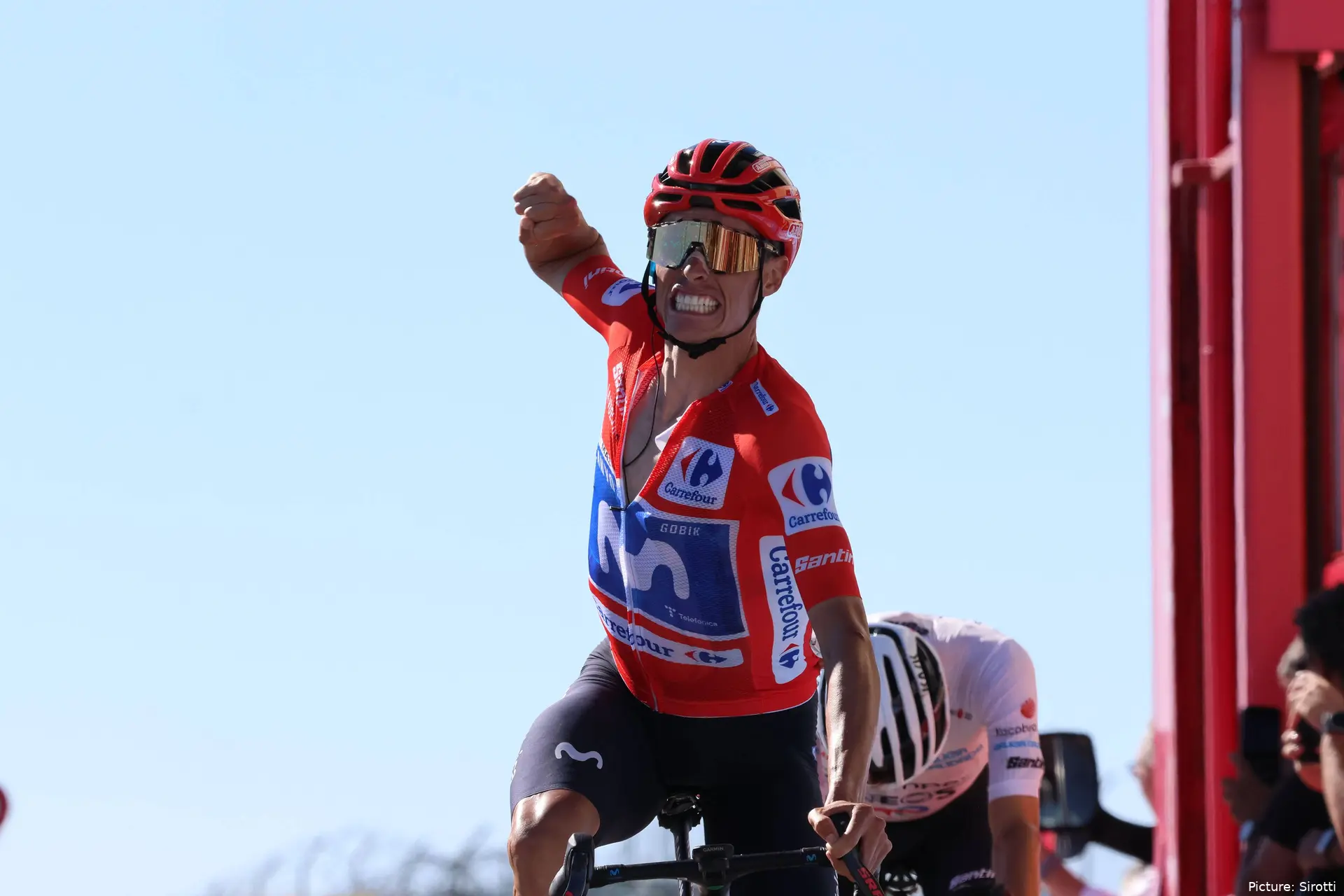
Carlos de Andrés, the familiar cycling voice on Teledeporte, assessed the impact of Tadej Pogacar’s injury and subsequent withdrawal on TV viewership for the Vuelta a España. The absence of the overwhelming favorite raised doubts over whether audiences would hold at the levels seen in the opening days of the Spanish Grand Tour.
However, the first signs are positive. The commentator highlights that the race continues to draw strong interest despite the Slovenian’s exit, a scenario that, far from triggering a slump, has underlined the loyalty of cycling fans.
De Andrés believes the focus now shifts to the racing itself. With a more open general classification and several riders in the hunt for the win, the Vuelta enters a new phase where excitement could become its main TV draw.
Pogacar’s absence has not, at least for now, had the negative impact many expected. De Andrés notes that “yesterday the ratings performed just as well as when Pogacar was in the race,” a telling conclusion after the Slovenian had dominated the narrative from the start.
For the commentator, this shows that interest in the Vuelta does not hinge solely on one star. “I think cycling has a fairly stable base,” he says, underscoring the sport’s ability to retain its audience even when its headline act leaves the competition.
Time trial a key day for the Vuelta GC
The sporting context is also crucial. The general classification is taking on a new shape, and riders will approach the coming days with different strategies. Some favorites may be saving energy for the time trial, while others will need to use the mountains to force gaps.
“There are riders who will do the whole race thinking about the time trial,” De Andrés explains, aware that the race against the clock could become one of this Vuelta’s key moments. Contenders who rate themselves superior in that discipline will try to limit losses in the mountain stages.
That outlook could trigger a tactical race over the next few days. The stronger time triallists will try to control their time losses on the climbs, while the pure climbers must seize every chance to take seconds before the individual test.

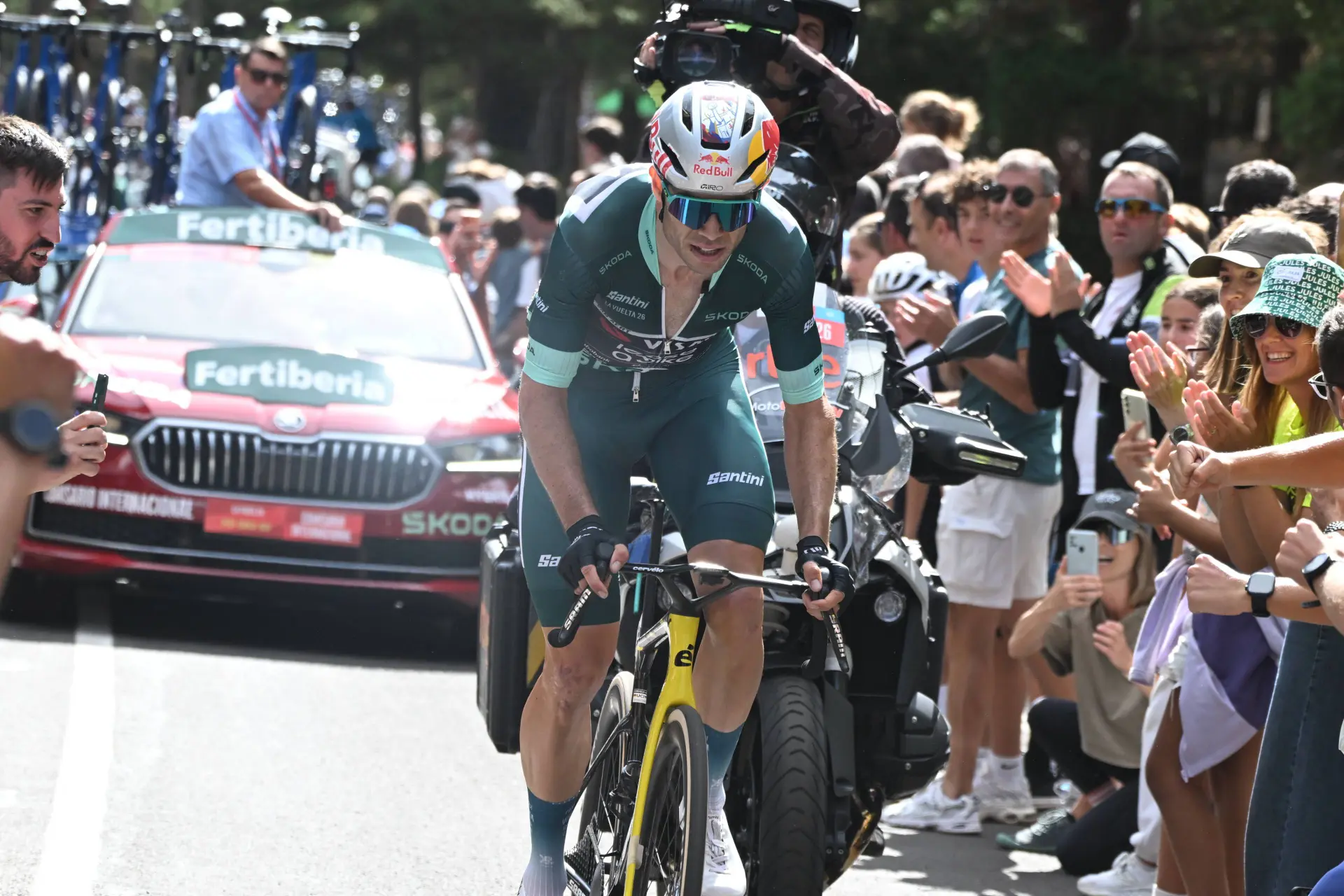
Enric Mas launching his move against Oscar Onley
A Vuelta that holds attention
De Andrés feels it is still early for firm conclusions and prefers to let a few days pass to see how both the race and its audience evolve. “You have to let the days go by,” he says, although the initial figures allow for cautious optimism.
Pogacar’s withdrawal had posed an obvious question: what would happen to a race that had relied on the Slovenian as its main attraction from the outset. His dominance had concentrated much of the attention, but the response since suggests the Vuelta retains a loyal audience.
The explanation, according to the commentator, lies in the nature of the spectacle itself. When a race offers options, attacks, and an open classification, fans stay engaged regardless of who carries the favorite’s tag.
Read also
“If the race is attractive and exciting, people will watch,” De Andrés sums up. A statement that gains weight after the first day without the Slovenian, when the competition opened a new chapter with several riders targeting overall victory.
Thus the Vuelta heads into its next stages with the certainty that Pogacar’s absence has not, at least initially, dented its ratings. The race’s suspense has become the new selling point and, with more mountains still to come, interest may remain intact.
Moreover, De Andrés believes the race still has room to grow in appeal. “Now the race is obviously going to be more exciting,” the commentator predicts, confident that an open fight for the overall will keep viewers’ attention through to the finale.
Javier RampeCycling Journalist
Javier Rampe is a sports analyst with more than 15 years of experience. He holds a degree in Economics from the University of Rome and a Diploma in Business Studies from the University of Cádiz. Despite coming from an academic background not particularly associated with cycling, his passion for both cycling and journalism was instilled in him from an early age. He grew up following Miguel Indurain and José María “El Chava” Jiménez. An admirer of Michael Robinson’s communication style and journalistic approach, he was inspired to pursue a degree in Journalism at the University of Buenos Aires, which he is currently completing.
He has always maintained close ties with the worlds of sport and culture, contributing from a young age to sports blogs and film and music review websites. His work has appeared in media outlets such as Cope, RAI, and Radio Con Vos. He is also the founder of the cycling-focused podcast El Contraanálisis and the football interview channel Días De Fútbol, dedicated to conversations with professional footballers.
In addition to his work at Ciclismoaldia, Javier has interviewed some of the most influential figures in modern cycling, including Alejandro Valverde and Tadej Pogačar, as well as key voices in anti-doping policy such as Alberto Yelmo, David Varillas, and Marcelo Milano. Marcos Maynar, in relation to the ‘Operación Ílex’ case, is also among the personalities he has interviewed. He enjoys conducting in-depth analysis of the cycling ecosystem and has attended major events such as Strade Bianche, the Vuelta a Andalucía, and Itzulia, as well as numerous national cyclo-cross races.
His background in economics, combined with extensive experience in marketing and corporate communications, drives his continuous study of positioning strategies and ensures that he always keeps his focus on crafting compelling and evocative headlines.
claps 0visitors 0
Just in
Popular news
Latest comments
- oh boy, you're gargling with french balls now?? pogi going to be jealous.whkman11-10-2026
- Well if UAE the best team in history comes knocking their the only team in the world who can get Seixas. Seixas will become incredible there. Lets see if he stays at decathlon or goes to UAE.miguel11-10-2026
- Ahem, stage 16 of the 2025 Giro
 Rafionain-Glas11-10-2026
 - Can we get a comment from the UCI on this. The silence from Aigle is deafening! Come on cycling journalists , start annoying them to get a comment please.Paul53111-10-2026
- A shame to see him retire, I really liked him as a rider. His dignified tribute along with Matej Mohorovic to Gino Mader after his death was class and will always live in my memory. Enjoy your retirement.GregT11-10-2026
- A shame to see him retire, I really liked him as a rider. His dignified tribute along with Matej Mohorovic to Gino Mader after his death was class and will always live in my memory. Enjoy your retirement.GregT11-10-2026
- I thought Seixas had hit the end of the road from a fatigue standpoint, after the WC meltdown - and he still finished ok. This was impressive and an amazing return.mij11-10-2026
- totally, eating crow for breakfast this morning. after the world championships I thought we were looking at a late season fade from fatigue. way to go Paul!mij11-10-2026
- Pogi would have won the Vuelta at around 10 min. But it would have been boring for fools like you. Capish?PogiSloFans11-10-2026
- Rather than me describing the technology at length on here, If you google. Line-scan cameras. They are also sometimes called Slit-Scan cameras. Either search will fill you in. You can read all about how they. work. Enjoy! Just to be clear the cyclist is saying he wants to see exactly where the digital finish line is in relation to the actual physical finish. At this point we only have the word of the authority that the digital line corresponds to the exact starting edge of the physical finish line. That seems like a reasonable request to me.Prorodsandstuff11-10-2026
Loading
Write a comment