
Netcompany Ineos is preparing to add artificial intelligence to its aerodynamic development program for the 2027 season through a partnership with AiRO, a digital platform designed to make advanced aero testing more accessible. The collaboration will give the British WorldTour team another way to evaluate rider positions and equipment.
AiRO has developed software that creates a three-dimensional digital model of a cyclist, allowing different aerodynamic configurations to be simulated without requiring every experiment to take place in a wind tunnel. The company has confirmed that it will work with Netcompany Ineos next season, although the full details of the agreement are expected to be announced next week.
The partnership comes as professional cycling teams continue to search for marginal gains in equipment, positioning and performance. While wind tunnels remain an important part of aerodynamic development, access to them can be expensive and time-consuming. AI-assisted simulation could offer teams a more flexible way to explore potential improvements before committing to physical testing.
AiRO's latest development is Vayu, an AI-based computational fluid dynamics (CFD) simulation tool launched on Wednesday. The technology is intended to help cyclists and bike fitters investigate aerodynamic changes through software, with applications across road cycling, gravel, mountain biking and time trials.

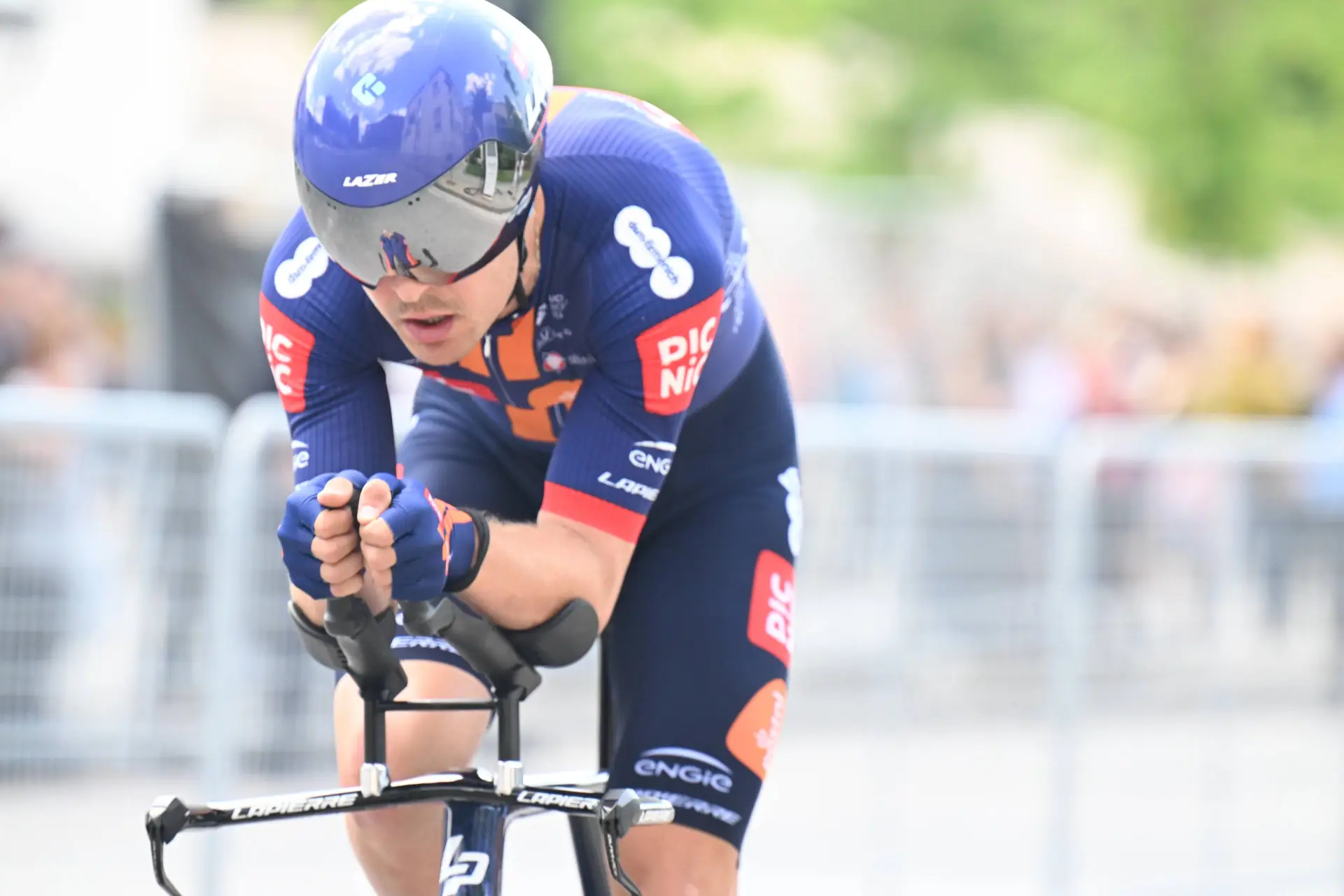
Netcompany INEOS in action at the 2026 Czech Tour
Digital riders could expand testing across the entire squad
The platform works by creating a digital twin of an individual rider. Photographs are processed using specialist software to produce a three-dimensional representation, which can then be used to assess potential aerodynamic changes. These include trying different helmets or modifying a rider's position.
The service is available through specialist bike fitters, with sessions costing approximately $200. Its consumer-facing approach could give riders access to simulations that have traditionally required more specialized facilities.
For Netcompany Ineos, however, the most significant benefit may be the ability to test a wider proportion of its roster. AiRO's founder Ingmar Jungnickel expects the team to use AiRO alongside conventional wind tunnel testing.
That could allow the team to investigate aerodynamic options for riders who might otherwise receive fewer testing opportunities because of the time and expense involved. It could also help the squad assess road-bike positions, which Jungnickel says can be more difficult to test consistently in a wind tunnel or velodrome than time-trial configurations.
Read also

Vayu aims to simulate hundreds of equipment and position combinations
One potential application currently under development is the ability to compare more than 20 helmets against a single rider's digital model, testing each helmet across numerous head positions. Because the helmets would already have been scanned into the platform, the system could eventually recreate the equivalent of more than 400 wind tunnel tests through a series of simulations.
Another planned function would allow users to assess more than 100 small changes to a rider's position, including adjustments to the arms, head and shoulders. The system could rank the simulated configurations according to their potential aerodynamic gains.
The digital models could also allow the team's staff to investigate potential changes without requiring riders to be physically present for every stage of the process. Coaches and technical staff could explore different configurations, identify promising options and prepare further tests before involving the athlete.
Jungnickel also sees a role for the technology in managing the relationship between aerodynamics and biomechanics. If a simulated position appears faster but raises concerns about a rider's movement or physical limitations, coaches and biomechanics specialists could develop a plan to address those issues before the rider adopts it.
The agreement with Netcompany Ineos will be AiRO's first official partnership with a professional cycling team. The precise scope of the collaboration remains under discussion, and further details are expected next week.
Félix SernaCycling Journalist
Félix Serna is a writer at CyclingUpToDate and has been part of the team since 2025. He covers professional cycling across both the men’s and women’s calendars, with a focus on UCI rankings, race developments, and rider performance. His work includes interview-based reports, liveblogs, and tournament coverage designed to provide clear, accurate context throughout the season.
In his reporting, Félix regularly uses ProCyclingStats for results, statistics, and historical reference. He places strong emphasis on careful sourcing, editorial accuracy, and updating articles promptly when new, verified information becomes available. He holds a bachelor’s degree in International Studies.
claps 0visitors 0
Just in
Popular news
Latest comments
- In reality, if Pogi hadn’t looked after Torito on two of the big mountain stages he most likely would have put another 3-5 mins into Remco and probably won 2 more stages!Lozza29-10-2026
- That was the same stage.awp29-10-2026
- And he seemed to be holding back in the sprint on a stage that Jonas had been targeting when he crashed out.Hills3329-10-2026
- I like Remco but the only reason he beat Tadej up Plateau de Solaison was because Tadej was babysitting del Toro.awp29-10-2026
- Race it all but Paris Roubaix. To much risk for him this year.awp29-10-2026
- No point going to the tour vs UAE they can prob 1-2 next year and they will be calling all the shots like usual. Seixas for Giro and WC is both interesting and opertunistic, hes still young and will grow on it. No point banging the head into a unbeatable wall that is Pogacar and UAE right nowmiguel29-10-2026
- I would have thought the same about Paul, my expectations were non existent when they announced he would do the 2026 Tour. I personally believe he can win this 2027 edition if Tadej struggles in the tt's. If Tadej doesn't struggle in the tt's then he will win in 2027 barring a crash or sickness. It will mostly come down to his ability to overcome his C7 fracture which will affect his tt position this coming year.awp29-10-2026
- Remco was a World Champion, and he won two Monuments and one Vuelta. And that’s it. Remember: no more Grand Tours, World Championships, or Monuments for Remco. As for Paul, he’ll have to wait a few more years for the Tour. As long as Tadej is at his peak...MajorPayne29-10-2026
- I think this will be a breakout year for Seixas. The course suits him, Tadej's C7 fracture is going to hurt him this year on the tt bike, I know they are talking about a different position for him right now. But his road bike racing will not be affected. If he comes healthy and doesn't crash, he wins. If he has a small issue with anything Paul might take advantage and take his first Tour. This is Remco's last chance to win a Tour but being honest he can't win it. The old guard is shifting but Tadej will remain for another few years.awp29-10-2026
- In my opinion, I'd like to give him a few races to get his 'legs'. This is the end of the season and an ideal time for him to get some valuable racing time for next year. Also, here's another rider coming back from devastating injury. Also, how much sprinting time will he get with Brennan as their main sprinter?Paggss29-10-2026
Loading
Write a comment