“What a way to silence his critics” - Bruyneel full of praise for Enric Mas as he rises to Vuelta red jersey challenge
Cycling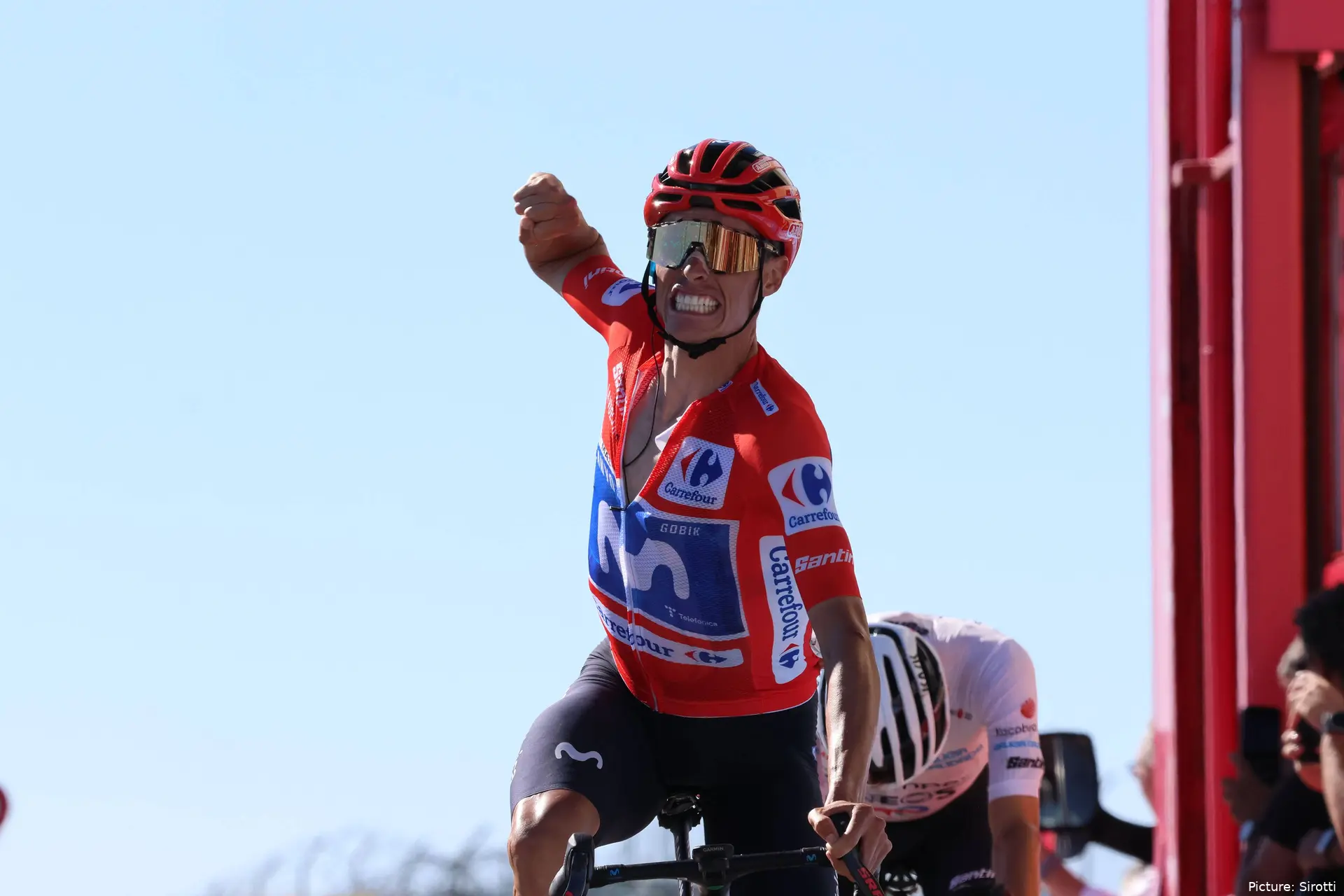
Enric Mas’s victory on Alto de Aitana not only allowed the Movistar Team rider to consolidate the red leader’s jersey at La Vuelta a España. His performance also drew a unanimous reaction from Johan Bruyneel and Spencer Martin on The Move, where both praised the Spaniard’s huge ride and broke down the keys to a day that has completely reshaped the race scenario.
Bruyneel was especially forceful in assessing Mas’s triumph. The Belgian former pro noted that the Spaniard seemed transformed as soon as he pulled on the red jersey.
“It looks like the red jersey gave him wings,” he said, before stressing that we saw “a different rider” compared to earlier stages.
For Bruyneel, the fact that Mas inherited the lead after Tadej Pogacar’s crash was a circumstance, but on Aitana he had to prove he was ready to own that role. “Obviously he got the red jersey because of Pogacar’s crash, but today it was up to him to show he’s the leader of his team and of La Vuelta. And boy did he show it,” the Belgian stated.

Enric Mas, leader of the Vuelta a España
“What a way to silence his critics”
One of the talking points on the show was the criticism Enric Mas has faced in recent years, especially in Spain. Bruyneel believes his win on Aitana is a direct reply to all those who have questioned the Movistar rider.
“What a day for Movistar and what a boost to Enric Mas’s confidence and morale,” he said. The Belgian admitted he expected a strong showing from the Spaniard, but not necessarily that he would be the one to take the win.
He went even further: “After all the negativity around Enric Mas, especially in Spain, I’ve said it many times: what a way to silence his critics.” He even closed with a direct message: “He has a lot of critics. Today they have to be quiet.”
Spencer Martin fully agreed and highlighted that Mas’s triumph also vindicates a rider who has spent years chasing a moment like this. Both recalled that the Mallorcan was runner-up at La Vuelta early in his career and that now, at 31, he faces an unexpected chance to fight for overall victory.
Mas’s race craft against his rivals
Beyond the power displayed, Bruyneel and Martin focused on the intelligence with which Mas handled the final kilometres. The Movistar rider did not react rashly to the attacks and managed each move progressively.
In the decisive section, Oscar Onley got onto his wheel while Felix Gall tried to split the race. Mas controlled the situation and, when he saw Gall lacked the force to open a meaningful gap, he launched his own attack. Onley was the only one able to follow at first, and Primoz Roglic later bridged across.
What surprised Bruyneel most was that Mas still had the strength to ride practically the final two kilometres on the front, with Onley suffering on his wheel. The Belgian felt that showed just how much the Spaniard was flying on Aitana.
Martin also valued that ability not to panic. In his view, the difference was that Mas “wrote the race more intelligently” than many of his rivals, in an extremely tight Vuelta after Pogacar’s withdrawal.
Tough assessment of Decathlon’s strategy
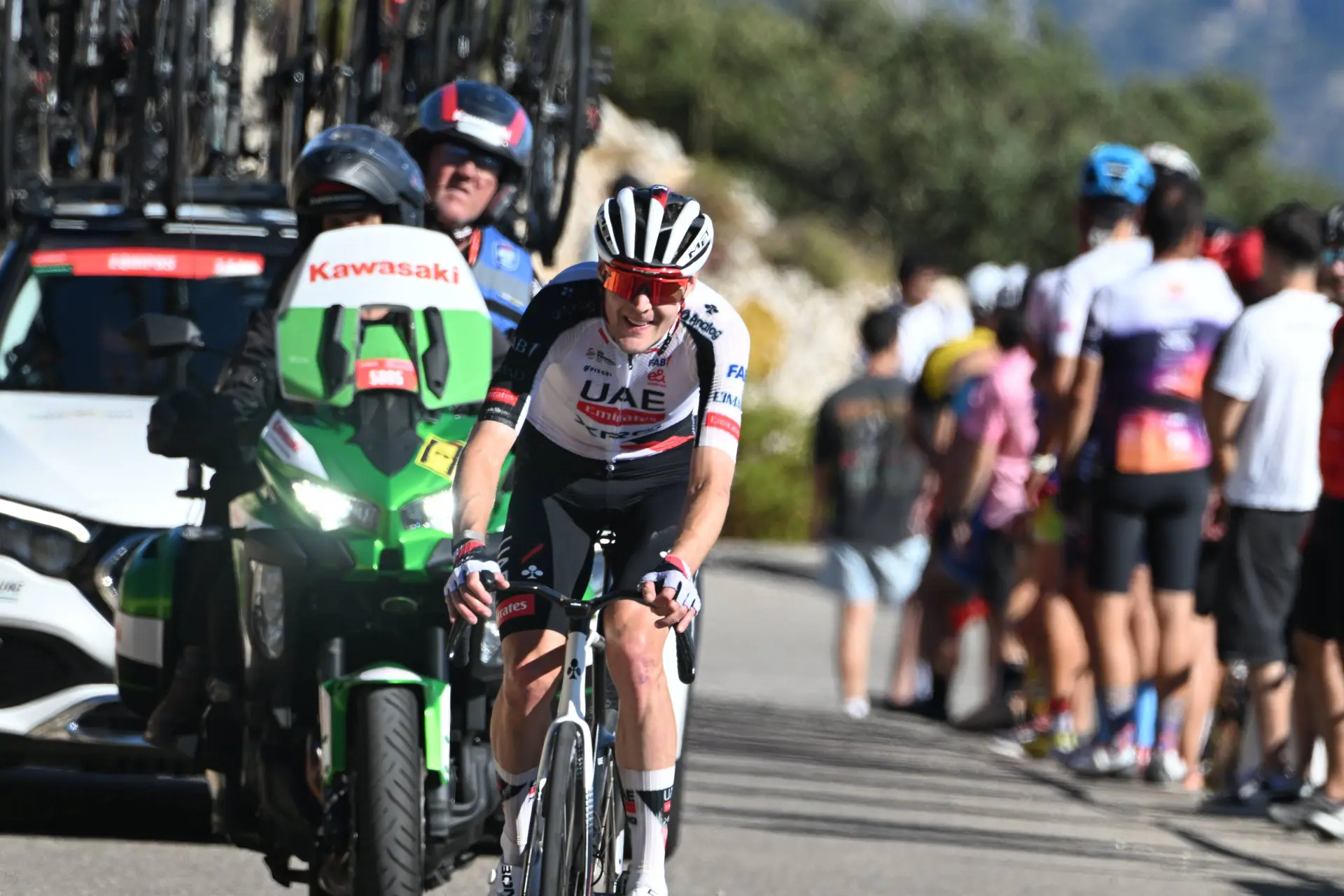
If Mas was one of the big positive takeaways from the analysis, Decathlon were singled out as one of the day’s major tactical losers. The French team hit the final climb with numbers and chose to harden the race from far out, considerably shrinking the group.
Bruyneel felt Decathlon “overcooked it” and played their cards too early. In his view, the team should have kept four or five riders with Felix Gall for longer and saved their leader’s attack for the final kilometres.
“I think they set too fast a pace too soon. They should have forgotten about the stage,” Bruyneel explained. His ideal strategy would have been to keep a hard tempo while preserving domestiques to protect Gall and allow him to attack much later.
The problem, according to both analysts, was that Gall ended up isolated too early. The Austrian attacked with seven kilometres to go, but failed to open a significant gap and later had to respond to his rivals’ moves. For Bruyneel, it was a misread given how tight the general classification is right now.
The stage’s brutality made that approach even more striking. The day amassed around 5,200 metres of climbing and, despite that, the gap between first and ninth was only 54 seconds. The top four finished within just 18 seconds.
Roglic, the threat still lurking
Although Primoz Roglic ceded time to Enric Mas, both Bruyneel and Martin still see him as a major threat to the Movistar leader. The Slovenian finished third on Aitana, 12 seconds behind the winner, but remains close to the top and holds a crucial card: the week-three time trial.
Bruyneel was blunt: “He’s the trap that’s sleeping.” The Belgian believes Roglic is biding his time and should not be written off despite not yet showing his best version.
Martin also recalled that Roglic arrived at La Vuelta after a tricky build-up and could be using the race to steadily regain top form. Hence, The Move’s analysis suggests the Slovenian could become Mas’s main danger as the race progresses.
The current gap does, however, force Roglic to start clawing back time before the final time trial. According to Martin’s analysis, if the race reached the last individual effort with today’s differences, Roglic would hold a significant potential advantage over Mas, but not enough to rely solely on the time trial.

Primoz Roglic, La Vuelta star
A completely different Vuelta without Pogacar
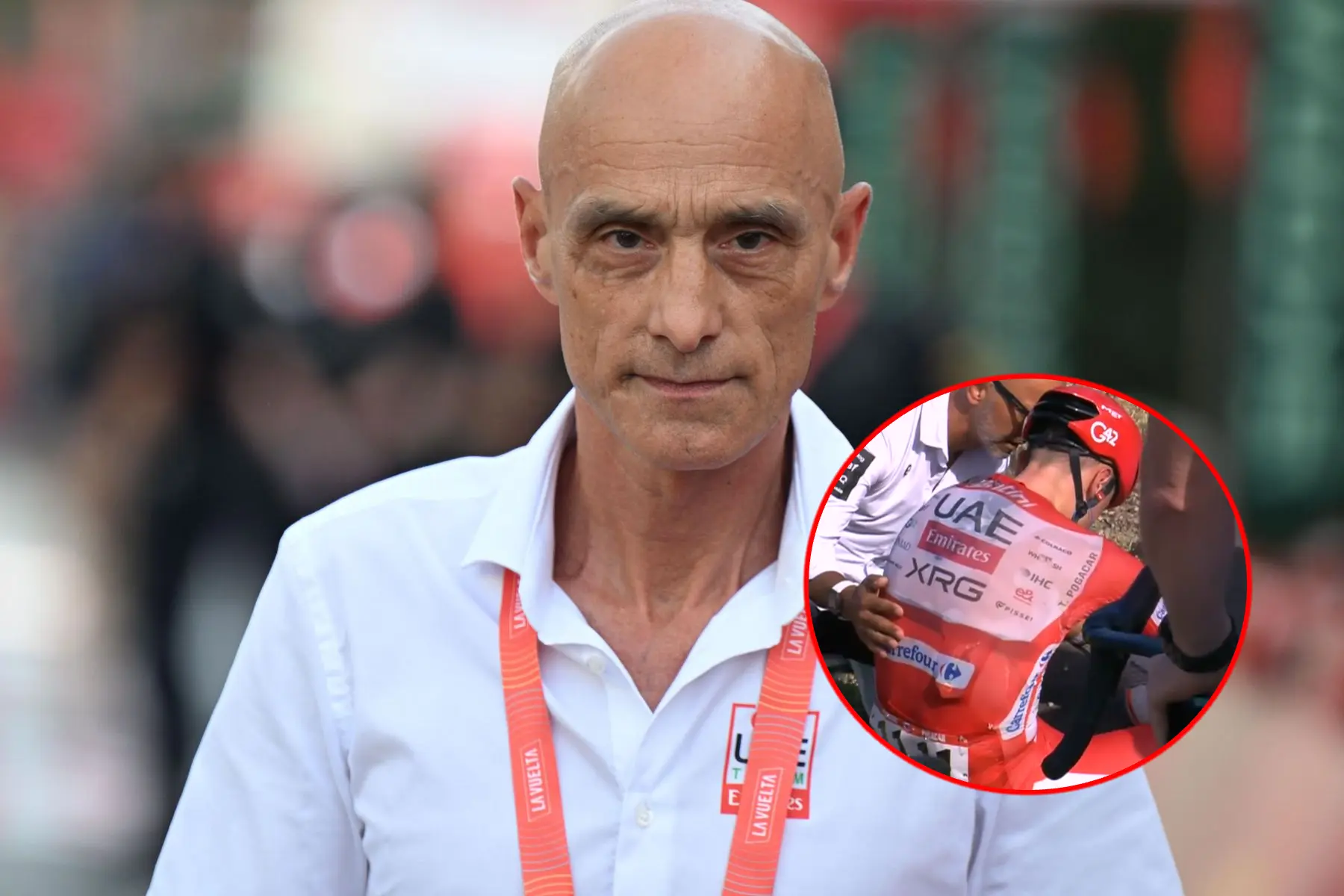
The crash and subsequent withdrawal of Tadej Pogacar has radically reshaped La Vuelta. Bruyneel believes that without the race’s dominant rider, breakaways will have a much better chance of making it to the line, even on mountain stages.
Bruyneel himself was pessimistic about the Slovenian’s return this season. In his view, with a C7 fracture and a concussion, the sensible approach would be for Pogacar to take the time he needs to recover and not rush back.
Read also
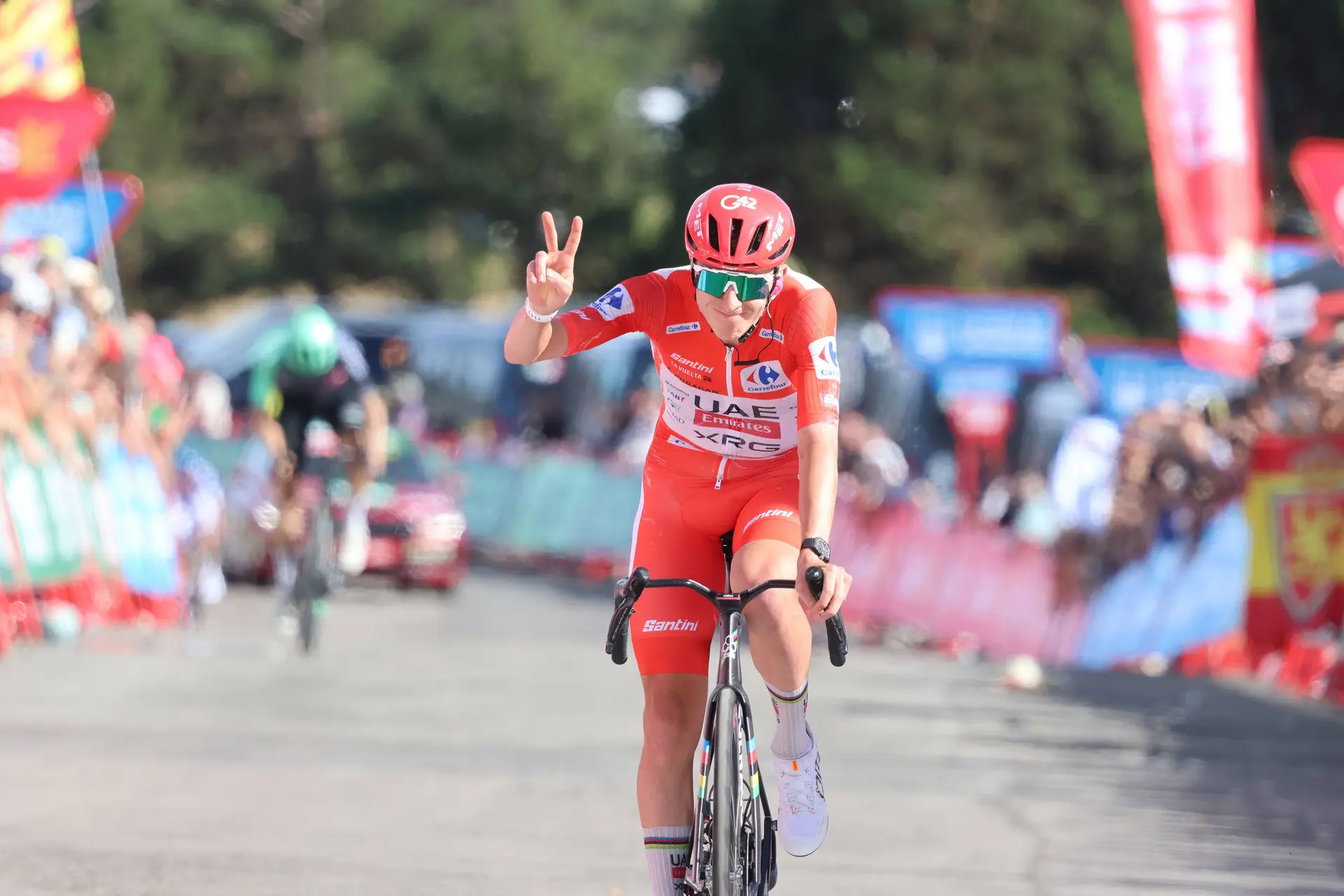
Martin, for his part, admitted it is especially tough to see a rider performing at an exceptional level sidelined. His absence, however, completely opens up the fight for the major late-season targets and, above all, leaves La Vuelta in the hands of a new generation of protagonists.
And at the center of it all now stands Enric Mas. What began as a lead inherited after Pogacar’s crash has become, after his Aitana exhibition, a real bid. As Bruyneel summed up, Mas has shown he not only wears the red jersey: he can defend it.
Juan LarraCycling Journalist
Juan Larra is a writer for Cyclinguptodate and editor-in-chief of Ciclismoaldia, where he has played a central role since its inception. Under his leadership, the website has become a trusted source for professional cycling coverage, offering in-depth analysis, news, and feature stories.
A sports journalist with over 20 years of experience, Juan earned his degree in Journalism from the University of Seville in 2007. He began his career covering a wide range of sports—including football, basketball, Formula 1, MotoGP, tennis, and cycling—for platforms such as the official La Liga app, Vodafone and Movistar websites, NBA Blogdebasket, and Cadena Cope, honing his skills in writing and editorial management.
In addition to his work at Ciclismoaldia, Juan contributes to Cyclinguptodate and serves as editor-in-chief for the tennis-focused site Tenisaldia. Throughout his career, he has conducted exclusive interviews with cyclists and sports figures, provided detailed analysis of competitions ranging from local Spanish races to major international events, and acted as a special correspondent at prestigious races including Paris-Roubaix, the Tour de France, and the Vuelta a España.
Juan’s combination of experience, expertise, and direct access to athletes has established him—and the platforms he leads—as authoritative voices in professional cycling.
claps 0visitors 0
Just in
Popular news
Latest comments
- That is what is called "dreaming". "The victory was quite close"abstractengineer10-10-2026
- Remco wins!
 DareDevil10-10-2026
 - I wonder if this had anything to do with the controversial finish at the Euros and Ciccone's Instagram post which followed?Cooldude10-10-2026
- I love to see him start in Down Under. Spices up the startlist!!DareDevil10-10-2026
- exactly! He does nothing the rest of the year!frieders309-10-2026
- what I don't understand is how do we know the photo --Line of pixel capture, is actually lined up with the finish line on the road? in this case even a couple inches either way could have made for the difference.jad2909-10-2026
- Yes, question is, why is Ineos so easy to convince ?Mistermaumau09-10-2026
- Or maybe they’ll just abandon the sport and focus on RE, unless they can revive MU. Maybe it’s all just about budget adjustments in preparation for takeover by the new sponsor who might have no use for some people in their idea of a projectMistermaumau09-10-2026
- Sounds like management did their job pretty well then ;-)Mistermaumau09-10-2026
- Tour down under awaits... and nothing beyond that
 Rafionain-Glas09-10-2026
Loading
Write a comment