“It’s not a situation he’s really used to” - Questions raised over whether inexperience cost Tadej Pogacar at Paris-Roubaix
Cycling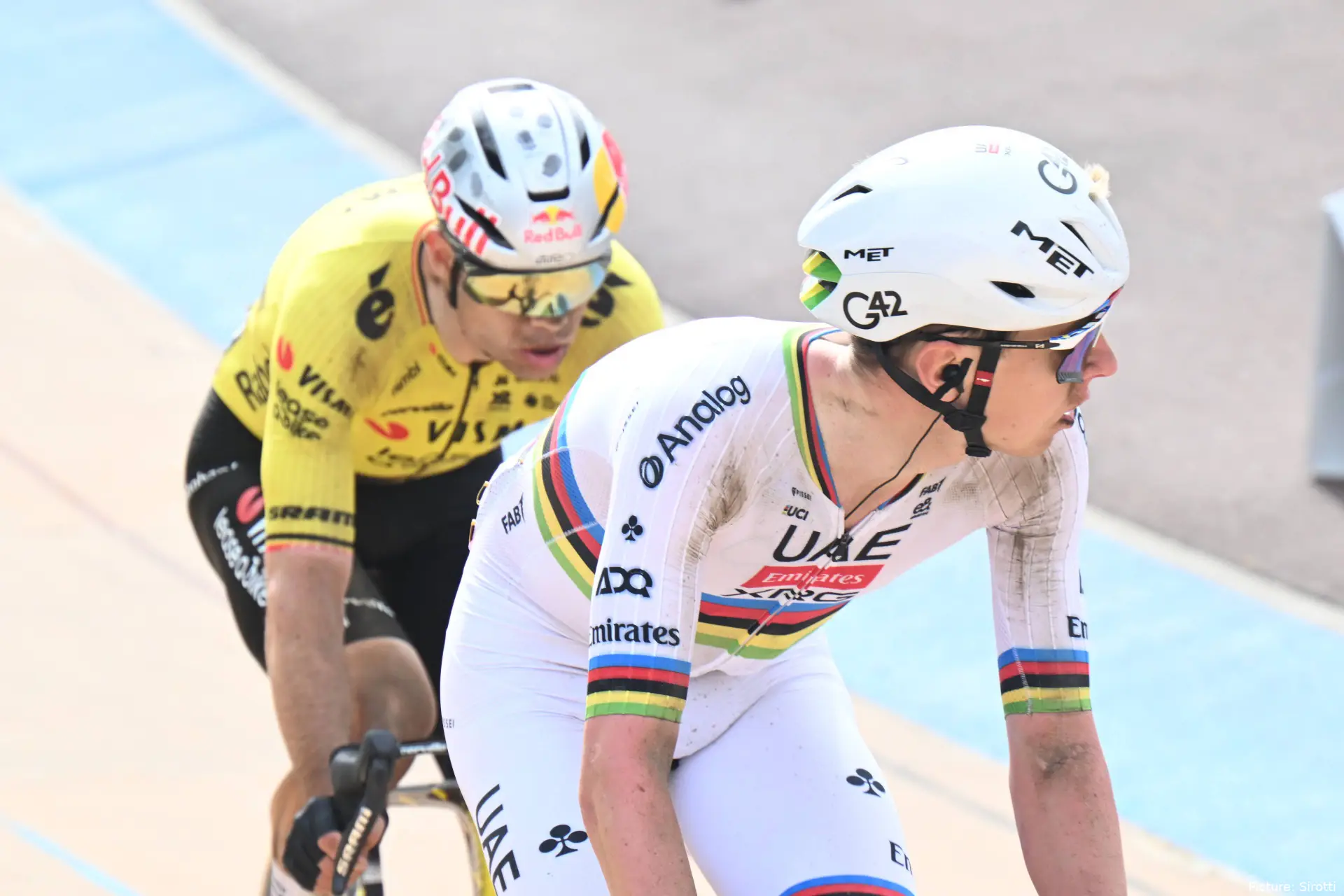
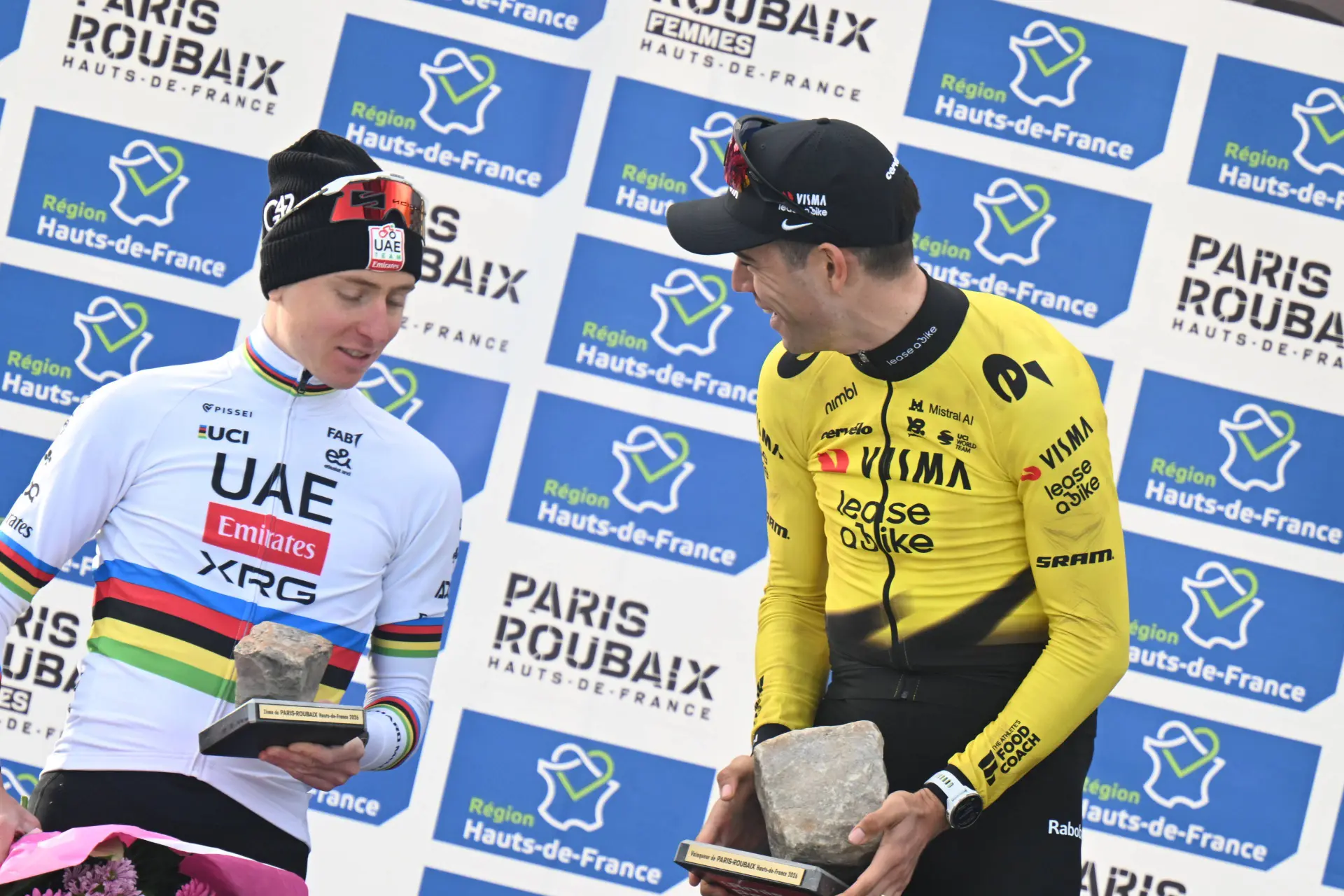
Tadej Pogacar left Paris-Roubaix 2026 with another second place, another reminder that he can win the Hell of the North one day, and another debate over what actually cost him this time.
The Slovenian was strong enough to fight for victory again. That much is beyond doubt. But in the aftermath, some of the discussion has shifted away from legs and towards detail, specifically whether a lack of Roubaix-specific experience showed itself at the key moments against Wout van Aert.
That was the line taken on the Live Slow, Ride Fast podcast, where Laurens ten Dam and Thomas Dekker picked apart both Pogacar’s riding on the cobbles and the way he handled the sprint in the velodrome.
Small details, big consequences
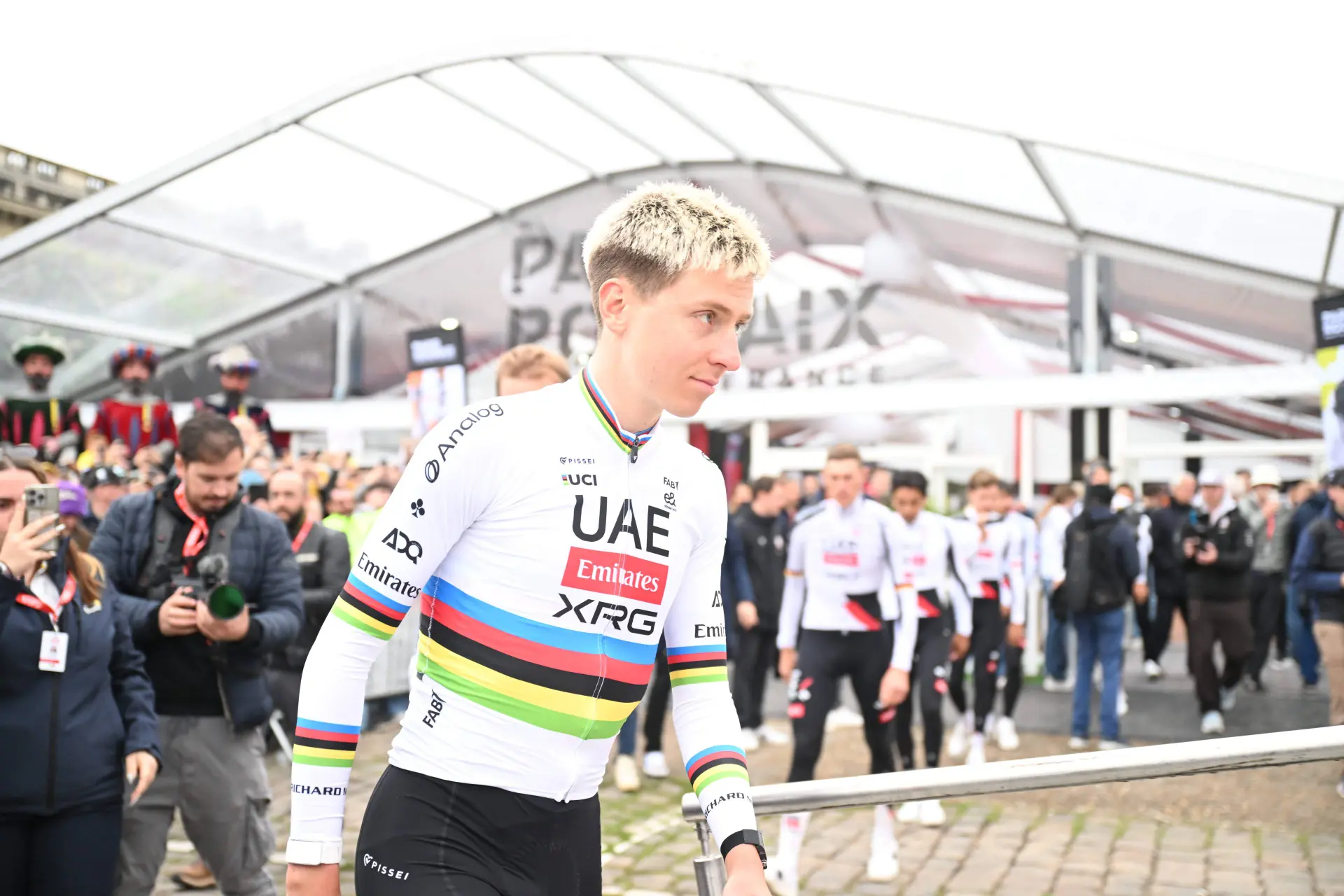
The criticism did not begin with the sprint. Ten Dam pointed to Carrefour de l’Arbre, where he felt Pogacar was already showing signs of awkwardness in the corners. “He rode very strange corners. He went through them with his legs level, his outside pedal wasn’t down,” he said, before adding the telling follow-up: “I said it, and one corner later he slipped.”
That does not mean Pogacar rode a bad race. Far from it. But Paris-Roubaix has a way of magnifying the smallest technical details, especially late on, when fatigue sharpens every mistake.
For a rider still relatively new to the race, that matters. Carrefour de l’Arbre is not just another section of road. It is one of the places where instinct, repetition and absolute familiarity can make the difference between carrying speed and losing control of the situation.
The feeling that Van Aert had the upper hand
Ten Dam’s reading of the finale went further than pure technique. “It also looked like Wout had the upper hand mentally during the finale. In the sprint as well,” he said, suggesting Van Aert seemed more in command once the race boiled down to the final head-to-head.
That is a significant point, because the closing kilometres did not just become a test of strength. They became a test of calm, positioning and judgement under pressure after more than 250 kilometres of chaos.
Ten Dam’s view was that Pogacar allowed that balance to tilt the wrong way. “If your opponent is at the bottom, you have to keep him there,” he said. “And Pogi lets Wout launch first. He could have done it differently.”
In other words, the issue was not simply that Van Aert sprinted faster. It was that Pogacar may have helped create the conditions for Van Aert to win.

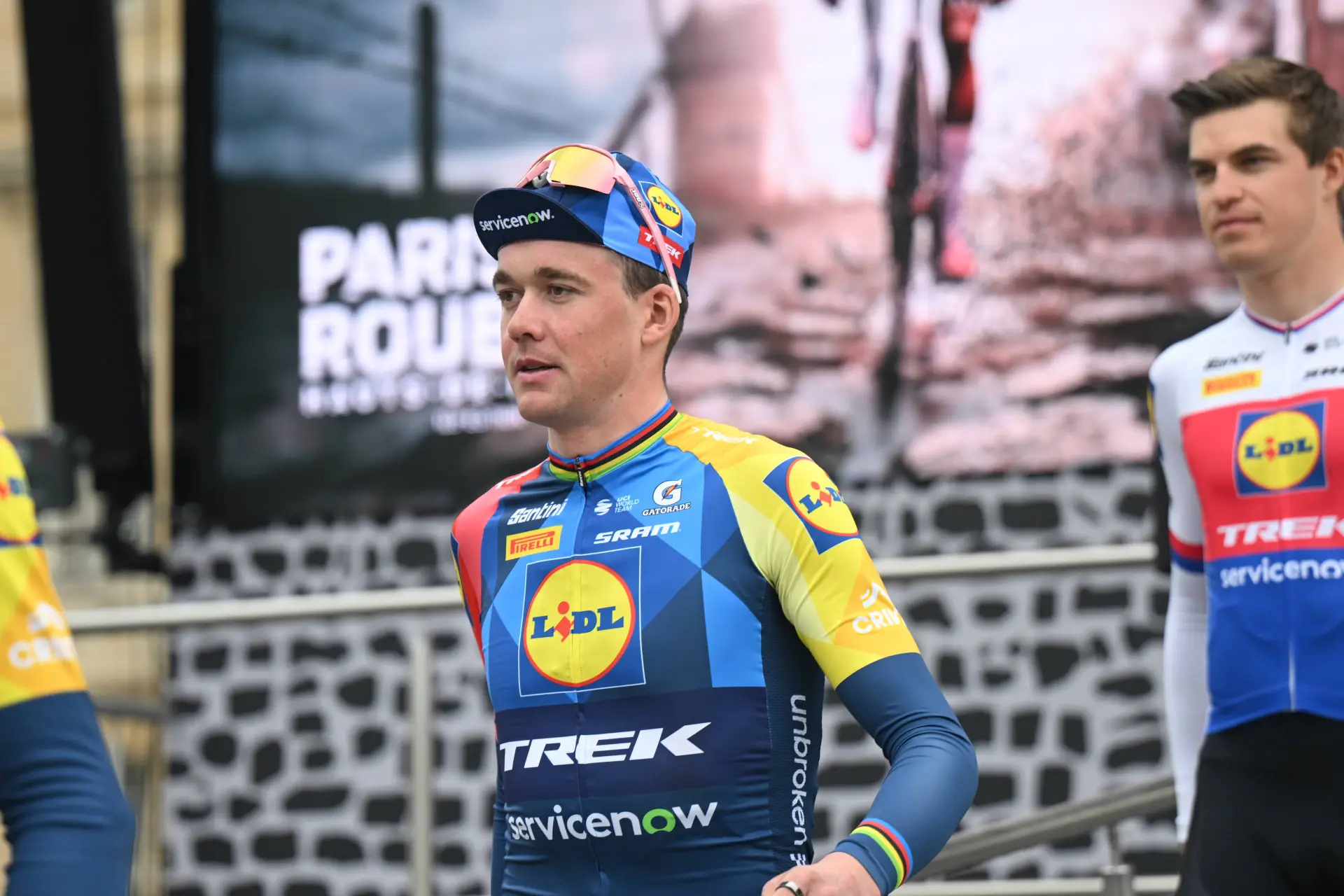
Tadej Pogacar at the 2026 Paris-Roubaix
“He basically brings Van Aert to the finish”
Dekker was even more direct in his criticism of the sprint itself. “At the beginning, he did well by riding high, but in the end, he just didn’t ride the sprint properly,” he said.
The key, in Dekker’s eyes, was that Pogacar failed to fully use the positional advantage he had built. “He should have slowed it down, because Van Aert was on the wrong side of his wheel,” he explained. “Wout was at the bottom, and you can’t come through underneath. He had to go around.”
Instead of making that disadvantage count, Pogacar allowed the sprint to develop in a way that played into Van Aert’s hands. “In the end, he basically brings Van Aert to the finish.”
That is a brutal assessment, but it gets to the heart of the argument. In a normal road sprint, Pogacar’s instincts are often enough to improvise a solution. In Roubaix, after that kind of race, in a velodrome, against a rider like Van Aert, instinct alone may not be enough.
A race situation he does not often face
That is where the experience angle comes in. Dekker did not argue that Pogacar lacks class, nor that he was obviously the weaker rider. His point was narrower and more interesting. “He really could have ridden the sprint differently,” he said. “I think Wout would probably still have won, but he didn’t try to make him nervous.”
Then came the line that says most about how they viewed the finish. “The start was good, but that final lap just wasn’t. Then again, it’s not a situation he’s really used to.”
That feels like the fairest way of framing it. Pogacar is used to deciding races through pressure, attacks and repeated accelerations. He is used to forcing others into mistakes. What he is far less used to is arriving at the end of Paris-Roubaix with a specialist still beside him, then having to solve a tactical velodrome sprint in real time. That is not weakness. It is specificity.
Not a limitation, but a lesson
There is a temptation after every Pogacar defeat to ask whether somebody has found the answer to him. Paris-Roubaix does not quite support that kind of conclusion. He still came second. He still matched the best riders in the race. He still did it in only his second appearance in one of the sport’s most specialised Monuments.
What this analysis really points to is not a fatal flaw, but the final layer of mastery Roubaix demands. Technique in the corners. Authority in positioning. Control in the sprint. Tiny things, but in this race, tiny things are often everything.
Pogacar did not lose Paris-Roubaix 2026 because he was not strong enough. If Ten Dam and Dekker are right, he lost it because, in the decisive moments, he was still learning how to win it.

Kieran WoodDeputy Editor-in-Chief
Kieran Wood is a sports journalist based in Wales and has been active in journalism since 2022. He regularly contributes to DartsNews.com and CyclingUpToDate.com, where he covers professional cycling and darts. In cycling, his work includes liveblogs from major races, including the Tour de France, the Giro d’Italia, and La Vuelta a España, alongside race reports and analysis. He has also conducted interviews with professional riders.
His reporting spans the full racing calendar, from one-day classics to stage races, with a focus on accurate, real-time coverage and clear contextual analysis. For statistics, results, and historical context, he regularly uses resources such as ProCyclingStats. To support reporting on rider activity and training context where relevant, he also references Strava.
In his work, Kieran places strong emphasis on careful sourcing, editorial accuracy, and updating articles as new, verified information becomes available.
claps 2visitors 2
Just in
Popular news
Latest comments
- well he is in the wrong team then why comment and basically says im no.2 and will have to wait to be No.1 when he could have a team built around him. but then maybe he gets things from UAE . this is the rider trek should have targeted instead of ayuso.
 Davide25-11-2026
- A classic career from the doping era, basically. He may have had the engine from his track days, but the sudden rise and the ongoing fade and fall-off look like so many results from so many people across so many sports in that era.RidesHills25-11-2026
- This makes sense, and shows maturity and patience. They are separated by 5 years in age, basically. When he's 27 and Pogačar is 32, they will have had plenty of time for a gracious handing over of the leadership in many races, and the already phenomenal del Toro will be in a place to lead. Until then, he rides for his leader, when appropriate, and that's one of the reasons this is a team sport, not a solo sport.RidesHills25-11-2026
- They were all doping hard, not just him. Bugno, Chiapucci, Induráin... they were not GC riders to start with. Bugno and Ullrich were much younger so it is harder to tell whether they were naturally climbers
 Rafionain-Glas25-11-2026
- He's got quite the sprint, I would not rule him outRafionain-Glas25-11-2026
- Watch Fleche Wallone where all 3 riders from Gewis get 1 2 3 lolpaultryan200225-11-2026
- I wish Primož all the best, after all he's my compatriot, like Pogi. But I don't see him winning races where the best cyclists will show up: Pogi, Remco, Del Toro, Seixas, Jonas, Lipowitz, etc. etc. I just hope Primož will be satisfied and happy with the races he wins. That's all that counts.PogiSloFans25-11-2026
- Andy Gosler is using philosophy and rhetoric against Dawkins book-The Selfish Gene, which is the skill of using language effectively and persuasively to influence and motivate his delusional followers. He's a so-called intellectual BS'ter!!!PogiSloFans25-11-2026
- Hey @flyer, to stop rationalizing your bad behavior, you have to stop your excuses in real time, realize the uncomfortable emotions underneath it, and take direct responsibility without shifting blame. And throw your gun away. If your neighbor pisses you off, go and punch him in the face, don't shoot him. Don't act like the every day delusional americans, who can buy firearms in every Walmart store.PogiSloFans25-11-2026
- I'm so used to Roglič being vague and abstract that these concrete answers are a real joy. One thing stands out, especially at the end: he is of the moment, don't dwell too much on the past (what day was that? who cares) and don't make decisions about the future. What matters is this beginning, right now, and what comes next will be decided later. He has always been this way, and I think it has helped him bounce back from the many setbacks he has faced - lose the Tour on a time trial, then win Olympic gold in the time trial, etc. In other words, even if he's not being abstract, this is still a totally classic Roglič interview.RidesHills25-11-2026
Loading
19 Comments