“It’s no longer just Pogacar against Vingegaard" - Analyst breaks down 2027 Tour de France route and names a new rival for Tadej Pogacar
Cycling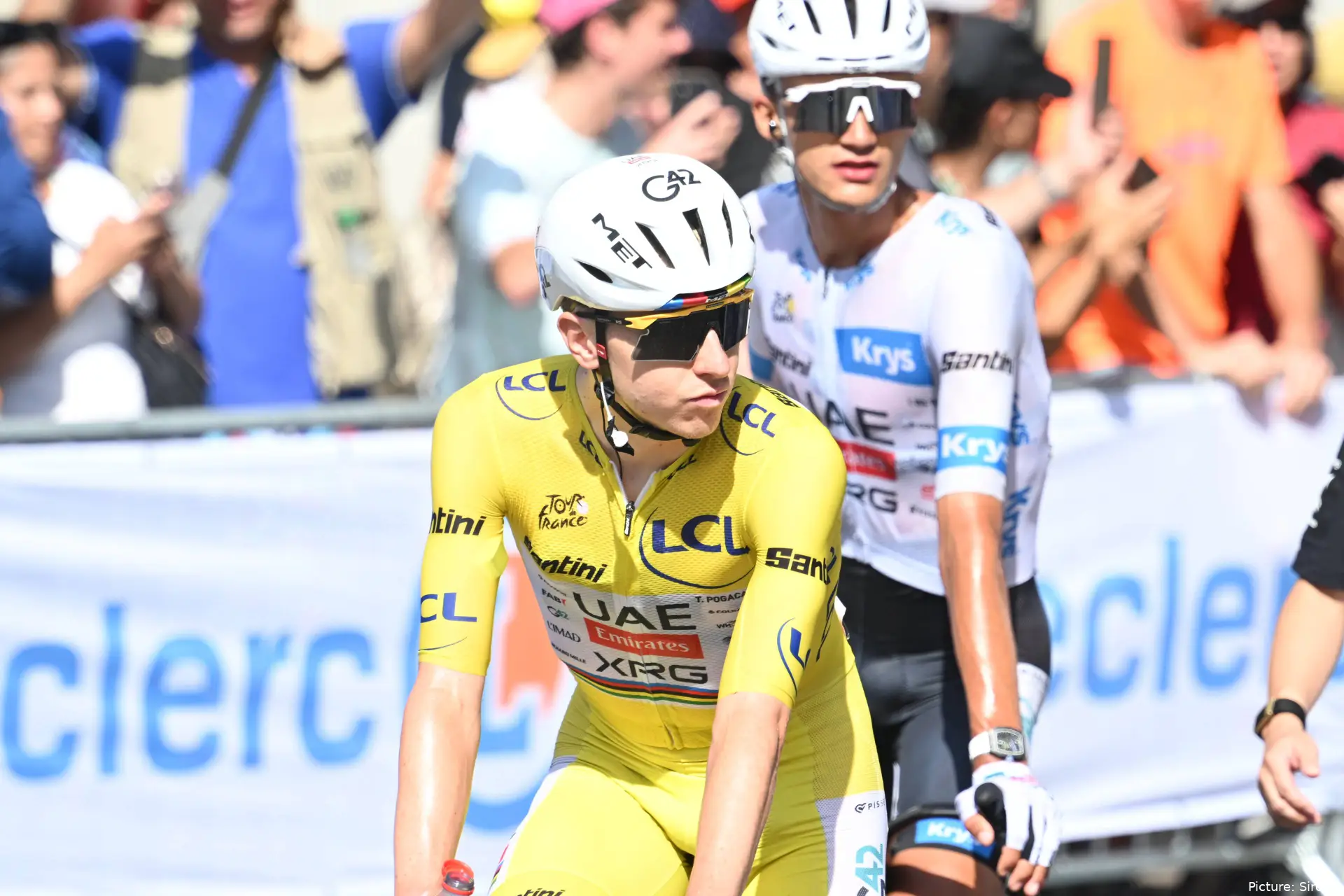
Javier Ares analysed the 2027 Tour de France route on his YouTube channel. The race will start in Great Britain and feature 21 stages, six mountain days and two time trials covering a total of 71 kilometres.
The journalist described the course as traditional, while pointing to several factors that could shape the battle for the general classification. “It is a fairly traditional route, though you can identify certain shortcomings or details that might favour one rider over another,” he explained.
The British start will carry special significance for a race that begins in Edinburgh and crosses Scotland, England and Wales during its first three stages. Ares used the route presentation to reflect on the rise of British cycling, from its limited representation in the sport’s early decades to Team Sky’s dominance between 2012 and 2018. Bradley Wiggins, Chris Froome and Geraint Thomas all won the Tour during that period. “What was almost a whim 20 years ago has now become almost a necessity,” he said of the start on British soil.
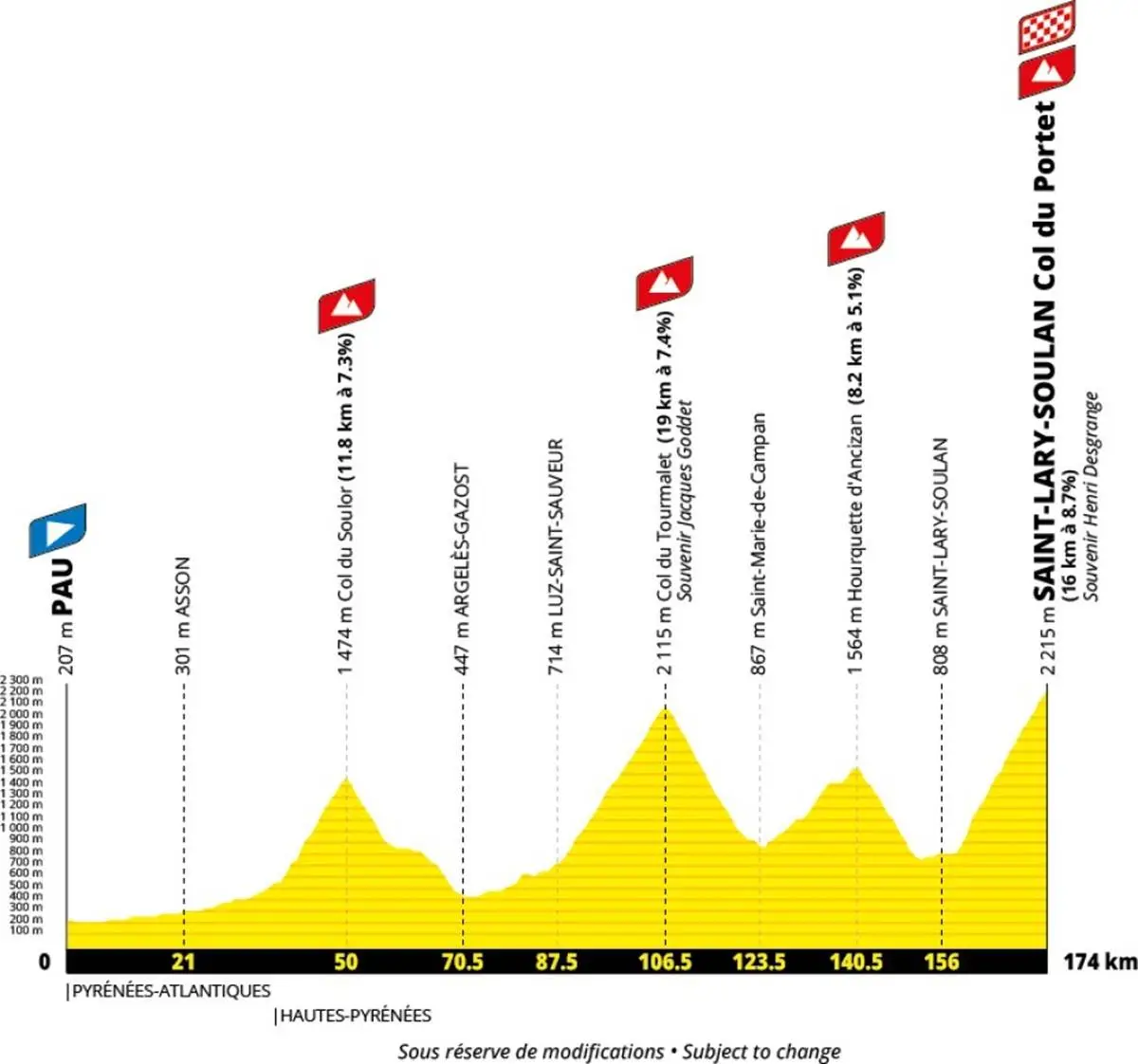
The route will offer opportunities for sprinters and time-trial specialists, but above all for climbers targeting the general classification. The Alps and Pyrenees will provide much of the difficulty, with demanding stages and iconic climbs that could prove decisive in the third week.
However, Ares stressed that the route profile is not everything and that the riders’ approach will be crucial. “A lot will depend on the riders’ conduct and attitude in the race. They can make a stage harder or easier, and more or less significant,” he said.
A lot will depend on the riders’ conduct
The contenders also featured in his analysis. Tadej Pogacar will start as the leading favourite as he targets a sixth Tour victory, but the journalist believes the list of candidates could include Jonas Vingegaard, Remco Evenepoel and young Frenchman Paul Seixas.
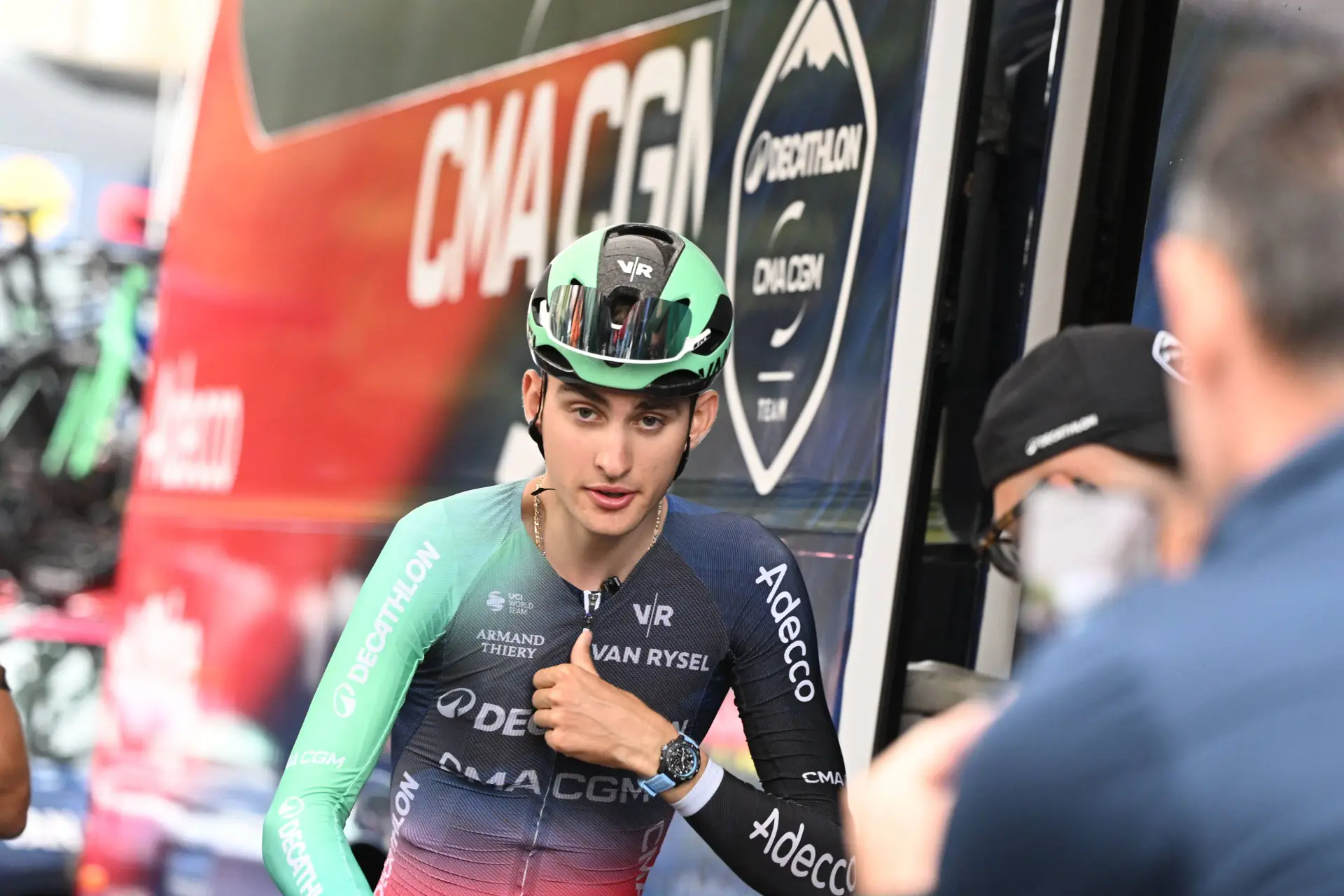
Ares also discussed Isaac del Toro’s role, with any potential participation depending on the team’s plans alongside the Slovenian. “It’s no longer just Pogacar against Vingegaard. Now it’s Pogacar against Vingegaard and Seixas, and we’ll see whether Remco keeps improving,” he said.
Beyond the mountain stages, Ares focused on two areas he believes could still be improved: bonus seconds and the distance of the time trials. The journalist argues that cycling needs fresh incentives to maintain interest during long days of racing and prevent broadcasts from being reduced to the final kilometres. “I still think cycling needs new incentives to make all those kilometres and hours in each stage more engaging,” he said.

Can Paul Seixas challenge Pogacar and Vingegaard?
Bonus seconds and time trials: two major concerns
The planned 71 kilometres of time trials should be enough to create gaps, in his view, though he believes the route could strike a better balance between specialists and climbers. Ares recalled that the long time trials of previous eras excessively penalised certain riders. He advocated a format combining a longer conventional time trial with a mountain time trial. “I’d add a little more incentive. I’d include a mountain time trial, for example. That would help restore the balance,” he suggested.
In Ares’s view, the battle for the yellow jersey is less predictable than in previous seasons. Pogacar remains the clear favourite, but Vingegaard no longer appears to be the only rival capable of challenging him for victory.
The journalist highlighted Paul Seixas’s emergence, particularly after his win in Lombardy, while warning that racing without pressure is not the same as taking on three weeks with the responsibility of trying to beat the Slovenian. “I have very few doubts that the Frenchman is capable of challenging Pogacar at the Tour. I’m not saying he can beat him; that’s a much bigger claim,” he said.
Ares also discussed Isaac del Toro and qualified his assessment of the Mexican’s chances if he lines up alongside Pogacar. The journalist believes the UAE Team Emirates-XRG rider can target major victories, but expects his goals at the French race could take a back seat to those of the Slovenian leader.
“When Del Toro races without Pogacar, he’ll be as much of a favourite as Seixas, if not more,” he said. On the Tour de France Femmes, he praised the race’s growth and highlighted an edition that will also start in Great Britain, with an 18-kilometre team time trial in London and a finish on the Puy de Dôme after nine stages.
Javier RampeCycling Journalist
Javier Rampe is a sports analyst with more than 15 years of experience. He holds a degree in Economics from the University of Rome and a Diploma in Business Studies from the University of Cádiz. Despite coming from an academic background not particularly associated with cycling, his passion for both cycling and journalism was instilled in him from an early age. He grew up following Miguel Indurain and José María “El Chava” Jiménez. An admirer of Michael Robinson’s communication style and journalistic approach, he was inspired to pursue a degree in Journalism at the University of Buenos Aires, which he is currently completing.
He has always maintained close ties with the worlds of sport and culture, contributing from a young age to sports blogs and film and music review websites. His work has appeared in media outlets such as Cope, RAI, and Radio Con Vos. He is also the founder of the cycling-focused podcast El Contraanálisis and the football interview channel Días De Fútbol, dedicated to conversations with professional footballers.
In addition to his work at Ciclismoaldia, Javier has interviewed some of the most influential figures in modern cycling, including Alejandro Valverde and Tadej Pogačar, as well as key voices in anti-doping policy such as Alberto Yelmo, David Varillas, and Marcelo Milano. Marcos Maynar, in relation to the ‘Operación Ílex’ case, is also among the personalities he has interviewed. He enjoys conducting in-depth analysis of the cycling ecosystem and has attended major events such as Strade Bianche, the Vuelta a Andalucía, and Itzulia, as well as numerous national cyclo-cross races.
His background in economics, combined with extensive experience in marketing and corporate communications, drives his continuous study of positioning strategies and ensures that he always keeps his focus on crafting compelling and evocative headlines.
claps 0visitors 0
Just in

Popular news
Latest comments
- Surprised it’s that inexpensive!Lozza25-10-2026
- Nah, I like it here. I like a challenge, against the people who hate me here. Jumping John, you ain't getting rid of me :))PogiSloFans25-10-2026
- Pogi deserves every penny he gets paid... and he's the only cyclist that should be paid more. If he's two classes above everyone else, his salary should also be. Ad acta.PogiSloFans25-10-2026
- It’s not only that, it’s this obsession with running after money, whether it be teams, riders, sponsors, broadcasters. As soon as one player gets ahead, others feel obliged to match their moves with increases for fear of losing out and for fear of someone else following in your place instead without looking at the long-term consequences of blindly following. Other sports ahead (or behind depending on how you look at it) in such matters should serve as a warning but humanity has a habit of heading straight into walls even when the writing is on it. When financial objectives and limits aren’t clear, it’s impossible to manage any organisation, you can’t even recruit the right riders or tell them what is needed to make sure they’re a good fit because you can’t clearly explain what they can expect. Not all riders are motivated by money alone and some of the teams are proof of that.Jumpyjohn25-10-2026
- To be honest, their signings weren't actually too bad. Oscar and Kevin had great 2025 seasons. Most of the top leaders were signed. But Red Bull, Lidl-Trek and Pinarello showed that that's not actually the coast. So team culture is probably the foremost reason. Whether there's a bad sporting culture now is debatable, but certainly there's the past. 2024 was the end of the old Ineos (it was not actually transition, it was slow decline)
 Rafionain-Glas25-10-2026
- FYI. Pogi made his World Tour debut at the TDU in 2019. I remember it well because someone said watch out for Pogi as he did a good time up Corkscrew during training. Who would have thought he'd end up as the GOAT.Santiago25-10-2026
- FYI. Pogi's first World Tour race was at the TDU in 2019. I remember it well because someone said watch out for Pogi as he did a good time up Corkscrew during training. Who would have thought he end up as the GOAT.Santiago25-10-2026
- 50 million isnt low. But if you hire super domestiques for a million and 3rd rung leaders for 3-5 million, natural you dont have money left not the results expected. Most monuments and TDF are out of reach due to Pogi. But there were a promising 2nd rung leaders on the market and they went for broke to get Onley and Kevin. I put their entire troubles due to mismanagementabstractengineer25-10-2026
- I think it’s becoming clear that cycling got way ahead of itself for a few reasons and is now coming to the realisation that some rider salaries just exploded without justification and it snowballed until sponsors started pulling money out because THEY did not see any return on increased costs. Cycling is still a dying sport (that never moved out of the niche family) and will remain so if it doesn’t embrace and promote new ventures or manage to attract new markets. Even within cycling, fans are basically compartimentalised, (almost nobody here follows track for example), and the multiplication of possibilities hasn’t grown the sport, it has just split it into a larger number of smaller branches. If it weren’t for nation state sponsors (far too numerous already) other teams would never have (had to resort to) raised bigger budgets that are now leading to sponsor abandonment. That’s the difference between long-term steady growth and financial doping, the latter can also just blow up in your face. I will venture to wager that apart from one or two exceptional cases, rider salaries will no longer go up and are quite likely to actually drop over the next decade.Jumpyjohn25-10-2026
- You know you can post all this on idlprocycling too with your account(s) don’t you? There’s a whole bunch more articles and people there to inform.Jumpyjohn25-10-2026
Loading
Write a comment