“I saw him on the ground when we crashed... next time I saw him was at the finish” – Wout van Aert stunned by Tadej Pogacar’s Milano-Sanremo turnaround
Cycling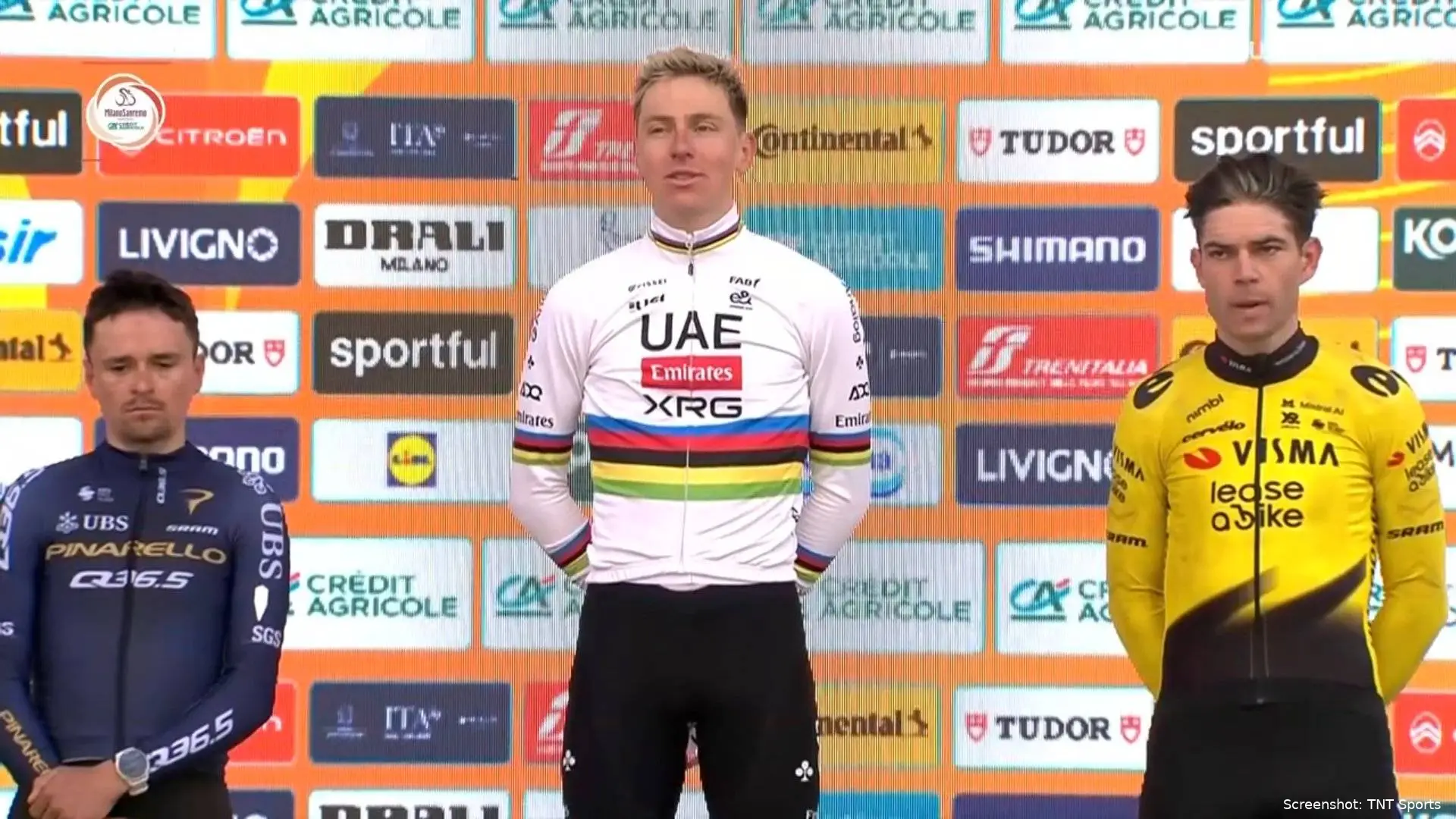
Wout van Aert’s Milano-Sanremo ended with a place on the podium, but his race was shaped by the same moment that defined the entire Monument: the high-speed crash on the approach to the Cipressa.
The Belgian was among several riders brought down in the incident, alongside eventual winner Tadej Pogacar. In a race where timing is everything, the crash forced Van Aert into immediate damage limitation, chasing rather than shaping the decisive phase.
Despite that setback, he still managed to fight his way back into contention and secure a top-three finish.
Yet it was what happened next that left the strongest impression. “I saw him next to me on the ground when we crashed, and the next time I saw him was at the finish,” Van Aert said in conversation with Cycling Pro Net.
Crash turns Van Aert’s race into recovery mission
The incident disrupted not only the rhythm of the race, but also Van Aert’s own ambitions.
Rather than being in a position to respond to the key attacks on the Cipressa and Poggio, he was forced to rely on his team to bring him back into the race. “In the final, I felt like I was racing on the back foot the whole time,” he explained. “Only in the last two or three kilometres did I realise we were still racing for the podium.”
That shift in mindset underlined how much the crash had altered his race. From a contender for victory, Van Aert was suddenly focused on salvaging the best possible result. “The circumstances are what they are, and we still reached the maximum possible. I’m happy with that.”
Podium feels like reward after chaotic finale
Even with that perspective, the result required a significant effort.
After losing ground and spending valuable energy in the chase, Van Aert still had enough left to contest the podium places from the reduced group behind the leaders. “It never feels like a win when you finish third,” he said. “But it was very unfortunate. First, the crash, and then it took quite a long time before I could continue on a new bike.”
That delay proved costly in a race where seconds can decide everything. “The team did a great job staying with me and bringing me back. The only thing I could do was try to go for the best result possible.”

Pogacar’s recovery leaves rivals searching for answers
While Van Aert was fighting to recover, Pogacar was rewriting the race at the front.
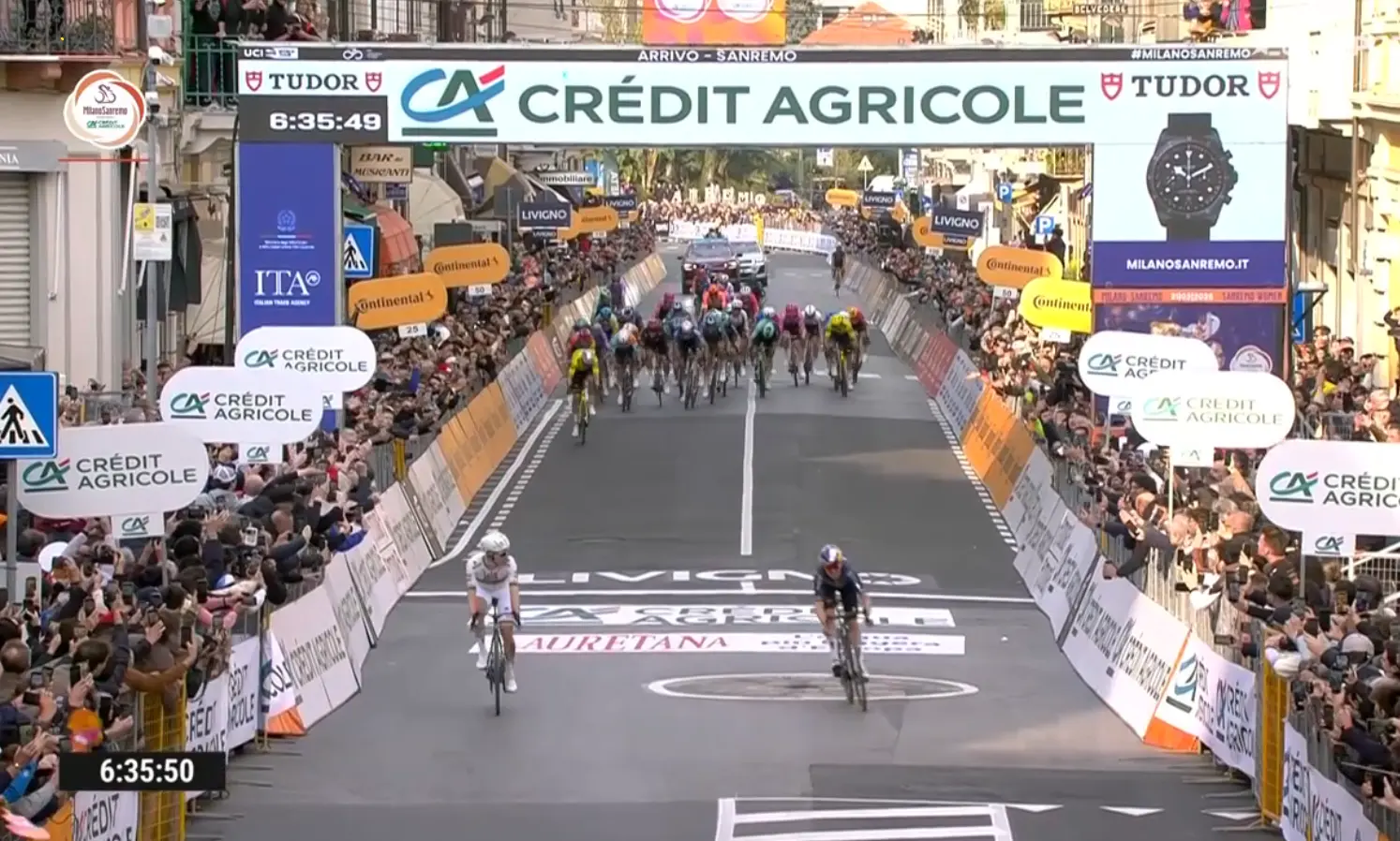
After also hitting the deck in the same crash, the Slovenian managed to return to the peloton, attack on the Cipressa and Poggio, and ultimately win the race in a photo finish against Tom Pidcock.
For Van Aert, the scale of that comeback was difficult to process in real time. “I have no idea what he did in between, but it must have been impressive,” he said. “It was quite a hard crash, and the fact that he still managed to get to the front like that is strong.”
The contrast between their races highlighted just how decisive that moment had been. Both riders hit the ground, but only one was able to turn that setback into victory.

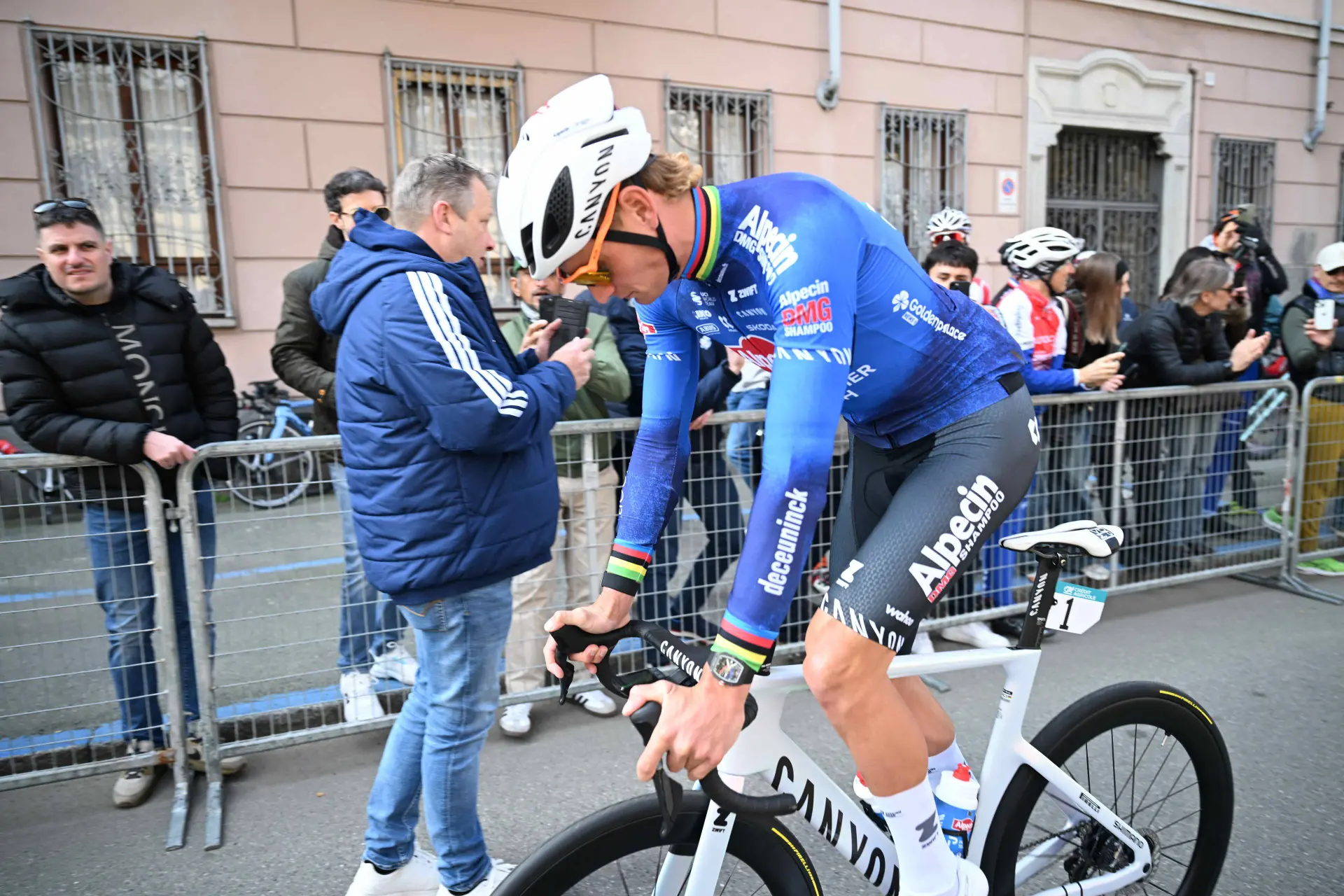
Wout van Aert finished 3rd at Milano-Sanremo 2026
Positives remain despite missed opportunity
Despite the circumstances, Van Aert was able to take encouragement from his performance. “I think the confidence was already good coming into this race,” he said. “I take a lot of positives from my performance, and it’s nice that the next races are coming soon.”
Milano-Sanremo may not have delivered the result he was aiming for, but his ride showed that his condition is where it needs to be ahead of the rest of the spring. Still, the defining image of his race remains that moment on the road before the Cipressa.
From lying alongside Pogacar after the crash to watching him stand on the top step of the podium, Van Aert experienced both sides of a Monument that can turn in an instant.
Kieran WoodDeputy Editor-in-Chief
Kieran Wood is a sports journalist based in Wales and has been active in journalism since 2022. He regularly contributes to DartsNews.com and CyclingUpToDate.com, where he covers professional cycling and darts. In cycling, his work includes liveblogs from major races, including the Tour de France, the Giro d’Italia, and La Vuelta a España, alongside race reports and analysis. He has also conducted interviews with professional riders.
His reporting spans the full racing calendar, from one-day classics to stage races, with a focus on accurate, real-time coverage and clear contextual analysis. For statistics, results, and historical context, he regularly uses resources such as ProCyclingStats. To support reporting on rider activity and training context where relevant, he also references Strava.
In his work, Kieran places strong emphasis on careful sourcing, editorial accuracy, and updating articles as new, verified information becomes available.
claps 18visitors 14
Just in

Popular news
Latest comments
- writing about yourself in third person ... please, at least have someone else from your staff author these self-coverage articles!Ketterechts25-11-2026
- Don’t forget Yates’s podium at 2023 TdF!Lozza25-11-2026
- It was stage 14 to Morzine that Carlos Rodriguez won in 2023, not Puy de Dome. And Kwiato actually won the previous stage himself to Grand Colombier!Lozza25-11-2026
- Go Pogi!! 🐐❤️Lozza25-11-2026
- They didn’t have or need “extraordinary information”. All they needed was for a French judge to sign off on the night-time testing for it to go ahead.Lozza25-11-2026
- If the sponsors voted for Primoz then you get him, otherwise not.flyer25-11-2026
- It sure can feel or seem that way but I wonder if the same amount of prodigious performances (compared to the others) would occur if no one was ever doping at all.flyer25-11-2026
- Given the similarity of two articles (published on I think the same date), I'm reusing (copy-n-pasting) my post from the twin: I've always thought the last day of each of the grand tours was problematic mostly in that the GC is considered completed before the race starts when that is not really true. There is some tension, but not desirable tension. What saves the awkward practice is the race finish is legit for those who participate - so it's not wholly different from the other stages. That neutralizations usually make good sense demonstrates their necessity so if that has to be the way to go I agree that the design plan for the neutralization should be completed before the race starts. This years end stage in the Vuelta had one of the best first half's I've seen in that many of the riders looked to be thoroughly enjoying themselves making it a joy to watch. But I think it was slightly closer to the exception rather than the rule.flyer25-11-2026
- Even I often win without being there at all, not even breaking a sweat. Beat that!flyer25-11-2026
- It is not about rest and peaking again - 5 weeks is not enough for that. It is about recovery while maintaining form. 4 weeks is easier for that. With a Giro-Vuelta, the 12 week break is enough to rest and then peak again. Not for the Tour
 Rafionain-Glas25-11-2026
Loading
6 Comments