“I don’t buy it” – Adam Blythe senses first crack in Tadej Pogacar’s Vuelta armour despite third win in six stages
Cycling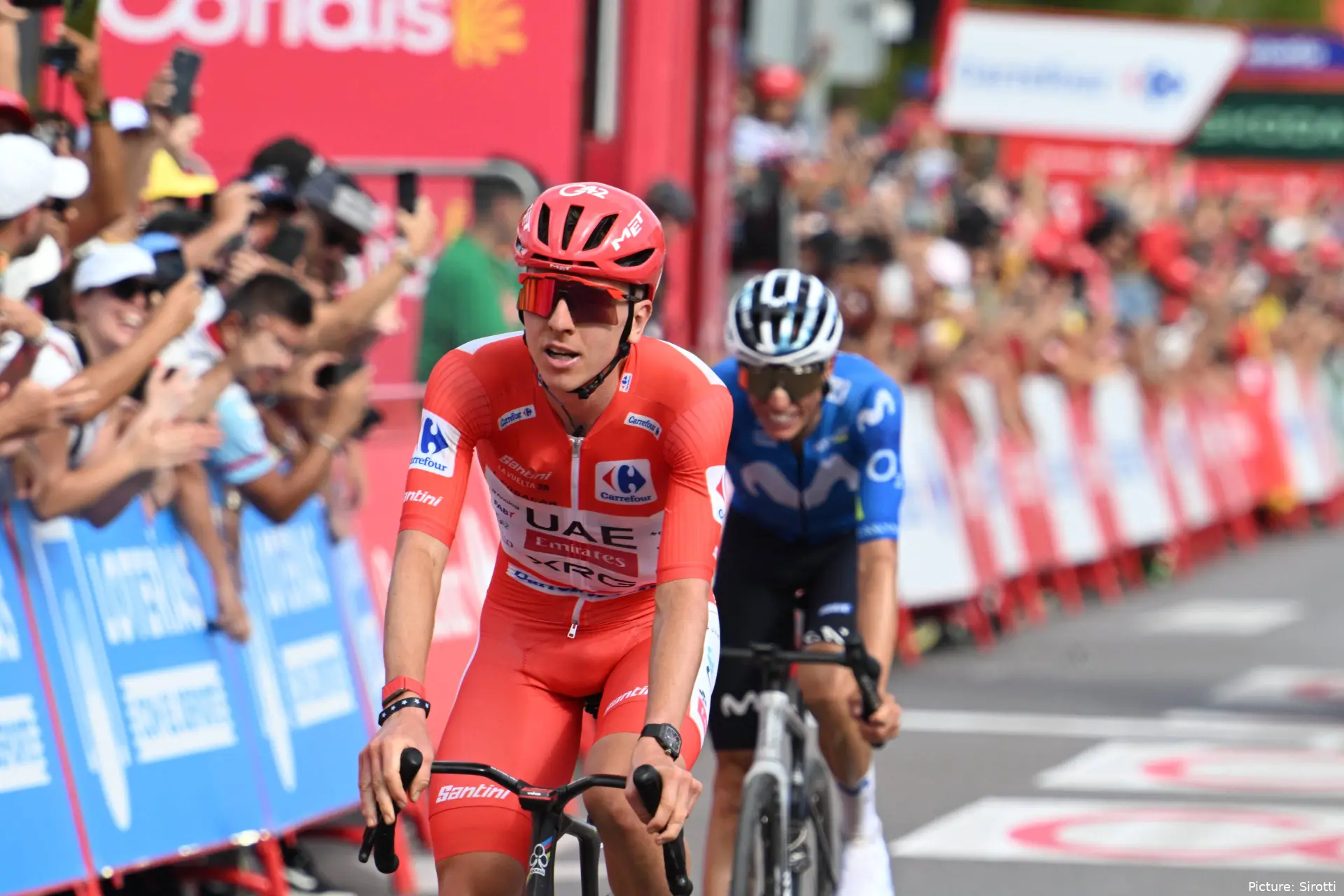
Tadej Pogacar won Stage 6 of the 2026 Vuelta a Espana, extended his advantage in the red jersey and completed a hat-trick of victories from the opening six days. The manner in which he reached Castellon de la Plana nevertheless created the first serious debate over whether the world champion had shown any vulnerability.
UAE Team Emirates – XRG controlled much of the stage before Pogacar attacked on the steep approach to the gravel sector of El Bartolo. Oscar Onley briefly followed before being dropped, while Primoz Roglic, Felix Gall and Richard Carapaz were also unable to contain the Slovenian’s acceleration.
Pogacar believed he had opened a lead of approximately 40 seconds, only for Enric Mas to close the gap and pass him immediately before the summit. The surprised race leader then followed the Spaniard into the descent, where Pogacar ran off the road after carrying too much speed into a corner but narrowly avoided crashing. The pair subsequently worked together before Pogacar comfortably defeated Mas in the sprint.
A third victory appeared to provide another demonstration of Pogacar’s control, but former British champion Adam Blythe and ex-professional Matt Stephens reached sharply different conclusions during TNT Sports’ post-stage coverage. Blythe saw evidence of a rare bad day, while Stephens believed incorrect radio information had persuaded Pogacar to ride within himself.
“He might have just been on a bad day”
Blythe rejected the suggestion that Pogacar had deliberately settled into a controlled rhythm once his initial attack had distanced the other general classification contenders.
“He’s not going to come out and say: ‘Well, I was really struggling,’” Blythe said on The Breakaway. “When Tadej attacks, he’s not going to just ride at a steady tempo. He’ll build, build, build, build, build time, and he always has done. Every single attack, he’s gone to get time on all his rivals. He’s not just going to go: ‘Okay, 40 seconds, I’ll leave it at that.’”
Pogacar said after the stage that he had been surprised when Mas came past “like a rocket” because the Movistar rider had not been mentioned over the radio. Blythe accepted that the incorrect time gap affected how Pogacar approached the climb but did not believe it completely explained why Mas caught him.
“He might have just been on a bad day,” he said. “I don’t buy into the idea that he wasn’t on a bad day. I don’t think he was riding at his limit, but he was riding at a pace where he thought he was getting away rather than being caught.”
Es real. Está pasando.
— Eurosport.es (@Eurosport_ES) August 27, 2026
❤️🔥 Enric Mas coge a Tadej Pogacar, ataca y se lleva la bonificación. #LaVuelta26 #LaCasadelCiclismo pic.twitter.com/RErycxY76w
UAE had spent much of the stage chasing the breakaway before Joao Almeida, Kevin Vervaeke, Pavel Sivakov, Jay Vine and Pablo Torres prepared Pogacar’s attack. Blythe viewed that commitment, along with Pogacar later revealing that he had run out of water, as further evidence that the stage had not unfolded according to a conservative plan.
“I don’t buy it,” Blythe continued. “No. 1, if he wants to make it easy, why go on the attack? No. 2, he referenced no water. But if he wants to save energy, just ride with the rest of them. Just follow the attacks, going with them. There are a lot more opportunities. I think one of the main things why I do believe he wasn’t on a good day is his team rode all day. Whenever Tadej’s team rides and commits to something like that, he has to deliver for them. Has to deliver, will always deliver.”
Pogacar did deliver the victory, but Mas becoming the first rider to close one of his decisive Vuelta attacks offered Blythe reason to question whether the red jersey had enjoyed his customary superiority.
“He rode today as though he wanted to win that stage, which he did, but he didn’t do it an easy way,” he said. “He didn’t do it in a conservative way where he’s like: ‘I’m gonna save as much as I can.’ I think, yes, there was a problem with comms, but when is he ever riding to comms? He’s never thought in the Tour de France: ‘Right, I’ve got a minute now on the rest of them. I’m just going to hold there.’”
“There’s no point in riding full throttle on Stage 6”
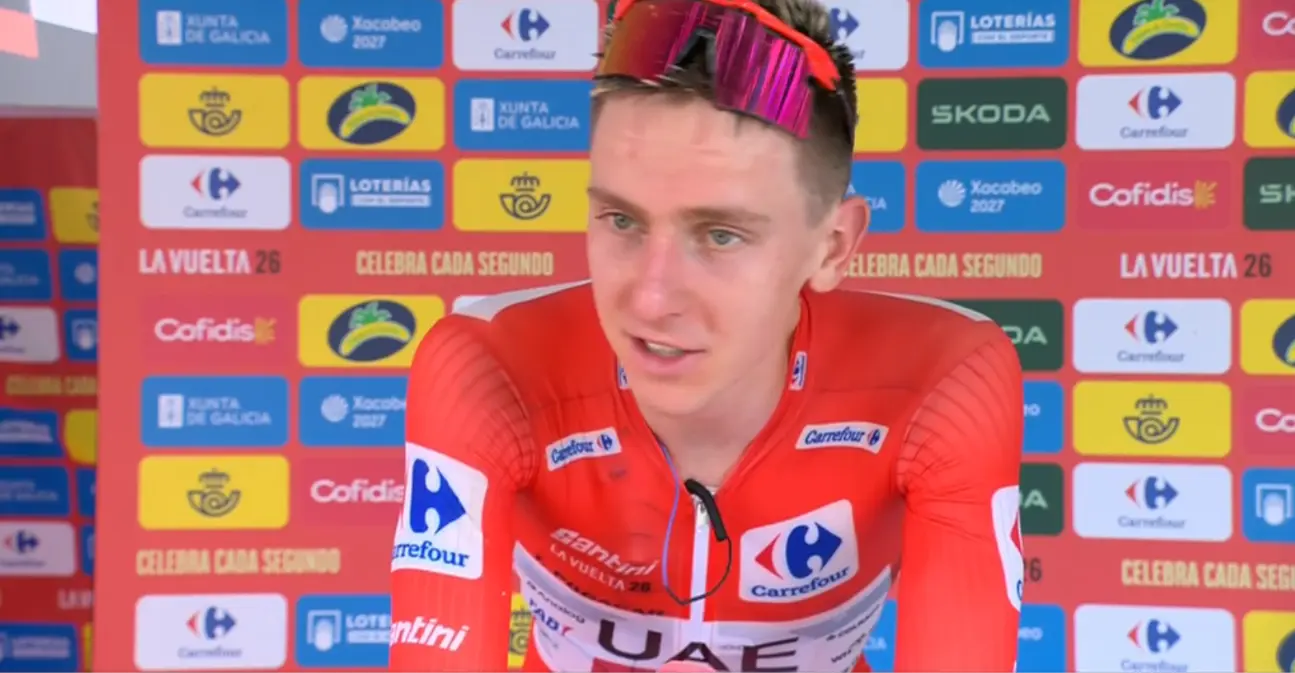
Stephens placed considerably more importance on the faulty information Pogacar had received. With the race leader believing Mas remained approximately 40 seconds behind, he saw no reason for Pogacar to continue pushing towards his limit.
“I think it was a solid day,” Stephens said. “I think it was down to comms. I think he was riding within himself and was caught unawares. I think Tadej’s trying to win this bike race as easily as he can, and there’s no point in riding full throttle on Stage 6.”
The unexpected sight of Mas arriving at the summit therefore did not necessarily mean Pogacar was incapable of riding faster. “If he’d ridden full throttle all the way up, he wouldn’t have caught him,” Stephens argued. “But he was thinking: ‘I’ve got 40 seconds, so I can ride in a controlled manner at the top.’ It does suggest that he’s playing this long game, doing what he needs to do without pushing into the red. But when he didn’t have the time gap, he’s just riding tempo on the climb, and Mas got across the gap. So that’s really interesting.”
Stephens compared the approach with Pogacar’s commanding victory at the 2024 Giro d’Italia, where his superiority gave him control over how extensively he punished his rivals.
“Within his realm, he’s riding in a controlled manner,” he explained. “Like when he won the Giro, he could’ve won it by 10 minutes; he could’ve won it by 15. I think that he was riding near his limit, but with a lot of room to adjust. And had it been 30 seconds, 20 seconds, he might have actually gone a bit harder to keep 30 seconds over the top.”
Pogacar survives scare before Mas lends a hand
Pogacar’s excursion off the road then introduced a different risk. He avoided the steep drop beside the technical descent, remained upright and quickly returned to Mas’s wheel.
“You can see there were proper drop-offs down the sides, so he was lucky it happened where there was a small bit of transition,” Stephens said. “Had he hit a stone and punctured, we could have been looking at a different story.”
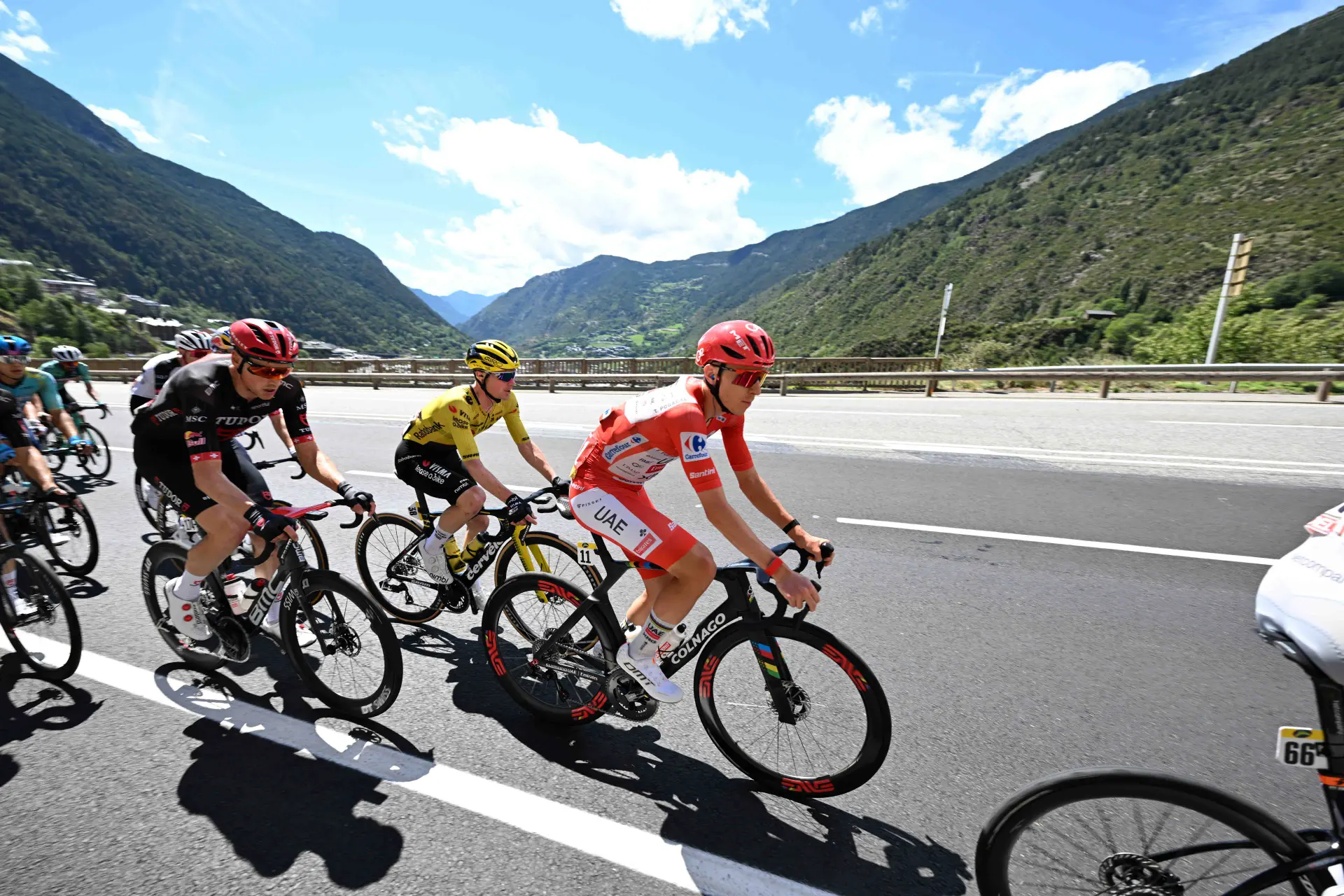
Having run out of water, Pogacar benefited from Mas’s cooperation across the exposed final kilometres. Their combined effort increased the advantage over Roglic, Gall, Carapaz, Harold Tejada and Ramses Debruyne to 46 seconds before Pogacar completed the victory in the sprint.
“We don’t know the truth,” Stephens conceded. “But he did suggest he was surprised by the information on the comms, and I don’t think Tadej’s trying to smoke-screen us. I think that’s a pretty honest, subjective answer.”
Whether Stage 6 exposed a genuine weakness or merely the consequences of faulty information remains unresolved. What it changed was the image of complete invulnerability: Mas caught Pogacar on the climb and forced him to share the work towards the finish. What it did not change was the result, with Pogacar taking another victory and beginning Stage 7 with Mas now his closest challenger at 3:34.
Kieran WoodDeputy Editor-in-Chief
Kieran Wood is a sports journalist based in Wales and has been active in journalism since 2022. He regularly contributes to DartsNews.com and CyclingUpToDate.com, where he covers professional cycling and darts. In cycling, his work includes liveblogs from major races, including the Tour de France, the Giro d’Italia, and La Vuelta a España, alongside race reports and analysis. He has also conducted interviews with professional riders.
His reporting spans the full racing calendar, from one-day classics to stage races, with a focus on accurate, real-time coverage and clear contextual analysis. For statistics, results, and historical context, he regularly uses resources such as ProCyclingStats. To support reporting on rider activity and training context where relevant, he also references Strava.
In his work, Kieran places strong emphasis on careful sourcing, editorial accuracy, and updating articles as new, verified information becomes available.
claps 0visitors 0
Just in
Popular news
Latest comments
- UAE was really badly positioned at the last climb, and Ineos did a great job of making that happen at the bottom. That must have affected del Toro and the rest. His attack wasn't spectacular, and they hadn't ripped apart the bunch enough, letting a large group remain in back to reel him in. UAW lost the race on the road to the climb and the bottom third of it, I think.RidesHills08-10-2026
- He won in exactly the same way as others. By being the fastest to complete the stages.mobk08-10-2026
- Very surprised del toro couldn't beat everyone here against lesser competition. He's well on his way to being top 5 in the worldbruins3008-10-2026
- Being the best rider left in the race is pretty much the only way to win in any edition, surely? Seems reductive to say "they only won because the entire peloton wasn't as absolutely stacked as it could've been" - you can only beat who is in front of you.wrsty08-10-2026
- I’m sorry but generally the coverage on your site is first class but this incident highlights something I just don’t get with cycling journalism. This accident should never have been allowed to happen, it comes uncomfortably close to the Finlay Tarling tragedy and two other incidents took place within days of this. I checked all of the cycling websites and you all put out basically the same story. Pidcock gave journalists the perfect opening to blow this sky high, what has the UCI got to say? What is Adam Hansen doing? What do the organisers say? Nothing, you all trot out the same easy quotes taken from Pidcocks interview after the race but do nothing to follow it up. I see it time and time again, journalists taking the easy way out but being outraged when it happens again as it surely will. Riders can’t do this but journalists should be independent and should be able to raise these uncomfortable questions but cyclinguptodate and every other on line publication prefer to take the easy way out. That’s the real tragedy here.Paul53108-10-2026
- Happy to help :-)Mistermaumau08-10-2026
- Well, ok but, it’s also a structural, team, budgeting, direction and all sorts of other issueMistermaumau08-10-2026
- I wouldn’t call it an analogy but maybe his criticism is a little unfair. On the other hand, the fact Cicco made a public affair out of it despite having received all the explanations and proof makes me feel he now deserves being criticised for not accepting there is nothing to discuss.Mistermaumau08-10-2026
- Much as I like him (one of my favourites), I do want to attract a little attention to the coincidence of his recent performances in the current context. Not the first time a rider improves noticeably when there’s a job interview to prepare. In the same lighthearted humour of his, i hope the UCI will let him wear it at home as the rules quite strictly state you can only wear it during participation in the discipline you won in, and we all know how capable they are of interpreting rule interpretation ;-) Also, if it’s going to be retirement (please not), I wouldn’t call that an agreement as somebody will probably feel they didn’t get what they wanted.Mistermaumau08-10-2026
- Agreed. There used to be a team willing to pay though. I take all these figures (that vary enormously according to who is publishing) with handfuls of salt. We don’t know how salaries are treated (especially between a UK employer and Andorran resident), we don’t know how numbers are derived and from where, if deductions have been taken into consideration, etc. but if he returns to Colombia, he’s going to need quite a bit in protection money.Mistermaumau08-10-2026
Loading
Write a comment