“Hide your cows. We’re coming” – EF Education-EasyPost unveil eye-catching ‘Ride In Peace’ Giro d’Italia 2026 kit
Cycling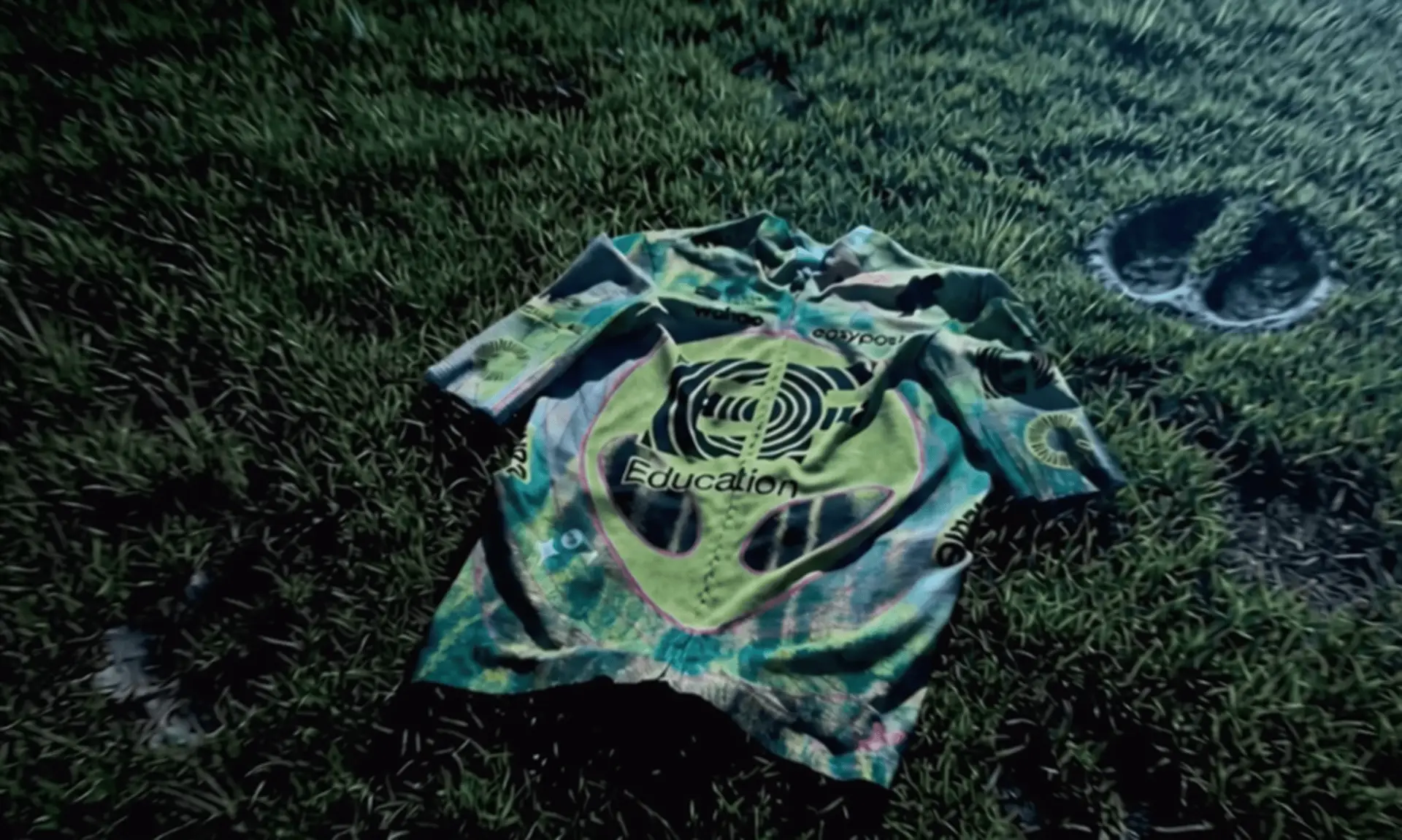
Every year, EF Education-EasyPost arrive at the Giro d’Italia with something different. In 2026, they may have taken that tradition further than ever.
With their usual pink colours off-limits due to the clash with the Maglia Rosa, the team have once again turned to a one-off design. This year’s version, created in collaboration with ASSOS, leans fully into a concept that blends performance kit engineering with something far more abstract.
The result is the “Ride In Peace” jersey, a neon green design layered with geometric patterns and pink detailing, described by the team as sitting “somewhere between space, time, and the Italian roads.”
A kit designed to stand out — on any planet
The thinking behind the design is made clear from the outset. This is not just a visual change, but a statement piece tied to a broader concept. “There was no warning. Just a drop,” the team wrote in their official release.
The campaign itself leans heavily into an extraterrestrial theme, presenting the kit as a kind of “contact” with something beyond the norm of the peloton. “We made contact. A signal. A message: We ride in peace. Do you? Join us.”
That approach fits with EF’s long-standing reputation for pushing creative boundaries with their Giro kits, but the 2026 version stands out even within that context. It is not just colourful or playful, but deliberately unusual, combining technical design cues with a narrative that feels more sci-fi than cycling.
Performance meets identity
While the visuals draw the most attention, the team were keen to emphasise that performance remains at the core of the collaboration.
“If we’re going to change kits, it should actually say something,” said Jonathan Vaughters. “ASSOS gives our riders the performance, comfort, and technical quality they need to race at their best, and that allows us to have some fun with the design. With this kit, we’re visually manifesting. Hide your cows. We’re coming to this Giro with serious race ambitions.”
That balance between function and identity was echoed by ASSOS leadership.
“We believe innovation happens when you challenge conventions, both in how products perform and how they are expressed,” said CEO Edwin Navez. “Too often in this sport, performance and identity are treated separately. We don’t see it that way. With EF Pro Cycling, this is again about pushing both at the same time: engineering at the highest level, and a visual language that refuses to blend in.”

Last year, EF opted for a white jersey
A Giro tradition continues
The changeout jersey has become a staple of EF’s Giro presence, driven by the need to avoid any confusion with the race leader’s pink jersey. But over time, it has evolved into something much bigger, a platform for the team to define its identity on cycling’s most stylistically open Grand Tour.
The 2026 edition continues that trend, pairing a bold aesthetic with a narrative that invites attention rather than avoiding it. “The mission is simple: make a kit that performs in the heat of the peloton, and stands out on the road,” the team explained.
The launch also arrives in a different sporting context for EF Education-EasyPost. With Richard Carapaz ruled out of the race, the team’s Giro ambitions have shifted in the days leading into the start.
But the message attached to the kit remains clear. “We ride in peace,” the release concludes. “But don’t get us wrong. We came to race.”
Kieran WoodDeputy Editor-in-Chief
Kieran Wood is a sports journalist based in Wales and has been active in journalism since 2022. He regularly contributes to DartsNews.com and CyclingUpToDate.com, where he covers professional cycling and darts. In cycling, his work includes liveblogs from major races, including the Tour de France, the Giro d’Italia, and La Vuelta a España, alongside race reports and analysis. He has also conducted interviews with professional riders.
His reporting spans the full racing calendar, from one-day classics to stage races, with a focus on accurate, real-time coverage and clear contextual analysis. For statistics, results, and historical context, he regularly uses resources such as ProCyclingStats. To support reporting on rider activity and training context where relevant, he also references Strava.
In his work, Kieran places strong emphasis on careful sourcing, editorial accuracy, and updating articles as new, verified information becomes available.
claps 0visitors 0
Just in


Popular news
Latest comments
- he had one good year of his career. gotta think he was doping hard.mij25-11-2026
- bam! two grand tour starts claimed by the younger sprinter just like this. what if merlier also plans for 2 grand tours?Ketterechts25-11-2026
- writing about yourself in third person ... please, at least have someone else from your staff author these self-coverage articles!Ketterechts25-11-2026
- Don’t forget Yates’s podium at 2023 TdF!Lozza25-11-2026
- It was stage 14 to Morzine that Carlos Rodriguez won in 2023, not Puy de Dome. And Kwiato actually won the previous stage himself to Grand Colombier!Lozza25-11-2026
- Go Pogi!! 🐐❤️Lozza25-11-2026
- They didn’t have or need “extraordinary information”. All they needed was for a French judge to sign off on the night-time testing for it to go ahead.Lozza25-11-2026
- If the sponsors voted for Primoz then you get him, otherwise not.flyer25-11-2026
- It sure can feel or seem that way but I wonder if the same amount of prodigious performances (compared to the others) would occur if no one was ever doping at all.flyer25-11-2026
- Given the similarity of two articles (published on I think the same date), I'm reusing (copy-n-pasting) my post from the twin: I've always thought the last day of each of the grand tours was problematic mostly in that the GC is considered completed before the race starts when that is not really true. There is some tension, but not desirable tension. What saves the awkward practice is the race finish is legit for those who participate - so it's not wholly different from the other stages. That neutralizations usually make good sense demonstrates their necessity so if that has to be the way to go I agree that the design plan for the neutralization should be completed before the race starts. This years end stage in the Vuelta had one of the best first half's I've seen in that many of the riders looked to be thoroughly enjoying themselves making it a joy to watch. But I think it was slightly closer to the exception rather than the rule.flyer25-11-2026
Loading
2 Comments