“He had an incredible engine” - Lance Armstrong rejoices a new American World Champion, over 30 years later
Cycling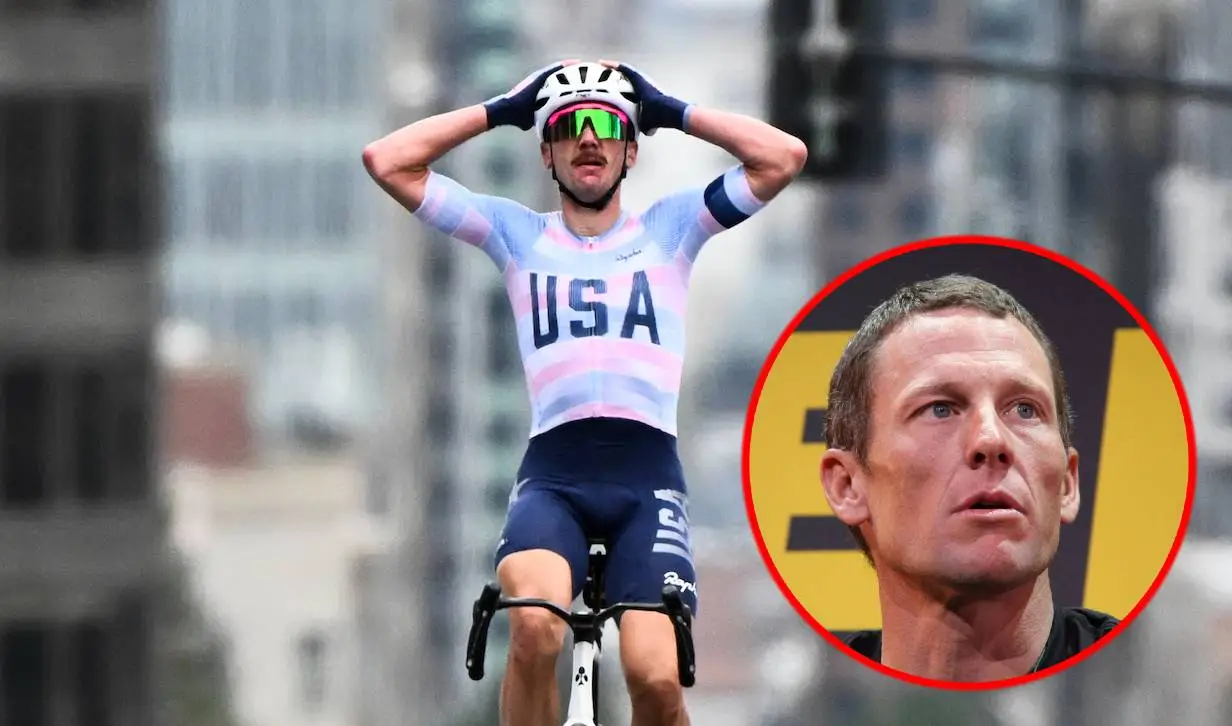
Lance Armstrong, Johan Bruyneel, and Spencer Martin broke down Brandon McNulty’s victory at the 2026 UCI Road World Championships in Montreal, agreeing that he combined power with sharp race craft to exploit how the race unfolded.
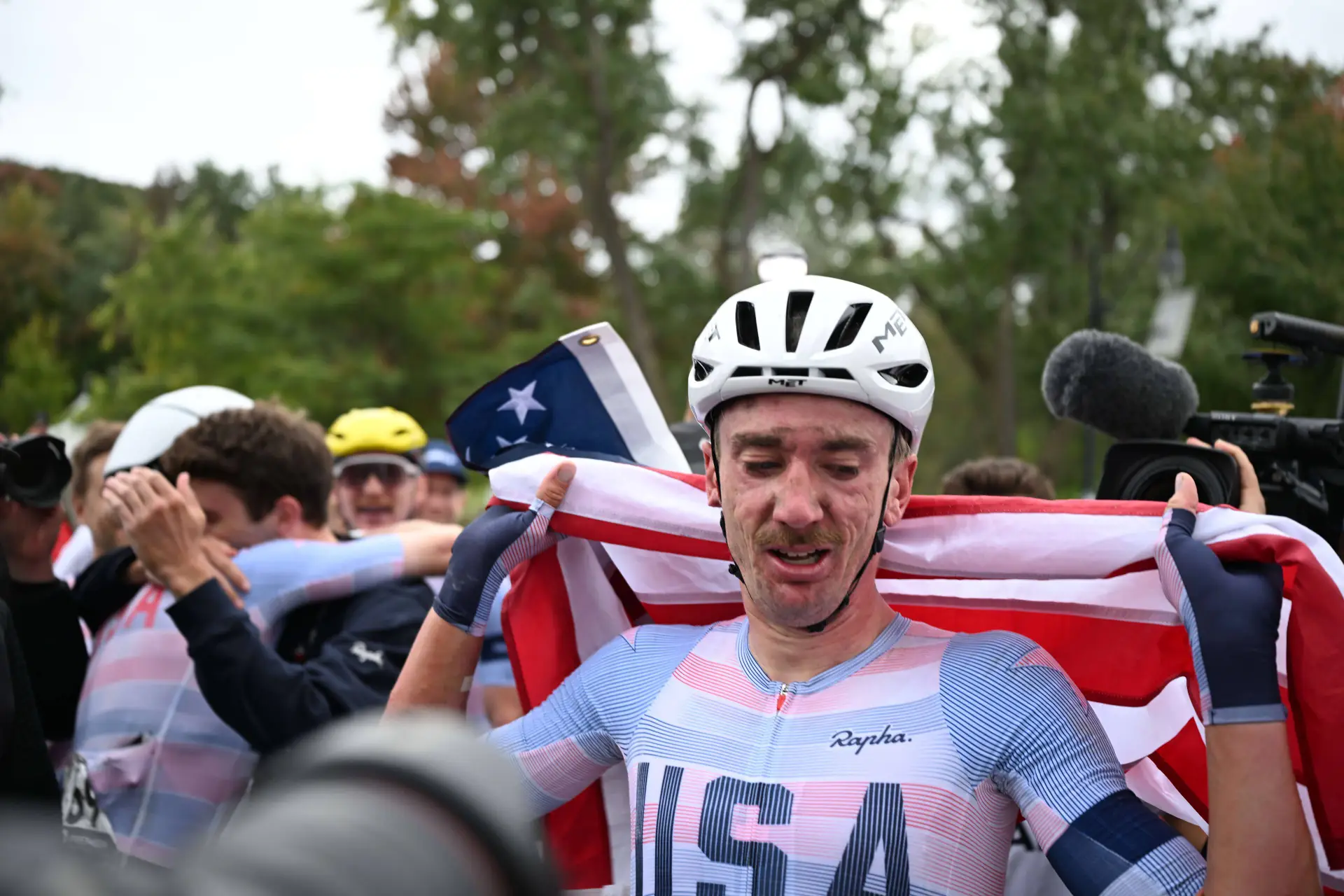
Brandon McNulty has his rainbow jersey. The American was crowned world champion in Montreal after a war of attrition marked by Tadej Pogacar’s absence and a wide-open finale in which the main favorites failed to organize an effective chase. His win surprised for the name on the line, but not for the qualities he had shown throughout the race.
Lance Armstrong recalled on the The Move podcast that McNulty had been a frequent subject of praise on the show, and he highlighted the rider’s physical capacity in particular. The former American pro noted they had always been “huge fans” of the rider and stressed he has “an incredible engine,” while pointing to his role as a teammate of Pogacar at UAE Team Emirates.
For Armstrong, the win also had a tactical dimension. McNulty picked the right moment to attack when the chase group lost cohesion. He opened a gap and then held a margin that hovered around ten seconds on the final lap. Armstrong felt the move was perfectly judged because behind there was hesitation, with no one willing to take full responsibility for the chase.

Brandon McNulty on the podium of the 2026 Montreal World Championships
Bruyneel: “McNulty did his job incredibly well”
Johan Bruyneel focused on the cumulative fatigue across the 273 kilometers of the Worlds. The former sports director described the finale as a genuine “blown-legs festival” after a race that forced riders into repeated efforts on the Montreal circuit.
In that context, Bruyneel underlined McNulty’s performance. The American could hold a steady speed while others began to pay for their efforts. Once he had the advantage, the key was to keep the same pace all the way to the line.
Bruyneel also stressed Matteo Jorgenson’s importance in the outcome. In his view, the American played a decisive role in allowing McNulty to fight for the win, to the point of saying Jorgenson was “the man who made McNulty win.” His work ensured McNulty reached the decisive phase with room to play his cards.
Bruyneel added that McNulty was no unknown to those who had followed his trajectory. He was a junior world champion and had repeatedly shown he could deliver strong results. Until now, however, he had mostly served in a supporting role at UAE.
Spencer Martin on why the circuit was so hard
Spencer Martin, on the ground in Montreal, offered a different angle by detailing the course features. His analysis was that the circuit proved much tougher than it looked on paper.
Martin explained that one of the main difficulties lay in the final sections of the climbs. He argued the climbs to to be roughly 2.2 kilometers at 6%, the last 500 meters kicked up to 8–9%. Fast descents and tarmac that, in his experience, made the race especially taxing added to the toll.
His analysis also helps explain why McNulty could prevail against riders with different profiles. Martin felt the nature of the course favored powerful, all-round riders, while short, high-intensity efforts could especially punish pure climbers.
“The climbs are so short that it’s like a blunt hit to the legs,” Martin said. In his view, that characteristic could suit riders like McNulty, Michael Matthews, or Mathieu van der Poel over others who need longer, more sustained efforts.

Brandon McNulty claims victory with a historic show in Montréal
An attack at the perfect moment
One point the trio emphasized was McNulty’s timing. The American sensed hesitation and rolled the dice. He didn’t need a huge gap: a handful of seconds and the lack of cooperation behind were enough.
Spencer Martin highlighted that race-reading instinct. McNulty not only had the power to open the gap, but also the intuition to sense a favorable situation.
Martin described McNulty as a rider with “power” and also an “opportunist.” His read was that the world champion saw a lull and attacked to see what might happen. Once he had the gap, his physical capacity turned that opening into victory.
Armstrong agreed with that reading and added that the scenario was especially favorable because the chasers had different interests. Each rider could feel that working too much meant riding for another rival, so no one wanted to take on the full effort.
The United States team, front and center
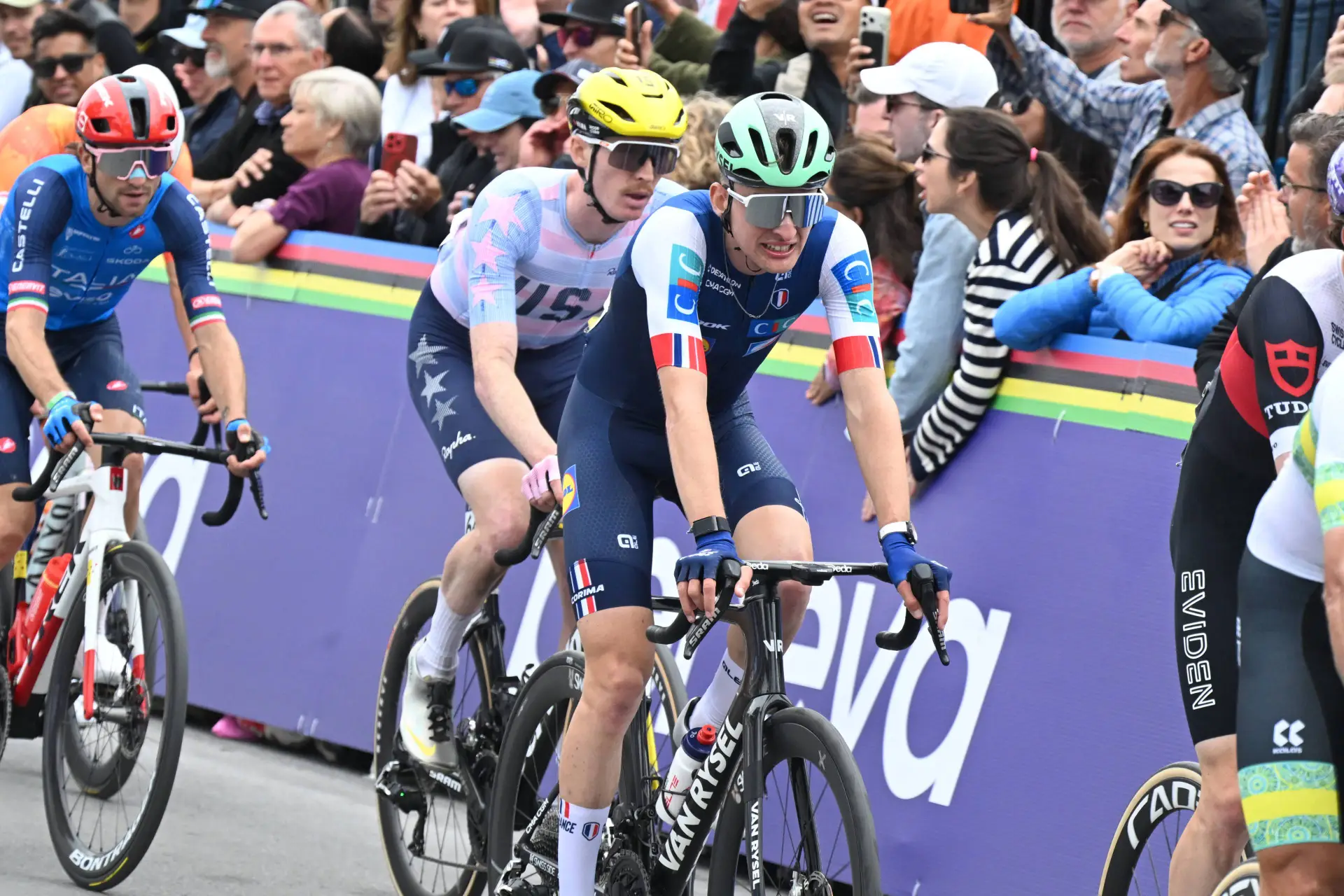
Beyond McNulty, Armstrong and Bruyneel also wanted to highlight the collective performance of the United States. Armstrong felt the American team was “the strongest squad in the race,” singling out the presence of Quinn Simmons, Matteo Jorgenson, and McNulty himself in the decisive phases.
Jorgenson was one of the key protagonists of the U.S. strategy. Bruyneel gave him top marks and judged that his work was decisive in delivering McNulty to the crucial part in a prime position.
The American approach carried even more weight because the Worlds are contested by national teams rather than trade teams. Armstrong explained that, at a Worlds, riders don’t share the same tactical relationships they have during the season, which can create very different scenarios.
In McNulty’s case, that context proved decisive. Had the Worlds been raced as a professional team event, his role might have been different and he would possibly have had to work for Isaac del Toro, his UAE teammate. Racing for the U.S. national team, McNulty was able to seize the opportunity when it came.
Read also
Pogacar’s absence changed the race
Another major theme analyzed by Armstrong, Bruyneel, and Martin was the absence of Tadej Pogacar. For Armstrong, the Worlds looked completely different from usual because riders had to face a race without the reference point who has dominated much of recent cycling.
The American felt that some of the big favorites seemed unsure how to shape the race without Pogacar. The Slovenian’s absence removed a tactical anchor around which others could structure their moves.
Martin agreed that the unfolding was entirely different and described it as a kind of “puzzle” for the favorites. Instead of a race with a clearly defined structure, the situation opened up and multiple moves emerged.
Bruyneel, for his part, noted another defining feature of the Worlds: riders compete for national selections rather than their usual professional teams. The lack of radio communication added another layer to the tactical development.
Juan LarraCycling Journalist
Juan Larra is a writer for Cyclinguptodate and editor-in-chief of Ciclismoaldia, where he has played a central role since its inception. Under his leadership, the website has become a trusted source for professional cycling coverage, offering in-depth analysis, news, and feature stories.
A sports journalist with over 20 years of experience, Juan earned his degree in Journalism from the University of Seville in 2007. He began his career covering a wide range of sports—including football, basketball, Formula 1, MotoGP, tennis, and cycling—for platforms such as the official La Liga app, Vodafone and Movistar websites, NBA Blogdebasket, and Cadena Cope, honing his skills in writing and editorial management.
In addition to his work at Ciclismoaldia, Juan contributes to Cyclinguptodate and serves as editor-in-chief for the tennis-focused site Tenisaldia. Throughout his career, he has conducted exclusive interviews with cyclists and sports figures, provided detailed analysis of competitions ranging from local Spanish races to major international events, and acted as a special correspondent at prestigious races including Paris-Roubaix, the Tour de France, and the Vuelta a España.
Juan’s combination of experience, expertise, and direct access to athletes has established him—and the platforms he leads—as authoritative voices in professional cycling.
claps 23visitors 3
Just in
Popular news
Latest comments
- Good grief, who proofreads this stuff? Errors abound.wrsty18-10-2026
- You can add weight to a bike and limit gears or make it single speed if you like. I doubt that would reduce crashes. It would just add another dymanique. All good and well, but It wont stop cars getting on to the course.Cyclingsbestfan18-10-2026
- Seixas is probably second best in the World on short climbs. But that hasn't translated as well to long climbs
 Rafionain-Glas18-10-2026
 - Idiotic fellaRafionain-Glas18-10-2026
- Nothing. Against Pogi nothingabstractengineer18-10-2026
- He didn't even try to sprint all outvappaxbipmv18-10-2026
- Campenaerts looked like a rolling pumpkin with that all orange leaders skinsuit !frieders318-10-2026
- He can take his dumb a$$ politics somehwere else !frieders318-10-2026
- good to have her back. fingers crossed she‘ll be able to stay!Ketterechts17-10-2026
- A tenner and he wins the Tour next year, too 😂anonymouscyclist17-10-2026
Loading
Write a comment