“Gery deliberately tries to prevent her from responding to Vollering” – Expert backs Niewiadoma as Tour de France Femmes flashpoint turns Yellow Jersey battle personal
Cycling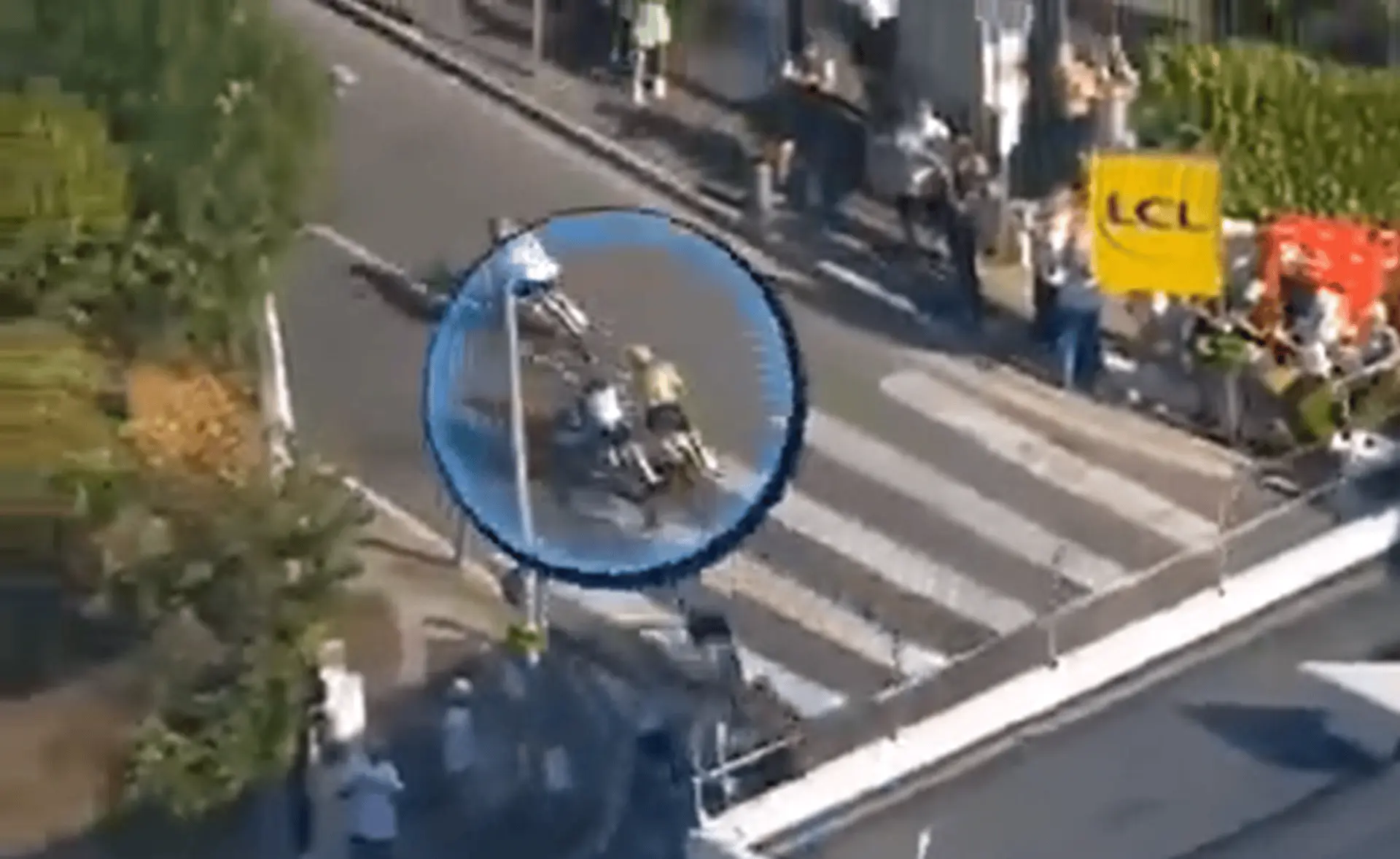
Kasia Niewiadoma-Phinney's furious accusation against FDJ United-SUEZ has received significant backing from former professional rider and Dutch cycling analyst Thijs Zonneveld, who believes Celia Gery deliberately tried to prevent the Pole from responding to Demi Vollering's decisive Stage 8 attack.
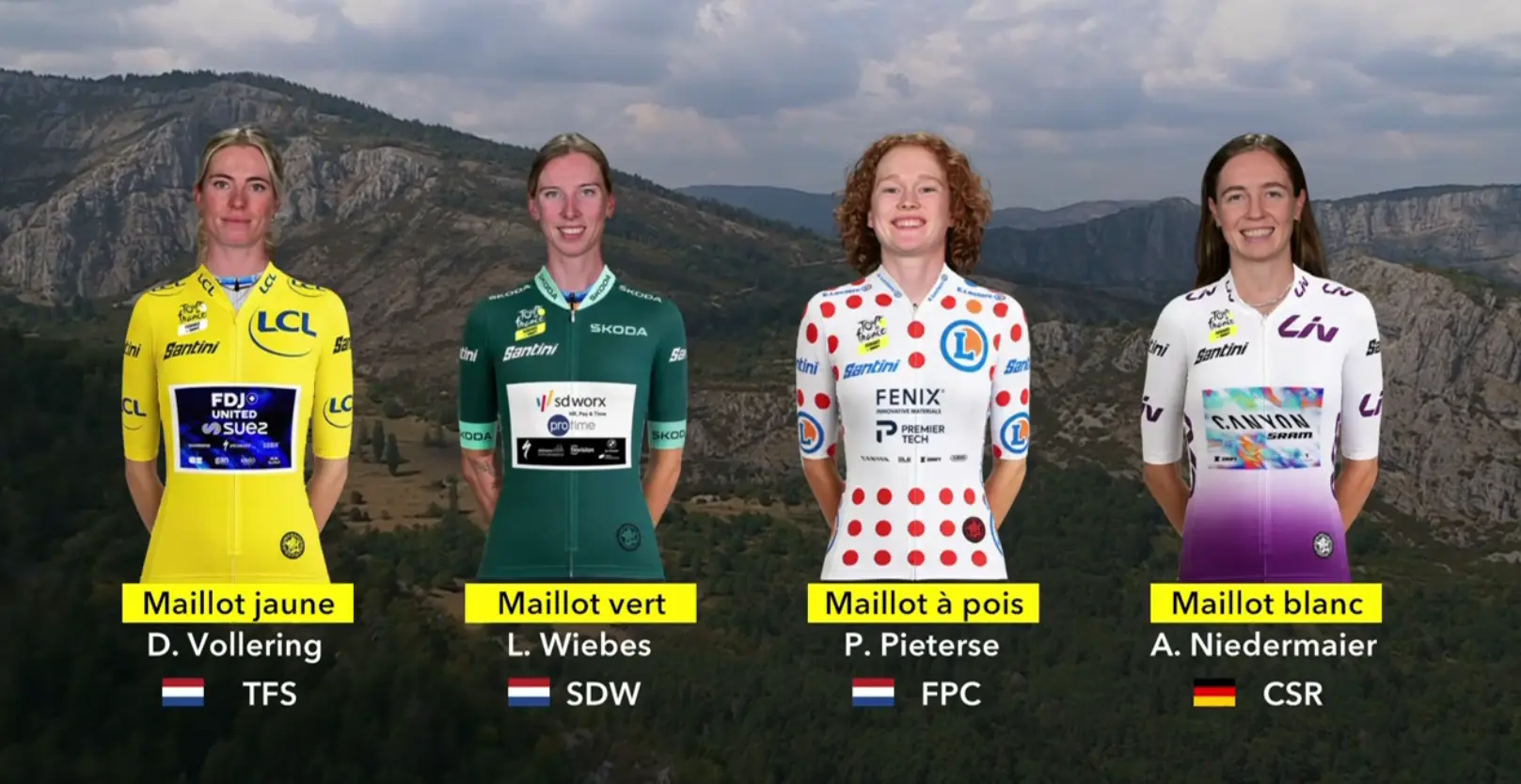
Niewiadoma-Phinney lost the yellow jersey by the narrowest of margins in Nice, finishing 17 seconds behind Vollering as her 15-second advantage became an eight-second deficit ahead of Sunday's final Tour de France Femmes stage.
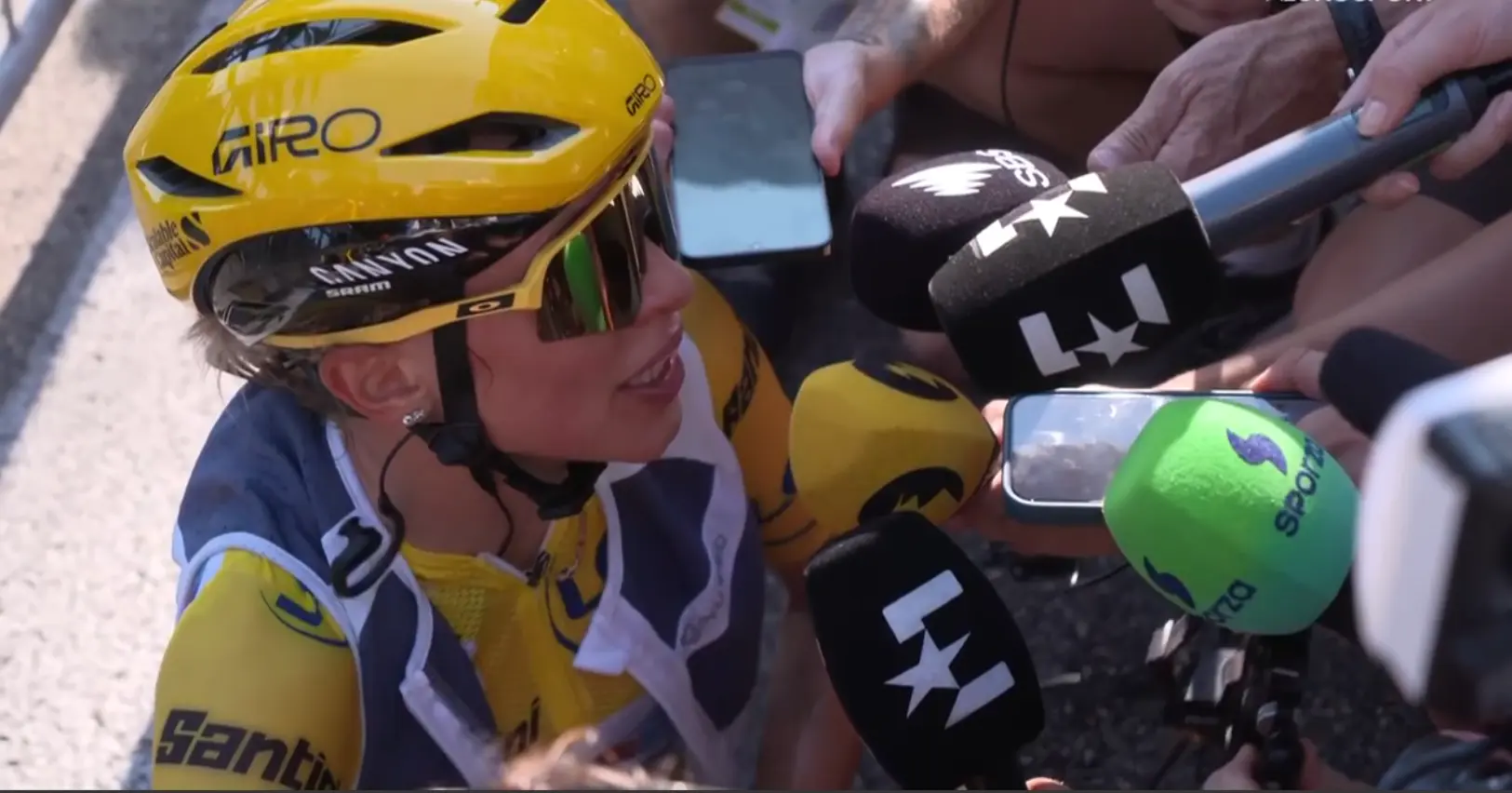
Her anger afterwards was focused on what happened immediately before Vollering attacked. Niewiadoma-Phinney accused Gery of deliberately squeezing her towards the barriers, forcing her to stop pedalling, and branded FDJ's actions “childish” before declaring that she had “lost all the respect” for the team.
Writing in his In de Waaier Substack, Zonneveld has now examined the incident in detail and reached essentially the same conclusion. “Gery deliberately tries to prevent her from responding to Vollering,” he wrote.
Zonneveld picks apart the move into the corner
FDJ had already spent several kilometres applying pressure before the decisive attack. Franziska Koch helped reduce the favourites' group before French champion Gery took over for the final lead-out towards the short, steep ramp above Nice.
Vollering passed Gery around 30 metres before the corner and immediately had clear road ahead of her. Gery then began moving back across behind her team leader.
FDJ sports director Lars Boom later told NOS: “The plan was to switch positions to the left just before the corner.” The idea was to leave space behind Vollering and force Niewiadoma-Phinney to negotiate her way around Gery.
Zonneveld believes the execution was the problem. “If Gery and Vollering had switched positions well before the corner, on the straight, it might still have been defensible,” he wrote.
Instead, his reading of the footage is that Vollering was allowed through on the outside before Gery moved across while Niewiadoma-Phinney was attempting to follow the same line.
He pointed to images from the apex which, in his assessment, show Niewiadoma-Phinney's elbow and front wheel already slightly ahead of Gery. “Gery really does move into Niewiadoma through the corner,” Zonneveld wrote.
The incident did not finish at the apex. Niewiadoma-Phinney was left with little room as they exited the bend and had to brake before reaching the pavement. Elisa Longo Borghini then came past, while Niewiadoma-Phinney eventually had to move behind Gery before finding a clear route forward.
HERE ARE THE MISSING IMAGES, thanks @Minimalizm__ !
— Mihai Simion (@faustocoppi60) August 8, 2026
Kasia didn't lie. After leading the peloton, Celia Gery slipped back, allowed her leader Vollering to attack and pushed Kasia to the barriers. Super dirty move but part of cycling, I guess. #TDFF2026 pic.twitter.com/dbIWFLPWe2
“Deliberately boxing opponents in against the kerb? Not for me”
Zonneveld also disputes the idea that Gery and Niewiadoma-Phinney were simply fighting normally for the same position.
Gery had just completed her lead-out for Vollering and was losing speed as she came back through the group. Zonneveld argues that her movement across the road therefore served no purpose for her own position in the race beyond making Niewiadoma-Phinney's response more difficult.
“I see a lot of people who are only focusing on who takes the corner in what way, but they are overlooking that Gery is not simply fighting Niewiadoma for her own position,” he wrote.
He compared the incident with lead-out riders obstructing rival sprinters after finishing their own effort. In sprint finishes, deliberate interference can lead to relegation or disqualification. “You can say that is part of cycling, but I disagree,” Zonneveld wrote. “Plans, tactics and strategy: absolutely. But deliberately boxing opponents in against the kerb? Not for me.”
That criticism also carried a pointed reference to FDJ's own complaints during the 2025 Tour de France Femmes.
🤬 An angry Kasia Niewiadoma confronts Célia Gery and FDJ United-SUEZ after pushing her in the barriers before final climb!
— Wielerflits.nl (@WielerFlits) August 8, 2026
🎥 @WielerFlits pic.twitter.com/FQM57U6VOL
Zonneveld accuses FDJ of hypocrisy
FDJ publicly complained during the 2025 race about what the team considered a lack of respect towards Vollering in the peloton.
Zonneveld sees a clear contradiction between those complaints and what happened in Nice. “For a team like FDJ, which complained last year about the ‘lack of respect for Demi Vollering’ in the peloton, such a tactic is downright hypocritical,” he wrote.
Canyon//SRAM have since lodged a complaint with the UCI over Gery's actions. Zonneveld does not expect that process to change the overall classification. A possible fine or yellow card for Gery would punish the rider, but the 17-second Stage 8 gap and Vollering's eight-second advantage would remain.
For Niewiadoma-Phinney, the damage Zonneveld identifies happened on the road.
How much did the incident cost Niewiadoma?
Vollering accelerated as Niewiadoma-Phinney was still recovering from the corner. The Canyon//SRAM leader lost several bike lengths and substantial speed before Longo Borghini helped her regain contact. Niewiadoma-Phinney did make it back.
That first chase, however, came immediately before Vollering increased the pressure again on the steep ramp. On the second acceleration, Niewiadoma-Phinney could no longer follow.
Zonneveld believes the energy spent closing that initial gap may have been decisive. He wrote that Niewiadoma-Phinney lost several bike lengths, a huge amount of speed and “the match she needed to follow Vollering all the way to the top”.
Vollering continued over the summit, drove the descent and then pushed through the final flat kilometres into Nice. She crossed the line 17 seconds ahead of Longo Borghini and Niewiadoma-Phinney, with the bonus seconds completing a 23-second swing in the general classification.
Zonneveld ended his analysis with the biggest possible consequence. Niewiadoma-Phinney may not only have lost time in the corner, but “probably the Tour as well”.
She still has one final opportunity to overturn the deficit. Sunday's 99.2-kilometre mountain stage starts with Vollering in yellow by eight seconds, less than 48 hours after Niewiadoma-Phinney had ridden more than a minute away from her on Mont Ventoux.
The pair will now contest the Tour after two consecutive stages that have completely reversed the general classification, with Canyon//SRAM's UCI complaint and the dispute over Gery's actions still hanging over the final fight for yellow.

Kieran WoodDeputy Editor-in-Chief
Kieran Wood is a sports journalist based in Wales and has been active in journalism since 2022. He regularly contributes to DartsNews.com and CyclingUpToDate.com, where he covers professional cycling and darts. In cycling, his work includes liveblogs from major races, including the Tour de France, the Giro d’Italia, and La Vuelta a España, alongside race reports and analysis. He has also conducted interviews with professional riders.
His reporting spans the full racing calendar, from one-day classics to stage races, with a focus on accurate, real-time coverage and clear contextual analysis. For statistics, results, and historical context, he regularly uses resources such as ProCyclingStats. To support reporting on rider activity and training context where relevant, he also references Strava.
In his work, Kieran places strong emphasis on careful sourcing, editorial accuracy, and updating articles as new, verified information becomes available.
claps 0visitors 0
Just in
Popular news
Latest comments
- A broken contract by mutual agreement is perfectly fine. The problem is if one side does it without the other agreeing which isn't the case in this situationvappaxbipmv09-10-2026
- Maybe Ineos are planning to concentrate on GC after recent statements about getting back to winning the Tour?Lozza09-10-2026
- lol maybe a better questionmij09-10-2026
- Does Ineos?Mistermaumau09-10-2026
- ThanksMistermaumau09-10-2026
- It depends on your religion or opinion of science but if you feel he did the right thing I suggest you go complain to guys like Mohorič, Mas, etc. for reminding him not to try to copy Senna too much.Mistermaumau09-10-2026
- yeah that was poorly written, but Gulio was in the pink, and they didn’t work for him to protect the jersey. they let a group get up the road. the transfers are out of hand. what is a contract for?mij09-10-2026
- does he make it two years?mij09-10-2026
- A lot of things should not be happening but everything seems to be getting worse, not just in cycling or sport or professional surroundings. People are abandoning (common) standards in their belief they are only responsible towards themselves and have lost the ability to care, consider or understand consequences for others. If you ride , you should have noticed by now. I’m not one to stick to rules per se but when, I don’t go round aggressing or criticising others who don’t either. On the bike you constantly get hooted, harassed, insulted or nudged off by drivers who broke at least double the number of rules you did before they point yours out. That said, I haven’t seen many specifics on this case yet so I’m not going to comment specifically, for now. If anyone knows more…Mistermaumau09-10-2026
- it is crazy. is this UAE at the end of Tadej’s reign? it happens!mij09-10-2026
Loading
Write a comment